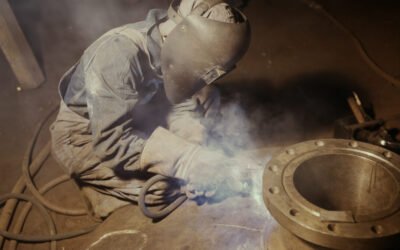
To weld, you clean the metal, clamp the parts together, set your welder for the metal thickness, then hold the gun or electrode at the right angle and move along the joint at a steady speed while the arc melts the metal into one piece. MIG or flux-core welding is the easiest way for an absolute beginner to start.
This step-by-step guide covers the safety gear you need, how to choose a process, machine setup, gun angles, your first beads and the most common beginner mistakes.
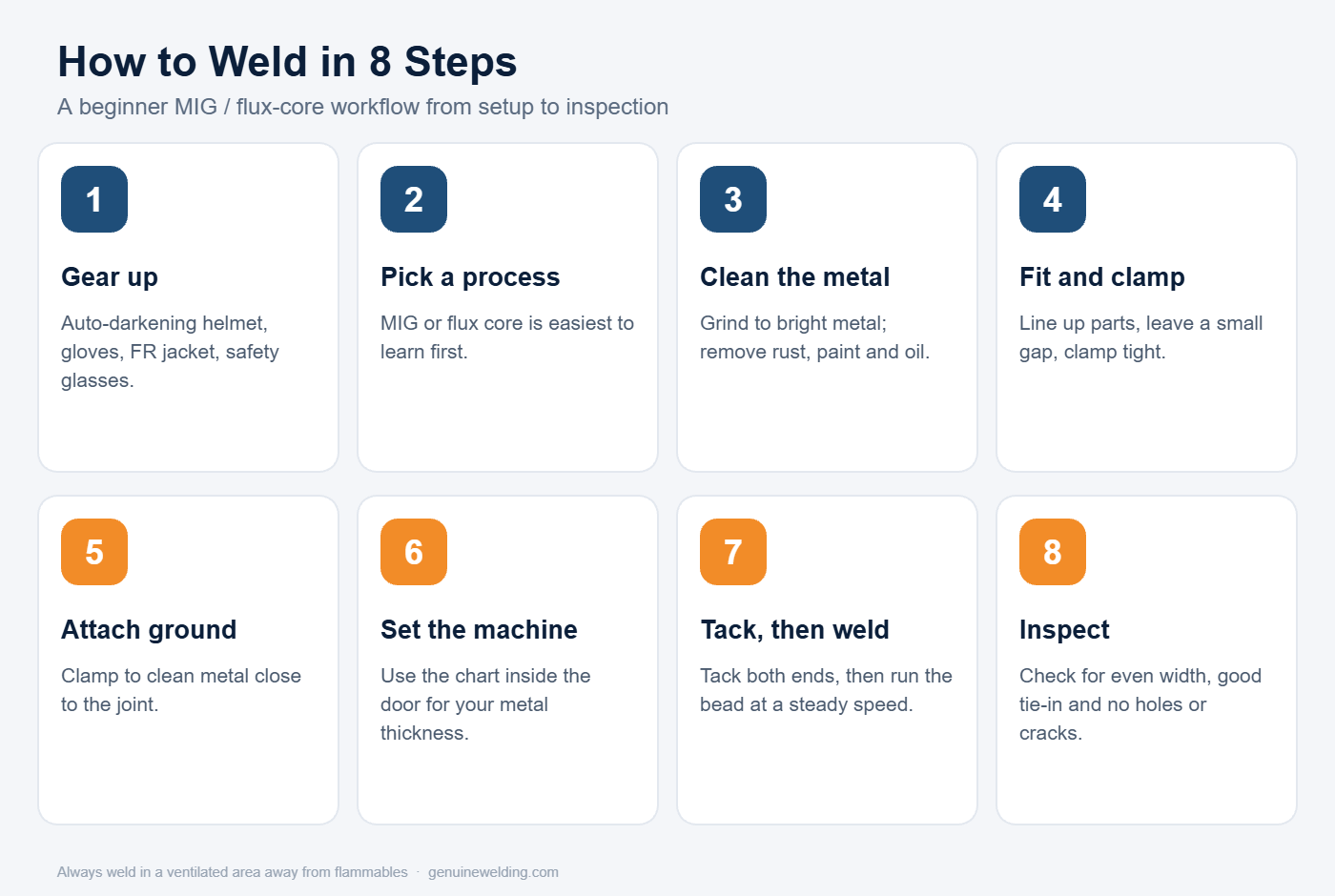
Step 1: Get the Right Safety Gear
Welding produces UV light, sparks, heat and fumes. Before you strike an arc, you need:
- Auto-darkening welding helmet (shade 9–13 for most arc welding; see our lens shade chart)
- Leather welding gloves and a flame-resistant jacket or cotton clothing (never synthetics)
- Safety glasses under the helmet and leather boots
- Ventilation and a fire extinguisher nearby; clear away anything flammable
Read our full welding safety guide before you begin.
Step 2: Choose a Beginner-Friendly Process
| Process | Learning curve | Best for beginners who… |
|---|---|---|
| Flux core (FCAW) | Easy | Weld outdoors or on thicker steel; no gas bottle needed |
| MIG (GMAW) | Easy | Want clean welds on steel indoors; uses shielding gas |
| Stick (SMAW) | Moderate | Repair rusty or dirty steel and farm equipment |
| TIG (GTAW) | Hard | Want precise welds on thin metal, stainless or aluminum |
Not sure which machine to buy? See how to choose a welder and our picks for the best welders for beginners.
Step 3: Clean the Metal
Grind or wire-brush the joint area to bright, shiny metal. Remove rust, mill scale, paint, galvanizing and oil. Dirty metal causes porosity, spatter and weak welds. Flux core and stick tolerate some dirt, but MIG and TIG need clean metal.
Step 4: Fit and Clamp the Parts
Line the pieces up and clamp them tightly to a steel table or with welding magnets. For thin sheet, butt the edges together. For thicker metal (over about 1/4 in.), bevel the edges so the weld can penetrate. Learn the basic joints in weld types and joints.
Step 5: Attach the Ground Clamp
Clamp the ground (work) lead to clean bare metal on the workpiece or table, as close to the joint as you can. A poor ground causes an unstable arc and erratic starts.
Step 6: Set the Machine
Most MIG and flux-core welders have a setting chart inside the wire-feed door. Find your metal thickness and wire size, then set the voltage and wire speed it lists. A rough rule for steel is about 1 amp for every 0.001 in. of thickness (about 125 amps for 1/8 in.). Fine-tune from there; see our MIG welder settings charts.
Check polarity, too: solid-wire MIG uses DC electrode positive (DCEP), while most gasless flux-core wire uses DC electrode negative (DCEN).
Step 7: Hold the Gun at the Right Angle
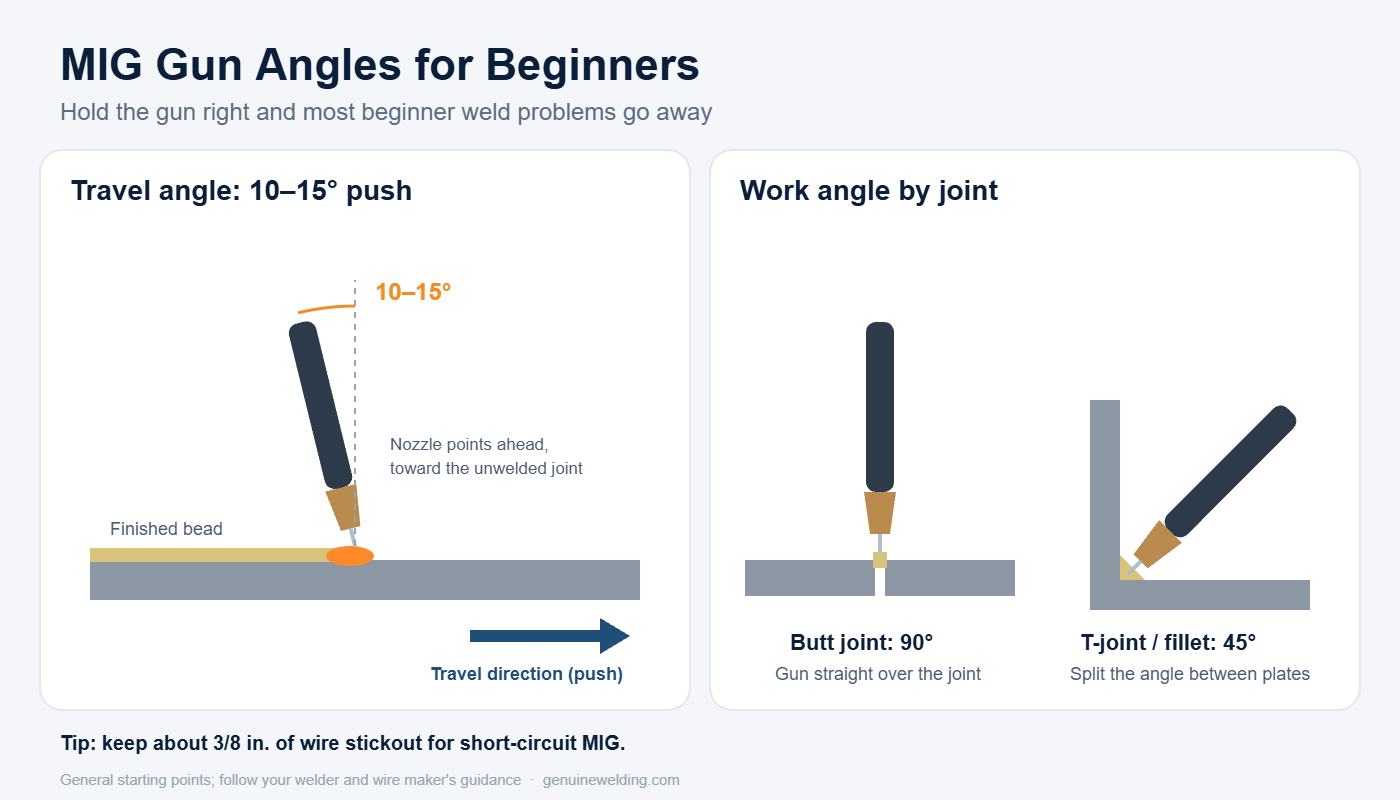
- Travel angle: tilt the gun 10–15° from vertical. Push for MIG; drag for flux core and stick (“if there’s slag, you drag”).
- Work angle: 90° for a butt joint, about 45° for a T-joint or lap joint.
- Stickout: keep about 3/8 in. of wire past the contact tip for short-circuit MIG.
- Stick arc length: about the diameter of the rod.
More on technique: push or pull when MIG welding and forehand vs backhand welding.
Step 8: Tack, Then Run Your Bead
- Put small tack welds at each end (and every few inches on long joints) to hold the parts.
- Start the arc at one end and watch the puddle, not the arc.
- Move at a steady speed so the bead stays an even width, about 2–3 times the wire diameter wide for a stringer bead.
- Listen: a steady “frying bacon” crackle usually means good MIG settings.
- Stop, chip off slag (flux core or stick) and inspect.
Practice bead patterns with welding beads: types and patterns and tack welding tips.
Step 9: Inspect Your Weld
A good weld has a consistent width and ripple pattern, blends smoothly into both pieces, and has no holes, cracks or undercut along the edges. If it sits tall and narrow, add heat or slow down; if it is flat and wide or burns through, reduce heat or speed up. Diagnose problems with common welding defects and how to reduce spatter.
Common Beginner Welding Mistakes
- Dirty metal: causes porosity and spatter.
- Wrong polarity: flux-core wire on DCEP gives a harsh, spattery arc.
- Moving too fast or too slow: leads to thin, weak beads or burn-through.
- Too much stickout: weakens the arc and penetration.
- No gas or a breeze: MIG welds turn porous without proper shielding.
- Watching the arc instead of the puddle: the puddle tells you everything.
Beginner Practice Projects
Once your beads look consistent, try a simple project like a stool, fire pit or welding cart. See easy welding projects for beginners and our DIY welding table plans.
Tools You Need to Start Welding
Here is a simple beginner kit. (As an Amazon Associate, we earn from qualifying purchases.)
Lincoln Electric Weld-Pak Flux-Core Welder
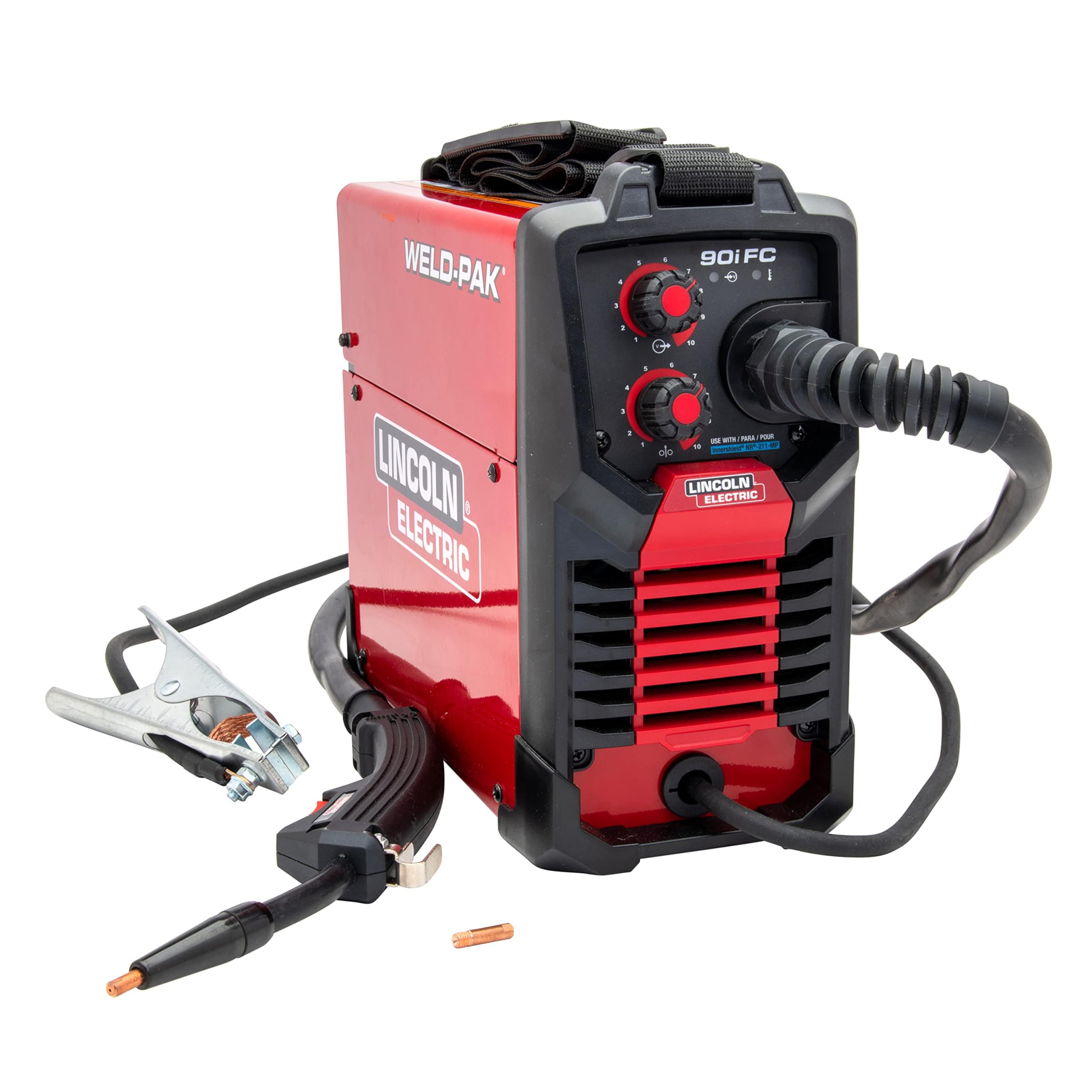
A plug-in 120V flux-core welder that needs no gas bottle, so it is one of the simplest ways to start welding mild steel at home.
YESWELDER 205A Multi-Process Welder
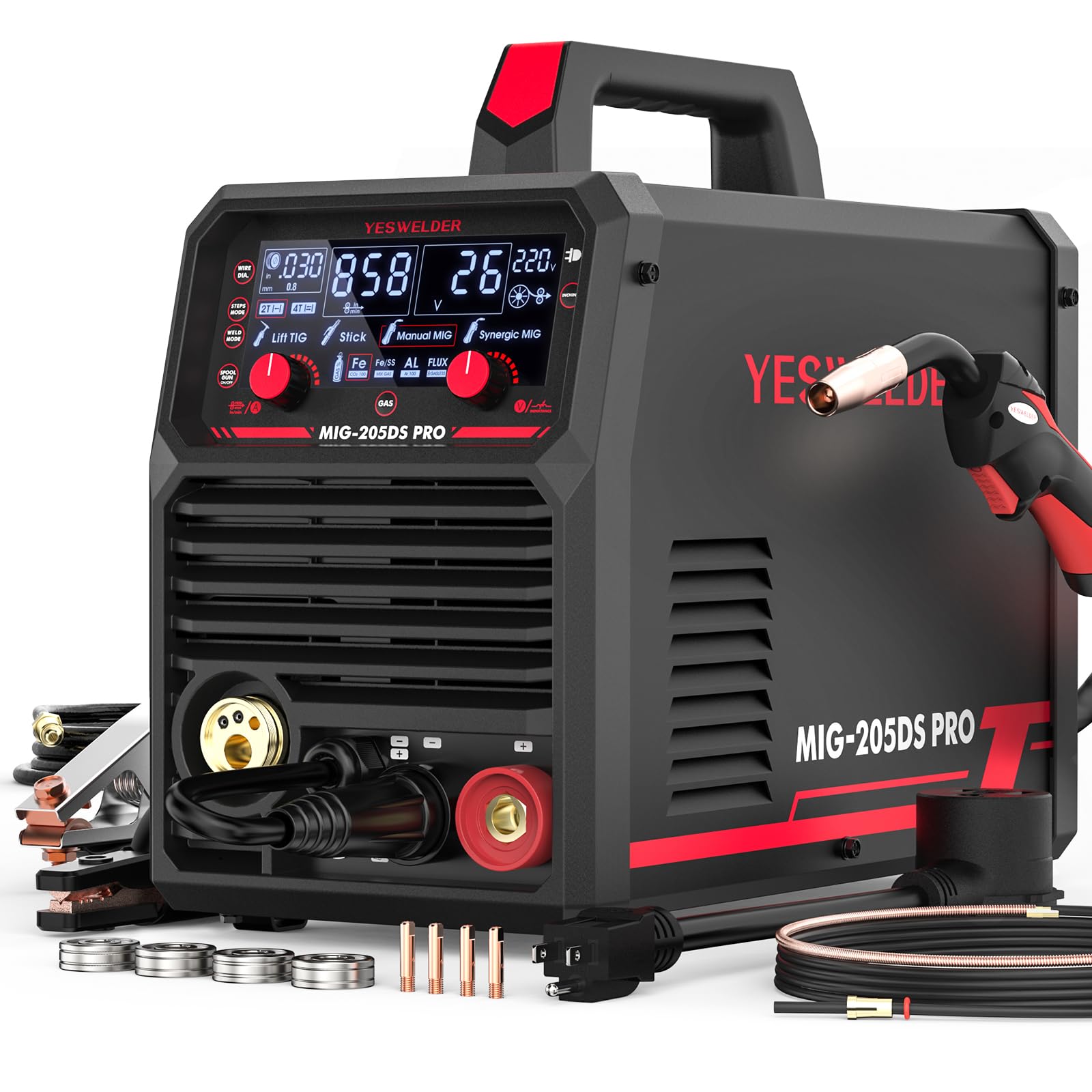
A budget multi-process machine that runs gas MIG, flux core, stick and lift TIG, so you can learn several processes on one welder.
YESWELDER LYG-M800H Auto-Darkening Helmet

A large-view, true-color auto-darkening helmet with a grind mode, a popular low-cost pick for beginners.
YESWELDER Leather Welding Gloves

Heat-resistant leather gloves for MIG, flux core and stick welding.
J&R Welding Magnet Set (4-Pack, 50 lb)

Arrow magnets that hold parts at 45°, 90° and 135° while you tack, like having an extra pair of hands.
DEWALT DWE402 4.5-Inch Angle Grinder

An 11-amp grinder for cleaning metal before welding and smoothing welds after.
For more options, see our welding tool list.
How to Weld: FAQs
Can I teach myself to weld?
Yes. Many hobbyists learn MIG or flux core at home with practice and online guides. A class speeds things up and is needed if you want to weld professionally. See how to become a welder.
What is the easiest type of welding for beginners?
Flux-core and MIG welding are the easiest because the machine feeds the wire for you and you only control the gun.
How long does it take to learn to weld?
Most beginners can lay decent MIG beads within a few days of practice. Becoming a skilled, certified welder usually takes months.
Can you weld with a 120V welder?
Yes. A 120V MIG or flux-core welder can weld steel up to about 1/8–3/16 in. in a single pass, which covers most home projects.
Do you need gas to weld?
Not always. Flux-core wire and stick rods make their own shielding, so no gas bottle is needed. Solid-wire MIG and TIG need shielding gas.