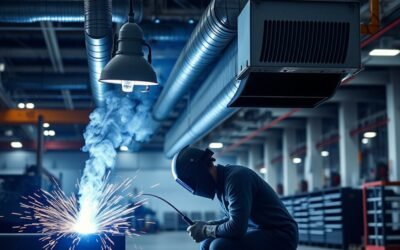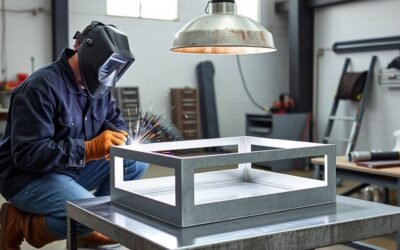
Welding safety depends on controlling electric shock, toxic fumes and gases, fire, burns, flying slag, noise, and harmful ultraviolet (UV) and infrared radiation. Safe welding starts with a hazard check before the arc is struck: identify the process and base metal, inspect equipment, clear or shield combustibles, provide effective ventilation, and wear task-appropriate personal protective equipment (PPE).
Quick Answer
Safe welding means controlling fumes, fire, electric shock, radiation, heat, noise, and flying metal before work begins. Use the correct helmet shade, safety glasses, flame-resistant clothing, gloves, suitable boots, effective ventilation, inspected equipment, and fire controls. Confined-space work, hazardous coatings, and respirator use require extra planning and training.
Key Takeaways
- Welding hazards include electric shock, fumes and gases, fire, heat, flying slag, ultraviolet and infrared radiation, and noise.
- Wear flame-resistant clothing, a welding helmet with the correct filter shade, safety glasses or goggles, heat-resistant welding gloves, and suitable safety footwear.
- Control fumes with process selection and ventilation first. Use a properly selected respirator when the hazard assessment shows one is required.
- Keep combustible materials away from hot work or shield them, maintain suitable fire-extinguishing equipment, and use a fire watch when required.
- Inspect cables, holders, work leads, PPE, ventilation, and the work area before welding. Stop if conditions change or a new hazard appears.
Note: This is general safety guidance, not a substitute for your employer’s procedures, the welding-machine manual, a job-specific risk assessment, or local regulations. Hot work, confined spaces, respiratory protection, and hazardous-metal exposure may require permits, air monitoring, medical evaluation, fit testing, or trained attendants.
What Are the Main Welding Hazards?
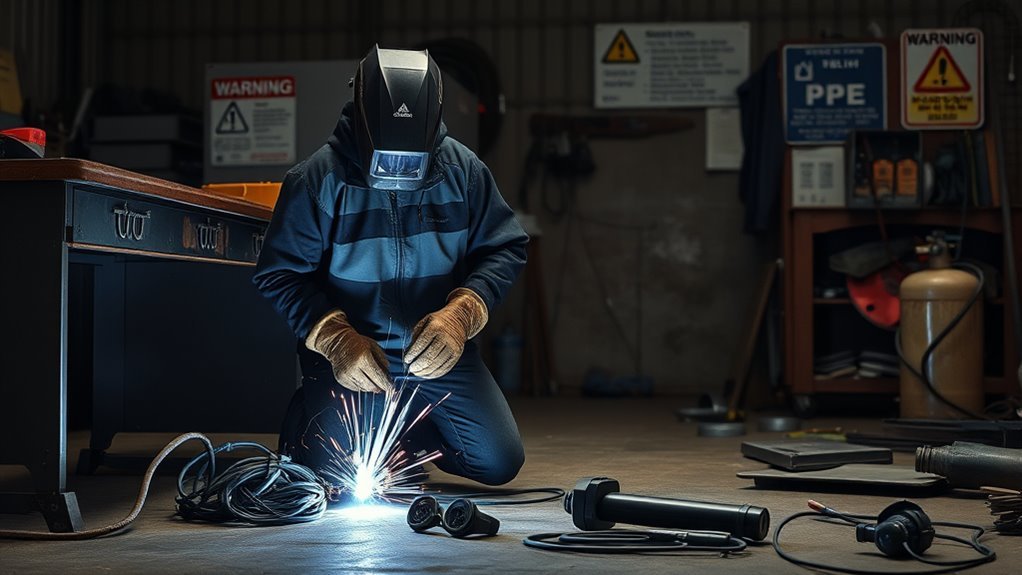
Welding presents several serious hazards that must be controlled to prevent injury, illness, and property damage.
Welding safety begins with recognizing electric shock, toxic fumes and gases, fire hazards, burns, eye and skin damage, noise, and flying metal before work begins. Electric shock can occur when a welder’s body becomes part of an electrical circuit, especially when equipment is damaged or conditions are wet or conductive. Machine frames must be grounded as required, work connections must be secure, and leads, holders, insulation, and connectors must be kept in good condition.
Welding fumes can contain manganese and other metals, while galvanized coatings can produce zinc oxide fume. The exact hazard changes with the electrode, wire, flux, base metal, coating, cleaning chemical, and welding process. The CDC/NIOSH welding-fume guidance notes that inhaled manganese is a concern because welding fume can affect the lungs and other body systems. Review labels and safety data sheets before welding coated, plated, painted, or unfamiliar metal.
Welding fume is not one substance. Its composition changes with the process, filler metal, base metal, and surface coating, so ventilation and respiratory controls must match the actual job.
Sparks, molten metal, and hot slag can travel beyond the immediate weld area and ignite combustible materials. The arc also creates intense heat and radiation that can cause severe burns and eye or skin injury. Flying slag, sharp edges, grinding particles, and noise add further hazards.
Effective PPE, including eye and face protection, is essential, but PPE is the last line of defense. Safer work also depends on eliminating hazards where possible, using engineering controls such as local exhaust ventilation and screens, and following safe work procedures.
Warning: Never weld, cut, or heat a used drum, tank, barrel, pipe, or other container until it has been properly cleaned, isolated, vented, and made safe for hot work. Residues can release toxic vapors or create an explosion hazard. Confined-space welding also requires specific ventilation, entry, attendant, and rescue controls.
What Welding Safety PPE Do You Need?
Proper welding PPE starts with flame-resistant clothing suitable for the process and the amount of sparks, spatter, and radiant heat. Heavy, tightly woven natural-fiber clothing may be appropriate for some work, while higher-exposure jobs need purpose-made flame-resistant garments or leather protection. Avoid exposed synthetic clothing that can melt onto skin. Keep collars closed, cover pockets, and wear pants without cuffs where sparks could collect.
A welding helmet with the correct filter shade protects the eyes and face from harmful radiation and flying debris. Wear safety glasses with side shields or suitable goggles under the helmet for primary impact protection, especially when chipping or grinding.
Heat-resistant welding gloves should cover the hands and wrists and suit the amperage and process. Heavy leather gloves are common for high-heat work, but glove type must still allow safe control of the torch or electrode holder.
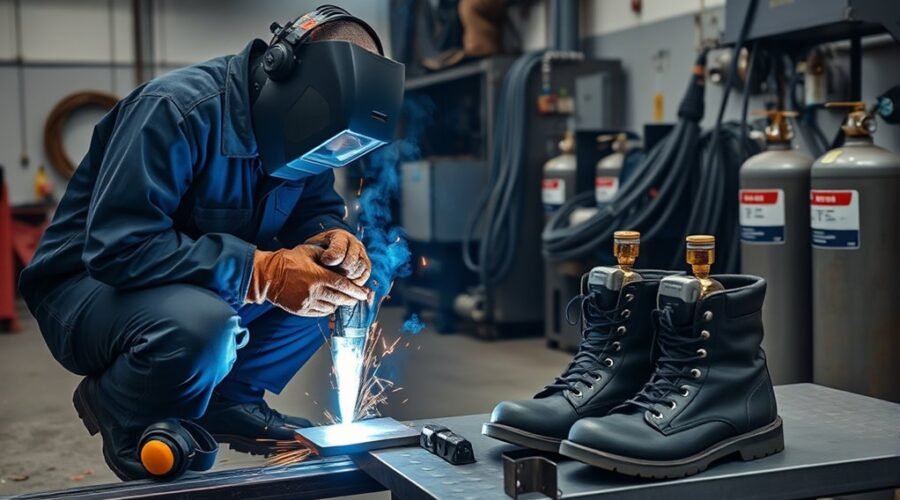
Wear leather safety footwear that covers the foot and ankle and resists sparks and hot metal. Toe protection is appropriate where a hazard assessment identifies a risk from falling or rolling objects. Keep trouser legs over the boots so molten metal cannot fall inside.
Hearing protection may be required around grinding, gouging, cutting, or noisy production work. A respirator may also be necessary, but it should not be chosen simply because fumes are visible. Under OSHA’s respiratory-protection standard, engineering controls are the primary approach where feasible, and required respirator use must be supported by proper selection, medical evaluation, fit testing, training, and a respiratory-protection program.
Pro Tip: Keep a dedicated PPE inspection routine. Check the helmet shell, lens and cover plates, safety glasses, gloves, clothing, boots, respirator parts, and hearing protection before starting. Replace damaged PPE instead of trying to work around defects.
How to Protect Your Eyes and Face?
Eye and face protection begins with a welding helmet or hand shield fitted with a filter shade that matches the welding or cutting operation. A blanket “shade 10 to 14” rule is not accurate. OSHA’s filter-lens table sets minimum shades by process, electrode size, and arc current.
| Operation | Example OSHA minimum shade |
|---|---|
| Shielded metal arc welding under 60 A | 7 |
| Shielded metal arc welding, 160–250 A | 10 |
| Gas metal arc or flux-cored arc welding, 60–500 A | 10 |
| Gas tungsten arc welding, 150–500 A | 10 |
| Carbon arc welding | 14 |
These are examples, not a complete shade chart. Use the applicable standard and the equipment manufacturer’s instructions for the exact operation. OSHA advises starting with a shade that is too dark to see the weld zone, then moving to a lighter shade without going below the minimum required shade.
A welding helmet should have an impact-resistant shell, a suitable filter lens, a protective cover plate, and intact retaining components. Wear safety glasses with side shields or suitable goggles under the helmet to protect against flying sparks, chipping debris, and hot slag. A face shield can add protection for grinding or cleanup, but it does not replace the required primary eye protection or welding helmet during arc welding.
Inspect and clean lenses regularly. Replace cracked, badly scratched, pitted, or damaged parts that reduce protection or visibility.
For Canadian workplaces, CCOHS guidance identifies Class 3 protectors under CSA Z94.3:20 as welding helmets and points to CSA W117.2:19 (R2023) for welding-safety guidance and shade selection.
- Identify the welding or cutting process and current range.
- Select a filter shade that meets the applicable minimum.
- Verify the cover plate, filter, retainer, shell, and headgear are intact.
- Wear safety glasses with side shields or appropriate goggles under the helmet.
- Replace damaged or excessively scratched eye and face protection immediately.
How to Prevent Fumes, Fire, and Electric Shock?
Effective control of welding fumes, fire, and electric shock begins with engineered safeguards and disciplined work practices. PPE supports these controls but should not be the only protection.
Control Welding Fumes at the Source
Use local exhaust ventilation as close to the fume source as practical without disturbing shielding gas or the weld. General ventilation may also be needed. OSHA’s welding standard requires ventilation to keep toxic fumes, gases, and dusts within applicable exposure limits and sets additional requirements for confined spaces and certain metals or coatings.
Do not use oxygen for ventilation. Keep your head out of the fume plume, position extraction so contaminated air moves away from the breathing zone, and review the base metal, filler, coating, and cleaning products before welding. Air monitoring may be needed when the exposure level is uncertain or when required by a substance-specific rule or workplace program.
Prevent Welding Fires
Remove movable fire hazards from the area or protect hazards that cannot be moved with suitable guards or shields. OSHA uses 35 feet (10.7 m) as an important hot-work threshold for combustible materials, floor openings, and fire-watch decisions. Suitable fire-extinguishing equipment must be ready for immediate use.
A trained fire watch is required in OSHA general-industry situations where more than a minor fire could develop, including when appreciable combustibles are within 35 feet, sparks could ignite combustibles farther away, or openings expose hidden combustible materials. Where OSHA’s fire-watch rule applies, the watch continues for at least 30 minutes after welding or cutting ends.
Reduce Electric-Shock Risk
Inspect welding leads, electrode holders, torch components, connectors, and insulation before use. Keep gloves and clothing dry, avoid standing in water, follow the machine manufacturer’s grounding instructions, and make secure work connections. Do not use damaged equipment. When work stops for a substantial period, remove electrodes from holders as applicable and disconnect or shut down equipment according to the process and workplace procedure.
Never dip a hot electrode holder in water. In wet, confined, or highly conductive locations, the shock risk is greater and additional controls may be required.
Handle Gas Cylinders Safely
Secure compressed-gas cylinders against tipping, keep them away from sparks, slag, and heat, protect valves during movement, and close cylinder valves when work is finished. Do not allow cylinders to become part of an electrical circuit. Oxygen and fuel-gas cylinders have additional storage and separation requirements that depend on the applicable workplace standard.
What Welding Shop Rules Prevent Injuries?
Safe welding shops rely on clear rules that reduce preventable injuries before work begins. A consistent standard keeps welding operations orderly, protects workers and bystanders, and makes hazards easier to spot.
Equipment must be stored so pathways stay free of cables, scrap, and other tripping hazards. PPE requires inspection before each use; gloves, helmets, flame-resistant clothing, safety glasses, hearing protection, and respirator components must remain serviceable.
- Inspect the work area, welding machine, leads, torch or holder, work connection, ventilation, and PPE before starting.
- Mark hot-work areas and use screens or barriers to protect nearby people from arc radiation and sparks.
- Remove or shield combustible materials and keep suitable fire-extinguishing equipment ready.
- Use a hot-work permit and fire watch when required by the workplace or applicable rule.
- Keep floors, aisles, exits, and access to fire equipment clear.
- Secure compressed-gas cylinders and protect them from heat, impact, and electrical contact.
- Read labels and safety data sheets for filler metals, coatings, cleaners, and other chemicals.
- Use ventilation and respiratory protection that match the actual fume hazard.
- Mark or otherwise warn others about hot metal after welding.
- Report damaged equipment, unsafe conditions, symptoms, and rule violations promptly so hazards can be corrected before work continues.
Good shop discipline is not about restricting work. It gives welders a repeatable way to control hazards, stop unsafe work, and complete the job without preventable exposure or injury.
How to Stay Safe During Long Welds
Long welding sessions require the same controls as shorter jobs, but fatigue, heat, repetitive posture, and prolonged fume exposure can increase risk. There is no single universal break schedule for every welding job. Break frequency should reflect heat stress, workload, PPE, ventilation, posture, and the worker’s condition.
| Practice | Purpose |
| Risk-based rest breaks | Reduce fatigue and heat strain; increase frequency as conditions become hotter or more demanding |
| Regular hydration and appropriate food | Support concentration and physical performance |
| Clutter-free workspace | Reduce trips and improve emergency access |
| Effective ventilation | Limit ongoing exposure to fumes and gases |
| Posture changes and ergonomic setup | Reduce strain from sustained or awkward positions |
PPE remains essential, but it is not enough alone. Keep the workspace orderly, place tools so reaching and twisting are minimized, and change posture when the job allows. Proper ventilation is especially important during long welds because total exposure can increase with time.
For hot work environments, OSHA emphasizes water, rest, and a cooler recovery area. The hotter the environment and the heavier the work, the more rest may be needed. Stop work and get help if a worker develops confusion, fainting, severe dizziness, unusual weakness, chest pain, or breathing difficulty.
Note: A fixed “5–10 minute break every hour” is not a universal welding-safety rule. Breaks should be based on heat stress, exertion, PPE, exposure conditions, and workplace procedures.
Frequently Asked Questions
What Are the Safety Rules for Welding Shops?
Core shop rules include inspecting equipment and PPE, providing effective ventilation, controlling fire hazards, keeping aisles clear, screening nearby workers from the arc, securing gas cylinders, following electrical-safety practices, reading hazard labels and safety data sheets, using permits and fire watches when required, maintaining first-aid and emergency procedures, and training workers for the hazards they face.
What Are the 7 Welding Hazards?
Seven common welding hazards are electric shock, welding fumes and gases, fire and explosion, UV/infrared radiation and arc-eye injury, burns from heat or molten metal, flying particles and sharp metal, and excessive noise. Other risks can include heat stress, awkward lifting or posture, compressed-gas hazards, and chemical exposure from coatings or cleaners.
What Are the 10 Welding Safety Rules?
Ten practical rules are: (1) inspect the work area and equipment, (2) wear the correct PPE, (3) use the right helmet shade, (4) control fumes with ventilation, (5) use respiratory protection when required, (6) remove or shield combustibles, (7) keep fire-extinguishing equipment ready, (8) keep equipment and clothing dry and electrically safe, (9) secure and handle gas cylinders correctly, and (10) stop work when conditions become unsafe or symptoms appear.
Why Do Welders Drink Milk After Welding?
Some welders drink milk because of a long-standing belief that it protects against welding fumes or metal fume fever. Evidence does not support milk as a protective measure. Milk enters the digestive system, while welding fume is inhaled into the respiratory system. The effective controls are reducing exposure, using ventilation, and wearing properly selected respiratory protection when required. Cancer Council Australia specifically identifies the milk claim as a myth.
Is Ventilation Enough Without a Respirator?
Sometimes, but not always. Ventilation is a primary control, and its effectiveness depends on the process, material, coating, work position, enclosure, and exposure level. A respirator is required when engineering controls cannot adequately control exposure or when a specific rule or hazard assessment requires one. Required respirator use also needs proper selection, fit testing, medical evaluation, and training.
Can You Weld Safely in a Confined Space?
Confined-space welding can be done only with the required controls. The space may need an entry permit, atmospheric testing, mechanical ventilation, an attendant, rescue planning, and specific respiratory protection. Welding machines and gas cylinders may need to remain outside the space. Never treat a tank, vessel, or other restricted area as ordinary shop welding.
Conclusion
Welding safety demands constant attention to hazards, PPE, ventilation, electrical condition, and fire prevention. The best protection comes from combining a pre-job hazard check with engineering controls, correct eye and face protection, suitable clothing and gloves, good housekeeping, and trained work practices. During long welds, keep monitoring heat, fatigue, fumes, and changing conditions. If the job cannot be made safe, stop and correct the hazard before welding continues.
Sources
- OSHA 29 CFR 1910.252 — Welding, Cutting and Brazing — fire prevention, ventilation, PPE, confined spaces, and hot-work controls.
- OSHA 29 CFR 1910.133 — Eye and Face Protection — filter-shade selection and eye/face protection requirements.
- OSHA 29 CFR 1910.134 — Respiratory Protection — engineering controls, respirator selection, fit testing, and program requirements.
- CDC/NIOSH — Welding Fumes and Manganese — welding-fume composition and manganese health concerns.
- CCOHS — Welding PPE and Clothing — PPE, welding helmet classes, lens components, and shade guidance.
- American Welding Society — Free Safety Resources — AWS/ANSI Z49.1:2021 and welding safety guidance.