
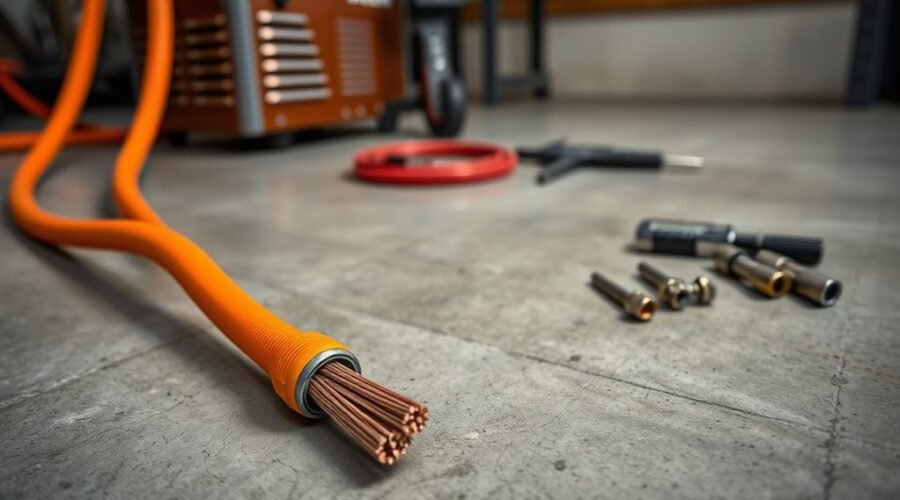
Choosing the right wire size for a welder extension cord depends on amperage, voltage, and cord length. A wire that is too small can cause voltage drop, weak arc performance, and overheating. For 120V units, 8 AWG is often a practical minimum at higher loads, while 240V welders commonly need 6 AWG for reliable service. The exact gauge changes with distance, and the margin can be narrower than expected.
Key Takeaways
- For 120V welders up to 50 amps, use at least 8 AWG wire for the extension cord.
- For 240V welders up to 50 amps, 6 AWG wire is typically recommended.
- A 30-amp welder cord often uses 10 AWG wire for short runs.
- Keep voltage drop near 3% to maintain arc stability and prevent overheating.
- Longer cords need thicker wire, so choose larger gauge as length and amperage increase.
What Size Wire Do You Need for a Welder Extension Cord?
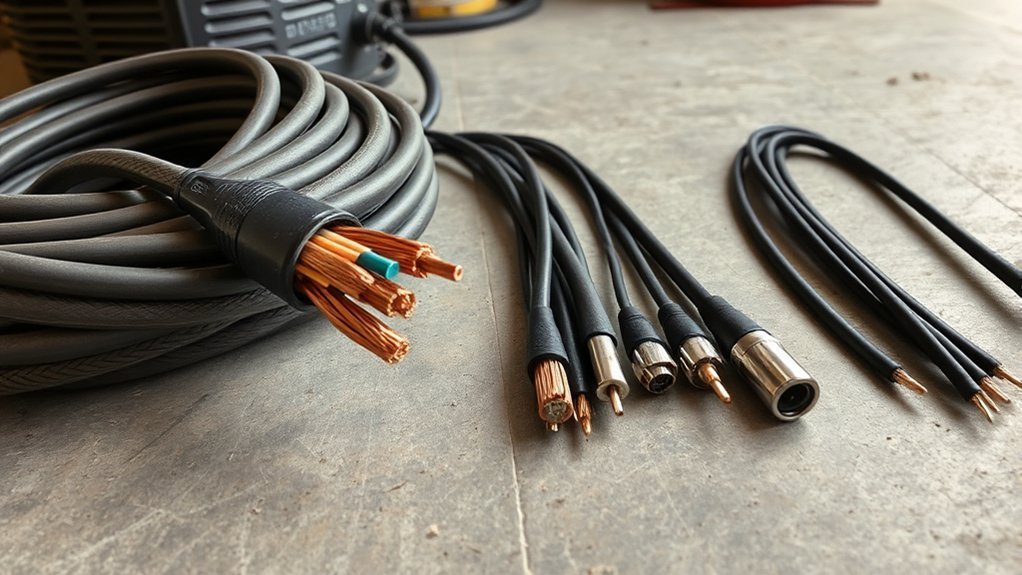
Choosing the correct wire size for a welder extension cord depends first on the welder’s voltage and amperage. For 120V units, a minimum 8 AWG wire is typically required; for 240V welders, 6 AWG is commonly the safer baseline.
A 50 amp circuit generally calls for 8 AWG, while a 30 amp circuit often uses 10 AWG, though distance may require heavier conductors. The wire gauge should be selected to keep voltage drop near 3%, preserving arc stability and reducing heat.
Undersized conductors can create hazardous conditions under the National Electrical Code, so minimum ratings must be respected. In practice, heavy-duty extension cords with thicker copper reduce resistance, improve efficiency, and support future upgrades.
A welder extension cord should thus be treated as load-bearing equipment, not a convenience item. Proper wire gauge supports safer power delivery, stronger performance, and greater electrical freedom. Additionally, selecting the right wire size is crucial for maintaining consistent arc quality, especially for high-demand welding tasks.
Welder Extension Cord Wire Gauge Chart by Amps
A wire gauge chart by amperage provides a practical way to match welder extension cord size to the actual load. For welder extension cords, the chart helps select AWG wire that limits voltage drop and supports safe operation. The NEC target is no more than 3% voltage drop, so amperage and distance must both be considered.
- Up to 30 amps: 10 AWG wire may be acceptable for some 240V units, provided the run is short and the load stays modest.
- Up to 50 amps at 120V: 8 AWG wire is the minimum recommended size to reduce heating and preserve performance.
- Up to 50 amps at 240V: 6 AWG wire is typically required to meet code expectations and keep the circuit efficient. Additionally, a proper chart gives users the power to size cords with confidence, protect equipment, and avoid unnecessary loss while considering the importance of shielding gas.
120V vs 240V Welder Extension Cord Sizing
For 120V welders, 8 AWG wire is typically specified to support currents up to 50 amps while limiting voltage drop.
For 240V welders, 6 AWG wire is generally required to handle higher amperage and reduce overheating risk.
In both cases, the selected cord gauge should keep voltage drop below 3% and align with NEC requirements. Additionally, ensuring the correct gauge selection is crucial for maintaining optimal performance and safety during welding tasks.
120V Cord Gauge
When sizing a 120V welder extension cord, 8 AWG copper wire is the practical minimum for loads up to 50 amps, as it helps limit voltage drop and reduces the risk of overheating during operation.
A proper cord gauge preserves output, protects the circuit, and supports steady arc performance. Wire size should be matched to amperage and cord length, with NEC temperature ratings and voltage-drop limits guiding selection.
A Heavy-Duty Extension Cord built with 8 AWG conductors offers disciplined power delivery and safer field use.
- Short runs reduce losses.
- Lower AWG means thicker wire.
- Match the cord to the welder’s load.
240V Cord Gauge
On 240V circuits, welder extension cord sizing shifts upward, with 6 AWG copper wire serving as the practical minimum for loads up to 50 amps while keeping voltage drop near the 3% threshold. This wire gauge supports stable output and reduces the risk of heat buildup, breaker trips, and wasted power.
For lighter duty welding, 8 AWG may be acceptable up to 40 amps, but only when the extension cord is short and the load is controlled. Longer runs demand thicker conductors because resistance rises with distance, increasing voltage drop.
The NEC also advises choosing a larger wire gauge when future load growth is likely. Proper sizing preserves efficiency, protects equipment, and gives the welder freedom to work without electrical constraint.
Why Does Cord Length Change Wire Gauge?
Cord length directly affects voltage drop in a welder extension cord, because longer runs add resistance and reduce the voltage delivered to the machine. Cords designed for welding must consequently use heavier gauge wire as distance grows, so voltage drops stay near the recommended 3% limit.
If the run is too long for the wire size, the welder sees less power, runs less efficiently, and the conductor warms unnecessarily. The National Electric Code reflects this practical reality: increased length calls for increased conductor size to limit loss and reduce fire risk.
In practice, a shorter cord may work with a smaller gauge, while a longer cord demands a thicker conductor.
- Short run: lower resistance, less voltage loss.
- Long run: higher resistance, more gauge wire required.
- Proper sizing: stable arc, safer operation, more freedom.
Additionally, understanding welding processes is crucial for selecting the right equipment and ensuring optimal performance.
What Is The Minimum Wire Size For A Welder Cord?
The minimum wire size for a welder cord is determined by amperage and voltage, with 8 AWG typically required for 120V welders up to 50 amps and 6 AWG for 240V units. Wire selection must also account for voltage drop, which should remain at or below 3% to preserve output and reduce heat buildup. Additionally, it’s essential to consider the importance of optical clarity when using a welder, as this can significantly enhance your overall welding experience. NEC Article 630 sets these minimums, and undersized conductors should be avoided; thicker wire may be used for additional margin.
Minimum Gauge By Amperage
Minimum wire size for a welder cord is determined primarily by amperage and supply voltage, since undersized conductors can overheat and cause excessive voltage drop.
For practical selection, the minimum gauge must match the machine’s amperage and voltage without compromise. An extension cable for 120V welders typically requires 8 AWG to safely carry up to 50 amps.
240V units usually need 6 AWG, though 10 AWG may suit some lower-load cases; 8 AWG is preferred for heavier demand.
Use conductors rated at least 60°C and keep the installation aligned with NEC Article 630.
- 120V, up to 50A: 8 AWG
- 240V, moderate load: 10 AWG possible
- 240V, higher load: 6 AWG preferred
Voltage Drop Limits
When selecting the minimum wire size for a welder cord, voltage drop must stay within roughly 3% to preserve arc performance and limit heat buildup.
For 120V units, 8 AWG is the practical minimum; for 240V welders, 6 AWG is generally required. High amperage loads punish undersized conductors, causing weaker output and excess temperature rise. A thicker wire size reduces voltage drop, improves delivery, and gives the operator more control over the arc.
NEC guidance also favors sizing for present demand and likely future load, not bare survival. On dedicated 50 amp circuits, 8 AWG is typically specified to maintain safety and prevent hazardous conditions.
Choosing margin over minimum supports reliable welding and frees the system from unnecessary strain.
Why Does 3% Voltage Drop Matter For Welders?
A 3% voltage drop is the practical limit commonly used for welders because anything beyond that can reduce available power enough to affect arc stability, increase heat in the system, and force the machine to draw harder than intended. For a 50-amp, 240-volt welder, that ceiling is 7.2 volts. The National Electric Code treats this standard as a safety and efficiency measure, not a suggestion.
- Stable arc behavior keeps weld quality consistent and preserves the integrity of each bead.
- Controlled welder’s amperage reduces stress on internal components and helps prevent overheating.
- Properly sized heavy-duty cords limit loss, supporting full output and reducing nuisance breaker trips.
- Many multi-process welders are designed to operate efficiently under these voltage conditions, ensuring optimal performance.
When voltage sags past the limit, the machine can underperform, run hotter, and shorten service life.
Respecting the 3% voltage drop guideline gives users practical control, cleaner results, and greater freedom from avoidable electrical drag.
Should You Buy A Pre-Made Or DIY Welder Cord?
Pre-made welder extension cords offer the simplest path to a safe, code-conscious setup because they are built for specific load ratings and typically include heavy-duty insulation, proper connectors, and safety features such as lighted plugs.
For many users, a pre-made choice reduces guesswork and supports compliance with electrical standards. This can be especially practical when portability, speed, and predictable performance matter.
Custom-built cords, however, provide freedom to match wire gauge and length to a particular shop layout or future machine upgrade. That flexibility can improve usability when the application is unusual.
Yet a DIY cord must be assembled with strict attention to code, conductor sizing, and termination quality. A poorly built cord risks voltage drop, overheating, and reduced service life.
In practice, the best option depends on the balance between convenience and control. Pre-made suits users who want immediate reliability; DIY suits those prepared to verify every specification. Additionally, choosing the correct wire gauge can significantly impact the performance of your welder setup.
Both can be heavy duty when selected correctly.
What Gauge Is Best For A 220V Welder Cord?
For a 220V welder cord, 6 AWG is generally the preferred minimum because it supports welders drawing up to 50 amps while helping limit voltage drop and heat buildup.
In practice, this thicker wire offers better performance for extension use, especially when the run is long or the welder demand is near the circuit limit.
An 8 AWG conductor can serve lighter 220V welder use, but it is usually better suited to loads up to 40 amps.
The National Electric Code, Article 630, also signals that minimum sizing should be viewed as a baseline, not a ceiling, because future equipment upgrades may require more capacity.
- 6 AWG: safer margin for heavier duty work
- 8 AWG: acceptable for lower amperage setups
- Lower AWG: less resistance, less heat, steadier output
A dedicated circuit paired with thicker wire supports disciplined, self-directed work and cleaner arc performance, which is crucial for maximizing performance in welding tasks.
What Safety Tips Should You Follow?
Safe welder extension cord use begins with matching the cord to the welder’s electrical demand and keeping the setup isolated on a dedicated circuit.
Minimum wire size should never be reduced; 8 AWG suits many 120V welders, while 6 AWG is appropriate for 240V units, helping prevent voltage drop and heat buildup. The extension cord should be cord rated for the full amperage and at least 60°C operating temperature.
Operators should inspect insulation, plugs, and connectors before each use, and replace any cord showing cuts, discoloration, or soft spots from overheating. Cords with integrated ground continuity monitoring and lighted plugs add practical visibility and fault detection.
Sharing a circuit can create overloads, trip breakers, and compromise control. A properly selected cord does more than comply with specifications; it preserves workspace independence and can keep you safe while welding under demanding conditions. Additionally, understanding the duty cycle of your welder can help in selecting the right extension cord for optimal performance.
Frequently Asked Questions
Can You Use a 12 Gauge Extension Cord for a Welder?
A 12 gauge extension cord is generally not suitable for a welder. Its capacity is often below the power requirements of most 220V units, and it can create voltage drop, excess heat, and reduced welding safety.
At longer cord length, the risk rises further. A 10 gauge cord may serve lighter 30 amp machines, but 8 gauge is commonly preferred for higher-demand welders to maintain reliable performance and compliance.
Can You Run a Welder on 10 Gauge Wire?
Like a bridge built for one lane, 10 gauge wire can run some welders, but only within limits. It suits many 240V units drawing about 30 amps, and may handle up to 40 amps in 220V use.
Welder power requirements, extension cord length, and wire insulation type must all be matched carefully. For long runs or higher loads, thicker wire frees performance from voltage drop and heat buildup.
Can You Run a MIG Welder on an Extension Cord?
A MIG welder can run on an extension cord only if the cord matches the unit’s power requirements, is heavy-duty, and is kept short enough to limit voltage drop.
For welder safety, 120V units typically need 8 AWG, while 240V units often require 6 AWG.
Extension cord length should be minimized, and the cord must be rated for at least 60°C.
Undersized wire risks overheating, poor arc performance, and failure.
Can You Run a 110 Welder on an Extension Cord?
Yes, a 110 welder can run on an extension cord if the cord matches the power requirements and supports welder safety.
A copper 8 AWG cord is usually preferred; 10 AWG may suit about 30 amps, though 8 AWG is safer for longer runs.
Extension cord length should stay under 100 feet to limit voltage drop.
The cord should be 60°C rated and code-compliant.
Conclusion
To summarize, selecting the correct welder extension cord wire size is essential for safety, performance, and arc stability. Match the gauge to the welder’s voltage, amperage, and cord length, with thicker wire required as distance and current rise. Undersized cords can act like a bottleneck, restricting power and increasing heat. Following proper gauge charts, voltage-drop limits, and safety practices helps guarantee reliable welding results and reduces the risk of cord failure.