
You need a TIG welder that matches the metals you work with, the time you spend welding, and the budget you set. Choosing the right AC/DC model matters because it expands the range of projects you can tackle, from delicate aluminum work to heavy steel repairs, while keeping operating costs and setup time under control.
Understanding the tradeoffs between power, duty cycle, portability and accessories helps you get a machine that pays back its cost in capability and time saved.
Top Picks
|
Category |
Product |
Score |
|---|---|---|
|
🏆 Best Powerhouse |
93/100 |
|
|
💰 Best Value |
88/100 |
|
|
🎯 Best Pro Lightweight |
91/100 |
|
|
🚀 Most Portable |
84/100 |
Selection Criteria
When you shop for AC/DC TIG welders you should focus on the core capabilities that affect real-world performance. First, power range and waveform control determine what thicknesses and materials you can weld cleanly, so you want machines with stable output, pulse options and good arc control. Second, duty cycle and cooling affect how long you can weld without pauses; machines with higher duty cycles give you more consistent workflow. Third, practical considerations like input voltage flexibility, included torch and foot pedal, ease of setup and serviceability shape how usable the machine will be in your shop.
Finally, value matters: you should weigh build quality, warranty and accessory quality against price so the welder delivers reliable performance over years rather than a low initial cost that forces early replacement.
Everlast PowerTIG

You get a powerful, shop-grade inverter that lets you move between TIG and stick welding without swapping machines. It supports AC and DC for aluminum and steel, offers pulse control for cleaner beads, and includes both air- and water-cooled torch options plus a foot pedal and regulator so you can start welding right away. For daily shop work it stands up to longer runs, and for occasional precision jobs the arc control and pedal make fine-tuning easy.
If you want a single machine that covers hobby, restoration and light industrial tasks, this one balances capability and professional features without feeling overly complicated.
What People Say
You’ll notice most users appreciate the PowerTIG for its value and performance compared with much more expensive machines. Common praise centers on the smooth arc, reliable dual-voltage operation and the included torch, pedal and regulator package.
A smaller number of comments point out fit-and-finish items like handle hardware and torch hookups as areas that can be adjusted easily.
Overall Sentiment: Positive

Long-Term Savings
Because the unit covers multiple welding processes and includes quality accessories, you avoid buying separate machines or replacing low-end gear quickly, which lowers your total cost of ownership over time.
ROI
You recoup the investment through faster job completion, fewer tool purchases, and the ability to take on thicker or more varied materials without outsourcing work.
Situational Benefits
|
Situation |
How It Helps |
|---|---|
|
Home Shop Projects |
Provides a versatile setup so you can weld aluminum wheels one day and steel repairs the next with the same machine. |
|
Small Fabrication Shop |
High output and solid duty cycle let you keep production moving with fewer stalls for cool-down. |
|
Mobile or Job Site Work |
Dual-voltage support and included adapters make it easier to adapt to different power sources on site. |
Ease Of Use
|
Feature |
Ease Level |
|---|---|
|
Setup |
Moderate |
|
Control Panel |
Moderate |
|
Torch Options |
Moderate |
|
Foot Pedal |
Easy |
|
Voltage Switching |
Easy |
Versatility
High. AC/DC, pulse and stick capability let you tackle aluminum, stainless and mild steel across a wide thickness range, making it a true multi-purpose machine for varied workloads.
Safety Features
Built with a metal chassis, temperature and duty-cycle protection, and UL-listed energy specs. The stable pure-sine output and standard gas flow regulator also help reduce splatter and improve control for safer welds.
Durability
Solid. The 85-pound build feels heavy-duty and components are designed for shop use.
Some buyers tweak handles and torch fittings, but overall the machine holds up well under frequent use.
Problem Solving
Strong. Pulse and waveform control smooths difficult arcs and reduces burn-through on thin sections, while stick functionality solves setup issues when shielding gas isn’t available.
Key Benefits
- Dual-voltage AC/DC capability for aluminum and steel
- Pro-level accessories included for immediate use
- Stable pure-sine output with pulse for clean arcs
- Robust build and duty cycle suited to shop work
Rating: 4.6 (total: 57+)
AHP AlphaTIG

You get a versatile, user-friendly TIG that covers most hobby and small-shop needs without a steep learning curve. It runs AC and DC for aluminum and steel, offers pulse for cleaner beads, and ships with a torch, foot pedal and regulator so you can get welding quickly. For daily projects it handles longer runs thanks to a solid duty cycle, and for occasional precision work the pedal and pulse control let you dial in fine heat control. If you want a dependable machine that balances capability and straightforward operation, this is a practical choice.
What People Say
Customers frequently highlight the AlphaTIG’s dependable duty cycle and how the included torch and foot pedal make setup painless. Users often praise its performance on aluminum when using AC and the usefulness of pulse settings.
A few notes mention the flow meter and documentation could be clearer, but most buyers find those easy to work around.
Overall Sentiment: Positive

Long-Term Savings
Because it combines TIG and stick modes and ships with quality accessories, you avoid buying extra tools early on. The durable components and warranty also reduce the chance of unexpected replacement costs down the road.
ROI
You benefit by taking on a wider range of jobs yourself, improving turnaround and reducing outsourcing. The reliable duty cycle and included consumable kit speed setup and keep downtime low, letting you finish more projects with the same gear.
Situational Benefits
|
Situation |
How It Helps |
|---|---|
|
Beginner TIG Users |
Simple controls, clear pedal response and included consumables help you learn without hunting for parts. |
|
Home Fabrication |
Dual-voltage support and a solid duty cycle let you tackle repairs and small builds without frequent cooldowns. |
|
Small Shop Production |
Pulse and consistent output reduce rework on aluminum components, keeping throughput steady. |
Ease Of Use
|
Feature |
Ease Level |
|---|---|
|
Setup |
Easy |
|
Control Panel |
Moderate |
|
Torch Handling |
Moderate |
|
Foot Pedal |
Easy |
Versatility
High. With AC/DC, pulse and stick modes plus dual-voltage compatibility, you can work on aluminum, stainless and mild steel across a wide range of thicknesses without needing multiple machines.
Safety Features
Includes thermal and duty-cycle protections, a grounded metal chassis and standard regulator for consistent gas flow, all of which help prevent overheating and unstable arcs during prolonged use.
Durability
Built to handle frequent use in a garage or small shop, the AlphaTIG’s components and construction feel robust. Some users note cosmetic or gauge accuracy issues, but those do not affect core performance.
Problem Solving
Strong. Pulse and waveform control help manage heat on thin sections, and stick mode provides a fallback when shielding gas isn’t available, so you can adapt to different jobsite limitations.
Key Benefits
- Strong duty cycle suitable for extended use
- Pulse capability for cleaner aluminum welds
- Complete accessory kit included for immediate setup
- Dual-voltage flexibility for varied power sources
Rating: 4.6 (total: 604+)
Miller Maxstar
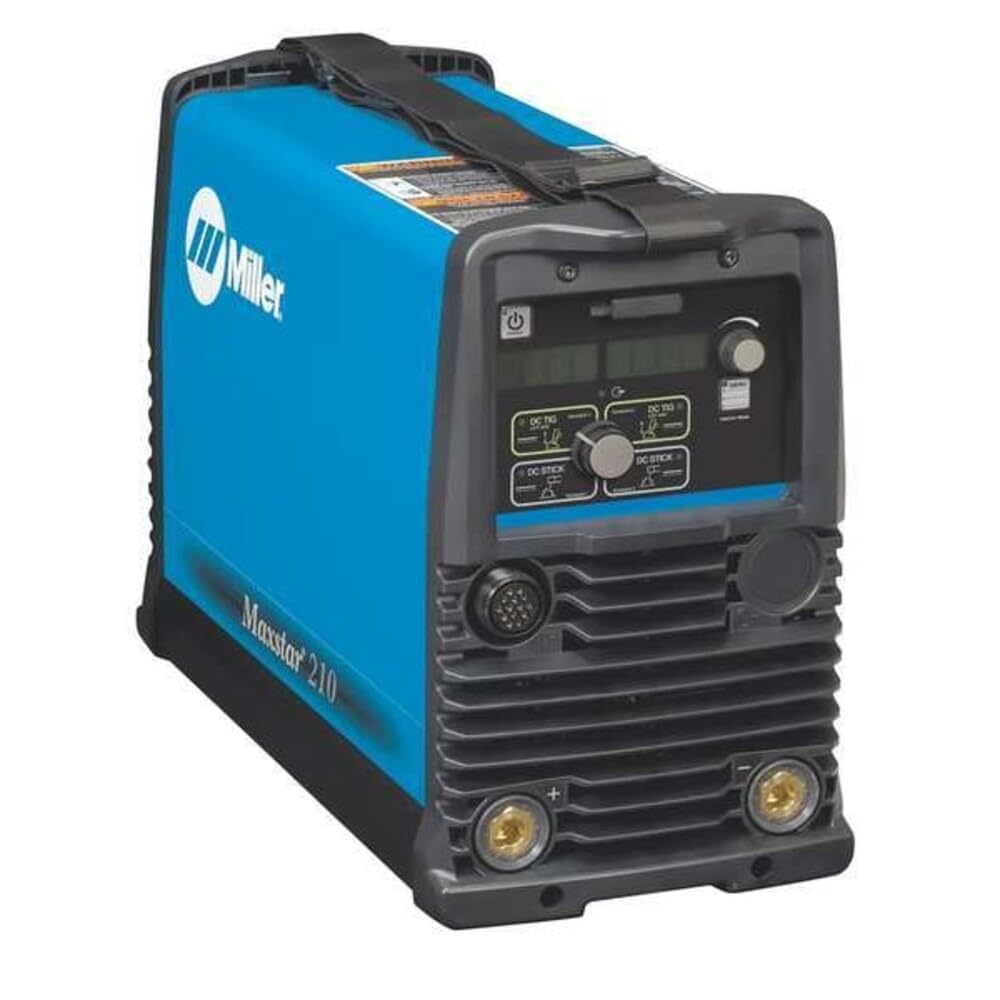
You get a compact, professional-grade welder that’s built to move with you. The Maxstar delivers consistent DC output and strong arc control, which makes it a go-to for steel and stainless work where precision matters.
It’s light enough to carry between job sites but still engineered for steady shop use. If your work is mainly steel and stainless and you want something reliable and portable, this is a practical, no-nonsense choice.
What People Say
Owners regularly point to the Maxstar’s dependable arc and the convenience of a lightweight package that still performs like a shop unit. Professionals appreciate how predictable the output is for thin stainless and mild steel work. A few buyers mention the machine suits experienced users best, since accessory choices and controls are geared toward pros.
Overall Sentiment: Positive

Long-Term Savings
A durable, serviceable unit reduces downtime and keeps you from replacing equipment frequently; consistent weld quality also cuts rework, saving both time and materials over the long run.
ROI
You recover costs by finishing jobs faster, avoiding outsourced welding for most steel and stainless tasks, and relying on a machine that retains performance over years of use.
Situational Benefits
|
Situation |
How It Helps |
|---|---|
|
Mobile Technicians |
Lightweight build and wide input range make it easy to move between job sites and hook up to varied power sources. |
|
Shop Repairs |
Stable DC output and fine control reduce rework on repair panels and stainless fixtures. |
|
Fabrication Work |
Consistent arc control helps you lay clean, repeatable beads on thin to medium steel parts. |
Ease Of Use
|
Feature |
Ease Level |
|---|---|
|
Setup |
Moderate |
|
Control Panel |
Moderate |
|
Portability |
Easy |
|
Maintenance |
Moderate |
Versatility
High for DC applications. Excellent for mild steel and stainless tasks, with stick capability for non-gas situations.
Not suitable for AC aluminum TIG without additional equipment.
Safety Features
Includes thermal and duty-cycle protection and a robust metal chassis. Standard grounding and proper gas/regulator setup are recommended for safe, consistent operation.
Durability
Built to withstand job-site and shop use, the Maxstar features quality components and a sturdy enclosure that hold up under frequent transport and heavy use.
Problem Solving
Excellent at controlling arc instability and reducing burn-through on thin steel. Stick mode provides a useful fallback when shielding gas or ideal conditions aren’t available, though aluminum AC needs a different tool.
Key Benefits
- Compact, transportable professional design
- Wide input voltage range for flexible power sources
- Stable DC arc with precise control for thin metals
- Proven Miller build quality and reliability
Rating: 5 (total: 2+)
CANAWELD 201

You get a compact, feature-rich TIG that punches above its weight. It runs AC for aluminum and DC for steel, includes pulse for cleaner beads and high-frequency starting for tighter arc control, and its small footprint makes it easy to move between the shop and a job site.
For everyday repairs and hobby fabrication you’ll appreciate the build quality and portability. If you want a solid, well-supported Canadian option that handles a wide range of parts, this is a practical pick.
What People Say
Most owners praise the unit’s build quality, portability and the usefulness of pulse when welding aluminum. Customers also note that the included accessories and overall usability stand out for the size of the machine. Common negatives are the lack of a foot pedal in the base package, a noisy cooling fan, and occasional reports of service availability depending on location.
Overall Sentiment: Positive

Long-Term Savings
Durable construction and a comprehensive feature set reduce the need to buy separate machines or replace gear often, and the 3-year warranty helps protect your investment against early failures.
ROI
You recoup value by taking on a broader range of jobs yourself, cutting outsourcing, and finishing work faster thanks to stable output and pulse control that reduce rework.
Situational Benefits
|
Situation |
How It Helps |
|---|---|
|
Mobile Work |
Compact size and selectable 120/240V make it easier to adapt to different power at job sites. |
|
Aluminum Repairs |
AC mode plus pulse provides better heat control and cleaner beads on thin aluminum panels. |
|
Small Fabrication |
Pulse and stable arc reduce burn-through and improve consistency during repetitive welds. |
Ease Of Use
|
Feature |
Ease Level |
|---|---|
|
Setup |
Easy |
|
Controls |
Moderate |
|
Portability |
Easy |
|
Learning Curve |
Moderate |
Versatility
High. With AC/DC, pulse and stick capability it handles aluminum, stainless and mild steel across a broad thickness range, making it useful for hobbyists and small shops alike.
Safety Features
Built-in thermal and duty-cycle protection, robust metal casing and consistent gas flow control reduce the risk of overheating and unstable arcs during longer runs.
Durability
Well-constructed for regular use and supported by a three-year warranty. The compact chassis and quality components are designed to withstand transport and frequent operation.
Problem Solving
Strong. Pulse and high-frequency start help you control heat on thin materials and get reliable arc starts, while stick capability offers a fallback when gas or ideal conditions aren’t available.
Key Benefits
- AC/DC with pulse for aluminum and steel
- Compact and highly portable for shop or site
- Solid build quality with a 3-year warranty
- High-frequency start for consistent arc initiation
Rating: 4.3 (total: 27+)
FAQ
AC or DC: Which Should You Choose?
You should pick based on the metals you weld: AC is what you want for aluminum because it cleans the oxide layer, while DC is better for mild steel and stainless for a stable penetrating arc. Pulse and waveform controls help you manage heat on thin sections, so a machine with pulse or adjustable waveforms gives you more control across materials.
If you switch between materials often, a dual‑voltage AC/DC unit is the most flexible choice.
What Should You Look For When Buying?
Focus on practical specs that matter in everyday use: Duty cycle for how long you can weld continuously, reliable arc control and pulse options for cleaner beads, and input voltage flexibility so you can adapt to shop or site power. Check what accessories are included—torch type, foot pedal and regulator can save setup time—and confirm warranty and local service options so repairs don’t turn into long delays.
Portability, build quality and whether the unit supports both TIG and stick modes are other useful deciding factors.
How Can You Improve Weld Consistency?
Consistency starts with setup: clean joint surfaces, correct gas flow and a well‑prepared tungsten. Use the foot pedal or pulse settings to control heat instead of relying on travel speed alone, and match amperage to material thickness rather than guessing. Keep consumables in good condition, watch duty cycle to avoid overheating, and troubleshoot by changing cup sizes or gas flow if you see porosity or unstable arcs.
Customer Preferences
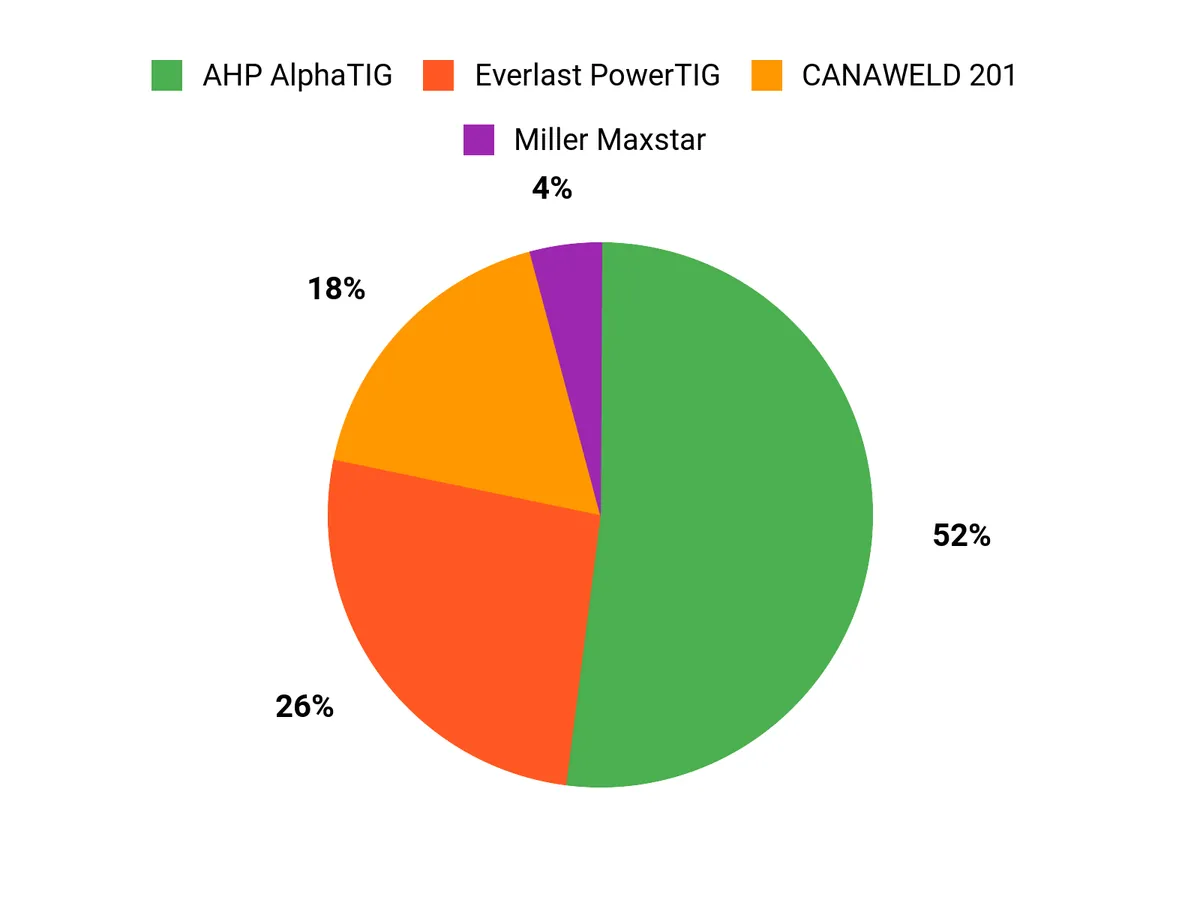
When you compare the Everlast PowerTIG, AHP AlphaTIG and Miller Maxstar you tend to prioritize a mix of capability and practicality: power range and AC/DC versatility for different materials, duty cycle and accessory quality for continuous shop work, and portability plus proven reliability for mobile or professional use. If you value the broadest feature set and high output you lean toward the Everlast, if steady duty cycle and ready-to-go accessories matter most you favor the AHP, and if compact, time-tested performance and ease of transport are priorities you choose the Miller.
Wrapping Up
You want a TIG welder that fits the metals you work, the frequency of your projects and the level of control you need. If you prioritize raw output and a full feature set for shop or light industrial work the Everlast PowerTIG delivers power, dual-voltage flexibility and pro-level accessories.
If you need maximum capability for the money and a strong duty cycle for hobbyists and small shops the AHP AlphaTIG is a dependable value pick. If portability, proven reliability and refined arc performance are your top priorities the Miller Maxstar is the professional lightweight to consider. If compact size, straightforward controls and strong build quality in a budget-friendly package are most important the CANAWELD 201 earns the nod. Use the selection criteria above to match one of these models to your workload so you buy a welder that grows with your skills and saves you time on real projects.
| Product Name | Image | Rating | Power Output | Weight | Dimensions |
|---|---|---|---|---|---|
| Everlast PowerTIG 255EXT |
|
4.6/5 (57 reviews) | Output Power: 255 Watts; Peak Output: 18,000 Watts | 85 pounds | 22″L x 9″W x 17″H |
| AHP AlphaTIG 203Xi |
|
4.6/5 (604 reviews) | Input Amperage: 110/220V; Power Source: AC/DC | 69 pounds | 19″ x 23″ x 12″ |
| Miller Electric TIG Welder Maxstar 210 |
|
5/5 (N/A reviews) | Input Voltage: 120/480VAC; Output Range: 1-210A | 38 pounds | 23.7″ x 16.7″ x 12.7″ |
| CANAWELD TIG AC DC 201 Pulse D |
|
4.3/5 (27 reviews) | Output Range: 120/240 Volts; Metal Thickness: 0.002″ to 1/4″ | 29 pounds | 25.59″ x 17.8″ x 15.91″ |
This Roundup is reader-supported. When you click through links we may earn a referral commission on qualifying purchases.