
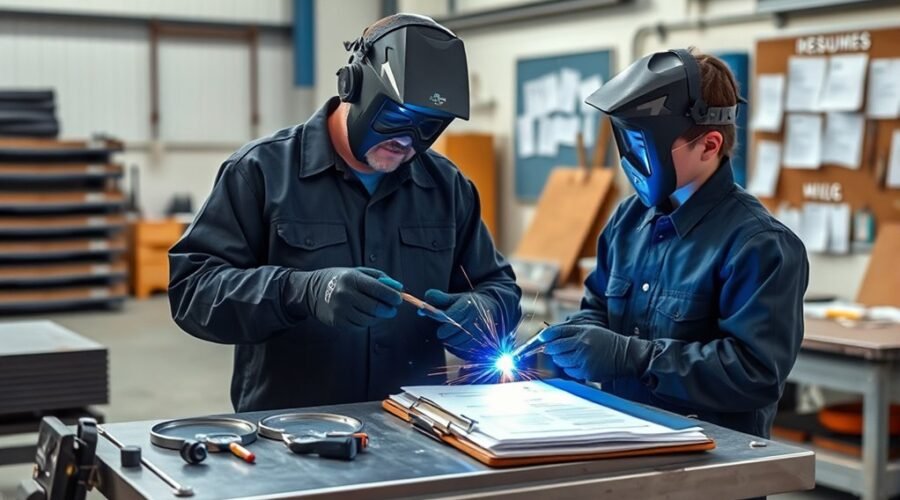
Getting a welding job often comes down to more than showing up with a torch and a résumé. Employers usually look for solid skills, the right certifications, and a steady hand under test conditions. They also notice how a candidate presents themselves, handles pressure, and prepares for the shop. A few smart steps can make the difference between a quick rejection and a call back. The details that matter most are not always the obvious ones.
Key Takeaways
- Earn relevant welding certifications like AWS or ASME to prove training and improve employability.
- Practice MIG, TIG, and stick welding, especially bead control and common positions like 6G.
- Understand safety practices, PPE use, and basic inspection methods to show professionalism and readiness.
- Tailor your resume to the job by highlighting specific processes, materials, specialized training, and problem-solving skills.
- Prepare for interviews and tests by researching the company, dressing properly, staying calm, and following instructions carefully.
Know What Employers Want
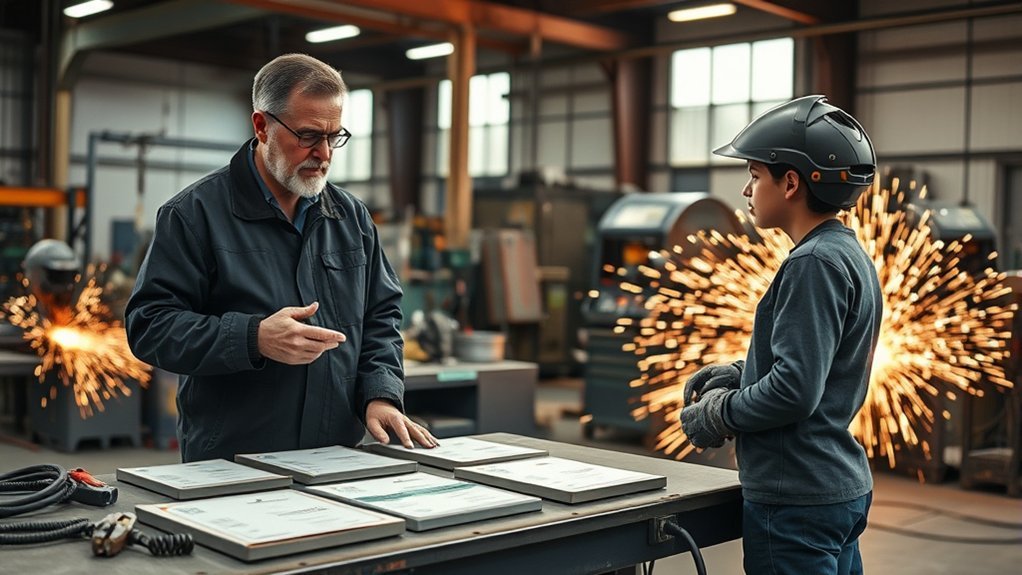
Employers typically want welders who bring both proof of training and practical skill. Certifications such as AWS or ASME can signal recognized competence, while hands-on ability in MIG, TIG, and stick welding shows readiness for the shop floor.
Hiring managers often value candidates who can stay calm during a welding test, follow instructions, and deliver clean work under pressure. Safety matters just as much: knowledge of personal protective equipment and strict attention to safe practices help protect the crew and the job.
Employers also notice clear communication, problem-solving, and the ability to work with others, because many projects depend on shared effort. Familiarity with the company’s materials, tools, and welding processes can further strengthen an application, showing that the candidate is prepared to contribute immediately and move toward stable, dignified work. Additionally, demonstrating versatility in welding techniques can make a candidate more appealing, as it indicates adaptability and a willingness to learn.
Build the Welding Skills Employers Test For
A strong welding job candidate prepares for the exact skills hiring teams are likely to test, especially MIG, TIG, and stick welding. Employers judge the quality, consistency, and control of each bead, so practice should focus on clean starts, steady travel, and sound fusion.
It helps to study common positions, including 6G, because these setups reveal whether a welder can work at angles, under pressure, and within wall-thickness or pipe-size limits. Anyone hoping to take a welding test should also learn the basics of visual inspection and fusion tests, since those checks often decide whether a person moves forward.
Familiarity with ASME and AWS standards can strengthen confidence and show respect for safety and quality. Additionally, understanding stick welders under 500 can aid in selecting the right equipment for practice and skill development. The path to a welding job is built through repetition, discipline, and hands-on skill, until each kind of welding can be performed with calm precision and strong, reliable results.
Tailor Your Experience to the Job
Sure! Here’s your content with the requested addition:
—
Once the welding test skills are in place, the next step is to present experience in a way that matches the job itself. A strong application helps employers see fit quickly.
| Focus | Example |
|---|---|
| welding certifications | ASME, AWS |
| welding processes | MIG, TIG, stick |
| Materials | stainless steel, pipe |
| Training | apprenticeship, specialty courses |
| Strengths | safety, problem solving |
To tailor your resume, highlight the qualifications the posting values most. If the role calls for specific welding processes, place those first. Add projects that show work on the same materials and techniques. Specialized training should be listed where it supports the employer’s needs. Clear examples of troubleshooting and safe practices show readiness to work with discipline and independence. This approach lets a worker present skill without distortion, and claim opportunity on solid ground. Additionally, showcasing experience with MIG welders can significantly enhance your appeal to potential employers.
—
Feel free to ask if you need any more modifications!
Know Which Welding Test to Expect
Welding tests can differ widely from one job to another, so a candidate should identify the required method before walking into an interview. Many welding tests focus on MIG, TIG, or stick work, and employers may judge not only speed but also bead quality and consistency.
A common challenge is the 6G welding position, where the pipe sits at a 45-degree angle and calls for control in both vertical and horizontal movement. Some shops also inspect welds on pipe sizes like 2” schedule 10, checking for clean fusion and sound appearance.
Knowing details such as schedule 5 or 0.049 wall thickness can help a candidate arrive prepared and calm. A good welding jacket supports safe practice during test conditions and reflects serious intent. Additionally, being familiar with TIG welding performance can enhance a candidate’s confidence during the test.
With clear expectations, the worker can enter the process with confidence, protect their own path, and meet the standard with greater freedom and less guesswork.
Practice the Right Welding Process
Focused practice starts with matching the process to the job, whether that means MIG, TIG, or stick welding, so the candidate can build real confidence in the exact technique being tested. Choosing the correct welding process reduces wasted effort and sharpens each practice session toward the needed standard.
Match the welding process to the job first, so every practice session builds real, test-ready confidence.
In the 6G welding position, the pipe sits at a 45-degree angle, so steady hand control and body positioning deserve repeated drills. Skill grows further by working on several pipe diameters, including 1/2”, 3/8”, and 1/4”, because versatility matters in real shop conditions. Additionally, practicing with a best stick welder can enhance arc control and ensure a stable performance throughout various tasks.
Fusion welds without filler material should also be practiced, since clean visual tests often demand that restraint. Equipment should be checked and maintained before every session to keep performance stable and avoid preventable failures.
- Match the process first
- Drill 6G setups
- Rotate pipe sizes
- Practice fusion welds
- Inspect gear regularly
Get Ready for the Interview
Getting ready for a welding interview starts with careful preparation: the applicant should study the company, review the required process, and practice clear answers about training, skills, and certifications.
Safety and presentation also matter, so wearing proper work attire and showing knowledge of safe welding practices can make a strong impression.
If a hands-on test is expected, the applicant should sharpen the specific welding skills needed and be ready to demonstrate them with confidence. Familiarity with best welding helmets under 200 can also enhance the applicant’s readiness and demonstrate a commitment to quality in their work.
Interview Prep Essentials
Preparation starts with understanding what the employer actually needs. For interview prep essentials, the candidate should study the required welding techniques, such as MIG or TIG, and match training to the role.
Clear, honest answers about welding techniques, experience, and safety practices help show competence and responsibility. Learning the company’s mission makes it easier to connect personal skills with its goals and to speak with purpose.
Practical readiness matters too; bringing gloves and a welding helmet shows seriousness if a hands-on test appears. Appropriate work attire signals respect for the job and readiness for labor.
- Research the position
- Review training and experience
- Practice interview answers
- Bring protective gear
- Dress for workshop tasks
Safety And Presentation
Safety and presentation should be treated as part of interview readiness, not an afterthought. A candidate can show respect for the trade by arriving in clean, practical work attire, such as long-sleeve shirts and work pants, that allows movement and signals readiness for hands-on tasks.
Personal protective equipment (PPE) like gloves, helmets, and jackets should be familiar, clean, and in good condition. Preparing for common interview questions about training, skills, and safety practices helps the candidate answer with calm confidence.
Good posture, eye contact, and active listening communicate energy and genuine interest. These habits do not just impress; they also reflect discipline, awareness, and the kind of self-possession that supports freedom on the job and in the shop.
Company And Test Research
Before the interview, a candidate benefits from researching the company’s welding processes, whether they rely on MIG, TIG, stick, or another technique, so experience can be matched to what the shop actually needs.
- Study the company mission and values.
- Learn which materials and thicknesses they use.
- Practice the welding tests, including 6G.
- Match skills to the company’s core work.
- Prepare questions for the interview.
This company research helps a welder speak with confidence, show respect for the shop’s goals, and avoid guesswork.
Knowing the expected tests allows focused practice on position, fit-up, and consistency. Reviewing the metals and project demands makes preparation practical, not random.
During the interview, informed questions can reveal how the crew works and whether the role supports skill growth and personal freedom.
Dress for Safety and Hands-On Testing
For welding tests, practical protective work clothing matters, so long-sleeve shirts and durable work pants such as jeans help guard against sparks and heat while allowing easy movement.
Clean, well-kept PPE—especially a helmet, gloves, and jacket—should be ready for the specific task, since safety and fit both affect performance.
Job-ready boots with steel toes and solid support add protection and comfort, while formal attire should be left aside in favor of gear suited to hands-on work. Additionally, wearing durable welding jackets can significantly enhance your safety by providing protection against sparks and heat during the welding process.
Protective Work Clothing
Proper work clothing helps a welding candidate look prepared and stay protected during hands-on testing. Clothing should support freedom of movement while still covering arms and legs to reduce burn risk.
Long-sleeve shirts and pants in durable materials help shield against sparks and heat, while cotton or flame-resistant fabrics align with safety standards. Avoid synthetic fibers that may ignite quickly.
High-quality work boots with steel toes add comfort and protection from heavy objects. Protective gear should be clean, intact, and ready for use, showing respect for the trade and the task.
- Long sleeves
- Durable pants
- Cotton or flame-resistant fabric
- Steel-toe work boots
- Clean, maintained protective gear
PPE For Welding Tests
When a welding test includes hands-on work, the candidate should arrive fully protected with the right PPE. A high-quality welding helmet meeting ANSI Z87.1 standards shields eyes and face from sparks and UV radiation.
Flame-resistant gloves and long-sleeve work shirts guard arms and hands from heat, helping the welder move with confidence. Durable cotton pants reduce fire risk and keep motion easy during the test.
Well-kept personal protective equipment matters as much as fit; clean gear without combustible material supports safe performance and shows professional readiness. Proper PPE can help a worker focus on technique, not worry.
Prepared candidates present themselves as capable, self-directed, and ready to work under real shop conditions.
Safe, Job-Ready Boots
Boots are the final piece of PPE that can make a welding test safer and more comfortable. The best choice meets safety standards, such as ASTM-rated steel toes, and shields against falling tools and heavy gear.
Durable leather or synthetic composites help block heat and sparks. For hands-on testing, slip-resistant soles matter where spills or debris can turn a busy shop into a hazard.
Proper ankle support and a snug fit reduce fatigue during long periods of standing, walking, and positioning material. Electrical hazard protection is wise when shock risks exist.
Job-ready boots help a welder move with confidence and protect hard-won freedom.
- ASTM-rated steel toe
- Slip-resistant soles
- Durable heat-resistant materials
- Snug fit with ankle support
- Electrical hazard protection
Research the Company Before You Apply
A careful job search starts with understanding the employer before sending an application. To research the company, a welder can read the mission statement and compare it with personal goals, making each application feel grounded and sincere.
It also helps to learn which welding techniques and processes matter most, such as MIG or TIG welding, so the résumé highlights the right strengths. Recent projects, awards, or completed builds reveal what the shop values and can supply useful interview points.
Employee reviews and testimonials offer clues about culture, pace, and team expectations, helping a candidate prepare with confidence. Safety standards and certifications deserve close attention too, because they show whether the workplace protects its people and respects disciplined practice.
Additionally, understanding the importance of auto-darkening helmets can enhance a welder’s performance and safety during various welding processes.
With this preparation, a job seeker enters the process informed, focused, and better able to choose work that supports skill, dignity, and freedom.
Follow Up After the Interview
After a welder has learned the company’s values, projects, and expectations, the next step is to stay present in the hiring process with a thoughtful follow-up. A timely follow-up within a week after an interview for a welding role shows appreciation and continued interest.
The message should be polite, professional, and direct. It can also ask about the expected timeline for feedback, which signals active engagement without pressure. Mentioning a detail from the conversation helps the note feel personal and respectful.
- Send the follow-up by email or phone call
- Thank the hiring team for their time
- Ask when feedback is expected
- Refer to a project or skill discussed
- Update a resume and LinkedIn profile with training and certifications
If the company invites further conversation, reply promptly and clearly.
Contact us only if the employer’s instructions request it, keeping the process orderly and freeing the candidate to move forward with confidence.
Frequently Asked Questions
Is It Hard to Pass a Weld Test?
Yes, passing a weld test can be hard, especially when the setup demands TIG, MIG, or 6G skill. Success usually depends on weld test preparation, steady hands, and respect for certification requirements.
Common mistakes include poor cleanliness, uneven travel speed, and weak joint control. With focused practice on the exact position and material, the challenge becomes manageable. Confidence grows when the welder knows the process and tests under realistic conditions.
What Is the 30-60-90 Rule in an Interview?
The 30-60-90 rule is a simple, strategic snapshot of a candidate’s plan for the first three months in a role.
In interview preparation, it signals steady progress: learn in 30 days, contribute by 60, and deliver results by 90.
Strong body language supports the message. Thoughtful follow up strategies reinforce readiness.
It helps a person show purpose, confidence, and practical commitment to growth and shared success.
How to Get Hired as a Welder?
To get hired as a welder, they should earn welding certifications, practice core processes like MIG, TIG, and stick, and prepare for 6G test positions.
Strong resume tips matter: highlight safety, experience, and specific metals or pipes handled.
Job networking can open doors through shops, unions, and training centers. Employers respond well to steady skill, clear communication, and proof of readiness, helping a worker build independent, dignified work.
What Is the Golden Rule in Welding?
The golden rule in welding is to prepare everything carefully and work safely before striking an arc. Clean surfaces, accurate joint preparation, and proper fit-up improve weld quality across different metal types.
Good welding safety means using the right gear, checking equipment, and following steady technique and speed. This practical habit helps welders produce stronger, cleaner joints, reduce defects, and work with confidence, skill, and freedom.
Conclusion
To sum up, landing a welding job comes down to preparation, practice, and professionalism. Employers look for solid skills, the right certifications, and experience with the processes and materials they need. A calm interview style, safe work attire, and a prompt follow-up can help an applicant stand out. With steady effort and attention to detail, the path to a welding job can feel as open as the sky.