

The best MIG welder for you depends on the power available in your garage, the thickness you weld, and how long you need to run before the machine cools. A compact 120V machine can handle routine repair work, while a higher-output 240V unit suits thicker material and longer shop sessions.
Our top pick is Lincoln Electric POWER MIG 211i because it combines 120/230V input, a 211A maximum output, and simple setup in a 41 lb package. For more process flexibility and higher peak MIG output, Everlast Cyclone 212i is the Best value choice.
We checked current Amazon listings, manufacturer specifications, manuals, current retail availability, and recall information. We prioritized input flexibility, output range, duty cycle, wire-feed capability, and the kind of work each machine actually fits.
Best MIG Welders Compared
| Product | Best for | Input power | Max MIG output | Rated duty cycle | Score |
|---|---|---|---|---|---|
|
Mid-range
|
Best overall | 120/230V | 211 A | 175 A at 30% | 95/100 |
|
Premium
|
Best for professionals | 220/230/240V | 280 A | 200 A at 60% | 89/100 |
|
Budget
|
Best for light duty | 115/120V | 135 A | 117 A at 20% | 75/100 |
|
Mid-range
|
Best value | 120/240V | 230 A | 200 A at 35% | 92/100 |
Best MIG Welders: Our Top Picks
1. Lincoln Electric POWER MIG 211i

Bottom line: Lincoln Electric POWER MIG 211i is the best fit here for buyers who want one portable MIG machine for home, automotive, and light-shop work. It runs from 120V or 230V and reaches 211A on 230V.
- Input power: 120/230V single-phase, useful at home or in a shop
- Max MIG output: 211 A on 230V, covers heavier garage work
- Rated duty cycle: 175 A at 30%, suited to intermittent fabrication
- Steel capacity: up to 3/8 in, useful for common repair stock
- Processes: MIG and flux-cored, with spool-gun support for aluminum
The main advantage is electrical flexibility. On 120V, the output range is 20–140A, which is useful when a standard household circuit is all you have. On 230V, the range extends to 211A, giving you more headroom for thicker steel and higher-output work.
Lincoln keeps setup straightforward with its three-step procedure and simple controls. That makes the 211i easier to move between occasional repairs and repeat fabrication without a large control panel or a separate cart-style power source.
The 41 lb net weight also makes this the most practical choice here when the welder must move between a garage, trailer, or job site. The tradeoff is that it is still a dedicated wire-feed machine rather than a MIG/Stick multiprocess unit.
- 120/230V input works across home and shop power
- 211A maximum MIG output on 230V
- 41 lb net weight is manageable for transport
- Spool-gun capable for aluminum work
- 30% duty cycle at 175A is below the Hobart at comparable working current
- No Stick welding mode
- A spool gun is a separate accessory

2. Hobart IronMan 240
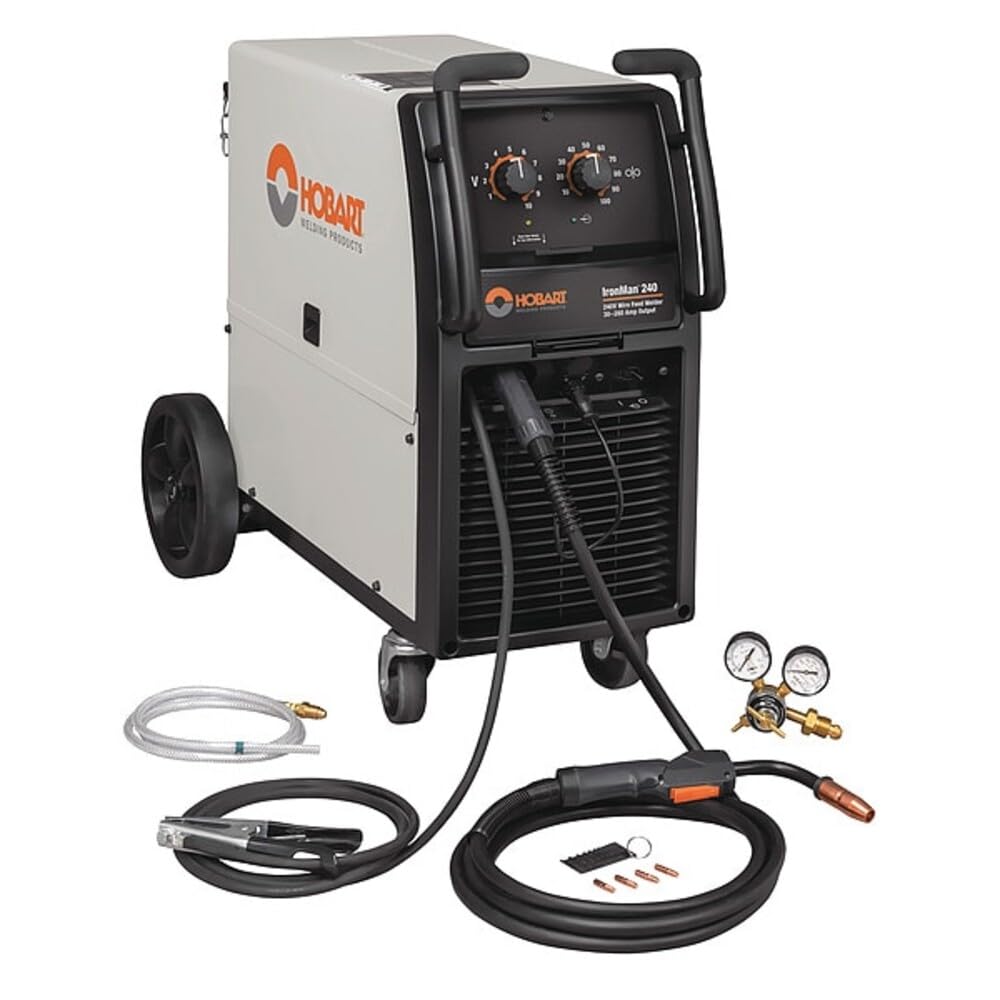
Bottom line: Hobart IronMan 240 is the strongest dedicated shop machine in this group. Its 30–280A range and 200A at 60% duty cycle make it a better fit for frequent fabrication than portable hobby use.
- Input power: 220/230/240V single-phase, intended for shop circuits
- Max MIG output: 280 A, highest peak output in this roundup
- Rated duty cycle: 200 A at 60%, supports longer welding sessions
- Steel capacity: 24 ga to 1/2 in, broad shop-work range
- Processes: MIG and flux-cored, spool-gun ready for aluminum
This is the machine to choose when portability matters less than sustained output. Hobart rates the IronMan 240 at 200A with a 60% duty cycle, so it can spend more of each 10-minute duty-cycle period welding before a cooling pause at that rated load.
The dual-geared drive, reversible drive rolls, and 50–700 IPM wire-feed range give you room to tune steel, stainless, and flux-cored setups. The built-in running gear and cylinder rack also make sense in a permanent shop where gas and wire stay with the machine.
At 186 lb, it is not a carry-around welder. It also needs 220/230/240V input, so buyers working from standard household outlets should look at the Lincoln, ESAB, or Everlast instead.
- 200A at 60% duty cycle supports frequent shop work
- 30–280A welding range covers thin sheet through heavier steel
- Spool-gun ready for aluminum
- Built-in running gear and cylinder rack keep a shop setup organized
- 186 lb weight limits portability
- Requires a 220/230/240V circuit
- Analog controls provide no digital readout

3. ESAB Firepower FP-135

Bottom line: ESAB Firepower FP-135 is the straightforward choice for household-power repairs and light fabrication. It runs from a standard 115/120V supply and delivers up to 135A without requiring a 240V shop circuit.
- Input power: 115/120V single-phase, works from common household service
- Max MIG output: 135 A, aimed at light repair and fabrication
- Rated duty cycle: 117 A at 20%, practical for shorter welding sessions
- Steel capacity: up to 1/4 in, suitable for light-duty plate work
- Processes: MIG and flux-cored, gas or gasless operation
The FP-135 is simpler than the dual-voltage machines above. Its four voltage settings and 20–135A range are aimed at basic maintenance, DIY projects, light automotive work, and small fabrication jobs rather than high-output production.
You can run solid wire with shielding gas or switch polarity for self-shielded flux-cored wire. That makes it useful when you want cleaner indoor MIG welds one day and a simpler gasless repair setup the next.
The main limit is power. A 135A, household-voltage welder cannot match the thicker-material capacity or duty cycle of a 230/240V shop machine. Choose it because your work is light and your power supply is simple, not because you expect production-level output.
- Runs from a common 115/120V supply
- MIG and flux-cored modes cover common repair work
- Gas or gasless setup adds flexibility
- Simple voltage controls reduce setup complexity
- 135A maximum output limits heavier fabrication
- Lower duty cycle than the larger 240V shop machine
- No Stick welding mode

4. Everlast Cyclone 212i

Bottom line: Everlast Cyclone 212i offers the widest process mix for the money in this list. It combines dual-voltage MIG with Stick welding, 230A peak MIG output, and spool-gun capability in one inverter machine.
- Input power: 120/240V single-phase, flexible across home and shop power
- Max MIG output: 230 A on 240V, strong headroom for fabrication
- Rated duty cycle: 200 A at 35%, useful for heavier intermittent work
- Steel capacity: over 3/8 in single pass on 240V, per manufacturer guidance
- Processes: MIG and Stick, with flux-core and spool-gun capability
The Cyclone 212i gives you more process options than the other picks. Its 240V MIG range reaches 230A, while the Stick side reaches 160A. If you repair equipment, fabricate brackets, or switch between indoor MIG and outdoor Stick work, that extra process range can replace a second machine.
Everlast also gives the MIG side several setup controls, including PowerSet, inductance adjustment, polarity reminders, spot and stitch timing, and support for 4 in and 8 in wire spools. Those features are useful once you know what you want from the arc, but they create a busier control experience than the simpler Lincoln.
At maximum 230A output, the MIG duty cycle is 15%; at 200A it rises to 35%. That distinction matters when comparing peak amperage. The machine has high top-end output, but the Hobart remains the better choice for sustained 200A production work.
- 120/240V input covers home and shop power
- 230A maximum MIG output on 240V
- Adds Stick welding for outdoor and repair work
- Spool-gun capable and supports 4 in or 8 in wire spools
- Digital setup features reduce common polarity and setting mistakes
- 15% duty cycle at the full 230A output
- More settings to learn than a basic MIG-only machine
- Optional accessories are needed for some aluminum and flux-core setups

Lincoln Electric POWER MIG 211i vs Everlast Cyclone 212i: Is the Upgrade Worth It?
The Lincoln is the easier all-around MIG choice; the Everlast gives you more peak MIG output and adds Stick welding. The right choice depends on whether you value a simpler dedicated wire-feed setup or broader process capability.
- Input flexibility: both run on household and higher-voltage shop power.
- Peak MIG output: Everlast reaches 230A; Lincoln reaches 211A.
- Process range: Everlast adds Stick welding; Lincoln focuses on MIG and flux-cored work.
- Rated MIG duty cycle: Lincoln is 30% at 175A; Everlast is 35% at 200A and 15% at 230A.
Which MIG Welder Should You Buy?
- Best all-around garage pick: get the Lincoln Electric POWER MIG 211i.
- Frequent shop fabrication: get the Hobart IronMan 240.
- Household-power repair work: get the ESAB Firepower FP-135.
- MIG plus Stick versatility: get the Everlast Cyclone 212i.
How We Chose
- Input power: we compared household-voltage, dual-voltage, and dedicated 240V machines because available power changes what you can use.
- Output and duty cycle: we used manufacturer-rated amperage and duty-cycle figures instead of treating peak output as the whole story.
- Wire and process flexibility: we checked MIG, flux-cored, Stick, spool-gun support, and wire-feed specifications where they affect the buyer’s decision.
- Use-case fit: we separated portable repair machines from stationary shop welders rather than ranking them only by amperage.
- Sources: we checked manufacturer specifications and manuals, current Amazon listings and retail availability, owner-feedback trends where repeatable, and recall records.
MIG Welder Buying Guide
Choose Input Voltage Before You Compare Amperage
A 120V welder is convenient for home repairs because it can use common power, but the available output is lower. Dual-voltage machines give you a lower-power mode for home use and a stronger 230/240V mode for thicker material. If you move between locations, Lincoln Electric POWER MIG 211i and Everlast Cyclone 212i are the most flexible choices here.
Match Amperage To The Material You Actually Weld
More amperage can increase thickness capacity, but peak output alone does not tell you how long the machine can sustain it. For light sheet and repair work, the ESAB Firepower FP-135 covers a simpler range. For heavier fabrication, the Lincoln and Everlast offer more headroom, while the Hobart reaches the highest output range in this group.
Use Duty Cycle To Judge Sustained Work
Duty cycle tells you how much of a 10-minute period the welder can operate at a stated load before it needs cooling. Always compare the percentage together with the amperage. The Hobart IronMan 240 stands out because Hobart rates it at 200A with a 60% duty cycle, which better suits repeated shop work.
Look At The Wire-Feed System
A consistent drive system matters because unstable wire feeding can create an erratic arc. The Hobart uses a dual-geared drive and a broad wire-feed range, while the Lincoln focuses on simple setup. Choose the machine whose drive system and supported wire sizes match the wire you use most often.
Plan For Aluminum Before You Buy
Aluminum MIG work often calls for a spool gun or another manufacturer-approved feeding setup. The Lincoln Electric POWER MIG 211i, Hobart IronMan 240, and Everlast Cyclone 212i are spool-gun capable, but the accessory is not automatically included with every package. Check the exact compatible gun and required wire before ordering.
Balance Portability Against Shop Stability
If you carry the welder to repairs, size and input flexibility matter more than a cart. The Lincoln weighs 41 lb and is built for transport. The Hobart weighs 186 lb and includes running gear, which makes more sense as a stationary shop system. Decide where the welder will spend most of its life before choosing.
Mistakes to Avoid When Buying a MIG Welder
- Buying by peak amps alone: compare duty cycle at a useful working current too.
- Ignoring your electrical service: confirm voltage, receptacle, breaker, and wiring requirements in the manual.
- Assuming aluminum is plug-and-play: verify spool-gun compatibility, wire, shielding gas, and drive setup.
- Choosing a shop welder for mobile work: check weight and whether the machine can run where you plan to use it.
- Skipping process needs: decide whether you truly need Stick or flux-core before paying for extra capability.
MIG Welder Maintenance Basics
Keep the wire path clean and inspect the drive rolls, liner, contact tip, gun cable, and work clamp regularly. Replace worn consumables before they create feeding or arc problems. Store wire dry, keep vents clear, and make sure connections stay tight.
Use the polarity, wire diameter, gas, and stick-out specified for the process. Before an important job, run a test bead on similar scrap and make small adjustments from the manufacturer’s starting settings. Disconnect input power before internal service and follow the manual for maintenance that goes beyond routine consumables.
FAQs
How do I pick the right MIG welder for my projects?
Start with the metal thickness, available input power, and how long you expect to weld at a time. Then compare the manufacturer’s output range and duty-cycle rating at a useful amperage. A dual-voltage machine adds flexibility, while a dedicated 240V shop welder makes more sense when sustained output matters more than portability.
Do I need a dual-voltage MIG welder?
Dual voltage is useful if you expect to weld in more than one location or if you have only household power for some jobs. It lets the same machine run at reduced output on 120V and deliver more capability on 230/240V. If your welder will stay beside a dedicated 240V circuit, dual voltage is less important.
Do I need a spool gun to MIG weld aluminum?
A spool gun is a common way to feed soft aluminum wire because it shortens the distance between the wire spool and the contact tip. You still need the correct wire, shielding gas, polarity, and manufacturer-approved setup. Check the exact spool-gun model listed for your welder instead of assuming any gun will fit.
What duty cycle should I look for in a MIG welder?
Choose duty cycle based on how continuous your work is, not on the largest percentage alone. A hobbyist making short welds with fitting time between beads may be comfortable with a lower rating. Repetitive fabrication benefits from a higher duty cycle at the amperage you actually use, which reduces cooling interruptions.
Can I run a MIG welder from a generator?
Only use generator power when the welder manufacturer permits it and the generator meets the required output and power-quality guidance. Some inverter welders specify minimum surge capacity and low harmonic distortion, while other machines may discourage generator use. Check both manuals before connecting them, and do not size a generator from welder peak amps alone.
How do I keep a MIG welder feeding wire reliably?
Keep the wire dry, use the correct drive-roll groove and tension, and replace worn contact tips or liners before feeding becomes erratic. Avoid sharp bends in the gun cable and inspect the work clamp and connections. If feeding changes suddenly, check the spool path and consumables before increasing drive-roll pressure.
Customer Preferences
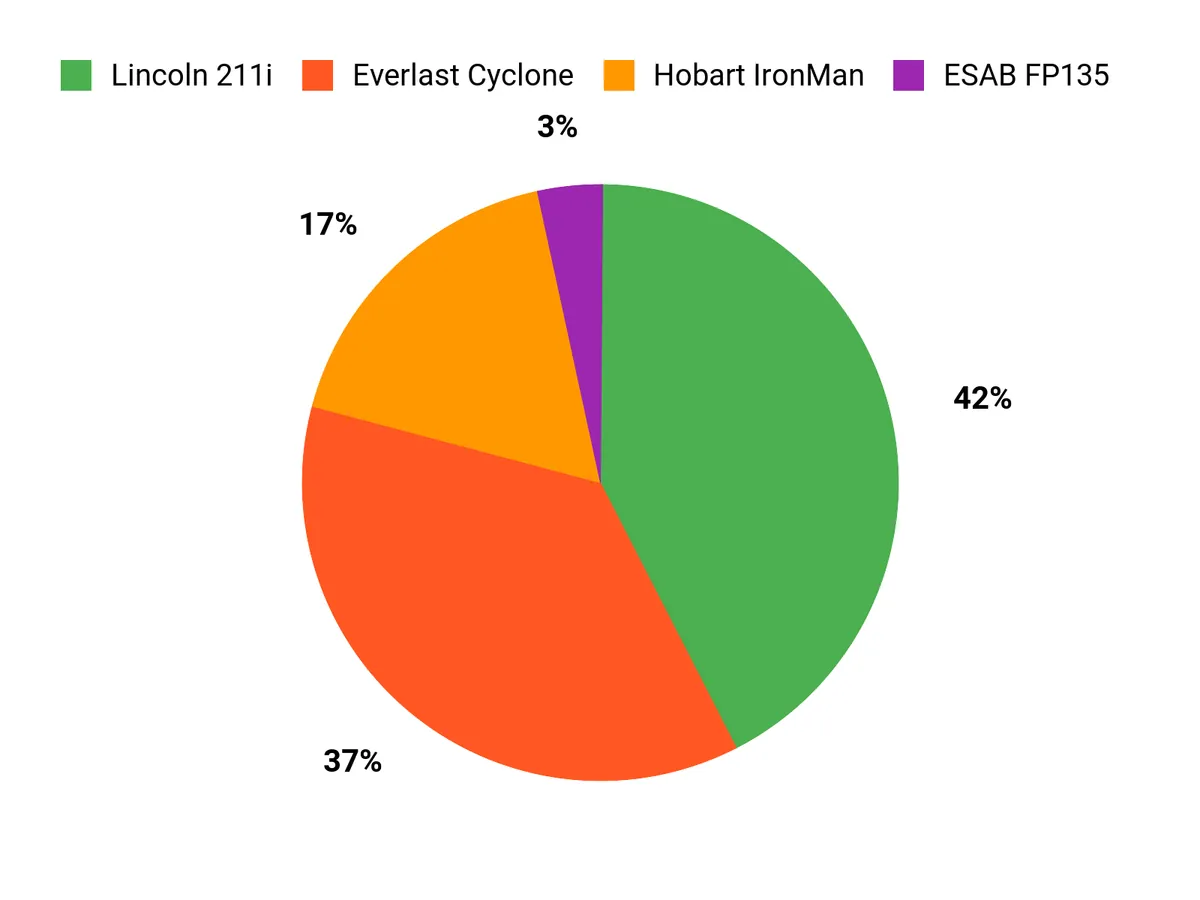
Buyers choosing among these four machines usually split by power source and workload. Portable users tend to value dual-voltage flexibility, while stationary fabricators care more about duty cycle and wire-feed capacity. Light-duty users can save complexity with a 115/120V model, and multiprocess buyers may prefer a MIG/Stick machine.
Final Verdict
For the best balance of portability, input flexibility, and useful MIG output, Lincoln Electric POWER MIG 211i remains the strongest all-around pick. It is easy to place in a home garage but still reaches 211A when 230V power is available.
Choose Everlast Cyclone 212i when MIG plus Stick capability matters more, or Hobart IronMan 240 when sustained 240V shop duty is the priority.



[…] offers an efficient route to durable metal joining without unnecessary constraint. Additionally, well-made machines enhance the efficiency and quality of welds, leading to long-term savings on […]
[…] the correct shielding gas is only one part of good MIG welder performance; machine output range and parameter control also […]
[…] bead appearance, joint tracking, and controlled penetration matter. Stable machine settings and consistent arc control remain […]
[…] energy for exact, high-speed joints, though it requires specialized systems. Additionally, MIG welders offer reliable results and are often favored for their versatility in various […]
[…] needed to produce controlled, durable joints with minimal rework. Additionally, understanding output range can significantly enhance your welding experience by ensuring optimal settings for different […]
[…] with less post-weld correction, reinforcing efficient, disciplined fabrication. Additionally, cleaner welds and simplified maintenance contribute to long-term savings in various welding […]
[…] rate. A fabricator choosing equipment for common steel work may therefore evaluate different MIG welding systems, while a repair involving cast iron may call for an entirely different […]
[…] suitable machine also matters. Different MIG welder options vary in output, duty cycle, wire capability, and available […]
[…] MIG-focused fabrication, machine capability still matters alongside metallurgy. This guide to MIG welder duty cycle and output can help when matching equipment to the intended material and […]
[…] you regularly make long welds, machine capacity matters as much as process choice. The welder duty cycle and output range affect how long you can weld before the machine needs to […]
[…] the correct machine and process controls also matters. A suitable MIG welder setup should let you control wire feed, voltage, and shielding gas consistently rather than treating gas […]
[…] machine’s available output range also matters because different transfer modes require different combinations of voltage, amperage, […]