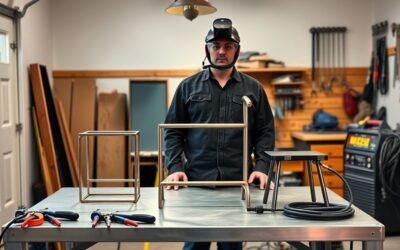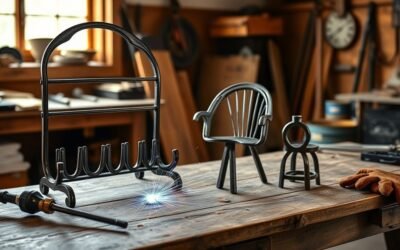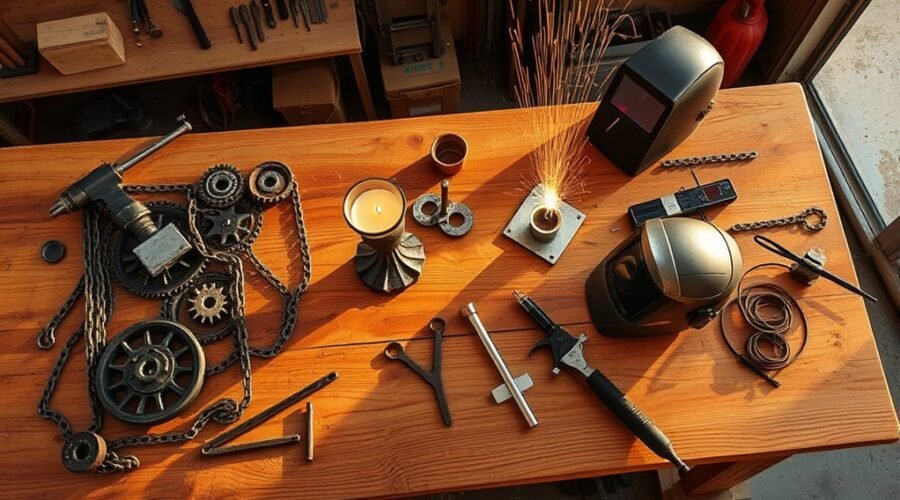
Small welding projects from scrap metal can turn usable steel offcuts, old hardware, and other known metal stock into practical items you can sell without buying large amounts of new material. Coat racks, wall hooks, bookends, garden art, plant stands, and small decorative pieces are good products to test because they can be made in repeatable sizes and customized for different buyers.
Quick Answer
Good small welding projects to sell from scrap metal include wall hooks, coat racks, key holders, bookends, plant stands, garden stakes, welded flowers, candle holders, desk organizers, and simple wall art. Start with known, clean metal, choose repeatable designs, calculate your true labor and finishing costs, and test demand before making a large batch.
Key Takeaways
- Functional products such as hooks, racks, organizers, bookends, and plant stands are practical starting points because buyers can immediately understand their use.
- Beginners should favor simple geometry, short welds, known mild-steel scrap, and products that are not safety-critical or heavily load-bearing.
- Unknown coatings, plated metal, sealed containers, oily parts, and unidentified scrap require extra caution because welding heat can create hazardous fumes, fire, or pressure hazards.
- Pricing should include material, consumables, labor, overhead, finishing, packaging, selling fees, shipping-related costs, and profit rather than relying on a fixed multiplier.
- Clean finishing, smooth edges, accurate dimensions, load or stability checks, clear photos, and honest product descriptions increase buyer confidence.
What Scrap Metal Projects Sell Best?
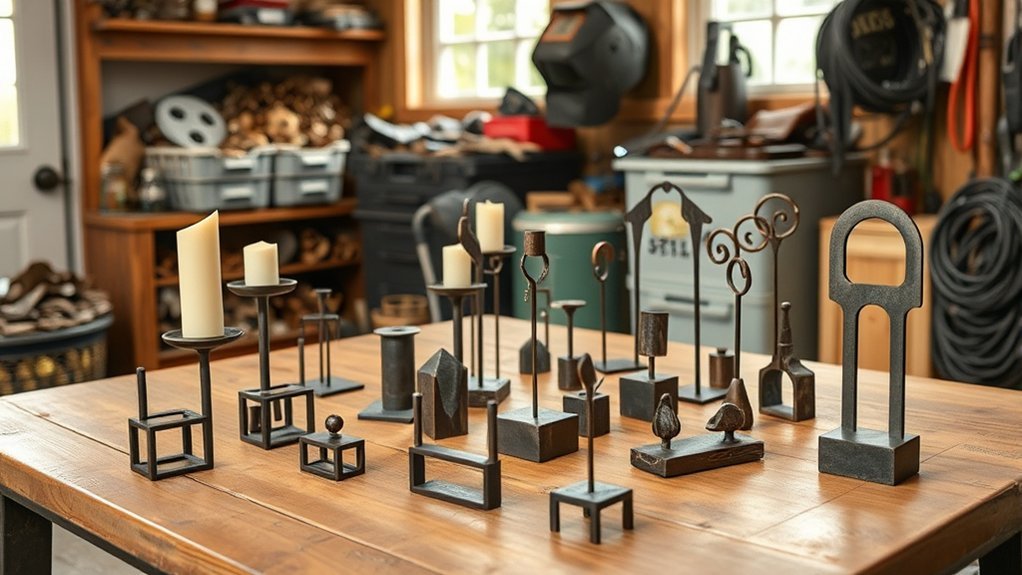
There is no universal list of scrap metal projects that always sells fastest. Demand changes with location, season, design style, price, shipping cost, and the marketplace you use. A better approach is to focus on products that combine a clear purpose, attractive design, repeatable construction, and manageable production time.
Coat racks, key holders, bookends, garden stakes, welded flowers, candle holders, desk organizers, plant stands, and compact wall art are useful categories to test. Scrap steel, nuts, bolts, flat bar, rod, washers, horseshoes, and other identifiable pieces can lower material costs while giving each product a handmade appearance.
| Project | Typical Skill Level | Useful Scrap | Selling Advantage |
|---|---|---|---|
| Wall hooks | Beginner | Flat bar, rod, old hardware | Small, useful, easy to personalize |
| Key holder | Beginner | Flat stock, hooks, nuts | Low material use and simple shipping |
| Bookends | Beginner | Plate, angle, nuts and bolts | Easy to make as matched pairs |
| Welded flowers | Beginner–intermediate | Washers, sheet, rod | Gift and garden appeal |
| Plant stand | Intermediate | Rod, square tube, flat bar | Functional home décor |
| Coat rack | Intermediate | Flat bar, hooks, plate | Useful and customizable |
| Garden stakes | Beginner | Rod, sheet offcuts | Simple seasonal inventory |
| Desk organizer | Beginner | Tube, sheet, nuts | Compact and inexpensive to package |
Instead of assuming an idea will sell, make one or two examples, photograph them well, list them at a price that covers your true costs, and track inquiries, saves, messages, and actual orders. Expand only the designs that receive real buyer interest.
If you are also looking for welding-related presents rather than products to manufacture, this guide to gifts for welders provides additional ideas.
Choose Safe Scrap Metal Before Welding
Scrap metal is inexpensive only when it is safe and suitable to use. Before cutting, grinding, or welding any reclaimed piece, identify the material and inspect it for coatings, plating, oil, paint, corrosion, cracks, and previous chemical exposure.
Warning: Do not weld an unknown sealed container, drum, tank, pipe section, or hollow object that may have held fuel, solvents, chemicals, or pressurized material. Welding heat can ignite residue, create toxic fumes, or cause pressure to build. Unknown painted, plated, galvanized, lead-bearing, cadmium-bearing, or chromium-bearing scrap can also require specific ventilation or respiratory controls.
The U.S. Occupational Safety and Health Administration requires precautions for welding fire hazards, ventilation, protective equipment, coated metals, and used containers. NIOSH also notes that welding fumes can contain different metals and metal oxides depending on the base metal, filler, and coatings.
For hobby work, the safest starting stock is usually known, clean material whose alloy and previous use you understand. Remove oil and contamination with a method appropriate for the material, keep combustible materials away from sparks and slag, provide suitable ventilation, and use welding PPE appropriate for your process.
Protective clothing matters around hot metal and sparks. See these guides to welding shirts and welding jackets for equipment-selection considerations.
Best Scrap Metal Projects for Beginners
Beginner scrap metal projects should use simple geometry, short welds, easy fit-up, and metal of a known type and thickness. Wall hooks, key holders, basic bookends, small garden stakes, pencil holders, and uncomplicated metal art are easier starting points than chairs, railings, structural brackets, pressure-containing parts, towing components, or other safety-critical products.
These projects let a new welder practice measuring, cutting, cleaning, tack-up, bead consistency, distortion control, and grinding without consuming much stock. Old tools, bicycle parts, nuts, bolts, plate, and cutoffs may be usable when their material and previous service are understood.
A coat rack or wall-hook board can combine utility with decorative design, but the finished product still needs suitable welds, strong mounting points, smooth edges, and a reasonable load test before it is sold.
Pro Tip: Build one prototype first. Record every cut length, hole location, setup, welding sequence, finishing step, and the total time required. That record turns a one-off project into a repeatable product you can price accurately.
Beginners who are still choosing equipment can compare welders for beginners before committing to a process.
Small Scrap Metal Projects That Are Easy to Test
Small metal products are useful for a first sales test because they require less stock, take less space to store, and are usually easier to photograph, package, and transport than large furniture or structural work.
Coat hooks, key holders, pencil cups, small shelf brackets, bookends, garden stakes, bottle openers, welded flowers, and compact wall art are examples. Their main advantage is not guaranteed fast sales; it is that a maker can produce a small batch without tying up large amounts of material or shop time.
Keep the design repeatable. If the first version takes three hours because every part must be individually fitted, the project may be harder to sell profitably than a simpler design that takes one hour and looks equally finished.
A home shop that handles several materials or processes may benefit from broader machine capability. This guide to welders for home use explains common options.
Scrap Metal Home Decor Ideas
Metal offcuts can be turned into home décor that is both functional and visually distinct. Practical ideas include candle holders, wall hooks, plant stands, bookends, pen holders, small shelves, decorative sconces, welded flowers, abstract sculptures, and wall panels.
Old tools, nuts, bolts, rod, angle, and flat stock can create an industrial or rustic appearance, but the metal still needs safe preparation and a stable design. Grind or radius sharp edges, remove loose scale, check that bases sit flat, and make sure wall-mounted pieces have mounting holes or brackets suitable for their intended use.
Candle holders require extra care. The base should be stable, combustible decorative materials should be kept away from flame and heat, and the finish must be suitable for the temperatures it may encounter.
For shops making several styles of small fabricated products, a multi-process welder can provide flexibility when the material and process requirements genuinely call for it.
Scrap Metal Garden Art Ideas
Garden art is a natural use for offcuts because pieces can be decorative without carrying major structural loads. Common projects include wind sculptures, metal flowers, plant markers, garden stakes, small animal forms, trellises, and decorative silhouettes.
Outdoor exposure changes the finishing requirements. Bare mild steel will normally develop rust unless the patina is intentional. Paint, powder coating, clear coatings designed for the substrate, or corrosion-resistant metals can extend appearance and service life when applied correctly.
Wind Sculptures
Wind sculptures use balanced rotating or swinging parts to add motion to a garden. Scrap pipe can form a central support, while sheet offcuts can form vanes or decorative shapes. Old tools or hardware may be incorporated when the material is suitable.
Tack welds are useful for holding parts in alignment during fit-up, but they should not automatically be treated as the final welds. Complete the joints with welds appropriate to the material, joint, expected wind load, and design, then check that moving parts cannot detach during operation.
| Material | Use |
|---|---|
| Pipe | Central shaft or support |
| Sheet metal | Vanes and decorative forms |
| Old tools | Accent pieces when safe and suitable |
| Tack welds | Temporary fit-up and alignment |
| Finish coat | Weather and corrosion protection |
Scrap Metal Flowers
Washers, spoons made from weldable material, sheet offcuts, rod, and small plate can be shaped into scrap metal flowers for garden beds, planters, or indoor displays. A typical flower combines cut or formed petals, a stem, leaves, and a welded center.
The project can develop cutting, fitting, tacking, finish welding, and distortion-control skills. Small pieces also make it easy to experiment with painted finishes, clear coats, or intentional patinas.
Outdoor pieces should be sold with an honest description of the material and finish. Painted mild steel can still need maintenance if the coating is scratched or eventually breaks down.
If a design calls for TIG rather than MIG or Stick, this guide to TIG welders explains common AC/DC machine choices.
Tools for Small Scrap Metal Welding Projects
A small fabrication setup does not need every welding tool available. The most useful equipment depends on the metal, thickness, process, and finishing method you actually use.
- Welder: MIG, TIG, Stick, or a multi-process machine suitable for the intended material.
- Helmet and PPE: A suitable welding helmet, gloves, protective clothing, hearing protection when needed, and appropriate eye protection for grinding.
- Angle grinder: Useful for cleaning, cutting with the correct wheel, deburring, and blending welds.
- Wire brush or preparation tools: Used to remove appropriate surface contamination before welding.
- Clamps and magnets: Helpful for holding small assemblies square during fit-up.
- Measuring tools: Tape measure, square, ruler, calipers, and marking tools improve repeatability.
- Workbench or welding table: Provides a stable, noncombustible work surface.
- Fire-control equipment: Suitable extinguishing equipment should be immediately available when performing hot work.
Multi-process machines can be convenient, but they are not automatically the best choice for every buyer. A dedicated machine may be simpler when you repeatedly use one process. Compare capability to the work you actually plan to do.
For additional machine options, see this guide to MIG welders. Consumable selection also affects weld quality and cost, so choosing suitable MIG welding wire matters when MIG is your process.
If you are planning purchases around seasonal promotions, this page covering welding deals may help you compare current equipment offers.
How to Choose Projects That Can Make a Profit
A product made from free scrap can still lose money if it requires excessive fitting, grinding, finishing, packaging, customer messages, or shipping. Evaluate the whole production process before committing to inventory.
- Confirm demand. Search current handmade marketplaces and local listings for comparable products, but do not assume listing volume equals sales.
- Build one prototype. Measure actual fabrication and finishing time.
- Record every cost. Include metal, filler, shielding gas, abrasives, electricity allowance, paint or coating, hardware, packaging, and selling fees.
- Check repeatability. A jig or cut list can reduce setup time and variation.
- Test the finished product. Inspect welds, remove sharp edges, verify stability, and test functional parts within a sensible margin.
- Calculate shipping before listing. Steel becomes expensive to ship quickly when dimensions and weight increase.
- Make a small batch. Let actual inquiries and sales determine whether to expand.
Note: Decorative items are generally easier starting products than railings, furniture frames, load-rated brackets, automotive parts, pressure-containing items, lifting devices, or other products whose failure could injure someone. Safety-critical work may require engineering, code compliance, certification, permits, insurance, or professional qualifications.
Scrap Metal Gifts That Sell
Welded flowers, key holders, bookends, horseshoe décor, small sculptures, desk organizers, and personalized wall pieces can work well as gifts because they are compact and easy to customize.
Personalization can include initials, dates, names, house numbers, finish choices, or simple original motifs. For custom work, confirm spelling, dimensions, finish, and mounting style with the buyer before cutting metal.
Avoid copying protected logos, characters, sports marks, or brand designs simply because a customer requests them. Selling an unauthorized reproduction can create intellectual-property problems.
Seasonality can influence what buyers search for, so test garden items before spring and gift-oriented pieces before major shopping periods rather than manufacturing a large seasonal batch without evidence of demand.
How to Price Scrap Metal Crafts
Pricing should start with the full cost of making and selling one unit. Scrap material may be inexpensive or free, but sorting, cleaning, straightening, cutting, welding, grinding, finishing, packaging, and selling still consume time and resources.
A practical starting formula is:
Selling price = materials + consumables + labor + overhead + packaging + marketplace/payment fees + desired profit.
Materials include metal, hardware, fasteners, wood, bases, hooks, and purchased components.
Consumables include welding wire or rods, shielding gas, grinding wheels, flap discs, drill bits, paint, primer, clear coat, and cleaning supplies.
Labor should use the hourly amount you need for your time rather than a universal internet rate. Track design, cutting, fit-up, welding, grinding, finishing, packaging, customer communication, and any installation work you provide.
Overhead can include an allowance for electricity, equipment wear, shop rent, insurance, software, advertising, failed parts, and tools.
Selling fees depend on the platform. As of September 2026, Etsy lists a $0.20 listing fee and a 6.5% transaction fee, while payment-processing and certain other fees vary by seller location and circumstances. Check the current fee schedule before setting prices.
For example, if your verified total cost before profit is $55 and you want $20 profit on the item, $75 is the starting point before any selling fees or shipping expenses that are not already included. You can then compare that number with current comparable products and decide whether the design is commercially realistic.
Finish Scrap Metal Projects for More Sales
Finishing affects both appearance and usability. A piece can have sound welds and still feel unfinished if it has weld spatter, sharp edges, grinding scratches, loose scale, poor paint preparation, or an unstable base.
Choose the finish according to the material and intended environment. Indoor décor may need only cleaning and an appropriate finish, while outdoor mild-steel products generally need more corrosion protection unless rust or patina is part of the intended design.
Clean Finishing Techniques
Surface preparation starts by identifying what is on the metal. Remove rust, loose scale, oil, and other contaminants using methods suitable for the material while observing the hazards of the coating or residue involved.
- Inspect the metal and identify coatings or contamination.
- Remove burrs and sharp edges.
- Clean weld areas before welding.
- Grind or blend only where the design requires it.
- Sand progressively when a smoother decorative finish is wanted.
- Remove dust and residue before coating.
- Apply primer, paint, clear coat, powder coating, or another appropriate finish according to the product and material.
Do not grind every weld simply for appearance. Excessive grinding can reduce the weld throat or remove useful material. On functional products, sound joints matter more than making every weld invisible.
Add Sale-Ready Details
Before selling a finished piece, inspect it as a customer would. Edges should not be dangerously sharp, bases should sit flat, moving parts should move as intended, and mounting holes or brackets should be accessible.
For a coat rack, wall hook, shelf bracket, or similar item, check the welds and hardware under a sensible test load. Provide clear mounting information and do not claim a load rating you have not actually established through appropriate testing or engineering.
Metal sheet can be formed into backs, trays, mounting plates, or decorative panels. Small changes such as consistent hook spacing, better mounting holes, replaceable hardware, or a cleaner finish can add more value than unnecessary ornament.
Present Projects Professionally
Clear photography is especially important when a buyer cannot inspect the item in person. Etsy’s seller guidance recommends showing products clearly from multiple viewpoints and using images that communicate details and scale.
- Photograph the entire item against a simple background.
- Include close-up detail shots of the finish and craftsmanship.
- Add a scale photo so buyers understand the actual size.
- Show the product in use when that helps explain function.
- Photograph important mounting points, feet, hooks, or moving parts.
- List dimensions, weight, material, finish, and what mounting hardware is included.
Accurate photos and descriptions reduce surprises. Avoid editing photographs so heavily that the finish color or surface texture no longer represents the actual product.
Where to Sell Scrap Metal Crafts
The best sales channel depends on product size, weight, price, customization, and whether buyers need to see the item in person.
| Outlet | Best Use |
|---|---|
| Etsy | Small handmade products that photograph and ship well |
| Local craft fairs | Direct sales, buyer feedback, and products customers want to handle in person |
| Local online marketplaces | Heavier products that are easier to collect locally than ship |
| Social media | Showing fabrication, custom orders, and local availability |
| Consignment shops | Home décor and gift pieces suited to a local retail audience |
| Online auction sites | Unusual one-off pieces or collectible designs |
Do not judge a channel only by the selling price. Compare fees, packaging, shipping time, returns, damaged-order risk, booth fees, fuel, and the hours required to communicate with customers.
For heavy steel products, local pickup can be more practical than nationwide shipping. For compact products, weigh and measure the packaged item before publishing a shipping price.
Frequently Asked Questions
What are some small welding projects I can sell?
Practical options include coat racks, wall hooks, key holders, bookends, plant stands, garden stakes, welded flowers, desk organizers, candle holders, bottle openers, and small wall art. Start with one or two repeatable designs, test actual buyer interest, and expand only after you know your production time and costs.
What are some easy small metal welding projects for beginners?
Good beginner projects include wall hooks, simple bookends, key racks, garden stakes, pen holders, small signs, and basic metal flowers. Choose known mild-steel stock, simple joints, and products that are decorative or lightly loaded rather than safety-critical.
What cool things can I make from scrap metal?
Scrap metal can become sculptures, garden art, flowers, animal figures, bookends, wall organizers, tool holders, candle stands, miniature models, furniture accents, hooks, racks, and plant stands. Use only material you can identify and prepare safely.
How much should I charge for small welding projects?
There is no reliable universal price range. Add the cost of metal, hardware, welding consumables, abrasives, finishing materials, labor, overhead, packaging, selling fees, shipping-related costs, and the profit you need. Then compare your calculated price with genuinely comparable products in your current market.
Is all scrap metal safe to weld?
No. Unknown coatings, plating, paint, chemical contamination, galvanized material, and metal containing hazardous elements can create dangerous fumes when heated. Used containers can also contain flammable or toxic residue. Identify and inspect scrap before welding, use suitable ventilation and PPE, and avoid unknown sealed containers.
Should I make a large batch before I start selling?
Usually not. Build a prototype, calculate the true cost, photograph it, and test the listing first. A small production run limits wasted material and labor while giving you real information about buyer interest.
Conclusion
Small welding projects from scrap metal can become saleable products when the material is safe to use, the design is repeatable, and the finished item solves a clear problem or offers distinctive decoration. Coat racks, hooks, bookends, organizers, flowers, garden pieces, and custom gifts are sensible categories to test without committing to large amounts of inventory.
The strongest results come from knowing your metal, controlling welding and finishing quality, testing functional products, calculating every real cost, and letting actual buyer response guide production. Scrap may lower the material bill, but careful fabrication, safe work practices, accurate pricing, and professional presentation are what turn it into a viable product.
Sources
- U.S. Occupational Safety and Health Administration — 29 CFR 1910.252 — welding, cutting, brazing, fire prevention, PPE, ventilation, coated metals, and used-container precautions.
- U.S. Occupational Safety and Health Administration — 29 CFR 1926.353 — ventilation and protection when welding metals or coatings that may create hazardous fumes.
- NIOSH Engineering Controls Database — Welding Fumes and Fume Extraction Guns — welding-fume composition and exposure considerations.
- Etsy Help — Fees and Taxes for Selling on Etsy — current listing, transaction, processing, and other seller fees.
- Etsy Seller Handbook — 7 Essential Types of Product Photos — product, detail, scale, and listing-photography guidance.