

Black Friday welding gear is easier to compare when you start with the exact tool type you need. Our ESAB Sentinel A50 is the best overall pick for frequent welding because it combines clear optics, a touchscreen, and ESAB's HALO headgear.
For lower-cost helmet value, YESWELDER M800H gives you a large true-color viewing area and four arc sensors without premium digital controls.
We checked the linked product, current manufacturer information where available, core specifications, model freshness, and model-specific recall signals before rebuilding this guide.
Black Friday Welding Gear Compared
| Product | Best for | Type | Key spec |
|---|---|---|---|
|
Budget
|
Value helmet | Auto-darkening helmet | 3.93 × 3.66 in view; DIN 5–9 / 9–13 |
|
Budget
|
Peripheral visibility | Auto-darkening helmet | 3.93 × 3.23 in main view; side windows |
|
Premium
|
Professional helmet | Auto-darkening helmet | 1/1/1/2 optical class; color touchscreen |
|
Premium
|
Panoramic view | Auto-darkening helmet | Shade 2.5 light state; ShadeTronic 4–12 |
|
Mid-range
|
Multi-process welding | Multi-process MIG welder | 200A class; 110/220V |
|
Budget
|
Portable multi-process use | Multi-process MIG welder | 165A; 110/220V |
|
Budget
|
Starter welding | Flux-core multi-process welder | 135A; 110V |
|
Budget
|
Stick and Lift TIG | Stick/Lift TIG welder | 135A; 110V |
|
Mid-range
|
Pulse DC TIG | Pulse DC TIG/Stick welder | 205A class; DC TIG/Pulse TIG/Stick |
|
Premium
|
Aluminum TIG | AC/DC TIG/Stick welder | 200A; 110/220V; AC/DC |
|
Mid-range
|
Portable DC TIG | HF DC TIG/Stick welder | 200A TIG at 220V; 140A TIG at 110V |
|
Budget
|
Garage plasma cutting | 50A plasma cutter | 110/220V; 50A class |
|
Budget
|
Pilot-arc value | 50A pilot-arc plasma cutter | 110/220V; non-touch HF pilot arc |
|
Mid-range
|
App-assisted cutting | 55A pilot-arc plasma cutter | 55A at 240V; 35A at 120V |
|
Budget
|
Basic DIY cutting | 50A plasma cutter | 110/220V; linked listing states 1/2-in clean cut |
|
Mid-range
|
55A pilot-arc cutting | 55A pilot-arc plasma cutter | 120/240V; non-touch pilot arc |
|
Mid-range
|
Higher-output plasma cutting | 60A pilot-arc plasma cutter | 110/220V; 60A class |
Black Friday Welding Gear: Our Top Picks
1. YESWELDER M800H
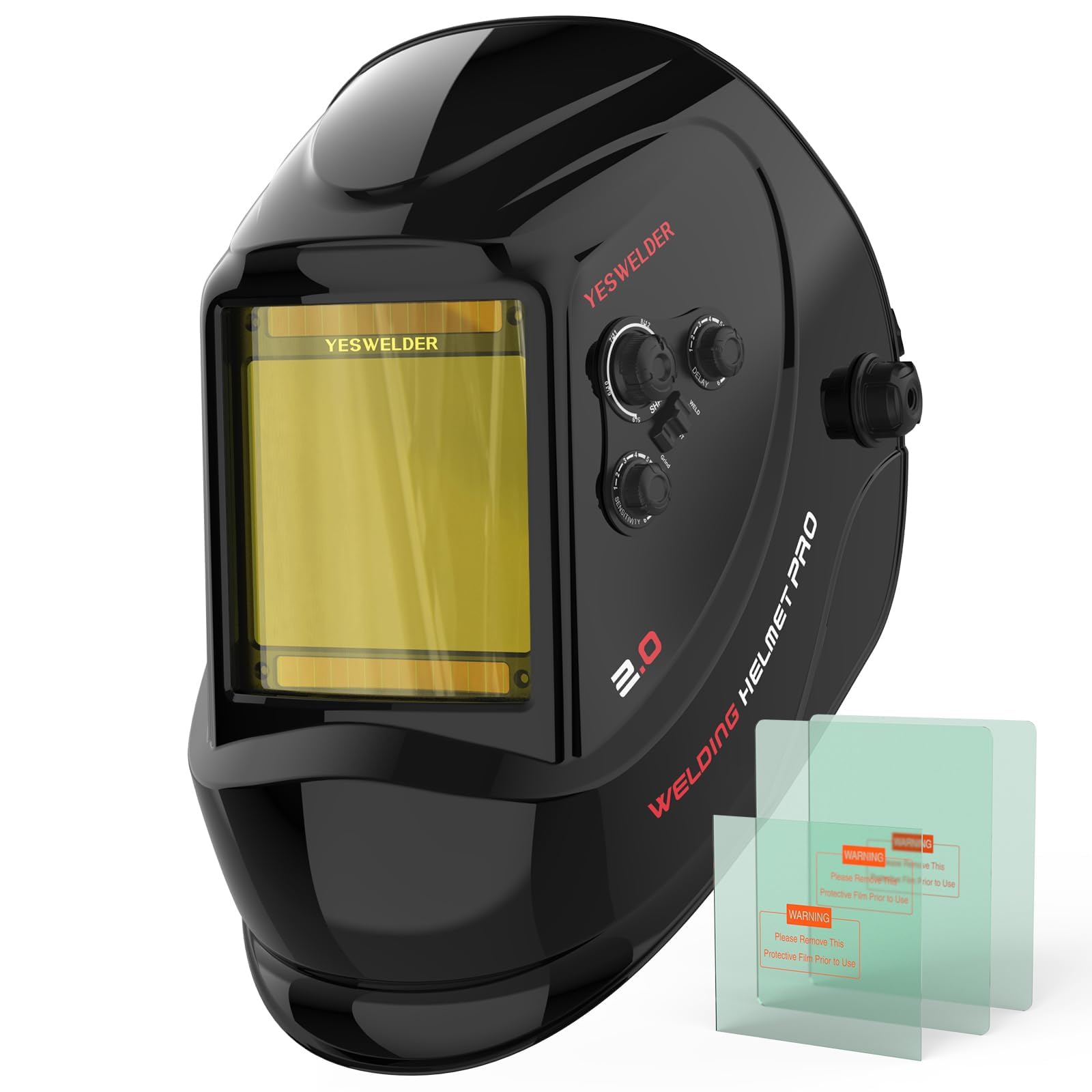
Bottom line: A strong value helmet if you want a large true-color viewing area without moving into a premium helmet tier.
Key Specs
- Viewing area: 3.93 × 3.66 in
- Arc sensors: 4
- Dark shades: DIN 5–9 and 9–13
- Power: solar assist with replaceable battery
The M800H gives you a broad front view, four arc sensors, and a fast auto-darkening filter. That combination makes it easy to move between MIG, TIG, stick, and grinding work without changing helmets.
It is the most sensible pick here for a home garage or mixed-use shop when visibility matters more than touchscreen controls or premium headgear.

- Large true-color viewing area
- Four arc sensors
- Wide shade range for welding and grinding
- Simple controls for mixed-use work
- No touchscreen or saved setup presets
- Separate respiratory protection is still needed where fumes require it
2. YESWELDER Q800D
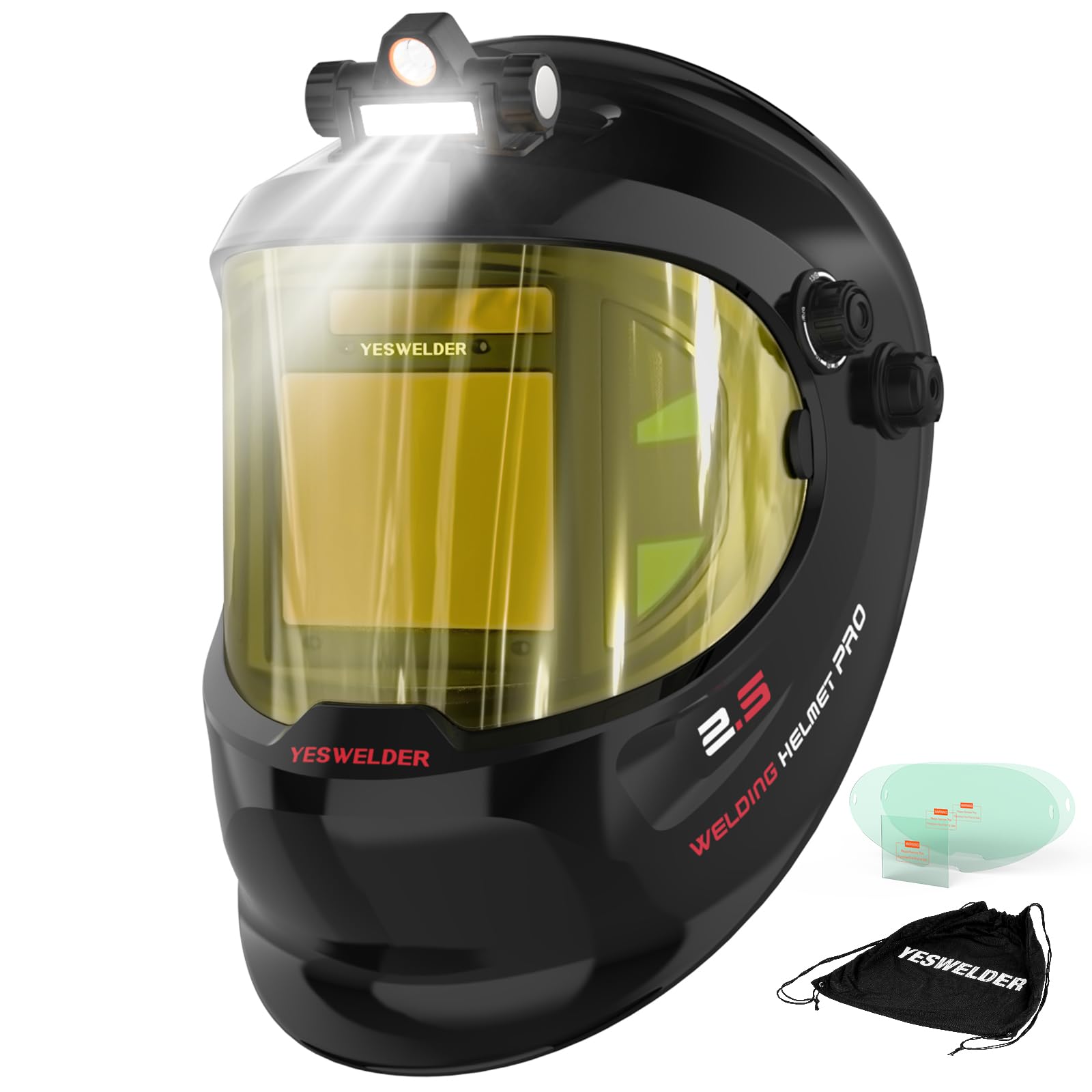
Bottom line: Choose the Q800D when peripheral awareness matters as much as the main auto-darkening window.
Key Specs
- Main viewing area: 3.93 × 3.23 in
- Arc sensors: 4
- Dark shades: DIN 5–9 and 9–13
- Power: solar assist with replaceable CR2450 battery
The Q800D pairs true-color optics with side viewing ports, so you can see more of the work area without lifting the hood. Four sensors support reliable arc detection across common welding positions.
Its advantage over the M800H is the wider-feeling field of view. The tradeoff is that the side ports are not the same active auto-darkening window as the main lens.
- Wide main viewing area
- Side windows improve peripheral awareness
- Four arc sensors
- Useful shade range for welding and grinding
- Side ports are not a second full auto-darkening lens
- No touchscreen or memory presets
3. ESAB Sentinel A50
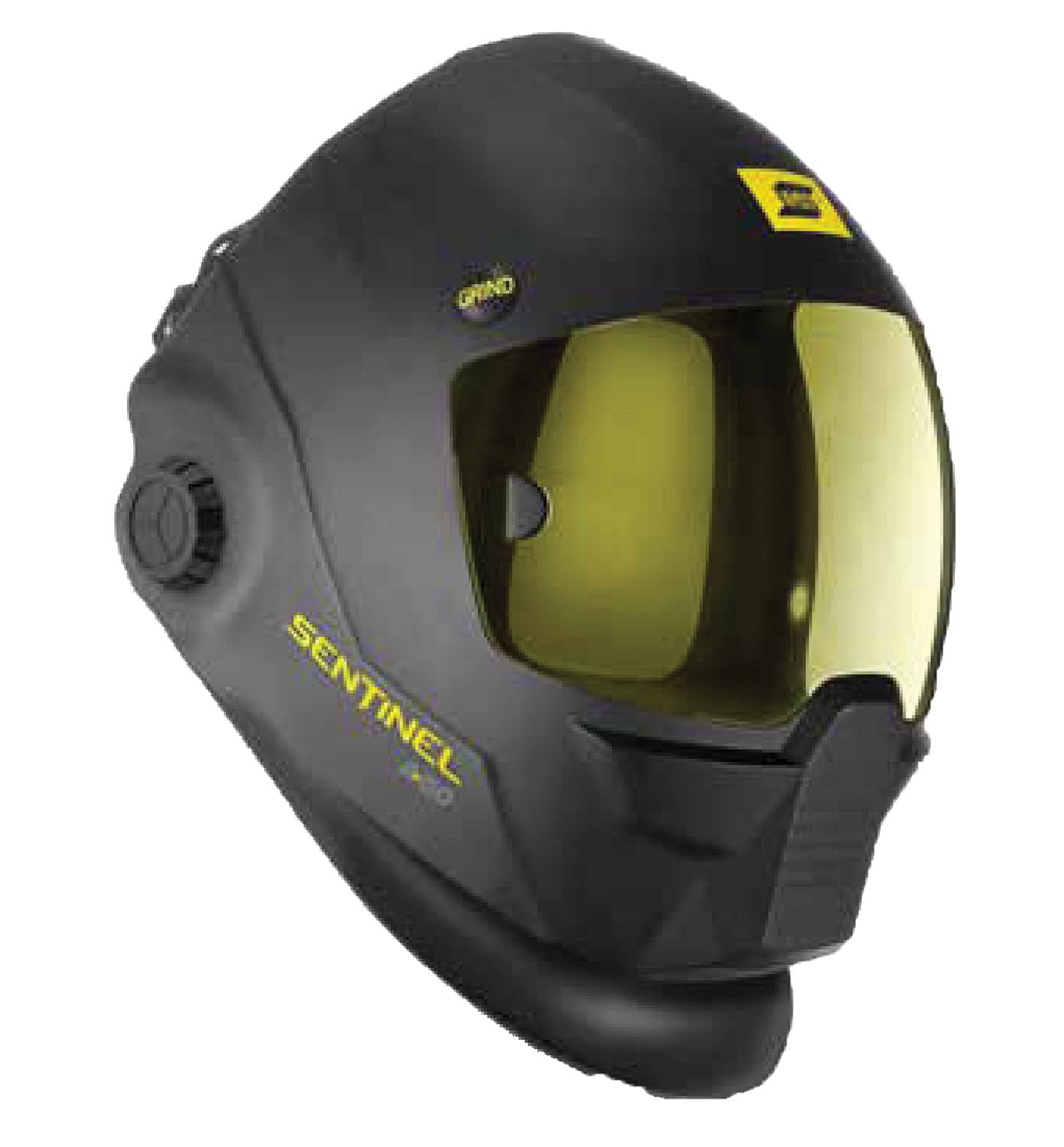
Bottom line: The Sentinel A50 remains the most complete helmet pick in this roundup for frequent shop work, with proven optics, digital controls, and ergonomic HALO headgear.
Key Specs
- Optical class: 1/1/1/2
- Controls: full-color touchscreen
- Headgear: 5-point HALO design
- Warranty: 3 years from ESAB for Sentinel A50
ESAB combines True Color optics with a curved low-profile shell and touchscreen adjustment. The interface is useful when you change processes often because settings are easier to review than on small analog dials.
The A50 is an older Sentinel generation, but ESAB still lists warranty coverage for it. Newer Sentinel models exist, so compare features if you want ESAB's latest platform.

- Clear 1/1/1/2 optical classification
- Full-color touchscreen controls
- Comfort-focused HALO headgear
- Current ESAB warranty coverage
- Premium tier
- Newer Sentinel A60 and A70 Pro models are available
4. Optrel Panoramaxx 2.5

Bottom line: The Panoramaxx 2.5 is the visibility-first choice, placing the auto-darkening filter close to your eyes for a broad, open field of view.
Key Specs
- Light state: shade 2.5
- Automatic shade range: 4–12
- Sensors: 5
- Power: rechargeable lithium-polymer battery with solar support
Optrel's close-to-eye lens position is the key design difference. It increases the apparent viewing area while keeping the shell compact around your face.
ShadeTronic can select the dark shade automatically, while the rechargeable battery reduces reliance on disposable cells. Its premium positioning makes the most sense when visibility is a daily priority.

- Very broad apparent field of view
- Five sensors
- Automatic shade selection
- Rechargeable battery system
- Premium tier
- Automatic shade range tops out at shade 12
5. ARCCAPTAIN MIG200
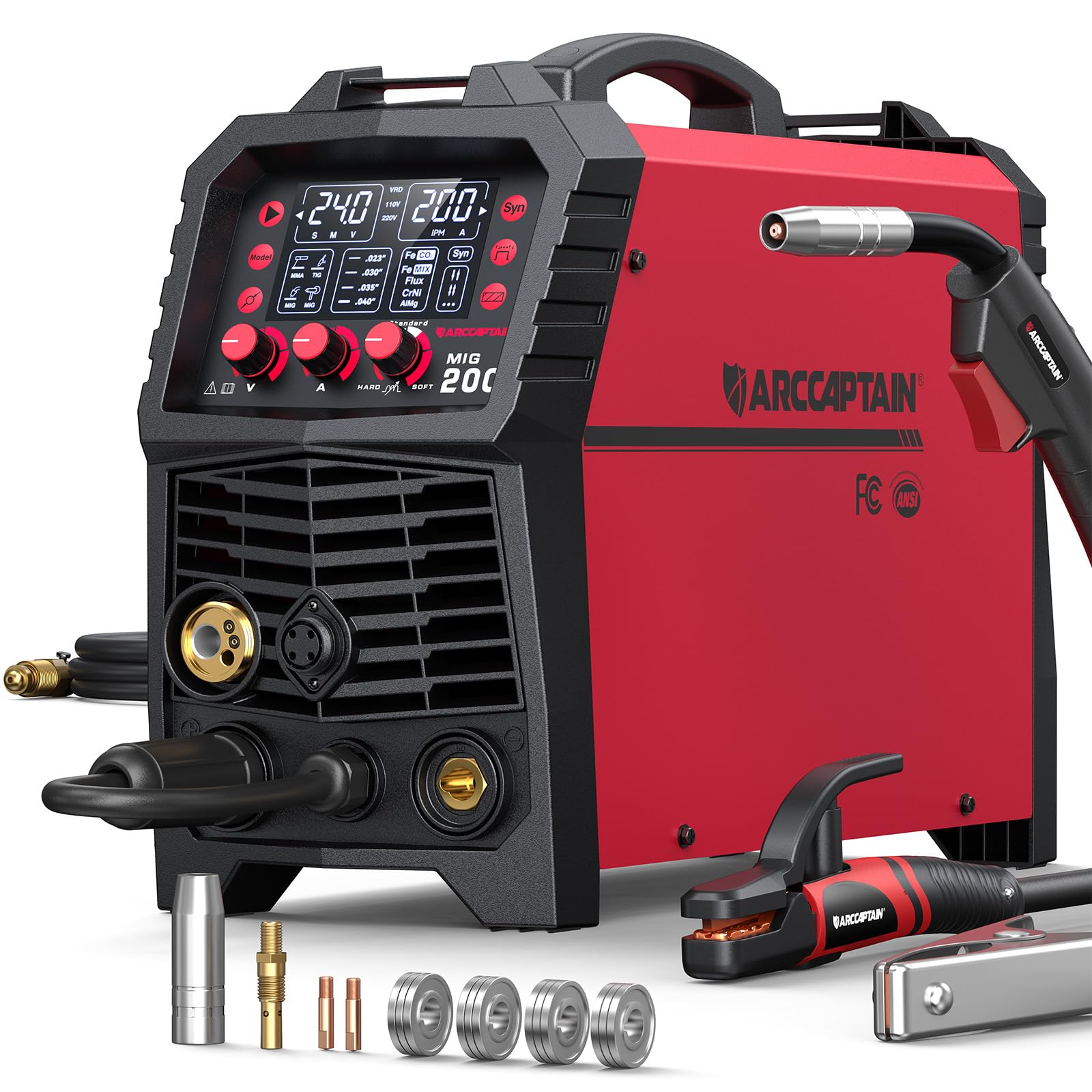
Bottom line: The MIG200 is the broadest general-purpose welder here if you want one portable machine for MIG, flux-core, stick, and Lift TIG work.
Key Specs
- Input: 110/220V dual voltage
- Rated class: up to 200A on 220V
- Processes: MIG, flux-core, Lift TIG, and stick
- Rated duty cycle: 60%
Dual-voltage input lets the MIG200 move between typical home power and a higher-voltage shop circuit. Its process range makes it useful for repairs, fabrication, and users who do not want separate machines for every job.
For aluminum MIG work, ARCCAPTAIN lists spool-gun support. It is not an AC TIG machine, so buyers focused on aluminum TIG should choose a dedicated AC/DC TIG welder instead.

- Broad multi-process capability
- Dual-voltage input
- Spool-gun support for aluminum MIG
- 60% rated duty cycle
- Not an AC TIG welder
- Larger and heavier than the MIG135 and MIG165
6. ARCCAPTAIN MIG165
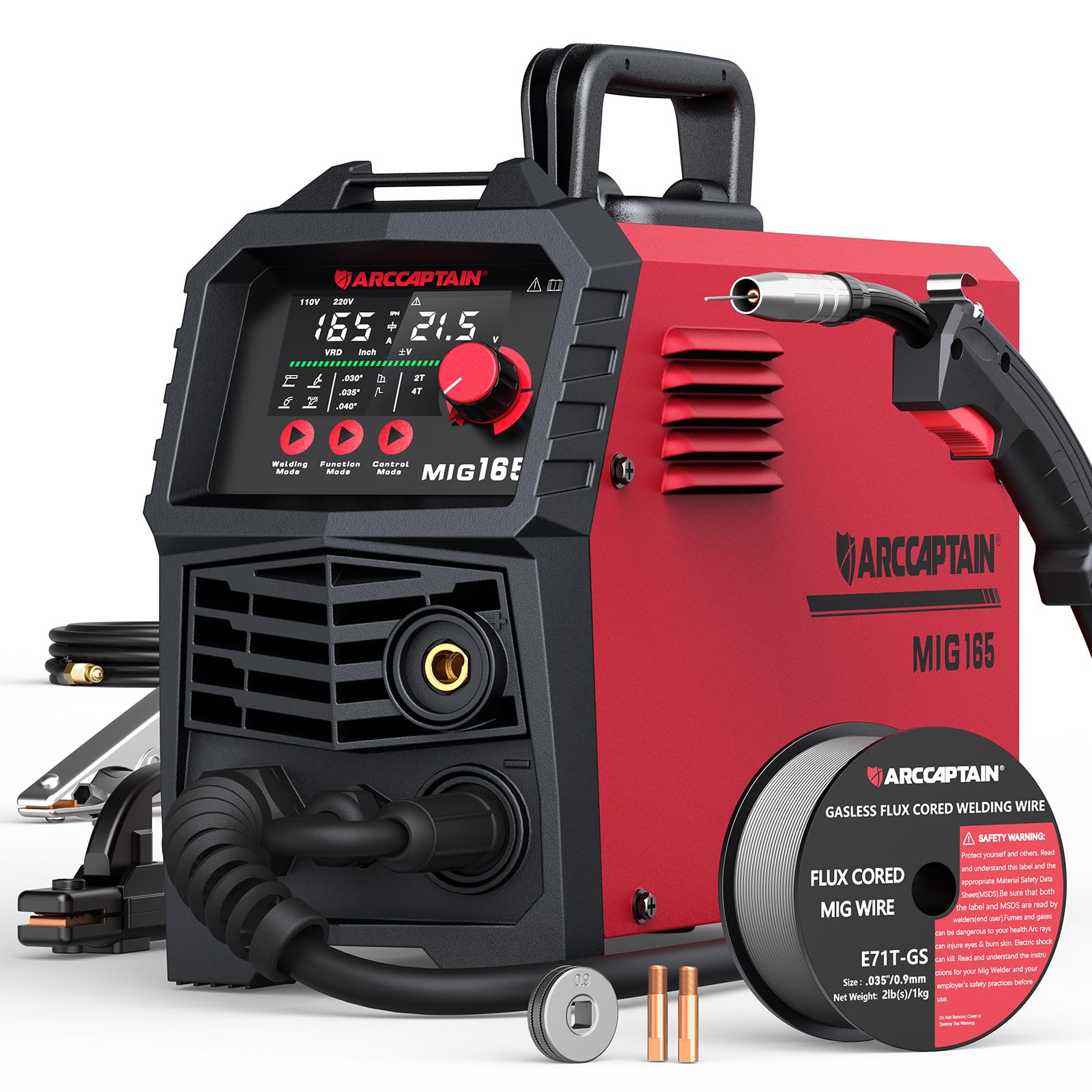
Bottom line: The MIG165 is a lighter-duty alternative to the MIG200 for users who want dual-voltage flexibility in a more portable package.
Key Specs
- Output class: 165A
- Input: 110/220V dual voltage
- Processes: gas/gasless MIG, stick, and Lift TIG
- Control: synergic MIG settings
The current linked listing identifies it as a four-in-one gasless/gas MIG, stick, and Lift TIG machine. That gives a hobby shop enough range for common steel repairs without stepping up to a larger 200A platform.
Its main limit is output headroom. If you regularly work on thicker material or long high-amperage runs, the MIG200 is the better fit.
- Dual-voltage input
- Gas and gasless MIG support
- Stick and Lift TIG capability
- Compact format
- Less output headroom than the MIG200
- Lift TIG is not the same as high-frequency TIG start
7. ARCCAPTAIN MIG135
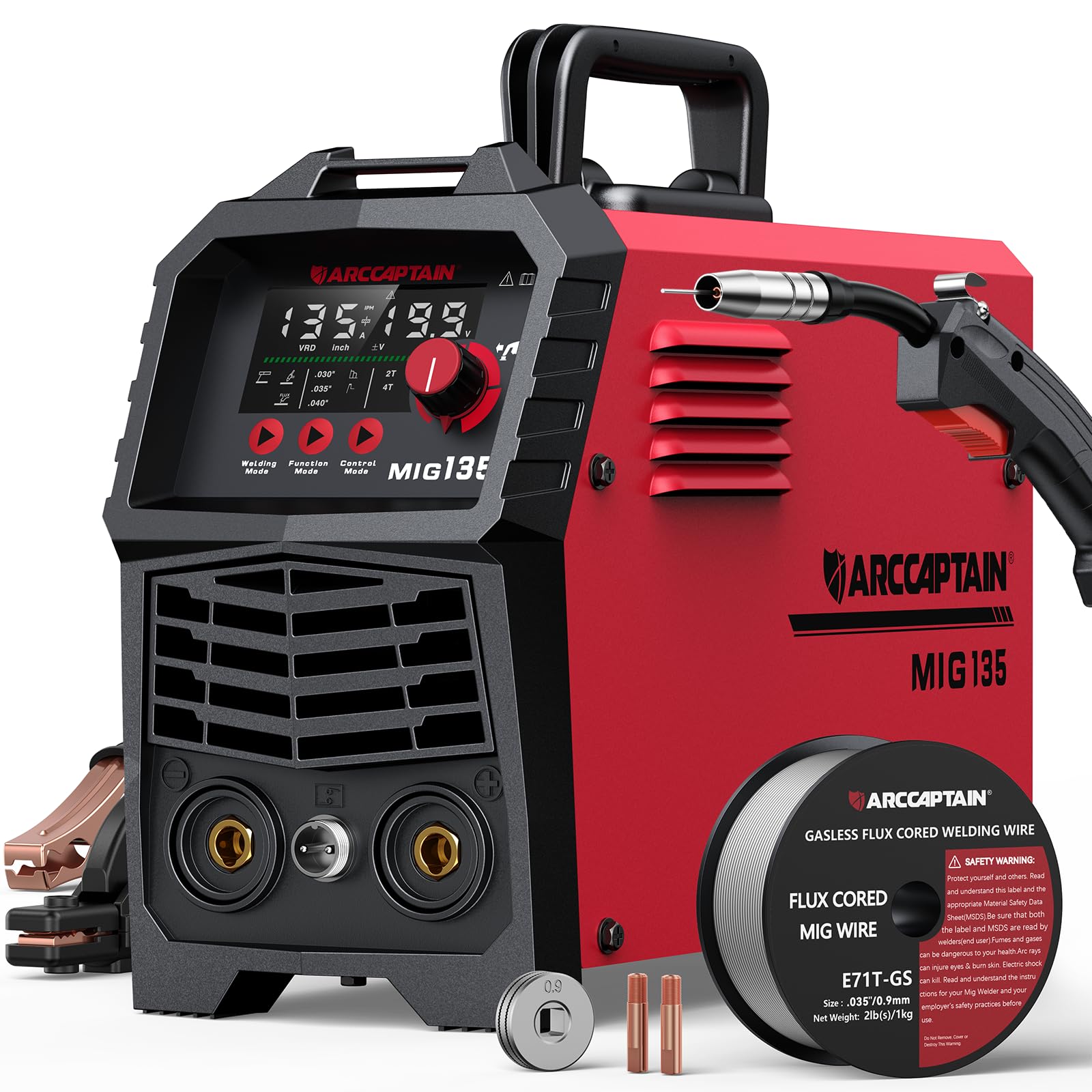
Bottom line: The MIG135 is the easiest ARCCAPTAIN welder here to match with ordinary 110V power and basic home-repair work.
Key Specs
- Output class: 135A
- Input: 110V
- Processes: gasless MIG, stick, and Lift TIG
- Control: digital/synergic setup
The linked listing is a 135A three-in-one machine built around gasless flux-core MIG. That keeps setup simple because you do not need a shielding-gas bottle for its main MIG mode.
The tradeoff is clear: it has less output and process flexibility than the dual-voltage MIG165 and MIG200. It makes the most sense for lighter repairs and learning.

- Works from 110V input
- Gasless MIG keeps setup simple
- Stick and Lift TIG modes add flexibility
- Compact and portable
- No 220V input
- Lower output than the MIG165 and MIG200
8. TOOLIOM 135A Stick/Lift TIG Welder

Bottom line: The TOOLIOM 135A is a focused choice for stick welding and Lift TIG when you do not need MIG capability.
Key Specs
- Output class: 135A
- Input: 110V
- Processes: MMA/Stick and Lift TIG
- Display: LCD
The live Amazon listing matches the TOOLIOM 135A Stick/Lift TIG machine and shows Amazon fulfillment. Its simple two-process layout suits maintenance and repair work where portability matters.
Because it is a 110V machine and uses Lift TIG rather than high-frequency start, it is better viewed as a compact repair welder than a full-featured TIG shop platform.

- Simple two-process design
- Runs on 110V
- Portable format
- Lift TIG torch included in the linked listing
- No MIG process
- Lift TIG is less convenient than high-frequency TIG start
9. YESWELDER TIG-205P
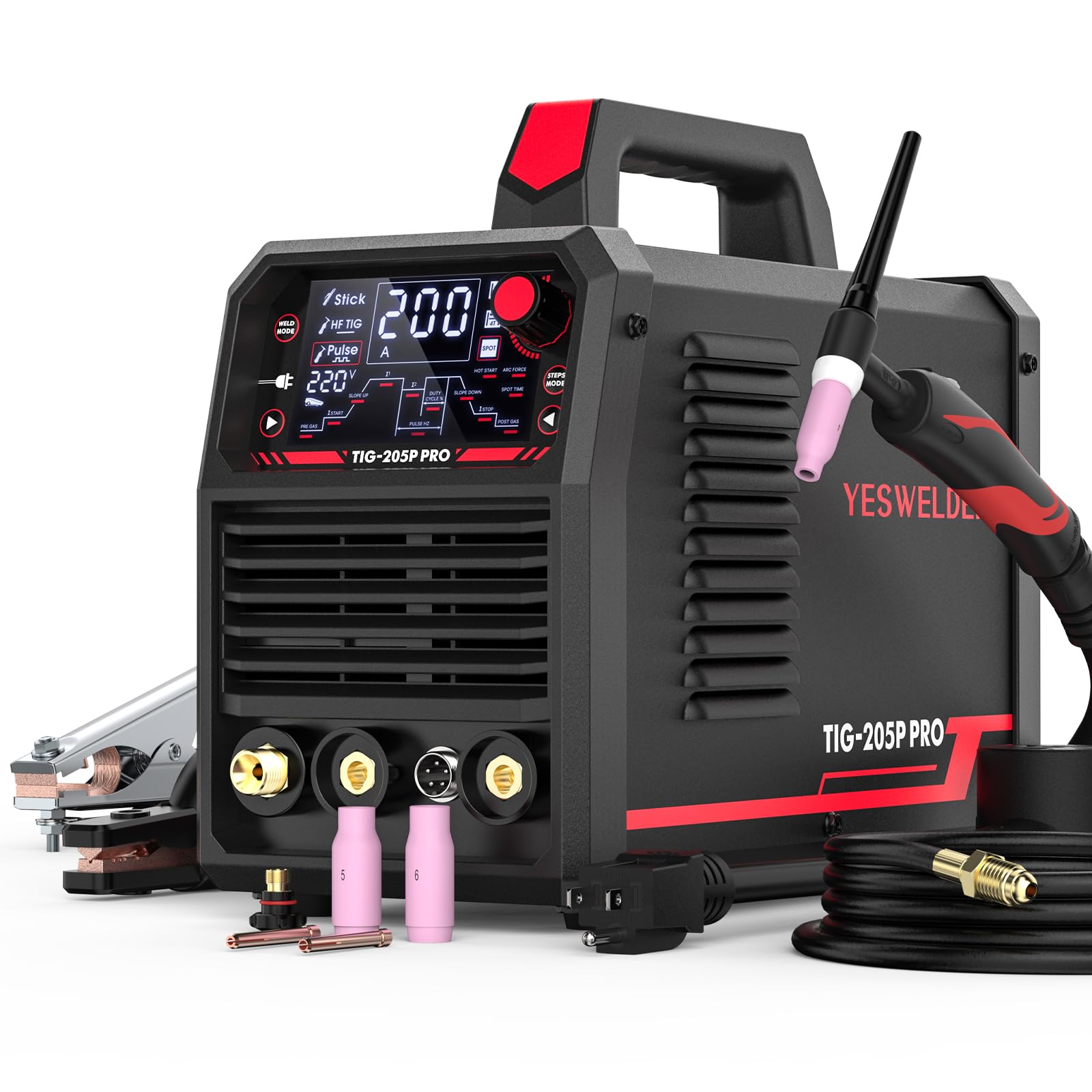
Bottom line: The TIG-205P is the value-oriented TIG choice if you want pulse control for steel and stainless work but do not need AC TIG.
Key Specs
- Input: 110/220V dual voltage
- Processes: DC TIG, Pulse TIG, and Stick
- Output class: 205A
- Control: digital pulse adjustments
The linked Amazon model is the TIG-205P three-in-one pulse TIG machine and lists 110/220V dual-voltage input. Pulse control helps you manage heat on thin material and repeat timing on detail work.
YESWELDER now sells a TIG-205P PRO version with dual-voltage input and a broader digital control set. Treat that as a newer related model rather than assuming every PRO specification applies to this older linked ASIN.

- Pulse TIG control
- 110/220V dual-voltage input
- DC TIG and stick in one machine
- Good fit for steel and stainless
- DC-only TIG is not the right process for conventional AC TIG aluminum work
- Newer TIG-205P PRO version exists
10. Weldpro 200A AC/DC TIG Welder
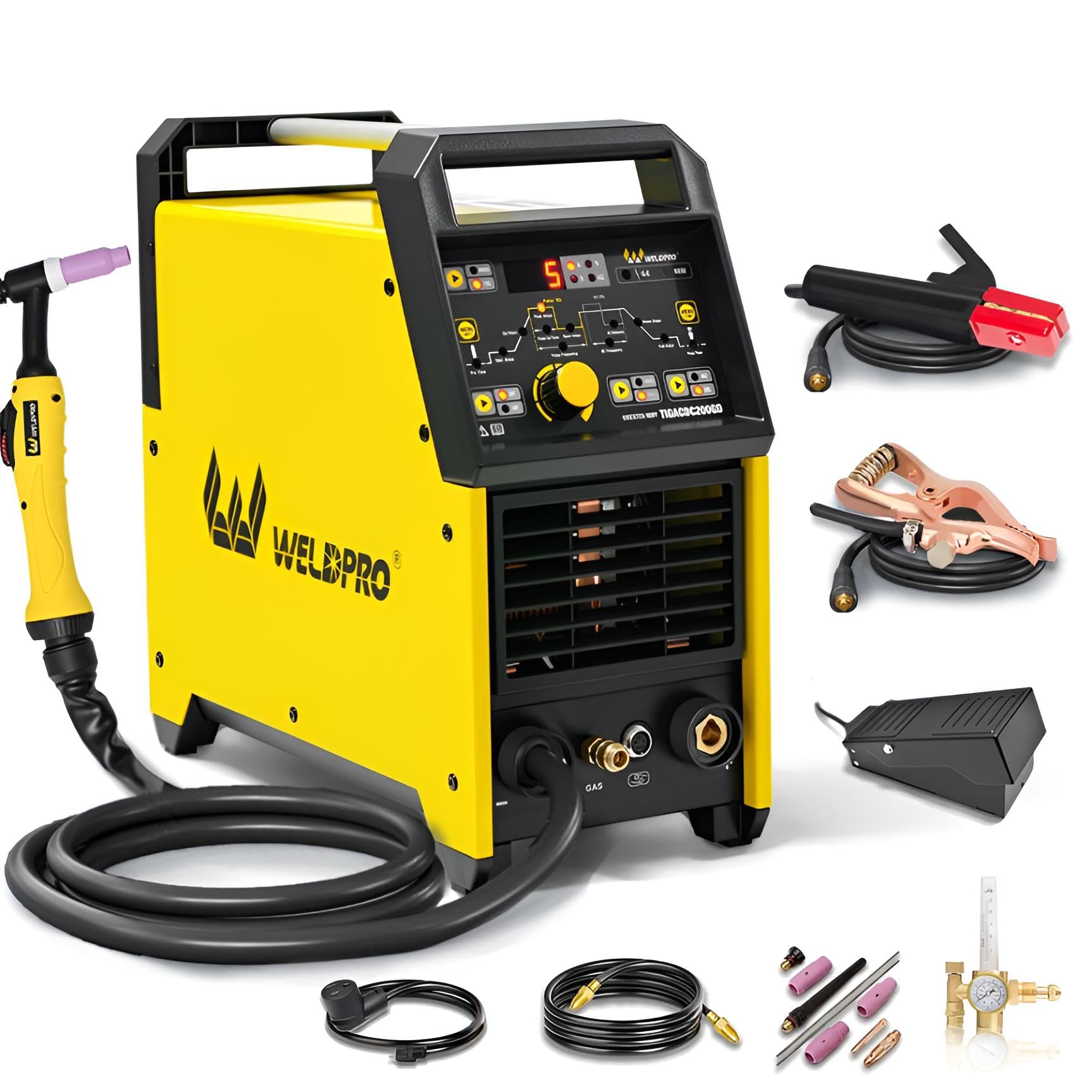
Bottom line: The Weldpro 200A is the most capable TIG-focused machine in this list when you need both AC and DC TIG plus pulse control.
Key Specs
- Output class: 200A
- Input: 110/220V dual voltage
- Processes: AC TIG, DC TIG, pulse TIG, and stick
- Control: foot-pedal compatible; linked package includes a foot pedal
The current Amazon title confirms a five-in-one AC/DC TIG platform with 110/220V input. AC capability is the key reason to choose it over the DC-only TIG machines when aluminum is part of your work.
It has more settings to learn, but that complexity buys wider material coverage. For a TIG-centered shop, this is the premium pick in the roundup.

- AC and DC TIG capability
- Pulse modes
- Dual-voltage input
- Foot pedal included in the linked package
- More controls to learn than a basic TIG machine
- Premium tier
11. ARCCAPTAIN TIG200
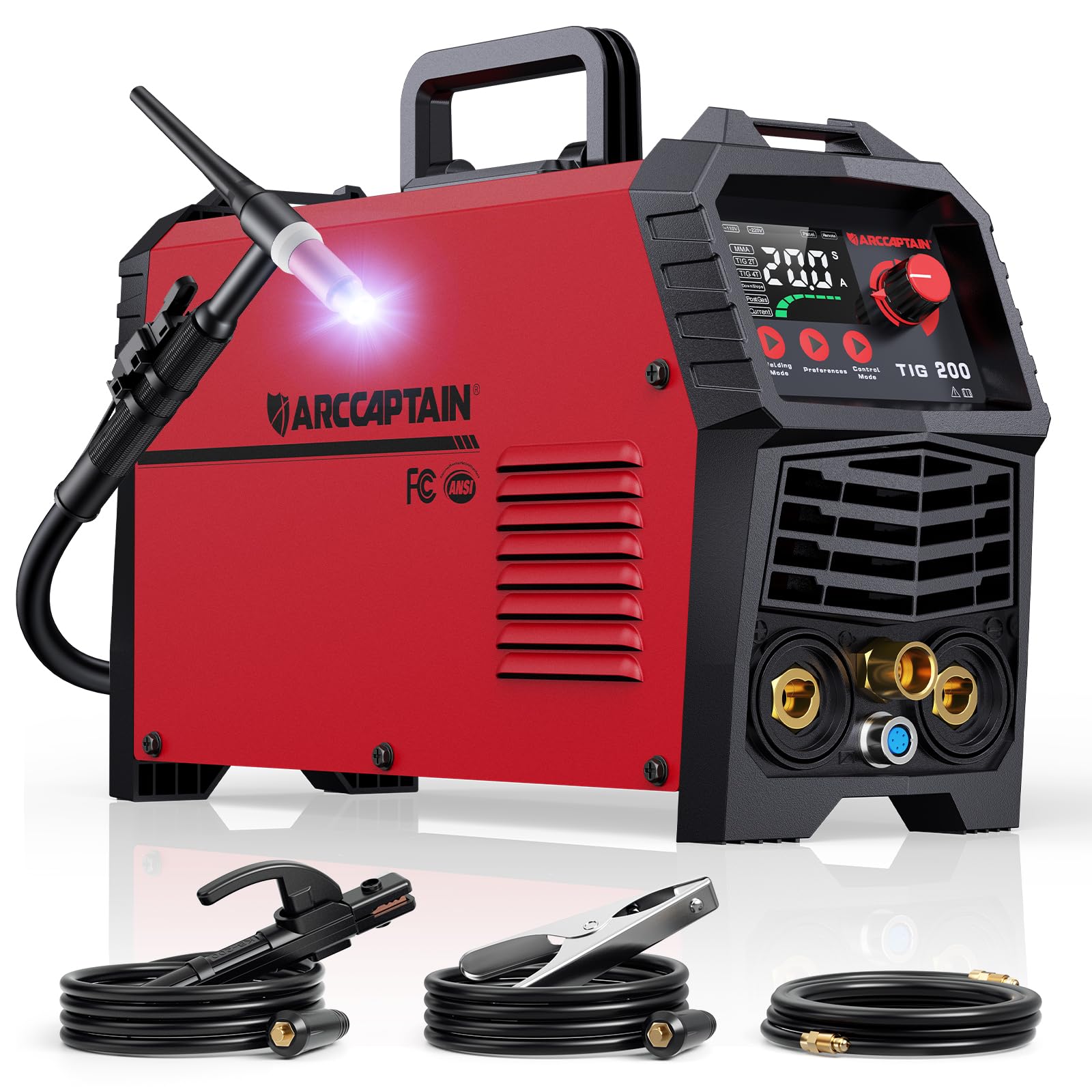
Bottom line: The TIG200 is a straightforward portable DC TIG machine with high-frequency start and dual-voltage input.
Key Specs
- Input: 110/220V
- TIG output: up to 140A at 110V; 200A at 220V
- Stick output: up to 120A at 110V; 170A at 220V
- Rated duty cycle: 60%
ARCCAPTAIN's current specification page confirms HF ignition, TIG/Stick operation, and a compact platform. It is easier to understand than a feature-heavy AC/DC machine while still giving you 2T/4T TIG control.
The limitation is material scope: this is a DC TIG welder, not an AC TIG machine for conventional aluminum TIG work.

- High-frequency TIG start
- Dual-voltage input
- 200A TIG output on 220V
- Portable design
- No AC TIG
- No MIG process
12. ARCCAPTAIN CUT50
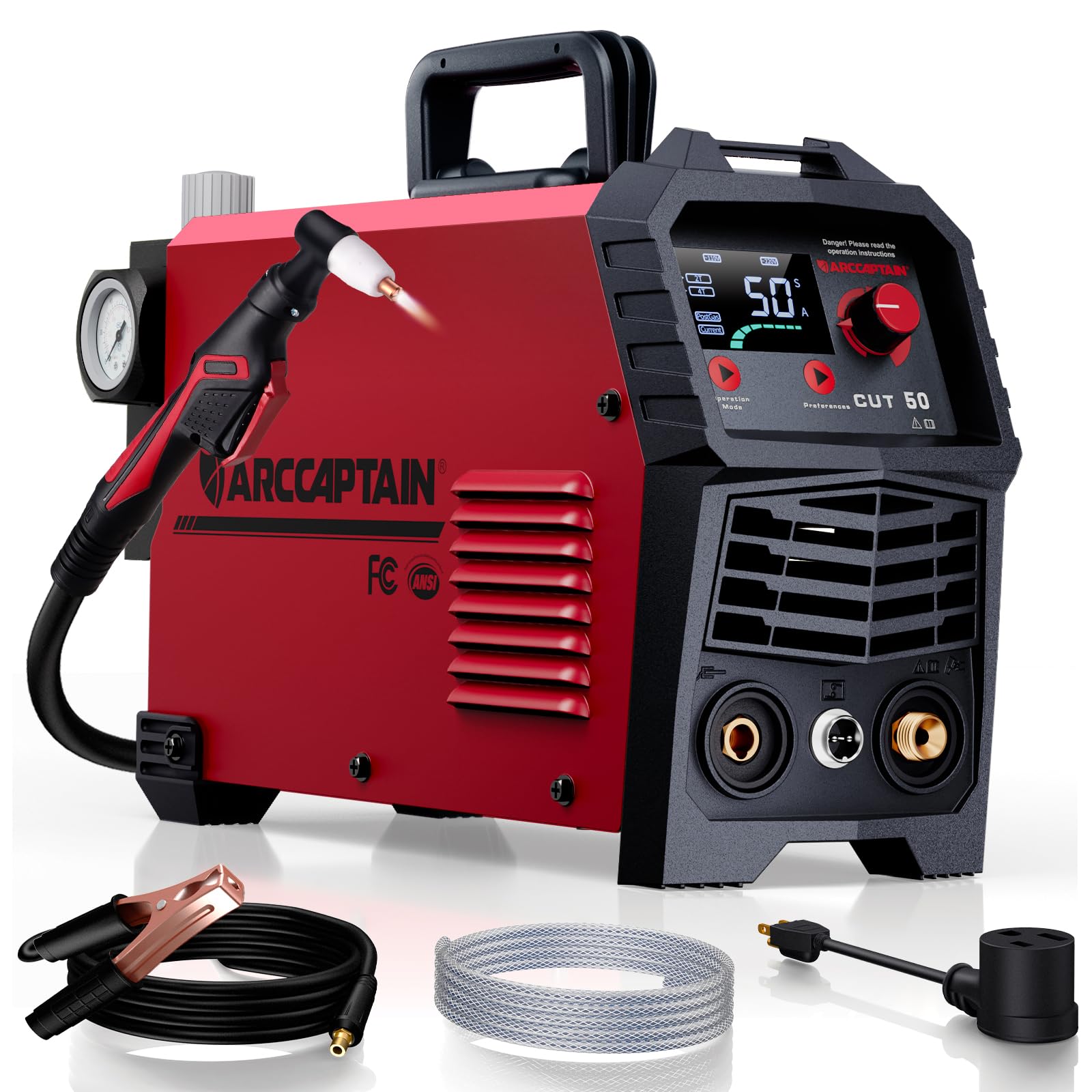
Bottom line: The CUT50 is a straightforward dual-voltage plasma cutter for garage fabrication and repair work.
Key Specs
- Input: 110/220V
- Output: up to 50A on higher-voltage input
- Arc: high-frequency contact start
- Rated duty cycle: 60%
The current Amazon listing matches a 50A dual-voltage cutter and states a maximum cut rating up to two-thirds of an inch. ARCCAPTAIN's specification page gives lower ideal-cut figures, which are the more useful numbers for planning clean work.
It needs a suitable supply of clean, dry compressed air. If you often cut painted, rusty, or expanded metal, a non-touch pilot-arc model will be easier to use.

- Dual-voltage input
- Compact 50A platform
- 60% rated duty cycle
- Useful for common garage cutting tasks
- Contact-start arc is less convenient on rough or expanded metal
- External compressed air is required
13. bestarc BTC500DP 7Gen

Bottom line: The BTC500DP 7Gen is the better 50A choice when non-touch pilot arc matters for rough, painted, or dirty material.
Key Specs
- Input: 110/220V
- Output class: 50A
- Arc: non-touch high-frequency pilot arc
- Rated clean-cut claim: up to 1/2 in on 220V
The exact ASIN is currently marketed as the BTC500DP 7Gen. Pilot arc lets the torch start without touching the workpiece, which is useful on coatings, rust, and expanded metal.
Its 50A ceiling keeps it in the light-to-medium fabrication class. Buyers who want more output headroom can move to a 55A or 60A cutter.

- Non-touch pilot arc
- Dual-voltage input
- Clear digital controls
- Good fit for rough-surface cutting
- Less output than 55A and 60A options
- Requires clean, dry compressed air
14. ARCCAPTAIN CUT55 Pro

Bottom line: The CUT55 Pro is the feature-rich plasma pick, pairing non-touch pilot arc with app-based adjustment and dual-voltage power.
Key Specs
- Input: 120/240V
- Rated output: 35A at 120V; 55A at 240V
- Arc: non-touch pilot arc
- Rated duty cycle: 60%
ARCCAPTAIN's current product page lists app control, firmware support, and a large digital display. Those features make setup easier to monitor without changing the core cutting process.
Maximum output depends on input voltage, so the 240V circuit is the important part if you want the full 55A capability.

- Non-touch pilot arc
- App and digital control features
- Dual-voltage input
- 60% rated duty cycle
- Full output requires 240V
- App control may be unnecessary for users who prefer simple front-panel settings
15. 50A Plasma Cutter with LED Display

Bottom line: The linked ASIN is still a 50A dual-voltage plasma cutter, but it is no longer presented on Amazon under the old 'S7 50A' product name.
Key Specs
- Output class: 50A
- Input: 110/220V
- Torch: PT31-style torch in the current listing
- Display: LED readout
The live listing now uses a generic product title and focuses on easy setup for DIY and home workshops. That means the source article's S7 branding is stale even though the product category and ASIN still match a 50A cutter.
Because branding and long-term model continuity are less clear than on the named-brand cutters, this is better treated as a basic option rather than a primary recommendation.

- Dual-voltage input
- Simple LED display
- Compact DIY-focused format
- Current linked ASIN remains in the correct product category
- Old S7 product name no longer matches the live Amazon title
- Brand/model continuity is less clear than on named-brand options
16. ARCCAPTAIN CUT55
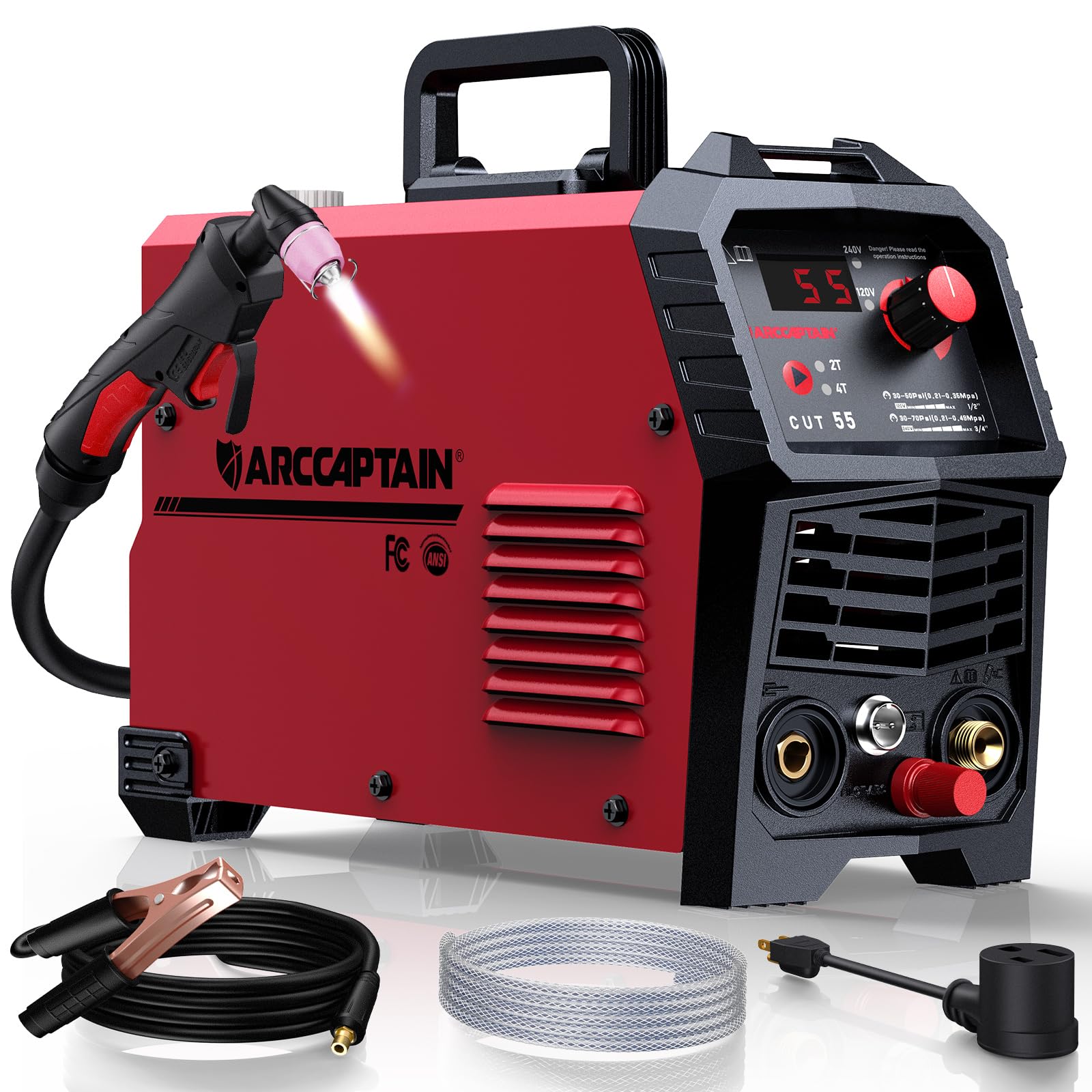
Bottom line: The CUT55 is the simpler 55A ARCCAPTAIN choice if you want non-touch pilot arc without making app control the main feature.
Key Specs
- Input: 120/240V
- Output class: 55A
- Arc: non-touch pilot arc
- Display: digital/LED control panel
The current Amazon title confirms a 55A non-touch pilot-arc machine. That start method helps when the surface is painted, rusty, or uneven because the torch does not need direct contact to establish the arc.
It sits between the CUT50 and CUT60 in output. Like all air-plasma cutters here, actual cut quality depends heavily on input voltage, clean dry air, torch speed, and consumable condition.
- Non-touch pilot arc
- Dual-voltage input
- 55A output class
- Useful middle ground between 50A and 60A cutters
- External air compressor is required
- Less output headroom than the CUT60
17. ARCCAPTAIN CUT60 HF

Bottom line: The CUT60 HF offers the most plasma-cutting output in this roundup while keeping a portable dual-voltage format.
Key Specs
- Output class: 60A
- Input: 110/220V
- Arc: non-touch pilot arc
- Modes: plate, expanded-metal, and rust-removal modes on the current CUT60 HF listing
The exact ASIN is currently identified as CUT60 HF. Current listings describe a large display and dedicated modes for plate, expanded metal, and rust removal.
Use 220V when you need the machine's full output. On 110V, available cutting power is lower, so material thickness and travel speed need to be more conservative.

- Highest output class in this roundup
- Non-touch pilot arc
- Dual-voltage input
- Modes for plate and expanded-metal work
- Full performance depends on higher-voltage input
- Requires clean, dry compressed air
ESAB Sentinel A50 vs YESWELDER M800H: Is the Upgrade Worth It?
The upgrade is mainly about controls, headgear, and professional-use refinement rather than basic eye protection. Both are auto-darkening helmets, but they target different budgets and work patterns.
- Choose the ESAB: you weld often and want a touchscreen, HALO headgear, and a current three-year ESAB helmet warranty.
- Choose the M800H: you want a larger front viewing area and straightforward controls at a budget tier.
- Optics: ESAB publishes a 1/1/1/2 optical class; YESWELDER publishes a 3.93 × 3.66 in viewing area with four sensors.
- Freshness: the A50 is still supported, but newer Sentinel generations are available.
Which Welding Gear Should You Buy?
- Need a professional helmet: start with ESAB Sentinel A50.
- Want helmet value: YESWELDER M800H is the simpler budget pick, while YESWELDER Q800D adds side viewing ports.
- Need one MIG-centered shop welder: ARCCAPTAIN MIG200 gives you the broadest multi-process range in this list.
- Need AC/DC TIG for aluminum: choose Weldpro 200A AC/DC TIG Welder.
- Need a pilot-arc plasma cutter: ARCCAPTAIN CUT55 Pro adds smart controls, while ARCCAPTAIN CUT60 HF gives you more output headroom.
- Limited to 110V for basic welding: ARCCAPTAIN MIG135 or TOOLIOM 135A Stick/Lift TIG Welder keeps the setup simpler.
How We Chose These Products
- We checked each original affiliate ASIN or linked Amazon listing to make sure the product category still matched.
- We used manufacturer product pages, specification pages, or manuals when they were available and preferred those sources for technical facts.
- We compared process support, input voltage, output range, optical specifications, arc-start type, portability, and required accessories.
- We checked model freshness and searched for model-specific recall signals before keeping a product in the recommended set.
- We did not use temporary Amazon pricing, sales ranks, or marketplace badges in the selection.
How to Choose Welding Gear for Black Friday
Start With the Tool Category
A helmet, welder, and plasma cutter solve different problems, so narrow the category before comparing features. If protection and visibility are the priority, compare helmets such as ESAB Sentinel A50 and YESWELDER M800H. If fabrication is the goal, decide whether you need MIG, TIG, stick, or cutting.
Match the Welding Process to Your Material
MIG is fast and practical for general fabrication, while TIG gives more control on precision work. Stick is useful outdoors and for repair work. If aluminum TIG is part of your plan, an AC/DC machine such as Weldpro 200A AC/DC TIG Welder is a better fit than a DC-only TIG welder.
Check Input Voltage Before Output
A dual-voltage machine can be easier to move between a home garage and a shop, but maximum output often changes with the input circuit. The ARCCAPTAIN TIG200 is a clear example: ARCCAPTAIN rates its TIG output higher on 220V than on 110V.
Use Duty Cycle as a Work-Pace Guide
Duty cycle matters when you weld or cut for long periods at higher output. A machine rated for a higher duty cycle can spend more of a ten-minute test period working before thermal protection is expected to interrupt operation. The ARCCAPTAIN MIG200 and ARCCAPTAIN TIG200 publish a 60% rated duty cycle.
For Plasma Cutters, Plan the Air Supply
Air-plasma cutters need clean, dry compressed air. Compare recommended clean-cut thickness before the maximum severance figure, and decide whether contact start or non-touch pilot arc suits your material. The bestarc BTC500DP 7Gen and ARCCAPTAIN CUT55 Pro use non-touch pilot arc.
Think About Consumables and Replacement Parts
Torches, nozzles, electrodes, cover lenses, and contact tips wear out. A tool is easier to own when those parts are easy to identify for the exact model. Before choosing ARCCAPTAIN CUT60 HF or any cutter, confirm the torch and consumable family shown on the current product page.
Mistakes to Avoid When Buying Welding Gear
- Buying by maximum amperage without checking the input circuit.
- Using maximum severance thickness as if it were comfortable clean-cut capacity.
- Assuming DC TIG and AC/DC TIG have the same aluminum capability.
- Ignoring required extras such as shielding gas, a spool gun, compressed air, or respiratory PPE.
- Failing to match the exact model and ASIN when several generations share a similar name.
FAQs
What should I compare first when shopping for welding gear on Black Friday?
Start with the job, not the promotion. Decide whether you need a helmet, MIG welder, TIG welder, or plasma cutter. Then compare process support, input voltage, output range, duty cycle, and required accessories. The correct tool for your outlet, material, and work pattern is more useful than a feature-heavy model that does not fit your setup.
Is a dual-voltage welder worth choosing?
Dual-voltage input is useful when you may work in more than one location. A machine can run from a common lower-voltage circuit for portability and use higher-voltage power when more output is needed. The exact current limit changes by model, so check the manual and your breaker capacity before planning high-amperage welding.
Do I need AC TIG to weld aluminum?
For conventional TIG welding on aluminum, an AC-capable TIG machine is usually the right choice because AC helps manage the oxide layer on the surface. DC-only TIG machines in this roundup are better suited to steel and stainless. The Weldpro 200A is the clear fit here when AC/DC TIG capability is required.
What should I check before buying a plasma cutter?
Confirm input voltage, rated output, recommended clean-cut thickness, arc-start type, and compressed-air requirements. Maximum severance numbers are not the same as comfortable clean-cut capacity. A non-touch pilot arc is especially useful for painted, rusty, or expanded metal, while every air-plasma cutter still needs clean, dry airflow at the required pressure.
How do I choose an auto-darkening welding helmet?
Prioritize optical clarity, viewing area, shade range, sensor count, headgear comfort, and controls you can adjust with gloves on. A wider view can help with positioning, while premium headgear matters more during long sessions. Make sure the stated shade range matches your process and amperage, and add separate respiratory protection whenever the work environment requires it.
What should I verify on the Amazon page before ordering?
Match the exact model name and ASIN to the product you researched, then review the current package contents, seller, delivery details, return policy, and any model-specific compatibility notes. For welders and cutters, confirm the input-voltage version and included torch or leads. For helmets, confirm replacement lenses and accessories fit the exact model.
What Matters Most When Comparing Welding Gear
Focus on fit before features. Helmet buyers usually care most about optical clarity, viewing area, shade range, and comfort. Welder buyers should start with process support and input power. Plasma-cutter buyers should compare pilot-arc behavior, clean-cut capacity, and air requirements.
That approach keeps a broad roundup useful: you are comparing each tool against the job it is built to do, not forcing helmets, welders, and cutters into one technical scale.
Final Verdict
The ESAB Sentinel A50 is the best overall choice in this mixed welding-gear roundup because it combines verified professional helmet features with current manufacturer support. If you are buying a machine instead, choose by process first rather than by a single overall ranking.
For helmet value, see YESWELDER M800H. For premium AC/DC TIG capability, see Weldpro 200A AC/DC TIG Welder.



[…] budget and protects freedom of choice. Additionally, investing in quality equipment, such as reliable welding gear, can enhance your learning experience and future job […]
[…] price or general build quality alone does not establish low EMF emissions. When reviewing welding equipment and deals, use the manufacturer’s EMF, EMC, installation, and safety documentation rather than assuming […]