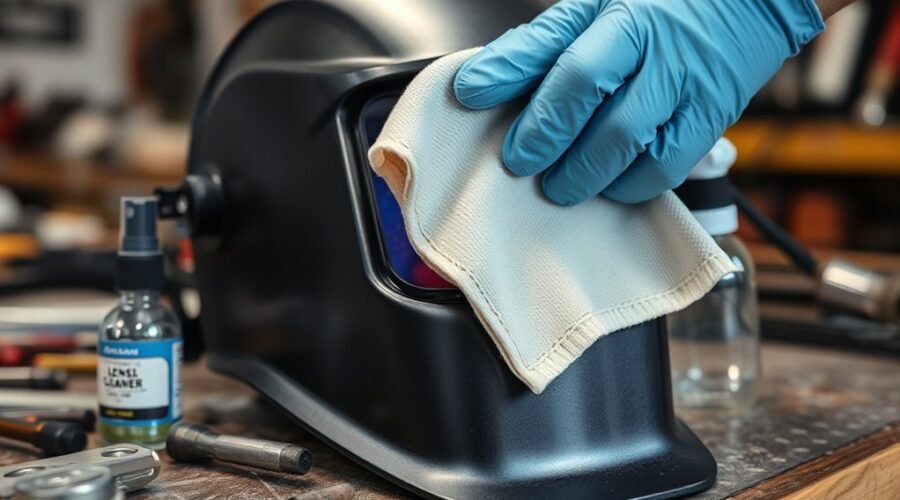
A welding helmet lens can lose clarity quickly when grinding dust, spatter, fingerprints, or the wrong cleaner reaches its surface. The safest cleaning method depends on which part you are handling: the replaceable outer or inner cover plate, a passive filter plate, or the electronic auto-darkening filter (ADF). Using a clean soft cloth, following the helmet manufacturer’s instructions, and replacing damaged cover plates instead of polishing them helps protect visibility and the helmet’s protective system.
Quick Answer
To clean a welding helmet lens without scratching it, first identify whether you are cleaning a removable cover plate or the auto-darkening filter. Use a clean, soft, lint-free cloth and only the cleaning method approved by the helmet manufacturer. Never scrub grit, scrape off spatter, or polish a scratched protection plate; replace damaged plates instead.
Key Takeaways
- Use a clean microfiber or other soft, lint-free cloth so trapped grit is less likely to scratch the viewing area.
- Check the helmet manual before using any liquid or chemical; cleaning rules differ between cover plates and auto-darkening filters.
- Mild soap and lukewarm water are permitted for certain helmet parts by major manufacturers, but solvents and abrasive cleaners are widely discouraged.
- Do not assume diluted alcohol is safe. Some manufacturers, including 3M for the Speedglas 9100 filter, specifically prohibit alcohol.
- Replace scratched, pitted, cracked, warped, or permanently cloudy cover plates instead of trying to polish them back to clarity.
- Keep auto-darkening sensors clean and confirm the helmet operates correctly before returning to welding.
At a Glance
| Time Required | About 5–10 minutes for routine cleaning and inspection |
| Difficulty | Easy, provided you follow the helmet manual |
| Tools Needed | Clean lint-free cloth, mild soap and lukewarm water if approved, clean water, helmet manual, and replacement cover plate when needed |
| Cost | Usually minimal if cleaning supplies are already available; replacement cover-plate cost varies by helmet model |
What Causes Welding Helmet Lens Scratches?
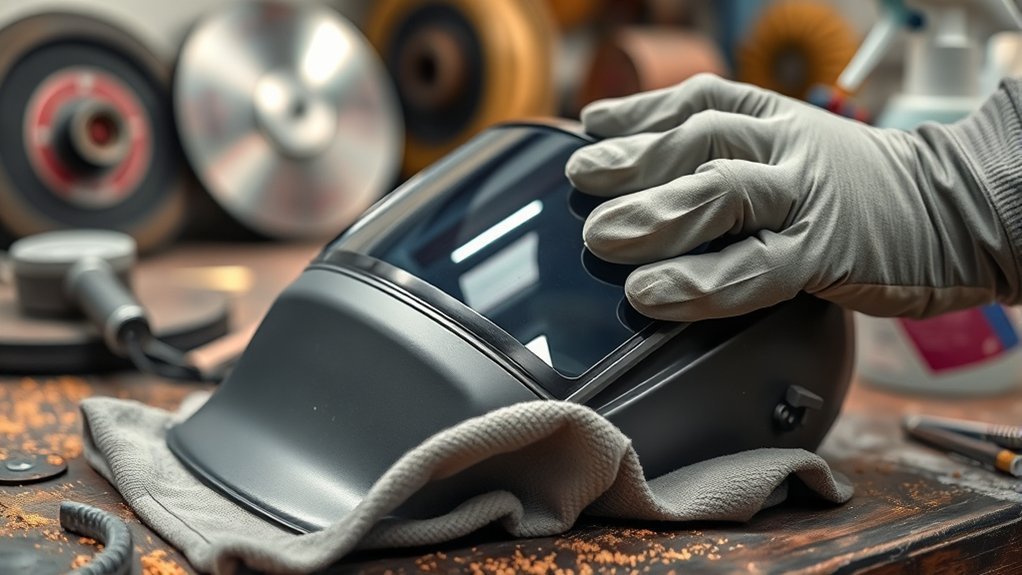
Welding helmet lens scratches usually come from wiping abrasive shop dust across a clear cover plate, using a contaminated rag, scraping hardened spatter, or cleaning with an abrasive product. Even a soft cloth can scratch a lens when metal or grinding particles are trapped in its fibers.
The outer cover plate takes most of the abuse from sparks, spatter, grinding particles, smoke film, and handling. Its job is to protect the more expensive filter behind it, which is why most modern helmets use a replaceable outer protection plate.
A scratched sacrificial cover plate is normally a replacement item, not a surface that should be aggressively polished back into service.
Improper storage can also damage the viewing area. A helmet placed lens-down on a welding bench can pick up grit immediately, while prolonged exposure to excessive heat, direct sunlight, solvents, or other chemicals may damage helmet materials. 3M recommends storing applicable Speedglas equipment in a dry, clean area away from direct sunlight, high temperatures, and solvents.
Good visibility also depends on the quality and condition of the filter system. Welders comparing features such as natural color technology should remember that even a high-quality filter becomes difficult to see through when its protection plate is dirty or damaged.
Know Which Part of the Welding Helmet You Are Cleaning
The word “lens” can refer to several different parts of a welding helmet. Identifying the part first prevents a common mistake: treating a replaceable clear cover plate and an electronic auto-darkening filter as if they were the same material.
| Part | Purpose | Safe General Approach |
|---|---|---|
| Outer cover plate | Protects the filter from spatter, sparks, scratches, and debris | Clean according to the manual; replace if scratched, pitted, cracked, warped, or too dirty to clean |
| Inner cover plate | Protects the inside surface of the filter | Clean gently and replace when damaged |
| Auto-darkening filter (ADF) | Provides variable welding shade and contains optical/electronic components | Use only the manufacturer-approved cleaning method; do not immerse, scrape, or polish it |
| Passive filter plate | Provides a fixed protective shade | Follow the helmet/filter manufacturer’s care instructions and replace damaged optics |
Warning: Never assume a household glass cleaner, alcohol, acetone, brake cleaner, abrasive compound, toothpaste, or automotive polish is safe for a welding filter or cover plate. The approved cleaner depends on the exact helmet. Some 3M Speedglas instructions specifically prohibit solvents and alcohol.
Best Supplies for Cleaning a Welding Helmet Lens
For most routine maintenance, you need fewer supplies than the original article suggested. A clean lint-free cloth, clean water, and a mild soap solution where the manufacturer permits it are usually enough. The helmet’s own instructions should override generic internet cleaning advice.
For example, Miller helmet maintenance guidance for applicable models instructs users to wipe cover lenses with a soft cloth dampened with mild soap and water and warns against solvents or abrasive cleaning detergents. 3M’s Speedglas care resources likewise provide model-specific maintenance instructions.
The helmet shell also matters because keeping the entire helmet clean reduces the amount of dust that migrates toward the viewing area. Owners of helmets such as the ESAB Sentinel A50 should still follow that model’s own manual rather than assuming a cleaner approved for another helmet is interchangeable.
Microfiber Cloth Essentials
A clean microfiber cloth is useful because it can lift fingerprints and fine dirt without the rough surface of many shop towels. A soft, lint-free cloth is also specifically recommended by welding-helmet manufacturers for various cleaning tasks.
Use a cloth that has not been exposed to grinding dust, metal chips, polishing compound, grease, or shop chemicals. A dirty microfiber cloth can scratch a clear cover plate just as easily as another contaminated rag.
- Keep one or more cloths dedicated to helmet and optical cleaning.
- Inspect the cloth for trapped debris before touching the viewing area.
- Use very light pressure.
- Move to a clean section of cloth as dirt transfers from the lens.
- Wash reusable cloths without contaminating them with oily shop rags.
Safe Lens Cleaners
There is no single “optical cleaner” that can be declared safe for every welding helmet. The best cleaner is the one approved for the specific lens, cover plate, or filter by its manufacturer.
For many helmets, mild soap and lukewarm water are approved for certain removable cover lenses or exterior components. Some ADF cartridges require a different method. For example, 3M’s Speedglas 9100 instructions state that the welding filter and protection plates should be cleaned with a lint-free tissue or cloth and warn against solvents, alcohol, immersion, and direct spraying of liquids.
Pro Tip: If the helmet manual is available online, check its “Cleaning,” “Maintenance,” or “Care” section before introducing a new cleaner. This is especially important for coated lenses and auto-darkening filters.
How to Clean a Welding Helmet Lens Safely?
Use this procedure as a safe general framework, then adjust it to the instructions for your exact helmet model.
- Move away from active welding and grinding. Let the helmet cool and work in a clean area where fresh grinding dust will not settle onto the lens.
- Inspect before wiping. Look for loose grit, hardened spatter, cracks, pits, warping, or deep scratches. If a disposable cover plate is badly damaged, replacement is usually safer than aggressive cleaning.
- Identify the component. Confirm whether you are touching the outer cover plate, inner cover plate, passive filter, or auto-darkening cartridge.
- Remove a cover plate only as the manual directs. Many cover plates can be taken out for easier cleaning or replacement. Do not force retaining tabs or pry against the ADF.
- Use a clean, soft, lint-free cloth. Lift loose dust with minimal pressure instead of grinding it across the surface.
- Use approved moisture only when needed. If the manual permits mild soap and lukewarm water, dampen the cleaning cloth or wash the removable plate as directed. Do not saturate an electronic filter.
- Do not spray an ADF directly. Liquid can migrate toward controls, seals, sensors, or electronic components. Follow the manufacturer-specific procedure.
- Dry completely. Use a clean lint-free cloth or allow the component to air dry as instructed.
- Reinstall the cover plate correctly. Make sure it sits flat and that any retainers or gaskets are positioned as the manufacturer intended.
- Inspect and test before welding. Confirm the viewing area is clear, the sensors are unobstructed, the correct mode and shade are selected, and the ADF operates normally.
Maintaining clear optics matters with any helmet, including models discussed in guides to Lincoln welding helmets, but the manual for the exact helmet should always control the cleaning method.
Clean Stubborn Residue Without Scratches
For oily film, smoke residue, or fingerprints that do not come off with a dry cloth, use the mildest cleaning method approved by the helmet manufacturer. On a removable cover plate for which mild soap and water are permitted, a soft cloth dampened with the solution can loosen residue without aggressive scrubbing.
Do not attack hardened spatter with a knife, razor blade, screwdriver, abrasive pad, sandpaper, polishing wheel, or grinding compound. Spatter that has melted or pitted a sacrificial outer cover plate has already damaged that plate. Replace it.
If residue is on the auto-darkening filter itself, follow the ADF manufacturer’s instructions. Some manufacturers allow a damp soapy cloth on specific cartridge surfaces, while others specify a dry or lightly damp lint-free cloth and prohibit direct spraying or immersion.
Note: A permanently cloudy or pitted outer cover plate can make an expensive auto-darkening filter appear defective. Inspect and, when necessary, replace the inexpensive protection plate before assuming the filter itself has failed.
Regularly inspecting cover plates also supports the visibility expected from the helmets compared in a welding helmet guide.
Should You Use Polish on a Welding Lens?
As a general rule, do not polish a welding helmet lens or protection plate unless the exact manufacturer explicitly approves a specific polishing method for that component. Welding-helmet manufacturers commonly instruct users to avoid abrasive cleaning products and replace protection plates once they become scratched or pitted.
Polishing removes or alters surface material. On a sacrificial clear plate, that is usually unnecessary because the plate is designed to be replaced. On a coated filter or auto-darkening cartridge, abrasion may damage coatings or optical surfaces.
The safest response to a scratch that affects your view is therefore replacement of the damaged replaceable component rather than trying progressively stronger abrasives. Good maintenance of the helmet should be paired with care of other PPE such as TIG welding gloves.
Why Polishing Minor Scratches Is Risky
Common internet remedies include toothpaste, plastic polish, automotive rubbing compound, and fine abrasive paste. These products may make an ordinary plastic surface look smoother, but a welding helmet is safety equipment and the viewing system can include protective coatings and manufacturer-specific materials.
- Do not use toothpaste as a scratch remover.
- Do not use automotive rubbing compound as a generic welding-lens treatment.
- Do not sand a cover plate or filter.
- Do not buff an ADF cartridge with a polishing wheel.
- Replace a damaged cover plate when scratches, pits, haze, or distortion affect visibility.
3M instructs users to replace scratched or pitted protection plates on applicable Speedglas helmets, and Lincoln Electric warns against abrasive cleaning detergents on applicable helmets.
Cleaning Guidance by Lens Type
| Lens / Component Type | Cleaning and Scratch Guidance |
|---|---|
| Outer clear cover plate | Clean with the manufacturer-approved method; replace when scratched, pitted, warped, cracked, or too dirty to clean |
| Inner clear cover plate | Clean gently with the approved method; replace if damaged |
| Auto-darkening filter | Use only the ADF manufacturer’s cleaning method; never use abrasive polish or immerse the cartridge |
| Passive filter plate | Follow the filter/helmet manufacturer’s instructions and replace the optical component if damage affects safe viewing |
Whether a part is plastic, glass, coated, laminated, or electronic does not by itself prove that a particular rubbing compound is safe. Product-specific instructions matter more than a generic material label.
Signs To Replace
Clean the viewing system first so you can distinguish removable dirt from permanent damage. Then inspect it in good light.
- Replace a cover plate with deep or widespread scratches that interfere with the view.
- Replace a pitted or melted outer plate damaged by spatter.
- Replace a cracked, warped, or permanently cloudy cover plate.
- Do not use a cracked or physically damaged auto-darkening filter.
- Investigate an ADF that flickers, fails to darken, darkens inconsistently, or has damaged controls or sensors.
- Keep the correct replacement cover plates available when the helmet is used frequently.
If visibility does not return after correct cleaning, replacement is safer than repeated abrasive treatment.
How to Clean an Auto-Darkening Lens Safely?
An auto-darkening filter requires more care than a disposable outer cover plate because it contains the protective optical assembly and electronic switching system.
Start by checking the instructions for the exact filter. The 3M Speedglas 9100 welding-filter instructions, for example, direct users to clean the welding filter and protection plates with lint-free tissue or cloth and specifically say not to use solvents or alcohol, immerse the unit, or spray liquids directly onto it.
Lincoln Electric’s guidance for applicable VIKING helmets also says to keep the sensors and solar cell clean, use a damp rather than saturated cloth where soapy water is approved, and avoid solvents or abrasive cleaning detergent.
- Inspect the outer protection plate first and replace it if it is heavily scratched, pitted, or coated with spatter.
- Gently wipe accessible ADF surfaces with the method approved in the helmet manual.
- Keep arc sensors and any solar-cell surface clean and unobstructed.
- Keep liquids away from openings, controls, battery compartments, and electronics unless the manual specifically permits otherwise.
- Do not immerse the ADF.
- Reassemble the helmet correctly and confirm the filter changes state normally before welding.
For passive helmets, care requirements may differ, so consult the manufacturer instructions for the filter and helmet. General comparisons of passive welding helmets should not replace model-specific maintenance directions.
The latest voluntary U.S. eye-and-face protection standard is ANSI/ISEA Z87.1-2025. OSHA separately requires employers to provide appropriate eye and face protection and suitable welding filter shades for the work being performed under applicable regulations such as 29 CFR 1910.133.
Warning: Cleaning does not correct a cracked ADF, an unreliable darkening function, or an inappropriate shade setting. Stop using a damaged or malfunctioning helmet until the affected component is correctly repaired or replaced according to the manufacturer.
When to Replace a Scratched Lens?
A scratched welding helmet component should be replaced when the damage interferes with a clear, undistorted view or when the manufacturer specifies replacement. On many helmets, the damaged part is only the inexpensive outer cover plate rather than the auto-darkening filter itself.
- Inspect the viewing area before welding.
- Clean fingerprints and removable residue first.
- Replace cover plates with significant scratches or persistent haze.
- Treat cracks, spatter pits, melting, or warping as physical damage.
- Replace an ADF or other protective component when its manufacturer says the observed damage requires replacement.
- Keep compatible spare cover plates available for quick changeout.
Routine inspection protects visibility and reduces the temptation to compensate for a dirty lens by changing welding position or using an inappropriate shade. Clear vision also supports better control when using equipment such as the machines covered in a guide to TIG welders.
Frequently Asked Questions
What Is the Best Way to Clean Welding Helmet Lenses?
Identify the component first, then follow the helmet manufacturer’s cleaning instructions. For routine cleaning, use a clean soft or lint-free cloth and minimal pressure. Mild soap and lukewarm water may be appropriate for some cover plates, but the auto-darkening filter may have different requirements. Replace scratched or pitted protection plates instead of using abrasive repair methods.
Can I Use Isopropyl Alcohol to Clean a Welding Helmet?
Do not treat isopropyl alcohol as a universally safe welding-lens cleaner. Some manufacturers expressly prohibit it. For example, 3M’s Speedglas 9100 welding-filter instructions say not to use alcohol or solvents. Use alcohol only if the instructions for your exact helmet and component specifically permit it.
How Do I Make a Welding Lens Clear Again?
Clean removable dirt using the approved method, then inspect the cover plate in good light. If haze comes from scratches, spatter pits, heat damage, warping, or a degraded surface rather than dirt, replace the damaged cover plate. Do not keep polishing or sanding a safety-related optical component until it appears clearer.
What Is a Good Lens Cleaner for a Welding Helmet?
The safest cleaner is the one approved by the helmet manufacturer. Many instructions permit mild soap and lukewarm water for certain parts and recommend a soft lint-free cloth. Do not assume household glass cleaner, ammonia, alcohol, solvent-based cleaner, or an abrasive optical polish is suitable for every welding helmet.
Can I Use Windex or Household Glass Cleaner on a Welding Helmet Lens?
Not unless the manufacturer specifically approves that product or its ingredients. Household glass cleaners may contain ammonia, alcohol, or other chemicals that are unsuitable for some plastics, coatings, and welding filters. Mild manufacturer-approved cleaning methods are a safer default.
Can Toothpaste or Car Polish Remove Welding Lens Scratches?
They may abrade ordinary plastic surfaces, but that does not make them appropriate for welding safety equipment. Welding-helmet manufacturers commonly warn against abrasive cleaners and instruct users to replace damaged protection plates. Do not use toothpaste, rubbing compound, or automotive polish unless the manufacturer of the exact component expressly approves it.
Conclusion
A welding helmet lens stays clear longest when dirt is removed gently and damaged sacrificial parts are replaced instead of aggressively restored. Start by identifying whether you are cleaning a cover plate or the auto-darkening filter, use a clean lint-free cloth, and follow the exact manufacturer’s rules for soap, water, or other cleaners. Avoid unapproved alcohol, solvents, abrasives, scraping, and polishing. If scratches, pits, cloudiness, cracks, or distortion remain after proper cleaning, replace the affected component before welding.
Sources
- 3M Speedglas Care & Maintenance Resources — manufacturer maintenance resources for Speedglas welding helmets.
- 3M Speedglas 9100 Welding Filter Instructions — cleaning restrictions for solvents, alcohol, immersion, and direct liquid spraying.
- Miller Welding Helmet Owner’s Manual — soft-cloth, mild-soap, water, and non-abrasive maintenance guidance.
- Lincoln Electric VIKING Welding Helmet Manual — cover-lens, ADF, sensor, and cleaning guidance.
- OSHA 29 CFR 1910.133 — Eye and Face Protection — workplace eye/face protection and welding filter-shade requirements.
- ANSI/ISEA Z87.1-2025 — current American National Standard for occupational and educational eye and face protection devices.