
The best Lincoln welding helmets should give you a clear puddle view, reliable auto-darkening, and a fit you can wear through a full job. The main differences are viewing area, shade range, sensor count, headgear, weight, and task-specific features.
Lincoln Electric VIKING 3350 ADV is the top pick because it combines an 11.8-square-inch 4C lens, five arc sensors, digital controls, and X6 headgear. For a simpler, lighter option, the Lincoln Electric VIKING 1740 is the Best value pick.
We checked the linked Amazon listings against current Lincoln Electric specifications, then compared optics, controls, weight, process range, serviceable parts, and recall information.
Lincoln Welding Helmets: Our Top Picks
Lincoln Welding Helmets Compared
| Product | Best for | Viewing area | Shade range | Arc sensors |
|---|---|---|---|---|
|
Premium
|
Best overall | 11.8 sq in | 5-13 | 5 |
|
Premium
|
Best for grinding | 2.95 × 4.25 in | 5-13 | 4 |
|
Premium
|
Best for low-light work | 9.3 sq in | 5-13 | 4 |
|
Premium
|
Best lightweight premium | 9.3 sq in | 5-13 | 4 |
|
Mid-range
|
Best mid-range | 3.78 × 1.85 in | 7-13 | 4 |
|
Budget
|
Best value | 3.78 × 1.67 in | 9-13 | 2 |
1. Lincoln Electric VIKING 3350 ADV

Bottom line: The Lincoln Electric VIKING 3350 ADV is the strongest all-around choice for full-time welding because it pairs a large 11.8-square-inch VIKING auto-darkening view with advanced controls and five arc sensors. Buy it when visibility and control matter more than keeping helmet weight to a minimum.
- Viewing area: 11.8 sq in, wide enough to reduce head repositioning
- Shade range: 5-13, covers common cutting and welding settings
- Arc sensors: 5, giving the lens more arc-detection points
- Weight: 23.6 oz; 25 oz with LED module
- Power: 1 replaceable CR2450; LED module uses separate AA power
The 4C lens carries a 1/1/1/1 optical clarity rating and a light state of 2.5. That combination gives you a brighter off-arc view for joint setup and inspection. The X6 headgear spreads the load across more contact points, which matters because this is not the lightest helmet in the group.
The digital interface stores three weld memories and supports Weld, Cut, Grind, and Auto modes. Auto Shade can adjust lens shade as the arc changes. Bluetooth connects to Lincoln Electric’s GearPoint app for settings, usage information, and maintenance support.
- 11.8 sq in 4C viewing area with 1/1/1/1 clarity
- Five arc sensors and broad 5-13 shade range
- X6 headgear plus removable smart LED
- Digital controls, weld memories and GearPoint connectivity
- Heavier than the 1740, 1840 and standard 2450
- More controls than occasional welders may need
- LED module adds extra weight and its own battery
2. Lincoln Electric VIKING 3250D FGS

Bottom line: The Lincoln Electric VIKING 3250D FGS is built for welders who switch often between welding, grinding, chipping, and inspection. Its flip-up clear grind shield and side windows are the reason to choose it over a standard fixed-front VIKING helmet.
- Viewing area: 2.95 × 4.25 in, with side windows for peripheral view
- Shade range: 5-13, suitable for varied welding processes
- Arc sensors: 4, a common multi-sensor layout for shop work
- Weight: 28 oz, the heaviest helmet in this roundup
- Power: 2 replaceable CR2450 batteries
The FGS design lets you flip the auto-darkening lens assembly up and work behind a clear anti-fog grinding shield. That saves you from repeatedly swapping face protection during fabrication and cleanup. The side windows also widen your awareness around the work area.
The lens is rated 1/1/1/1 for optical clarity, with a 1/25,000-second switching speed and digital sensitivity control. The trade-off is weight: at 28 ounces, this is the model to avoid if neck fatigue is your first concern.
- Flip-up clear grinding shield speeds task changes
- Side windows improve peripheral visibility
- 1/1/1/1 optical clarity and four arc sensors
- Five-year manufacturer warranty
- 28 oz weight is the highest in this group
- Internal shade and grind controls are less direct than external controls
- No integrated work light like the ADV models
3. Lincoln Electric VIKING 2450 ADV

Bottom line: The Lincoln Electric VIKING 2450 ADV is the best fit when you often position, tack, or inspect work in dim spaces. Its removable smart LED adds arc-off lighting while keeping the 9.3-square-inch 4C lens and digital controls of a premium VIKING helmet.
- Viewing area: 9.3 sq in, a roomy window without 3350 size
- Shade range: 5-13, covering cutting through common welding shades
- Arc sensors: 4, supporting reliable arc detection from several angles
- Weight: 22 oz; 24 oz with LED module
- Power: 1 CR2450 for the helmet; LED module uses an AA battery
The 2450 ADV uses 4C optics with a 1/1/1/1 clarity rating. Its push-button interface adjusts shade, sensitivity, delay, and mode, while low-profile external controls handle grind mode and the LED.
The LED turns off when the arc starts and returns when the arc stops, preserving its separate battery. You still get a five-year manufacturer warranty, hard-hat compatibility, and cheater-lens compatibility, but the view is smaller than the 3350 ADV.
- Integrated removable LED improves arc-off visibility
- 9.3 sq in 4C lens with 1/1/1/1 clarity
- Digital controls with external grind and LED buttons
- Five-year manufacturer warranty
- Smaller viewing area than the 3350 ADV
- LED raises total helmet weight
- LED has a separate battery to maintain
4. Lincoln Electric VIKING 2450
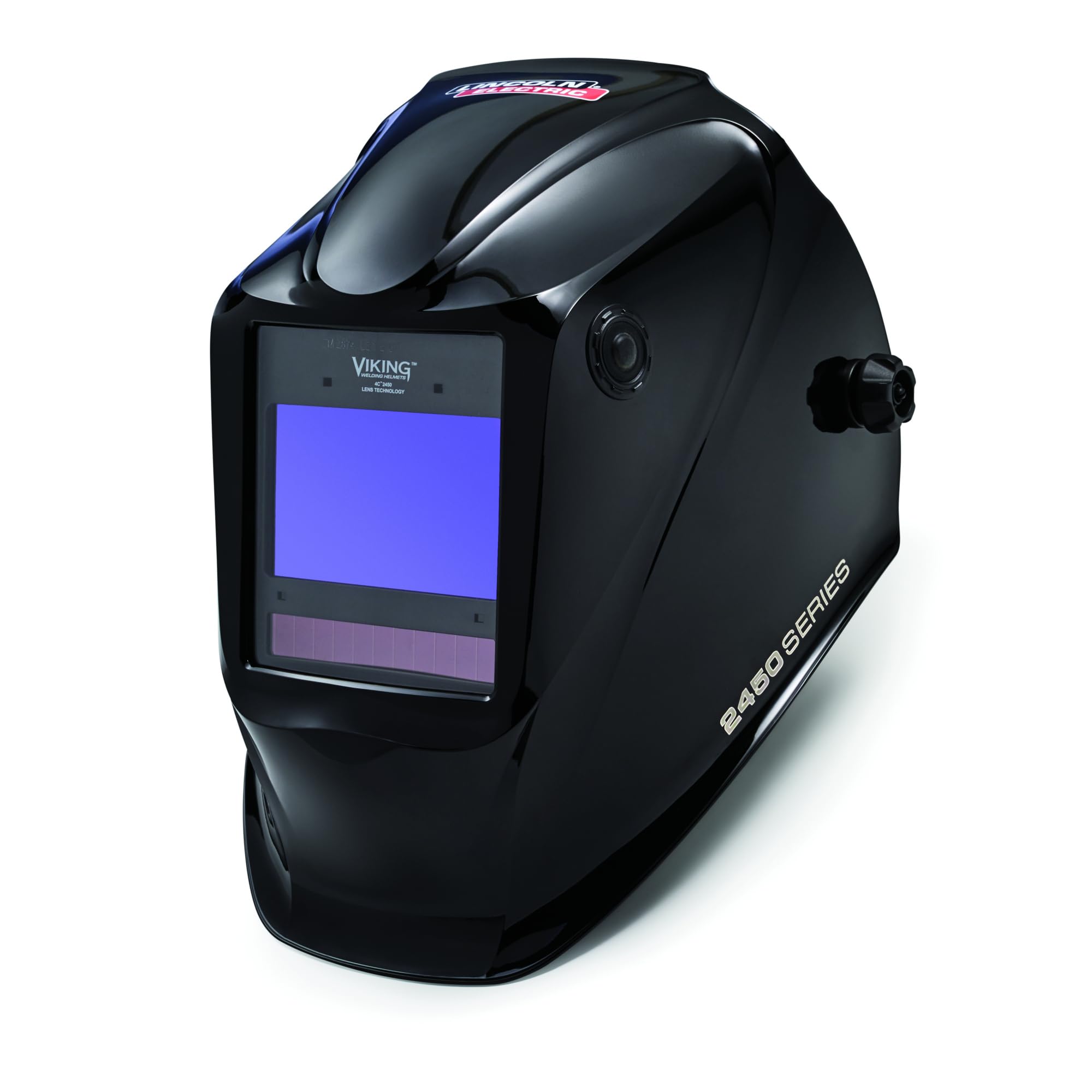
Bottom line: The Lincoln Electric VIKING 2450 is a lighter premium option for TIG, MIG, stick, and general fabrication. It keeps the 9.3-square-inch 4C lens and four sensors, but skips the integrated LED and newer ADV interface.
- Viewing area: 9.3 sq in, large enough for detailed fabrication work
- Shade range: 5-13, useful across cutting and welding tasks
- Arc sensors: 4, giving broad arc-detection coverage
- Weight: 21 oz, lighter than the ADV and FGS models
- Power: 2 replaceable CR2450 batteries
The standard 2450 is appealing if you value a clear lens and lower weight more than connected or lighting features. Its 4C lens is rated 1/1/1/1, and the view measures 3.82 by 2.44 inches.
It also supports a cheater lens and offers adjustable sensitivity and delay. Compared with the newer 2450 ADV, you give up the integrated LED and digital interface, but you keep the core optical package in a lighter shell.
- 9.3 sq in 4C viewing area
- 1/1/1/1 optical clarity
- 21 oz weight undercuts the ADV models
- Adjustable sensitivity and delay with four sensors
- No integrated LED
- Older control layout than the 2450 ADV
- Two CR2450 batteries instead of one helmet battery
5. Lincoln Electric VIKING 1840 Tempered

Bottom line: The Lincoln Electric VIKING 1840 Tempered is the balanced mid-range choice. The linked Tempered variant gives you 4C optics, a 7-13 shade range, four sensors, external grind control, and a 19.5-ounce weight without stepping up to the heavier premium models.
- Viewing area: 3.78 × 1.85 in, smaller than the 2450 and 3350
- Shade range: 7-13, focused on welding rather than shade-5 cutting
- Arc sensors: 4, a strong sensor count at this size
- Weight: 19.5 oz, easier on the neck than premium models
- Power: 1 replaceable CR2450 battery
The current 1840 Digital platform uses a 1/25,000-second switching speed, seven sensitivity settings, and an external grind control. The compact view makes the helmet easier to keep light, but it does not give you the wide field of the 2450 or 3350.
For TIG, Lincoln rates the lens above 2 amps DC and above 5 amps AC. That makes the specification worth checking if you routinely weld at very low AC amperage.
- 4C optics in a 19.5 oz helmet
- Four arc sensors and seven sensitivity settings
- External grind control
- Simple mid-range feature set
- Smaller viewing area than 2450 and 3350 models
- Shade range starts at 7 rather than 5
- Low-amp AC TIG rating is not as low as 3350 or 2450 models
6. Lincoln Electric VIKING 1740

Bottom line: The Lincoln Electric VIKING 1740 is the Best value choice for hobbyists, maintenance work, and backup-helmet duty. It is the lightest model here and still gives you 4C optics, a 1/1/1/1 clarity rating, and grind mode.
- Viewing area: 3.78 × 1.67 in, the smallest view in this roundup
- Shade range: 9-13, aimed at common welding shades
- Arc sensors: 2, fewer than the other models here
- Weight: 18.6 oz, the lightest verified model in this list
- Power: Solar-assisted with replaceable AAA battery backup
The 1740 keeps setup simple. Its compact 6.3-square-inch viewing area works well for straightforward MIG, TIG, stick, and maintenance jobs, while the lower weight reduces the load on your head and neck.
The trade-offs are straightforward: the window is smaller, the shade range is narrower, and there are only two arc sensors. Current Lincoln Electric literature lists a five-year standard warranty, so you do not give up warranty length to choose the lighter 1740.
- 18.6 oz weight is the lightest in this roundup
- 4C optics with 1/1/1/1 clarity
- Simple grind mode and 9-13 shade range
- Solar assist with replaceable battery backup
- Smallest viewing area in the group
- Only two arc sensors
- No integrated LED or advanced digital interface
Lincoln Electric VIKING 3350 ADV vs Lincoln Electric VIKING 1740: Is the Upgrade Worth It?
The 3350 ADV gives you a much larger view, more sensors, broader controls, and connected features. The 1740 cuts weight and complexity for smaller jobs and occasional welding.
- Viewing area: 11.8 sq in on the 3350 ADV versus 6.3 sq in on the 1740.
- Sensors: five on the 3350 ADV versus two on the 1740.
- Shade range: 5-13 on the 3350 ADV versus 9-13 on the 1740.
- Weight: the 1740 is lighter at 18.6 oz; the 3350 ADV is 23.6 oz before its LED module.
Which Welding Helmet Should You Buy?
- Full-time welding and the broadest feature set: get the Lincoln Electric VIKING 3350 ADV.
- Frequent grinding and chipping: get the Lincoln Electric VIKING 3250D FGS.
- Dim work areas and inspection: get the Lincoln Electric VIKING 2450 ADV.
- Premium optics with lower weight: get the Lincoln Electric VIKING 2450.
- Balanced mid-range use: get the Lincoln Electric VIKING 1840 Tempered.
- Hobby projects and lowest weight: get the Lincoln Electric VIKING 1740.
How We Chose
- Optics: We compared 4C lens technology, optical clarity, viewing area, and light-state visibility from Lincoln Electric specifications.
- Process control: We checked shade range, sensor count, TIG amp ratings, sensitivity, delay, grind controls, and available modes.
- Comfort: We compared published helmet weight and headgear design because both affect long-session wear.
- Practical features: We considered flip-up grinding shields, LEDs, batteries, hard-hat and cheater-lens compatibility, and replaceable parts.
- Verification: We matched each linked Amazon listing to the exact Lincoln model and checked manufacturer documentation plus recall searches. Owner-feedback claims were not added unless a repeated non-Amazon trend could be verified.
Welding Helmet Setup and Maintenance
Fit the headgear so the viewing window lines up with your natural sightline. Before welding, confirm the correct mode and shade, then use the helmet test function when available. Set sensitivity and delay for your process rather than copying one setting for every job.
Keep outside and inside cover lenses clean, and replace them when scratches or spatter reduce visibility. Check sensors for dirt, inspect the shell and headgear for damage, and keep the correct spare batteries for your model. If you use a cheater lens or hard-hat adapter, confirm it is compatible with the exact VIKING series.
How to Choose a Lincoln Welding Helmet
Optics and Viewing Area
A larger lens lets you see more of the joint and surrounding work without moving your head as much. If that matters most, the Lincoln Electric VIKING 3350 ADV has an 11.8-square-inch auto-darkening view. If you prefer less weight, the smaller 1840 and 1740 windows help keep those helmets lighter.
Shade Range and Low-Amp TIG
Choose a shade range that matches your actual processes. The 3350 ADV, 3250D FGS, 2450 ADV, and 2450 cover shades 5-13. The 1840 runs 7-13, and the 1740 runs 9-13. For low-amp TIG, compare the published TIG minimums; the Lincoln Electric VIKING 3350 ADV and both 2450 models are rated above 2 amps for AC and DC.
Grinding and Fabrication Workflow
If grinding is a major part of your day, the Lincoln Electric VIKING 3250D FGS stands apart because its auto-darkening lens flips up over a clear grinding shield. If you only need a grind mode, the other VIKING models can be simpler and lighter.
Weight and Headgear
Helmet weight matters most during long or overhead sessions. The Lincoln Electric VIKING 1740 is the lightest here at 18.6 ounces, followed by the 1840 at 19.5 ounces. The 3350 ADV is heavier, but its X6 headgear is designed to distribute that load across more contact points.
Controls, Lighting, and Connectivity
Choose controls you will actually use. The Lincoln Electric VIKING 2450 ADV adds a smart LED and digital interface without going to the 3350’s full feature set. The 3350 ADV adds Auto Shade, weld memories, Bluetooth, and GearPoint support. Simpler models reduce setup steps if you rarely change processes.
Safety Standards and Compatibility
Check the certification label and manual for the exact helmet and generation you buy. Current Lincoln literature lists ANSI Z87.1 and CSA Z94.3 compliance on multiple VIKING models, but accessories, shell designs, and regional versions can differ. Also confirm hard-hat and cheater-lens compatibility if those are part of your setup.
Batteries, Parts, and Warranty
Replaceable batteries and cover lenses keep a helmet serviceable. The 3350 ADV, 2450 ADV, 2450, 1840, and 3250D use CR2450 batteries in their auto-darkening systems, while the 1740 uses solar assist with battery backup. Warranty length also differs by series, so confirm coverage for the exact model you buy.
Mistakes to Avoid When Buying a Welding Helmet
- Buying by series name alone: Check the exact model and generation because ADV and standard versions differ.
- Ignoring your lowest TIG amperage: Match the published TIG rating to your real process.
- Choosing the biggest lens without considering weight: Balance field of view against long-session comfort.
- Assuming every grind mode works the same: A flip-up clear shield is different from an electronic grind setting.
- Forgetting replacement parts: Confirm cover lenses, batteries, headgear, and adapters are available for your exact series.
FAQs
How Do I Choose the Right Lincoln Helmet?
Match the helmet to your main process, then compare viewing area, shade range, sensor count, weight, and controls. A larger 4C window helps when you want more of the joint in view, while lower weight matters during long sessions. Choose task-specific features such as a flip-up grind shield or LED only when they fit your workflow.
Are Lincoln Helmets Suitable for TIG and Low-Amp Welding?
Yes, several VIKING models are specified for low-amp TIG, but the minimum varies by model. The 3350 ADV, 2450 ADV, 2450, and 3250D FGS are rated above 2 amps for AC and DC TIG. The 1840 and 1740 have different minimums, so check your typical amperage before buying.
What Is Lincoln Electric 4C Lens Technology?
4C is Lincoln Electric’s lens technology designed to show a broader, more natural color range through the auto-darkening filter. The current VIKING models in this roundup use 4C optics, and several carry a 1/1/1/1 optical clarity rating. The practical benefit is a clearer view of the base metal, arc, and puddle.
Which Lincoln Viking Helmet Is Best for Grinding?
The Lincoln Electric VIKING 3250D FGS is the most grinding-focused model in this roundup. Its auto-darkening lens assembly flips up to expose a clear anti-fog grinding shield, and side windows add peripheral visibility. If you only need occasional grinding, the electronic grind modes on the other VIKING models may be simpler.
How Should I Maintain and Set Up My Helmet?
Adjust the headgear so the lens sits naturally in your sightline, then confirm mode, shade, sensitivity, and delay before welding. Keep the sensors and cover lenses clean, replace scratched covers, and use the helmet test function when available. Store spare batteries that match your model and inspect the shell and headgear for damage.
What Is the Main Difference Between the VIKING 3350 ADV and 1740?
The 3350 ADV is larger and more feature-rich, while the 1740 is lighter and simpler. The 3350 ADV has an 11.8-square-inch view, five sensors, a 5-13 shade range, digital controls, LED support, and Bluetooth. The 1740 has a 6.3-square-inch view, two sensors, a 9-13 range, and an 18.6-ounce weight.
Customer Preferences
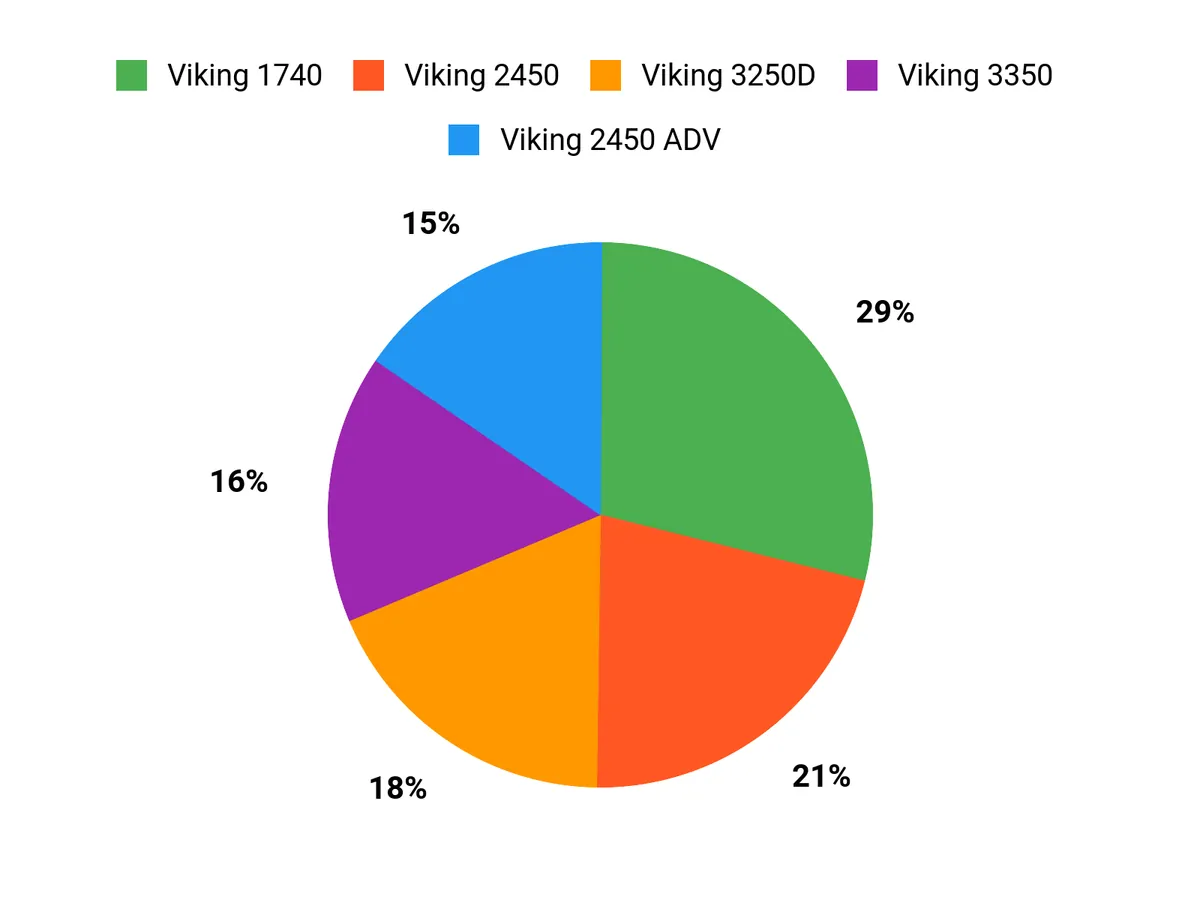
Your best match depends on the trade-off you care about most: wider optics, lower weight, faster grinding transitions, built-in lighting, or simpler controls. Use the comparison table and decision guide above to narrow the field before checking fit, battery type, and process limits.
Final Verdict
Among these Lincoln welding helmets, the Lincoln Electric VIKING 3350 ADV offers the broadest verified feature set for professional and multi-process use. It is the pick to start with when visibility, control, and versatility outweigh the extra weight.
For lower weight and simpler controls, see the Lincoln Electric VIKING 1740. If you want a premium mid-size helmet with integrated lighting, compare the Lincoln Electric VIKING 2450 ADV.
More Product Views
These additional product views help you compare the 3350 ADV, 3250D FGS, 2450 ADV, and 2450 before you choose.