
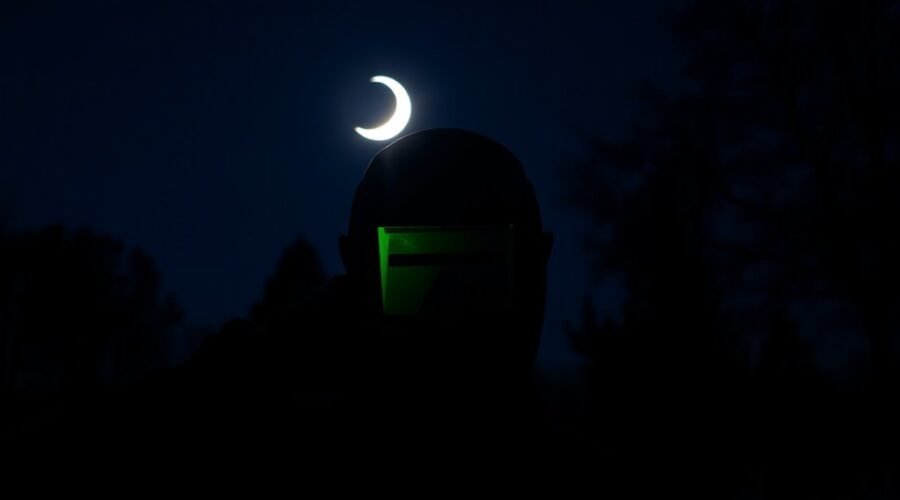
A welding mask can sometimes be used for eclipse viewing, but only if its lens is rated shade 12 or higher, with shade 14 preferred for stronger protection. Many masks sold at hardware stores do not meet this standard, and cracks or scratches can reduce safety further. Ordinary sunglasses are inadequate. The key question is not whether the mask exists, but whether its exact rating and condition can truly protect the eyes.
Key Takeaways
- Yes, but only if the welding mask lens is clearly rated shade 12 or higher, with shade 14 preferred.
- Check the helmet label and lens for a legible shade rating before using it for solar viewing.
- Ordinary sunglasses and low-shade welding helmets are not safe and can still cause permanent eye damage.
- Inspect the mask for cracks, scratches, or poor fit, since damaged or unverified masks may not protect your eyes.
- Certified ISO 12312-2 eclipse glasses or indirect viewing methods are safer and more reliable options.
Can You Use a Welding Mask for Eclipse Viewing?
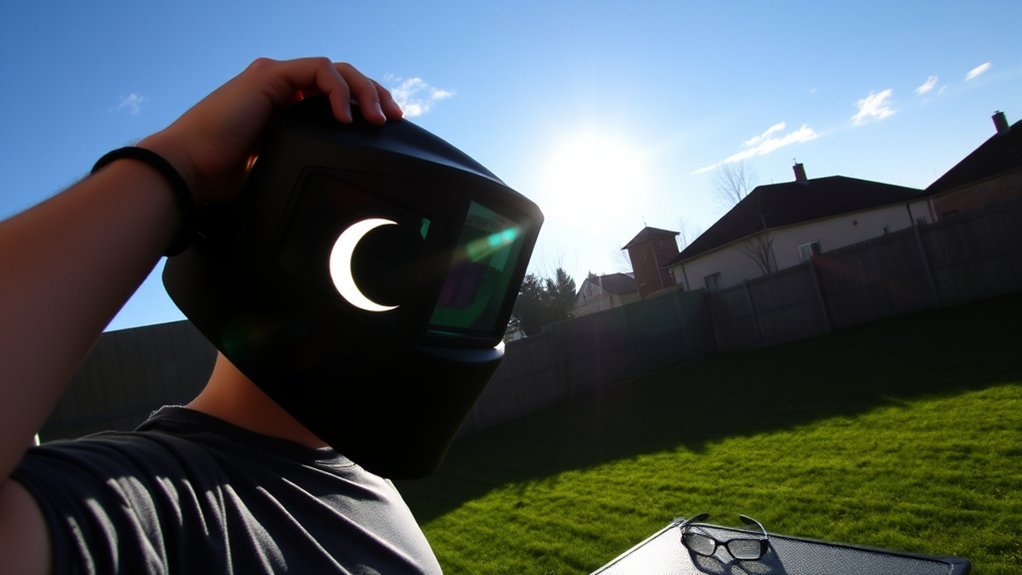
A welding mask can be used for solar eclipse viewing only if its lens is rated shade 12 or higher, with shade 14 preferred for safer protection.
A detached assessment of a welding helmet should begin with verification of the shade number, because many hardware-store models do not provide adequate filtering for viewing of the sun. Unlike standard solar eclipse glasses, a properly rated welding lens may serve as temporary eye protection when it meets safety standards and is free of damage.
Shade 12 or higher is the minimum threshold; shade 14 offers stronger reduction of ultraviolet, white, and infrared exposure. The mask should be inspected before use, since cracks, scratches, or poor fit can compromise protection. Additionally, many welding helmets feature durability and safety features that can enhance their effectiveness in protecting your eyes during the eclipse.
Shade 12 or higher is the minimum threshold; shade 14 offers stronger protection, and the mask should be inspected before use.
For those seeking bodily autonomy over risk, informed choice matters: only equipment that has been checked and rated appropriately should be used for direct eclipse observation. Temporary removal of eye protection is reserved for totality only.
What Shade Number Is Safe for the Sun?
For direct solar viewing, the shade number must be verified before use: a welding mask should be rated at least shade 12, with shade 14 preferred for greater reduction of ultraviolet and infrared exposure.
This threshold is essential when a person aims to protect your eyes while observing a solar eclipse. A welding helmet with a lower shade number is generally not safe for the sun, and many standard models fall below the required level.
- Confirm the shade number on the welding helmet label before any solar viewing.
- Prefer shade 14 when available, because it provides stronger attenuation of harmful radiation.
- Use only equipment explicitly marked for eclipse observation; unmarked gear should be considered unsafe.
Only properly rated welding glasses or masks can offer adequate defense against severe retinal injury. Additionally, optical clarity in welding helmets plays a crucial role in ensuring safety during such observations.
The prudent choice is the darkest verified option, selected with medical caution and respect for eye safety.
Why Ordinary Sunglasses Aren’t Enough
Ordinary sunglasses reduce glare and block some UVA and UVB radiation, but they do not attenuate solar intensity enough for eclipse viewing.
They typically cut light by only about tenfold, far below the protection offered by certified eclipse glasses, which reduce it by about 10,000 times.
Because they also fail to block harmful infrared radiation, their use during direct solar observation leaves the eye at risk for retinal, corneal, and lens injury. Additionally, using high fingertip sensitivity in welding masks can also lead to improper eye protection during an eclipse.
Sunglasses Block Too Little
Although sunglasses reduce glare, they block only a small fraction of sunlight and are not designed for direct solar viewing during an eclipse.
In medical terms, ordinary sunglasses transmit too much visible and infrared energy to safely view the sun. A welding helmet may appear protective, yet its use for direct viewing depends on the lens rating; ordinary sunglasses do not meet ISO 12312-2 standards and can damage the retina.
- They cut only about 10% of sunlight.
- They fail to filter intense solar radiation adequately.
- They cannot replace eclipse glasses, which reduce light about 10,000 times.
Without proper filtration, corneal burns and permanent vision impairment remain possible.
Liberation from caution is not advised here; the eyes require verified protection, not assumptions.
Eclipse Safety Requires More
Even though sunglasses can reduce glare and block some UVA and UVB exposure, they do not provide adequate protection for direct solar viewing during an eclipse. For eclipse safety, ordinary lenses are insufficient because they transmit dangerous visible, infrared, and ultraviolet energy. The risk is not theoretical: eye damage may include corneal injury, lens harm, and retinal burns.
| Protection | Effect |
|---|---|
| Sunglasses | About 10× reduction |
| Eclipse glasses or welding helmet | About 10,000× reduction |
Only eyewear meeting ISO 12312-2:2015, or a welding helmet with shade 14 or higher, is considered suitable. Medical caution is warranted: freedom to observe the Sun safely depends on rejecting inadequate filters and using certified protection.
How to Check a Welding Helmet’s Shade
To verify a welding helmet for solar viewing, the shade rating must be checked directly on the lens or on a label inside the helmet. The shade should be at least 12, with shade 14 preferred for eclipse observation, because lower values may fail to provide adequate UV and infrared protection.
- Inspect the helmet shell and lens for a printed shade number before any use.
- Confirm that the marking is legible; if no shade is visible, do not rely on the device for solar viewing.
- Choose higher shade ratings only when clearly labeled, recognizing that color distortion may occur while protection remains the priority.
A properly marked welding helmet can offer limited protection for an eclipse, but only when its shade is verified and sufficient. Additionally, ensure the helmet complies with accepted safety standards to maximize eye protection during such events.
If the marking is absent, the safest course is refusal, preserving ocular freedom through caution rather than risk.
Where to Buy Safe Eclipse Glasses
Safe eclipse glasses should be obtained only from reputable sources that explicitly state compliance with ISO 12312-2 for direct solar viewing. Such certification is the minimum standard for dependable eye protection during an eclipse. The American Astronomical Society maintains a list of trusted suppliers of solar glasses, helping users avoid counterfeit or mislabeled products. Local retailers and libraries may also distribute approved glasses for community viewing, especially in regions near the path of totality. Each pair should be inspected before use; scratches, punctures, or bent frames can reduce protection and invalidate the shade level claimed by the manufacturer. If certification is absent, the item should be considered unsafe. Individuals seeking visual freedom from risk should verify labeling, source, and condition before purchase. No improvised substitute should be accepted unless it clearly meets the required standard. Caution remains essential, because inadequate filters can injure the retina without immediate warning. Additionally, using glasses that meet welding helmet standards can ensure your eyes are protected from harmful rays during the eclipse.
Safe Ways to Watch During Totality
During totality, brief unaided viewing is permissible, but only while the Sun is fully obscured and only for the duration of that phase.
For a solar eclipse, a welding mask rated Shade 14 offers adequate eye protection and supports safe observation with minimal restriction. The observer should verify the shade before use; ratings below Shade 12 are insufficient.
Because totality duration varies by location, timing must be exact, and the mask should be reapplied immediately when partial light returns.
- Confirm local totality times before the event.
- Use only a welding mask marked Shade 14.
- Resume eye protection at the first sign of sunlight.
This approach permits careful viewing while preserving ocular safety and personal autonomy. Additionally, ensure the helmet features true-color optics for optimal visibility during observation.
Even during totality, unprotected viewing should remain brief, controlled, and intentional.
What Not to Use for Solar Viewing
Ordinary sunglasses, unverified welding helmets, and any shade lower than 12 are not suitable for solar viewing, since they fail to block hazardous ultraviolet and infrared radiation adequately. For liberated, informed choice, proper eye protection must be certified before any direct look at the Sun.
| Item | Risk |
|---|---|
| Ordinary sunglasses | Severe retinal injury |
| Low shade welding helmets | Inadequate UV protection |
| Unverified welding masks | False sense of safety |
| Shade rating under 12 | Infrared exposure remains |
| Naked-eye viewing | Permanent vision impairment |
Standard welding helmets often have a shade rating too low for eclipse use, and many are not verified for solar viewing. Reliance on guesswork is medically unsafe. Direct exposure may cause painless injury that becomes evident only after damage has occurred. When protection is uncertain, the safest position is refusal to look directly. Liberation includes the right to protect sight, preserve autonomy, and avoid permanent vision impairment. Additionally, using certified eye protection can ensure that your vision remains safe during solar events.
Best Indirect Ways to View the Eclipse
Indirect viewing methods offer a safer alternative when eclipse observation is desired without direct retinal exposure. For people seeking freedom from risk, these indirect methods permit viewing the eclipse while avoiding any need to look at the Sun.
- A DIY pinhole projector can be made from a card with a small hole; sunlight then forms a projected image on a white surface.
- Household tools such as colanders or graters can create multiple solar images on the ground, providing a controlled, noncontact view.
- Natural dappled light through tree leaves may reveal the Sun’s crescent shape, and a live stream from the Royal Observatory in Greenwich can extend access safely. Additionally, using proper protective equipment is essential to avoid eye injuries during direct solar viewing.
These approaches are preferable to welding masks or other improvised protective equipment for direct observation.
These methods are safer than welding masks or other improvised gear for viewing the Sun.
Direct solar viewing without proper protective equipment can cause severe eye injury, so caution remains medically essential.
Frequently Asked Questions
Can You Use a Welding Mask for an Eclipse?
Yes, a welding helmet may be used for an eclipse, but only as a dark shield, not a charm of freedom.
Safety precautions require a shade 12 or 14 lens for adequate eye protection. A standard welding helmet should be verified before use.
Eclipse glasses remain the preferred viewing methods for most people.
Viewing should be brief and cautious, because insufficient filtration can injure the retina, even when the sun seems subdued.
Can I Look at the Sun With a Welders Mask?
Yes, a welder’s mask can be used for direct sun viewing only if its shade meets proper welding mask safety standards, ideally shade 14.
Medical caution is warranted, as inadequate welding lens specifications may permit harmful UV, visible, and infrared exposure. Eye protection importance remains absolute during solar observation techniques.
For celestial event precautions, the mask should be verified before use, because unsafe filtration risks serious retinal injury and lasting vision loss.
What Shade Welding Lens for Solar Eclipse?
Shade 14 is the safest choice, a dark shield against a sun that can flash like a blade. For eclipse viewing safety, welding lens types below Shade 12 are unsafe; Shade 14 is preferred for solar observation techniques.
The wearer should verify welding helmet features and select certified eye protection methods. Even with proper shade, viewing should be brief and cautious, because liberation from harm begins with precise, medically sound restraint.
How to Safely View a Solar Eclipse Without Glasses?
Safe solar observation without glasses is possible through eclipse viewing techniques that avoid direct eye exposure.
DIY solar viewers, such as pinhole projectors, colanders, or graters, serve as reliable eclipse glasses alternatives.
Tree-leaf shadows provide another indirect method, and live streams offer further alternative viewing methods.
These approaches are medically cautious, precise, and suitable for anyone seeking liberated, self-directed eclipse viewing while preserving ocular safety and avoiding harmful solar radiation.
Conclusion
To sum up, a welding mask can be suitable for solar eclipse viewing only when its lens is clearly rated shade 12 or higher, with shade 14 preferred for safer sun shielding. Scratched, cracked, or unverified helmets should be avoided, as inadequate filtration may cause serious ocular injury. For the greatest protection, certified eclipse glasses or indirect viewing methods remain the most prudent, precise, and professionally recommended options for observing this powerful celestial event.