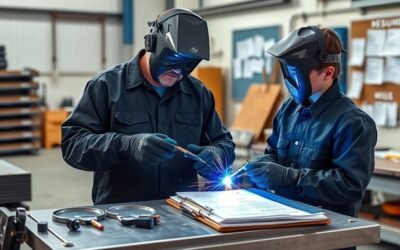
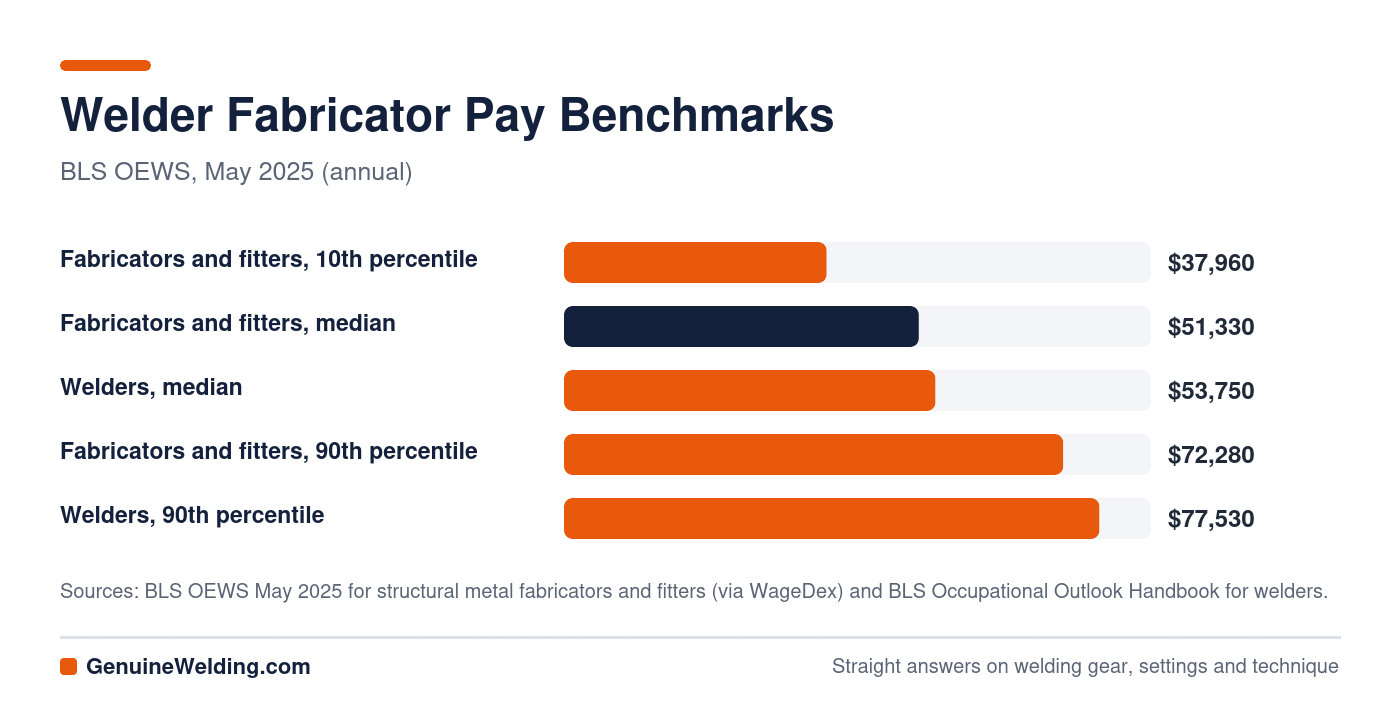
A welder fabricator builds metal products from start to finish: reading blueprints, laying out and cutting steel, bending and fitting parts, then welding and finishing them into frames, trailers, stairs, railings, machinery and structures. The job combines welding with layout and fit-up skills. BLS data for structural metal fabricators and fitters shows a $51,330 median (May 2025), and welders earned a $53,750 median, with experienced, multi-skilled welder fabricators earning more.
If you like building things rather than just running beads, welder fabricator is one of the most satisfying jobs in the trade. Here is what the work involves, the skills you need, what it pays and how to get started.
What Does a Welder Fabricator Do?
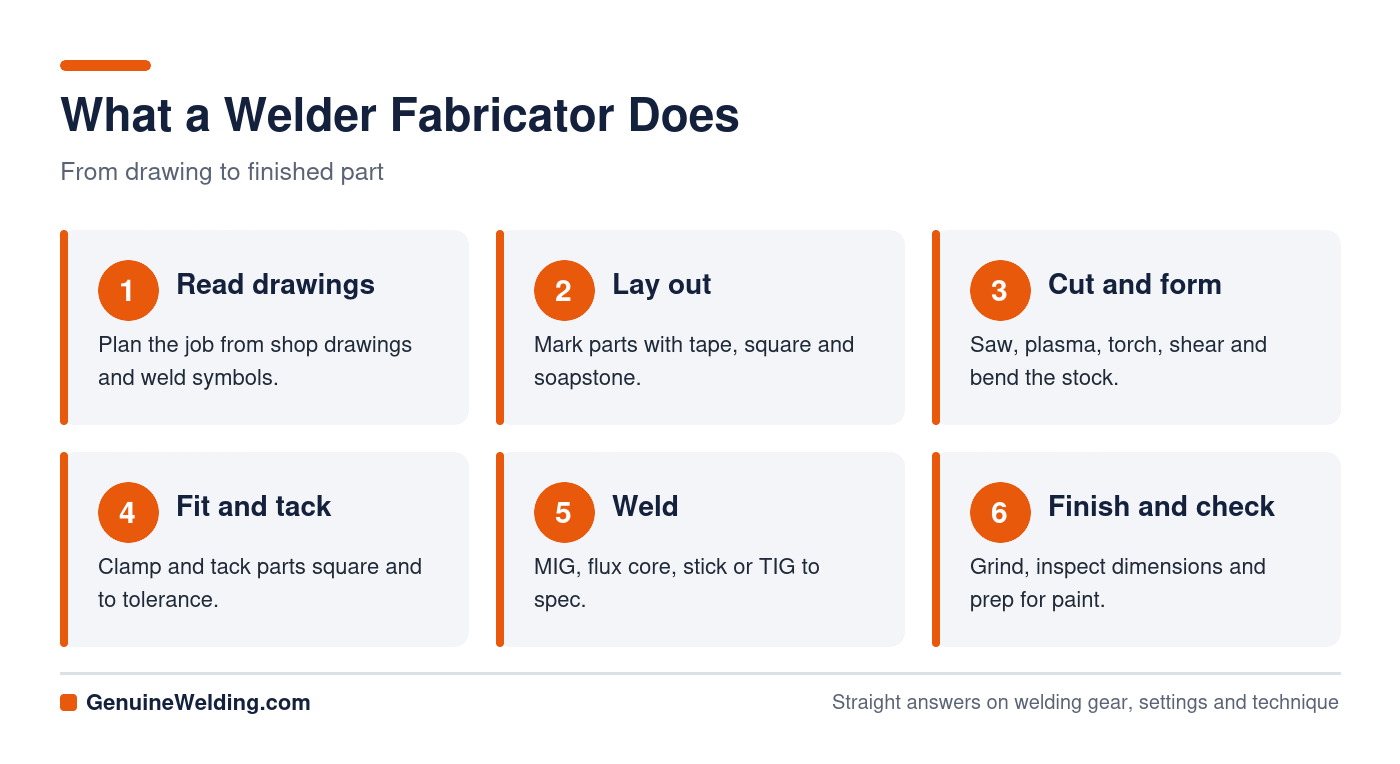
A typical day might include:
- Reading shop drawings and welding symbols to plan a job
- Laying out parts with tape, square, soapstone and scribe
- Cutting stock with band saws, chop saws, shears, plasma or oxy-fuel torches
- Bending and forming with press brakes, rollers and benders
- Drilling, punching and machining holes and slots
- Fitting and tacking parts square, level and to tolerance using clamps and fixtures
- Welding with MIG, flux core, stick or TIG
- Grinding, finishing and preparing parts for paint or galvanizing
- Checking dimensions and weld quality before parts ship
Some shops split this work between fitters and welders; smaller shops expect one person to do it all.
Where Welder Fabricators Work
- Structural steel fabrication shops (beams, columns, stairs, handrails)
- Custom and job shops (gates, trailers, racks, one-off repairs)
- Manufacturing plants (machinery, agricultural equipment, truck bodies)
- Shipyards and heavy industrial fabricators
- Ornamental and architectural metalwork
- Mobile or self-employed fabrication businesses
Welder vs Fabricator vs Fitter

For more on the welding side, see what a welder does, and for fabrication fundamentals, our metal fabrication safety guide.
Welder Fabricator Salary
BLS May 2025 data puts the median for structural metal fabricators and fitters at $51,330 ($24.68 an hour), with the top 10% above $72,280. Welders earned a median of $53,750, and the top 10% above $77,530. Welder fabricators who can lay out, fit and weld to code on their own often sit in the upper half of these ranges, and lead fabricators and shop foremen earn more.
Pay goes up with code certifications, TIG and aluminum skills, blueprint expertise, and work in high-paying industries such as shipbuilding, energy and heavy equipment. See how much welders make.
Skills a Welder Fabricator Needs
- Blueprint reading: dimensions, tolerances, views and weld symbols
- Shop math: fractions, decimals, angles, squaring with diagonals and basic trigonometry
- Measuring and layout: tape, squares, levels, protractors and calipers
- Multiple welding processes: MIG and flux core for production, stick for structural, TIG for thin and stainless
- Cutting and forming equipment: saws, plasma, oxy-fuel, press brake, iron worker
- Fit-up and distortion control: tacking sequence, clamping, and weld sequencing
- Safety: PPE, lifting, rigging and machine guarding
How to Become a Welder Fabricator
- Finish high school or a GED, and take shop, math and drafting classes if you can.
- Enroll in a welding and fabrication program at a community college or trade school. Look for programs that include blueprint reading and fabrication projects, not just booth welding. See how to choose a welding school.
- Earn certifications such as AWS D1.1 structural plate tests. Our certifications guide explains the options.
- Start as a helper or entry-level fitter in a fabrication shop to learn layout and fit-up from experienced fabricators.
- Build a portfolio of projects (tables, carts, trailers) with photos and drawings. Our welding projects for beginners and welding table plans are good practice.
- Keep adding skills: TIG, aluminum, CNC plasma, press brake and forklift or crane certifications.
Career Path for Welder Fabricators
Common steps include fitter or welder, then fabricator, lead fabricator, shop supervisor or foreman, and project manager. Many fabricators also become Certified Welding Inspectors or open their own fabrication businesses. Explore more options in the welding career guide.
Welder Fabricator FAQs
Is a welder fabricator a good job?
Yes. It offers steady shop work, variety and hands-on problem-solving, and skilled fabricators are in demand across construction and manufacturing.
What is the difference between a welder and a fabricator?
A welder focuses on joining metal. A fabricator handles the whole build, including layout, cutting, forming, fit-up and assembly, and often welds too.
Do fabricators need certification?
It isn’t always required, but code certifications such as AWS D1.1 make you more employable and are required for structural and code work.
How long does it take to become a welder fabricator?
Training programs run from several months to two years. Expect another one to three years in a shop to become a well-rounded fabricator.
Sources
- WageDex (BLS OEWS May 2025): Structural Metal Fabricators and Fitters
- BLS: Welders, Cutters, Solderers, and Brazers