A rig welding truck is a heavy-duty pickup, usually a 3/4-ton or 1-ton diesel, fitted with a flatbed or welding bed, an engine-driven welder, leads on reels, oxygen and acetylene bottles, grinders, a rod oven and secure tool storage. To build one, start with a truck that can legally carry the weight, mount a welding bed with headache rack and boxes, bolt down the welder near the cab, add lead reels and bottle racks, wire lights and power, then organize tools so everything is secured for the road. A complete rig commonly costs $50,000 to $150,000 or more, but it earns rig pay on pipeline and field jobs.
Your rig is your shop on wheels and, for many pipeliners and mobile welders, their business. A smart setup saves time on every job, keeps you safe on the highway and helps you pass site inspections. Here’s how to plan and build one.
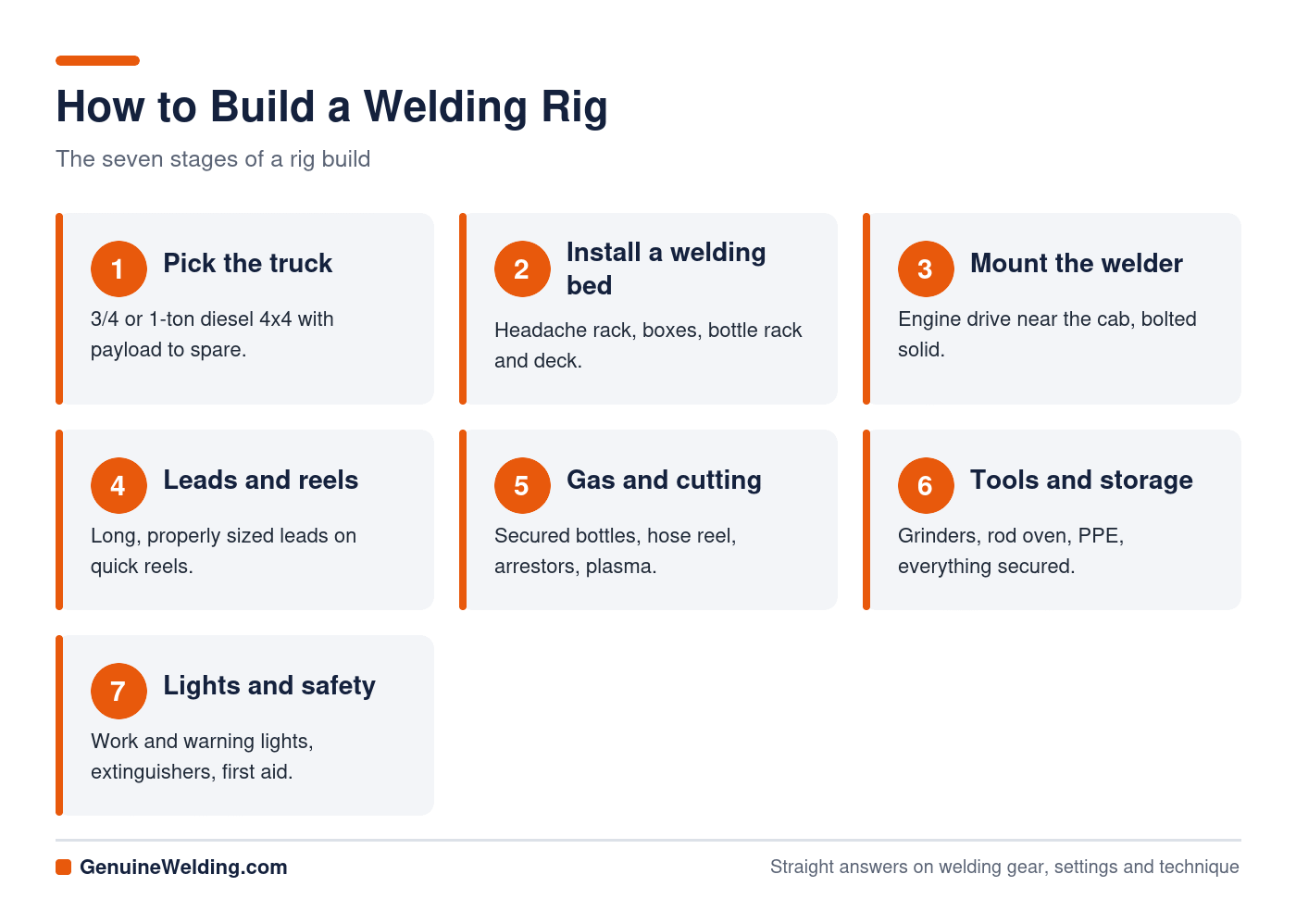
Step 1: Choose the Truck
- Size: most rigs use a 3/4-ton (2500/250) or 1-ton (3500/350) pickup. A loaded rig easily weighs several thousand pounds, so 1-ton trucks are popular.
- Engine: diesels are common for torque, towing and long life.
- Drivetrain: 4×4 is strongly recommended for pipeline right-of-ways, mud and oilfield leases.
- Cab: crew cab for a helper and gear, or regular cab for a shorter wheelbase.
- Payload: check the door sticker. Add up the bed, welder, bottles, tools and fuel to make sure you stay under GVWR.
Step 2: Install a Welding Bed
Replace the factory box with a steel or aluminum welding bed. Common features include:
- A heavy headache rack to protect the cab from shifting loads
- Side boxes and underbody boxes for tools, rods and PPE
- A bottle rack (often behind the cab) for oxygen and acetylene
- A flat deck area or skirting for the welder and reels
- Built-in vise mount, pipe racks and stake pockets
- Gooseneck or receiver hitch for trailers
Many rig welders buy a commercial welding bed; others build their own as a showcase of their skills. See welder fabricator skills that come in handy here.
Step 3: Choose and Mount the Welder
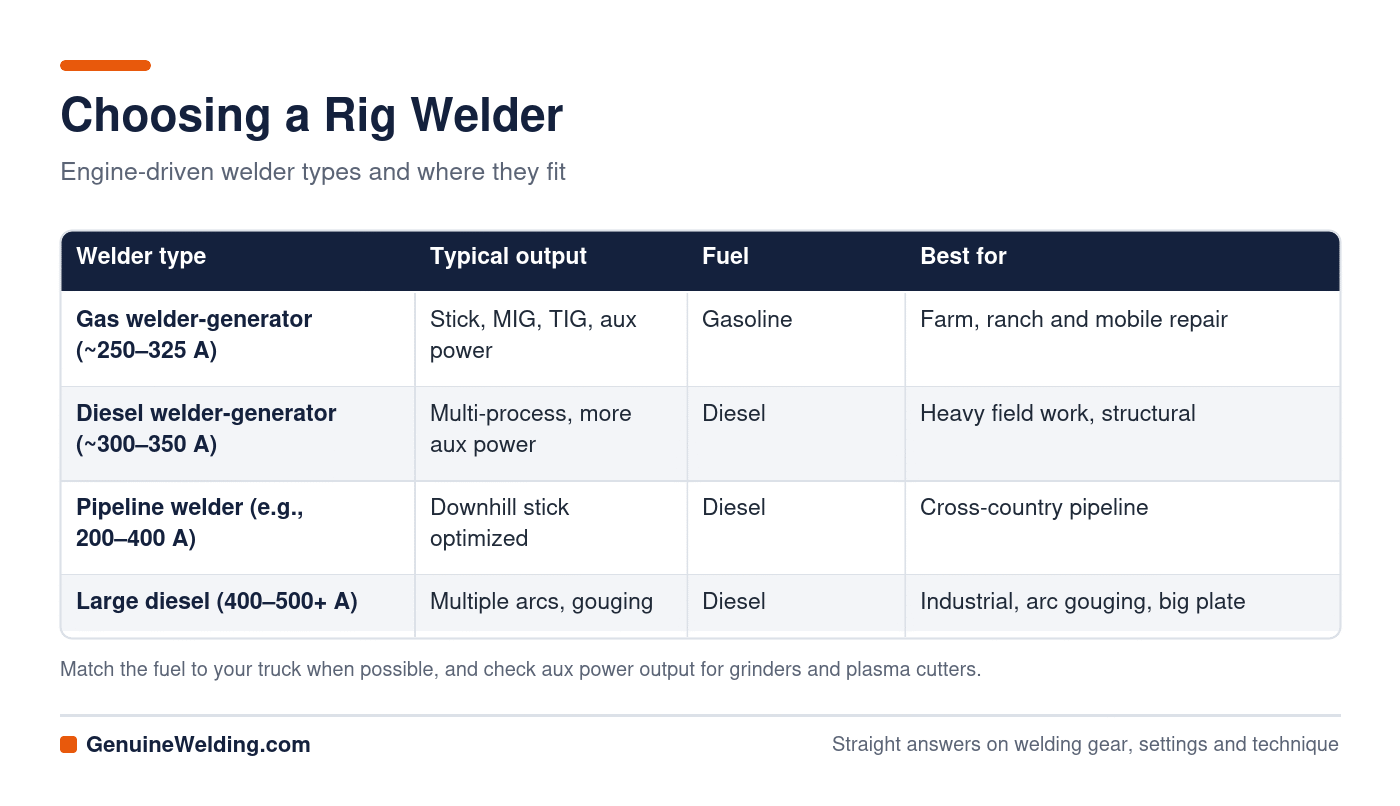
- Mount the welder on the bed close to the cab for weight distribution, bolted through the frame or bed structure.
- Leave room around it for service, airflow and fuel filling.
- Run its exhaust away from the cab and your work area.
- Many rigs plumb the welder to the truck’s fuel tank or add an auxiliary tank, following the manufacturer’s guidance and local rules.
For machine options, see best welder generators.
Step 4: Leads, Reels and Connections
- Mount lead reels so you can quickly unroll and rewind long leads.
- Size cables for long runs: rig welders often carry 100 to 200+ ft of leads, so 1/0 or 2/0 cable is common. See welding cable size chart.
- Use quality stingers, ground clamps and quick connectors. See welding leads explained.
- Carry a remote amperage control so you can adjust from the work.
Step 5: Gas, Torches and Cutting
- Secure oxygen and acetylene cylinders upright in a bottle rack with chains or clamps and valve caps for transport.
- Mount a hose reel for the torch hoses and fit flashback arrestors.
- Many rigs also carry a plasma cutter run from the welder’s generator output.
See acetylene tank sizes and torch tip sizes.
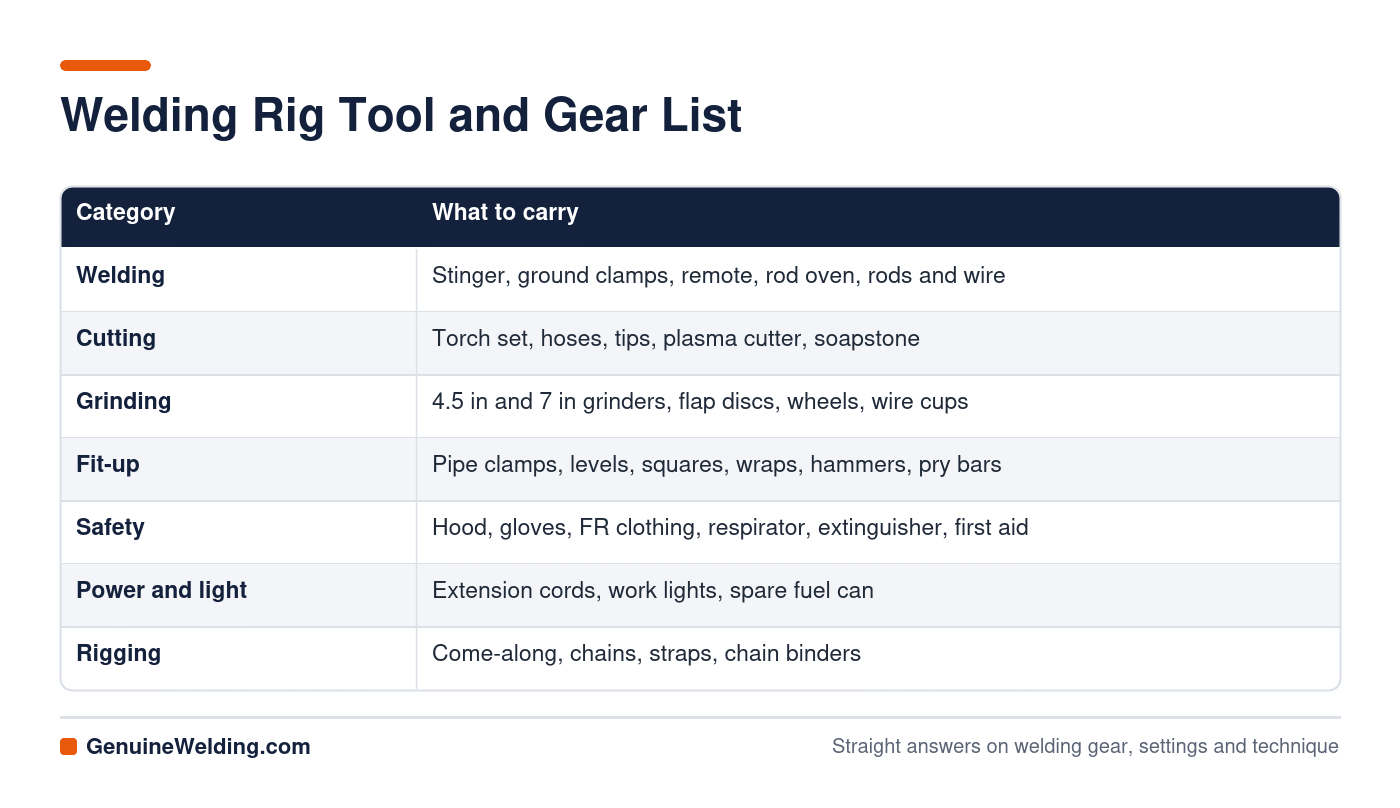
Step 6: Tools and Organization
Step 7: Lights, Power and Safety
- LED work lights and amber warning lights for night work and road shoulders
- Fire extinguishers mounted where you can reach them (many sites require them)
- First aid kit, eyewash and spill kit
- Wheel chocks, safety cones and reflective triangles
- Secure everything for a rollover or hard stop; loose bottles and tools are deadly
What Does a Welding Rig Cost?
| Item | Typical cost range |
|---|---|
| Truck (used to new 3/4–1 ton diesel) | $30,000–$90,000+ |
| Welding bed | $8,000–$25,000+ |
| Engine-driven welder | $5,000–$20,000+ |
| Leads, reels, stinger, clamps | $1,000–$4,000 |
| Torch setup, bottles, plasma | $1,500–$5,000 |
| Grinders, hand tools, rod oven, PPE | $2,000–$6,000 |
Insurance, Licensing and Business Basics
- Commercial auto insurance and general liability are usually required by contractors.
- DOT rules: depending on your truck’s GVWR and how you operate, you may need a USDOT number and to follow federal and state commercial vehicle rules. Check FMCSA and your state.
- Taxes and records: track rig expenses, mileage and per diem carefully.
Running a rig is running a business; read pipeline welder and traveling welder for how rig pay and per diem work.
Welding Rig Setup FAQs
What is the best truck for a welding rig?
A 1-ton diesel 4×4 pickup is the most common choice because of payload, durability and off-road capability. A 3/4-ton works for lighter setups.
Because a loaded rig runs heavy every day, choose truck tires with a load range that matches the weight you carry.
What welder do pipeline rig welders use?
Many use diesel engine-driven welders designed for pipeline stick welding, such as Lincoln’s Pipeliner 200D or Miller’s Big Blue machines, chosen for their downhill arc characteristics.
How much does it cost to build a welding rig?
Commonly $50,000 to $150,000 or more for a complete rig, depending on the truck, bed and welder. Used equipment can lower the cost significantly.
Do I need a CDL for a welding rig?
Usually not for a pickup rig on its own, but towing heavy trailers or exceeding weight thresholds can change that. Check federal and state rules for your setup.
What is rig pay?
An extra hourly or daily rate paid to welders who supply their own truck and welder, covering fuel, wear and equipment costs.
Sources
- FMCSA: Do I Need a USDOT Number?
- OSHA 1910.253: Oxygen-Fuel Gas Welding and Cutting (cylinder handling)