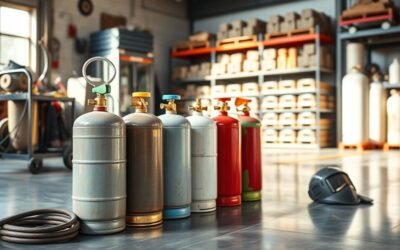
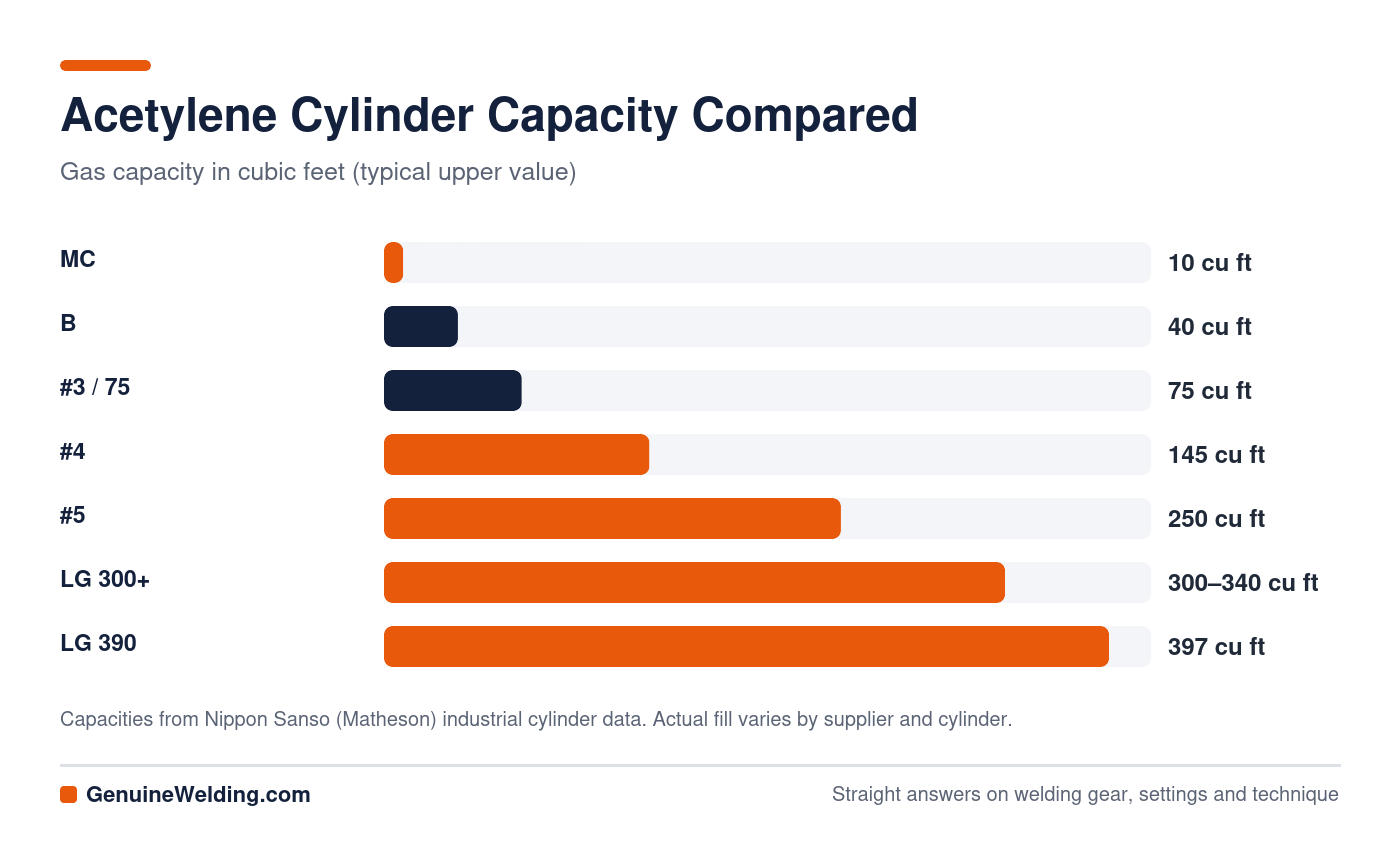
Acetylene tanks range from the small MC cylinder (about 10 cubic feet) and the B tank (about 40 cubic feet) up to large shop cylinders holding 300 cubic feet or more. Most hobby and farm shops run a B or “75” (60 to 75 cu ft) cylinder, while fabrication shops use 130 to 300 cu ft tanks. The right size depends on your torch tips, because an acetylene cylinder can only safely deliver about one-seventh of its contents per hour.
Below is a full acetylene tank size chart with capacity, dimensions, weight and valve connection, plus how to pick a size and handle acetylene safely.
Acetylene Tank Size Chart
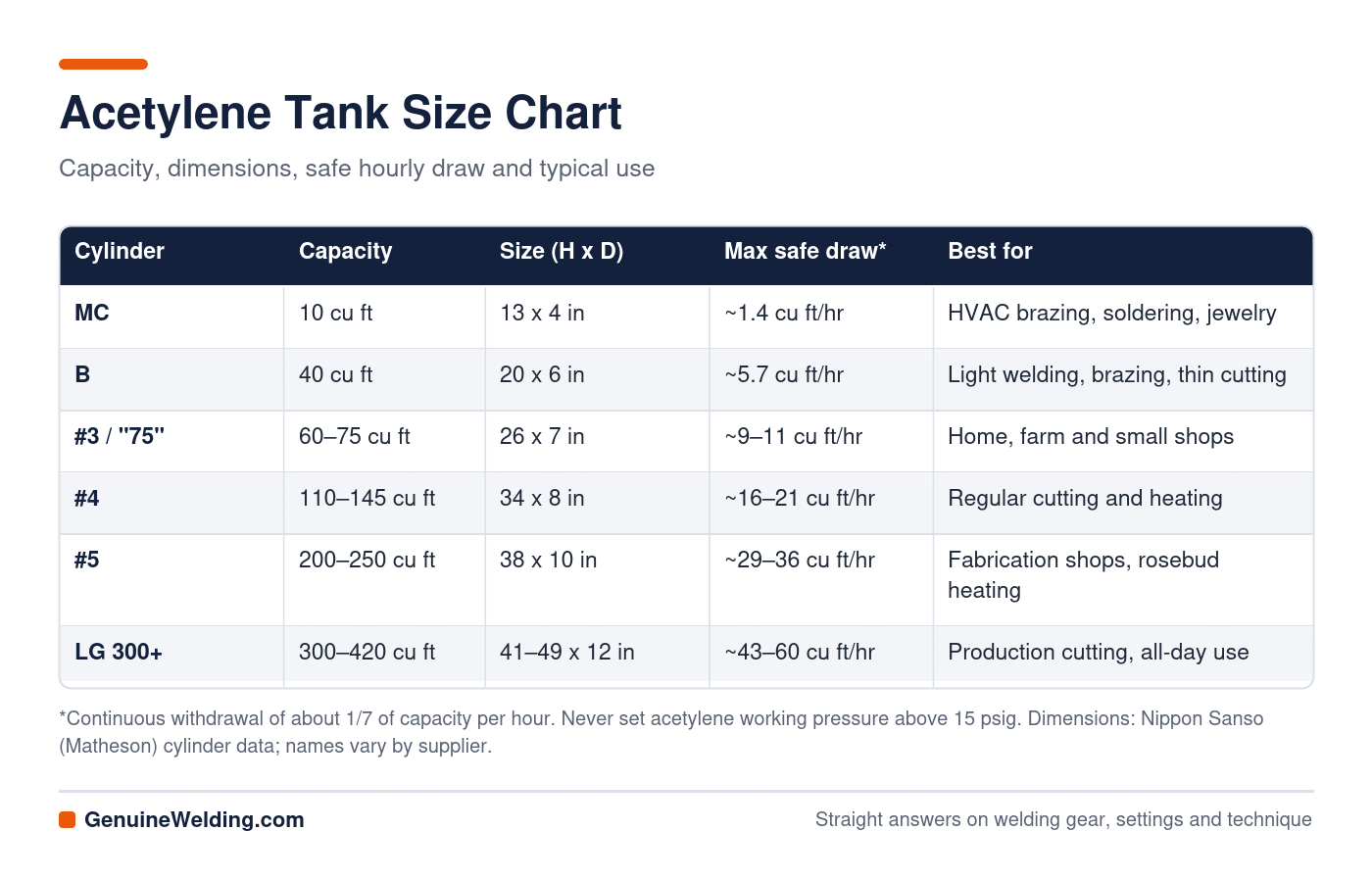
Suppliers use different names for the same cylinders. The MC and B names are nearly universal, but the larger tanks may be called #3, #4 and #5, or “75,” “145” and “300,” or SM, MED and LG. Capacity, not the name, is what matters when you order.
| Common name | Capacity (cu ft) | Height x diameter | Empty (tare) weight | Valve connection |
|---|---|---|---|---|
| MC | 10 | 13 x 4 in | ~8 lb | CGA 200 |
| B | 40 | 20 x 6 in | ~25 lb | CGA 520 |
| #3 / “75” | 60–75 | 26 x 7 in | ~43 lb | CGA 510 |
| #4 / SM | 110–145 | 34 x 8 in | ~70 lb | CGA 510 or 300 |
| #5 / MED | 200–250 | 38 x 10 in | ~120 lb | CGA 510 or 300 |
| LG (300+) | 300–420 | 41–49 x 12 in | ~168–178 lb | CGA 510 or 300 |
How Much Acetylene Can You Use Per Hour?
Acetylene is not stored as a simple compressed gas. It is dissolved in liquid acetone inside a porous filler that fills the cylinder. If you pull gas out too fast, acetone comes out with it, which damages regulators and torches and makes a weak, contaminated flame.
The common industry rule is to withdraw no more than one-seventh (1/7) of the cylinder’s capacity per hour during continuous use. That limit, not the total gas, is usually what decides your tank size.
Small welding and brazing tips may use only a few cubic feet of acetylene per hour, but a cutting tip on thick steel can use 10 to 20 cu ft per hour or more. If your torch needs more than one cylinder can safely supply, step up a size or manifold two cylinders together. Check your torch manufacturer’s flow chart for exact consumption. Our oxy-acetylene torch tip size chart lists tip sizes by metal thickness.
Which Acetylene Tank Size Do You Need?
- MC (10 cu ft): HVAC and plumbing brazing, soldering, jewelry and small repair work with tiny tips. Very portable, but too small for cutting steel.
- B (40 cu ft): light welding, brazing and occasional cutting of thin steel with small tips. A favorite for portable carts and home garages.
- #3 / “75” (60 to 75 cu ft): the sweet spot for most hobby, farm and small-shop users who cut and heat regularly.
- #4 (110 to 145 cu ft): regular cutting up to about an inch, heating with rosebuds and daily fabrication.
- #5 and larger (200 to 400+ cu ft): production cutting, heavy heating and fabrication shops that run torches all day.
Pair your acetylene tank with a matching oxygen cylinder. Oxygen use is several times higher than acetylene when cutting, so shops often run a larger oxygen tank. See oxygen cylinder sizes and our general guide to what size welding gas cylinder you need.
Acetylene Tank Pressure and How to Check Contents
A full acetylene cylinder reads about 250 psi at 70°F, but the reading changes with temperature because the gas is dissolved in acetone. A cold tank shows lower pressure even when it is full. The most accurate way to check how much acetylene is left is to weigh the cylinder and subtract the tare weight stamped on its shoulder. Acetylene weighs roughly 0.07 lb per cubic foot, so a full B tank holds only about 3 pounds of gas.
Whatever the cylinder pressure, never set acetylene working pressure above 15 psig. Above that, acetylene can become unstable. Most cutting and welding jobs need far less, usually 3 to 10 psi. Learn how to set gauges in our guide to fuel gas pressure regulators.
Safe Handling and Storage of Acetylene Cylinders
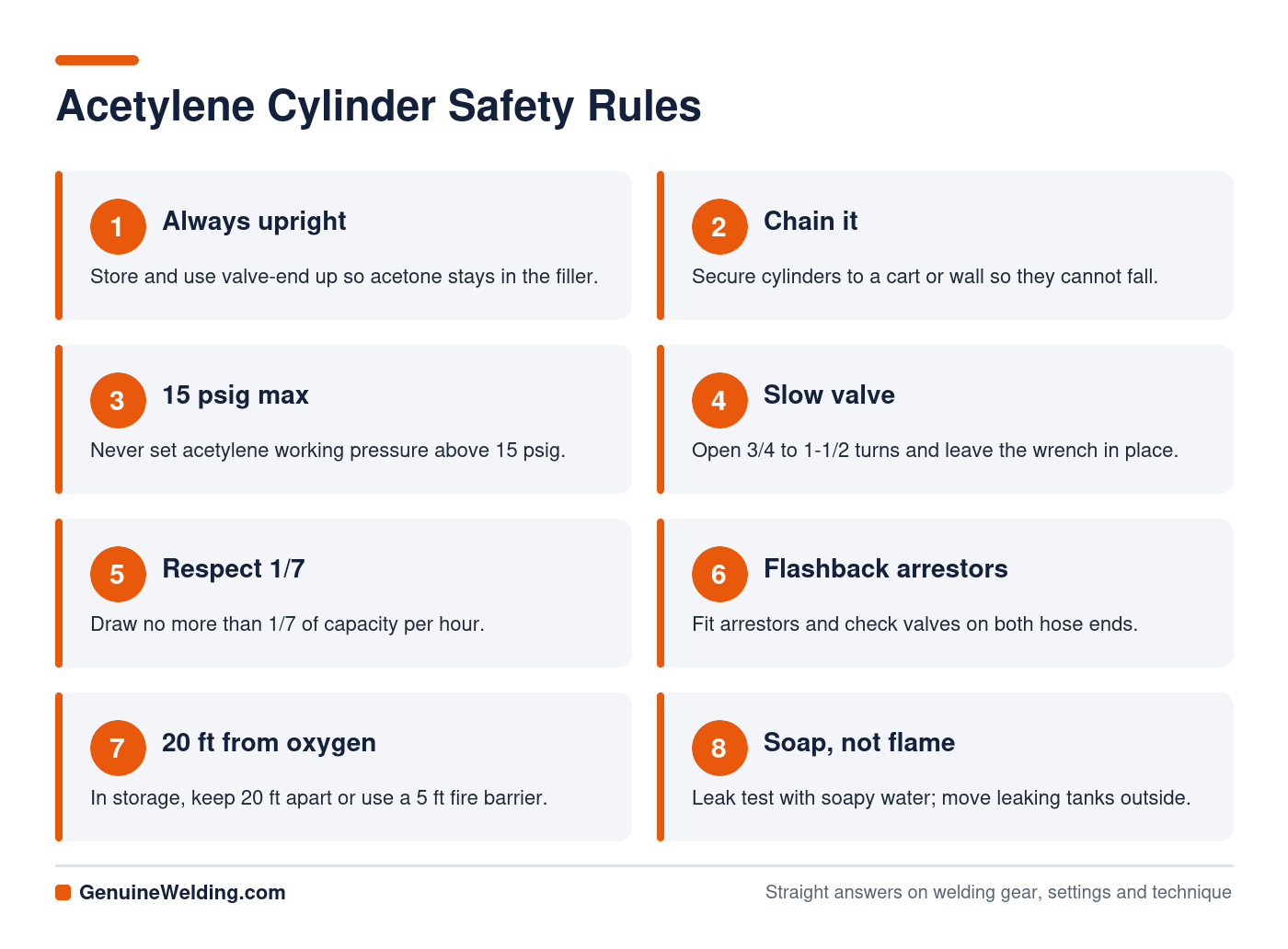
- Keep it upright. Store, transport and use acetylene cylinders valve-end up so acetone stays inside. If a tank has been lying down, stand it upright and let it settle before use; suppliers commonly recommend waiting at least as long as it was on its side.
- Secure it. Chain or strap cylinders to a cart, wall or column so they cannot tip.
- Protect the valve. Keep the valve cap on when the regulator is off and during transport.
- Open the valve slowly. Open it no more than about 3/4 to 1-1/2 turns and leave the wrench on the valve (if it has one) so you can shut it off fast.
- Separate from oxygen in storage. OSHA requires stored oxygen cylinders to be kept at least 20 feet from fuel-gas cylinders, or separated by a noncombustible barrier at least 5 feet high with a half-hour fire rating.
- Use flashback arrestors and check valves on both the regulator and torch ends of the hoses.
- Leak test with soapy water, never a flame. Close the valve and move a leaking cylinder outdoors away from ignition sources.
- Keep it cool and ventilated, away from heat, sparks and electrical circuits. Store indoors only in well-ventilated areas.
For a complete shop routine, see our welding safety guide.
Buy, Lease or Exchange?
Most welding suppliers offer three options. Owned cylinders cost more up front but are swapped for a full tank at a refill price. Leased cylinders carry a monthly or yearly fee and suit shops that use gas constantly. Exchange programs at big-box stores are convenient for MC and B tanks. Small MC and B cylinders are easy to find, but some suppliers do not refill them in-house and will swap them instead. See how much welding gas costs for typical prices.
Acetylene Tank Sizes: FAQs
What is the most common acetylene tank size?
For home and farm shops, the B (40 cu ft) and #3/”75″ (60 to 75 cu ft) tanks are the most common. Fabrication shops usually run #4 or #5 tanks.
How long does a B acetylene tank last?
It depends on tip size. At a safe draw of about 5 to 6 cu ft per hour, a full 40 cu ft B tank lasts roughly 7 hours of continuous small-tip use, and much less with larger tips.
Can I lay an acetylene tank down in my truck?
You should transport acetylene upright and secured. If it must lie down, let it stand upright before use so acetone settles back into the filler.
Why does my acetylene gauge read low in winter?
Cylinder pressure drops as temperature falls because more acetylene stays dissolved in the acetone. Weigh the tank for an accurate reading.
Can I use an MC tank for cutting?
Only very light cutting with the smallest tips, and only for short periods. Its safe draw rate is too low for most cutting.
Sources
- Nippon Sanso (Matheson): Industrial Cylinder Dimensions
- Airgas: Acetylene Cylinder Sizes and Connections
- OSHA 1910.253: Oxygen-Fuel Gas Welding and Cutting