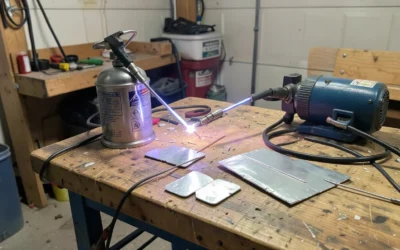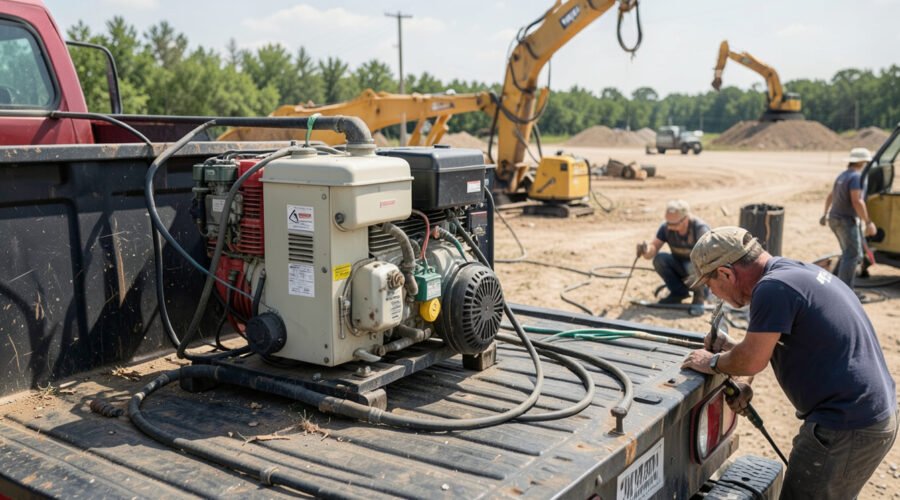
The best welder generator for most people is the Lincoln Ranger 260MPX. It welds stick, TIG, MIG and flux core at 231 A at 100% duty cycle, and it powers a jobsite with 9,500 W of continuous generator output. If you only stick weld on a farm or ranch, the Hobart Champion Elite 225 gives you the same 9,500 W of generator power for much less.
A welder generator (also called an engine-driven welder) combines a welding power source and an AC generator on one gas or diesel engine. You can lay a root pass on a pipeline, fix a broken gate in a pasture, then run grinders and lights, all with no utility power.
Our Quick Picks
- Best overall: Lincoln Ranger 260MPX – 35–260 A, all processes, 9,500 W continuous
- Best for pros: Miller Bobcat 265 – 265 A at 100% duty cycle, 382 lb
- Best value: Hobart Champion Elite 225 – 225 A stick, 10,000 W peak
- Best mid-range multi-process: Lincoln Ranger 230MP – 230 A, 10,500 W peak
- Best heavy-duty: Miller Trailblazer 330 – 20–330 A, 12,000 W peak
- Best budget: Hobart Champion 145 – 40–145 A stick, 4,500 W peak
- Most portable: ESAB Ruffian ES 150G – 150 A stick, under 250 lb
Prices in this guide are dealer prices checked in November 2026. Engine-driven welders often carry seasonal rebates, so check the current price before you buy.
Welder Generator Comparison Table
| Model | Weld output | Processes | Generator (peak / continuous) | Engine & fuel | Weight |
|---|---|---|---|---|---|
| Lincoln Ranger 260MPX | 35–260 A; 231 A @ 100% | Stick, TIG, MIG, flux core | — / 9,500 W | Kohler CH730 23.5 hp, gas, 11 gal | 446 lb |
| Miller Bobcat 265 | 20–265 A; 265 A @ 100% | Stick, TIG, MIG, flux core, gouging | 11,000 / 9,500 W | Kohler CH730 23.5 hp, gas, 11 gal | 382 lb |
| Hobart Champion Elite 225 | 25–225 A; 225 A @ 100% | Stick | 10,000 / 9,500 W | Vanguard 23 hp, gas, 11 gal | 373 lb |
| Lincoln Ranger 230MP | Up to 230 A DC | Stick, scratch-start TIG, MIG/flux core (with feeder) | 10,500 W peak | Rehlko CH730 23.5 hp, gas, 11 gal | ~100 lb lighter than Ranger 225 |
| Miller Trailblazer 330 EFI | 20–330 A | Stick, MIG, DC TIG, spool gun | 12,000 / 10,500 W | Kohler EFI, gas | 400 lb |
| Hobart Champion 145 | 40–145 A; 130 A @ 30% | Stick | 4,500 / 4,000 W | Briggs & Stratton, gas, 6.25 gal | 222 lb |
| ESAB Ruffian ES 150G | 150 A @ 60% | Stick | 4,500 / 4,000 W | Kohler CH440 14 hp, gas, 5 gal | <250 lb |
Best Welder Generator Reviews
1. Lincoln Ranger 260MPX – Best Overall
Bottom line: The Ranger 260MPX is the all-rounder most contractors and serious farm owners should buy. It covers stick from 35 to 260 A, touch-start TIG from 20 to 250 A, and MIG or flux core from 14 to 28 V, rated at 231 A at 100% duty cycle.
The 23.5 hp Kohler CH730 also delivers 9,500 W of continuous 120/240 V power for a plasma cutter, compressor or lights. It weighs 446 lb and holds 11 gallons of gas. Lincoln backs it with a 3-year parts and labor warranty, and Kohler covers the engine separately.
Pros
- Every major process, including touch-start TIG
- 100% duty cycle at 231 A for long stick runs
- 9,500 W continuous runs most 240 V shop tools
Cons
- At 446 lb it needs a trailer or a truck bed with a lift
- No published peak wattage
Best for: fabricators and farm owners who want one machine for stick, wire and TIG. Sold through Lincoln welding distributors (not listed on Amazon).
2. Miller Bobcat 265 – Best for Professional Welders

Bottom line: The Miller Bobcat 265 replaces the long-running Bobcat 260 and is light for its class at 382 lb. Miller rates it at 265 A at 27 V at 100% duty cycle across stick, MIG and TIG, with a 20–265 A range. It also handles flux core and air carbon arc gouging.
Its 23.5 hp Kohler CH730 gives 11,000 W peak and 9,500 W continuous. Miller says it is over 100 lb lighter and 13% smaller than earlier Bobcats, which matters on a service truck.
Pros
- 265 A at 100% duty cycle on every process
- 64 lb lighter than the Ranger 260MPX
- Gouging capability for repair work
Cons
- The most expensive pick at this output level
- Options like ArcReach and remote start add to the cost
Best for: pipeline, structural and mobile repair welders who weld all day.
3. Hobart Champion Elite 225 – Best Value

Bottom line: The Hobart Champion Elite 225 is the best value if you mostly burn stick rods. It gives 25–225 A DC with a 225 A rating at 100% duty cycle. The 23 hp Vanguard engine makes 10,000 W peak and 9,500 W continuous, the same continuous power as the Ranger 260MPX.
At 373 lb, it costs much less than the Lincoln. Hobart covers it with its 5/3/1 industrial warranty.
Pros
- Same 9,500 W continuous generator power as pricier machines
- 225 A at 100% duty cycle handles 1/8 in. 7018 all day
- 73 lb lighter than the Ranger 260MPX
Cons
- Stick only: no TIG or wire feeding
Best for: ranches, farms and fence builders who stick weld and need backup power.
4. Lincoln Ranger 230MP – Best Mid-Range Multi-Process
Bottom line: The Ranger 230MP is Lincoln’s newest compact model and a lighter alternative to the legacy Ranger 225. It welds up to 230 A DC for stick and scratch-start TIG. Add an LN-25 series wire feeder and it runs MIG and flux core too.
The 23.5 hp Rehlko CH730 makes up to 10,500 W peak. Lincoln says it is nearly 100 lb lighter than the Ranger 225. It also costs noticeably less than the 260MPX.
Pros
- 10,500 W peak generator output
- Multi-process capable at a mid-range price
- Much lighter than the Ranger 225
Cons
- MIG and flux core need a separate wire feeder
- Scratch-start TIG only, no touch start
Best for: welders who want Lincoln quality and wire capability later without paying for the 260MPX now. Sold through Lincoln welding distributors (not listed on Amazon).
5. Miller Trailblazer 330 EFI – Best Heavy-Duty

Bottom line: The Miller Trailblazer 330 is the pick when you need more amps and quieter running. It welds stick and DC TIG from 20 to 330 A and MIG from 15 to 40 V. It also connects directly to a 10-pin aluminum spool gun.
It makes 12,000 W peak and 10,500 W continuous. Miller’s Excel Power gives 2,400 W of 120 V power at idle, so lights and chargers run without the engine at full speed. It weighs 400 lb.
Pros
- 330 A for 3/16 in. rods and heavy gouging
- Excel Power saves fuel and noise at idle
- Direct spool gun connection for aluminum
Cons
- The most expensive gas pick here
Best for: structural steel crews and rental fleets.
6. Hobart Champion 145 – Best Budget

Bottom line: The Hobart Champion 145 is the cheapest real engine-driven welder from a major brand. It welds 40–145 A DC stick, rated at 130 A at 30% duty cycle, and handles steel up to 1/4 in. with rods up to 5/32 in.
The Briggs & Stratton engine gives 4,500 W peak and 4,000 W continuous. It weighs 222 lb with running gear and holds 6.25 gallons of fuel.
Pros
- The lowest-cost pick here
- Light enough to move with its running gear
- Enough generator power for a grinder and lights
Cons
- 30% duty cycle at 130 A means frequent breaks
- Recoil start only
Best for: hobby repair, fence lines and occasional farm fixes.
7. ESAB Ruffian ES 150G – Most Portable
Bottom line: The Ruffian ES 150G is the easiest to load in a pickup at under 250 lb fully assembled. It welds stick at 150 A at 60% duty cycle and runs 6010, 6011 and 7018 rods up to 5/32 in.
Its 14 hp Kohler CH440 engine produces 4,500 W peak and 4,000 W continuous from a 5-gallon tank.
Pros
- Double the duty cycle of the Champion 145 at a higher amperage
- Commercial Kohler engine
Cons
- Stick only, manual rope start
- 4,000 W is not enough for most 240 V tools
Best for: mobile repair from a pickup and small ranch jobs. Sold through ESAB welding distributors (not currently listed on Amazon).
How to Choose a Welder Generator
Welding Output and Duty Cycle
Match amperage to the rods you run. A 1/8 in. 7018 rod needs about 90–140 A, and 5/32 in. needs about 120–200 A. A 225–265 A machine at 100% duty cycle covers both all day. A 145–150 A unit handles 1/8 in. rods but needs rest breaks. See our guide to duty cycle in welding for how ratings work.
Generator Power
Continuous watts matter more than peak watts. Peak is a short surge for motor starts; continuous is what you can run all day.
- 4,000 W: a 4.5 in. grinder, work lights and a battery charger
- 9,500 W: a 240 V plasma cutter, an air compressor or a small house backup
- 10,500 W and up: several tools at once on a jobsite
Our generator sizing chart for welding shows how many watts each welder and tool needs.
Processes
Stick-only machines (Champion Elite 225, Champion 145, Ruffian 150G) are simplest and best for dirty or rusty steel outdoors. Multi-process machines (Ranger 260MPX, Bobcat 265, Trailblazer 330) add TIG and wire feeding for clean, fast welds. You will need a separate wire feeder for MIG on most engine drives. If you don’t need a generator, compare our best multi-process welders and best stick welders.
Fuel Type
Gasoline machines are cheaper and lighter, which suits farm and hobby use. Diesel models such as the Trailblazer 330 Diesel cost more but use less fuel and last longer on pipeline and fleet work. Some Bobcat models also come in liquid propane (LP) versions for low-emission jobs.
Weight and Transport
Every 9,500 W machine here weighs 373–446 lb. Plan for a trailer, a truck bed mount or a lift gate. The 222–250 lb stick units fit a pickup with two people and a ramp.
Idle and Noise Features
Auto-idle drops engine speed when you stop welding. Miller’s Excel Power goes further, giving 2,400 W at idle. Both save fuel and cut noise on long days.
Welder Generator FAQs
What is an engine-driven welder?
An engine-driven welder is a welding machine powered by its own gas, diesel or propane engine instead of a wall outlet. Most also include an AC generator, so the same unit runs power tools. That is why the terms welder generator and engine-driven welder mean the same thing.
How much does a welder generator cost?
Stick-only welder generators are the least expensive, multi-process models with 9,500 W or more of generator power cost more, and heavy-duty 330 A and diesel units are the most expensive. Check current Amazon and dealer prices, because they change often.
Is a welder generator better than a welder plus a separate generator?
A combo unit is better for field work. Engine-driven welders are built for 100% duty cycle welding and produce a stable arc. A separate generator must be large enough for the welder’s surge, and a cheap one can damage an inverter welder. Our guide on what size generator you need for welding explains the math.
Gas or diesel welder generator?
Choose gas for occasional farm, ranch or hobby use, because it costs less up front and weighs less. Choose diesel if the machine runs several hours every day, because diesel engines use less fuel and last longer.
Can a welder generator power a house?
Yes, a 9,500 W continuous unit can back up essential circuits like a well pump, fridge and lights. Use a transfer switch installed by an electrician; never backfeed through a wall outlet.
Is Miller or Lincoln better for engine-driven welders?
Both are excellent and close in price. The Miller Bobcat 265 is lighter (382 lb) and rated higher (265 A at 100%), while the Lincoln Ranger 260MPX adds touch-start TIG and a 3-year warranty. Pick the brand your local dealer services.
Final Verdict
Buy the Lincoln Ranger 260MPX if you want one machine for stick, TIG and MIG plus 9,500 W of reliable power. Pick the Miller Bobcat 265 if you weld professionally and want the lighter, higher-rated machine. If you only stick weld, the Hobart Champion Elite 225 gives the same generator power for less, and the Hobart Champion 145 covers occasional repairs at the lowest cost.