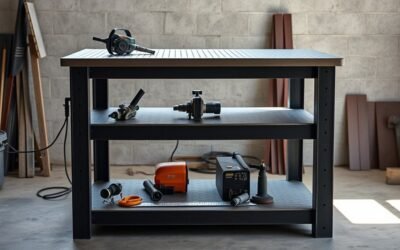
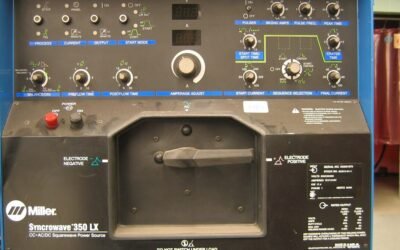
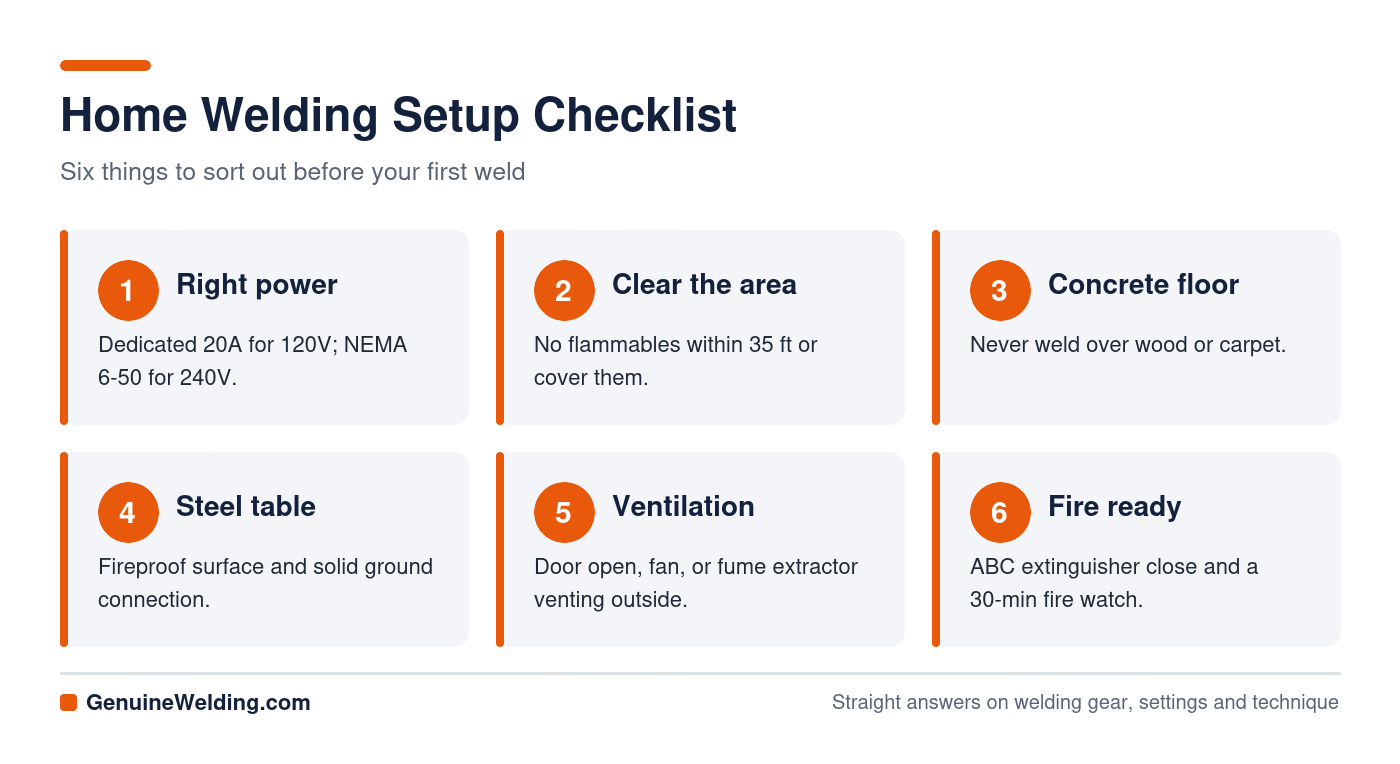
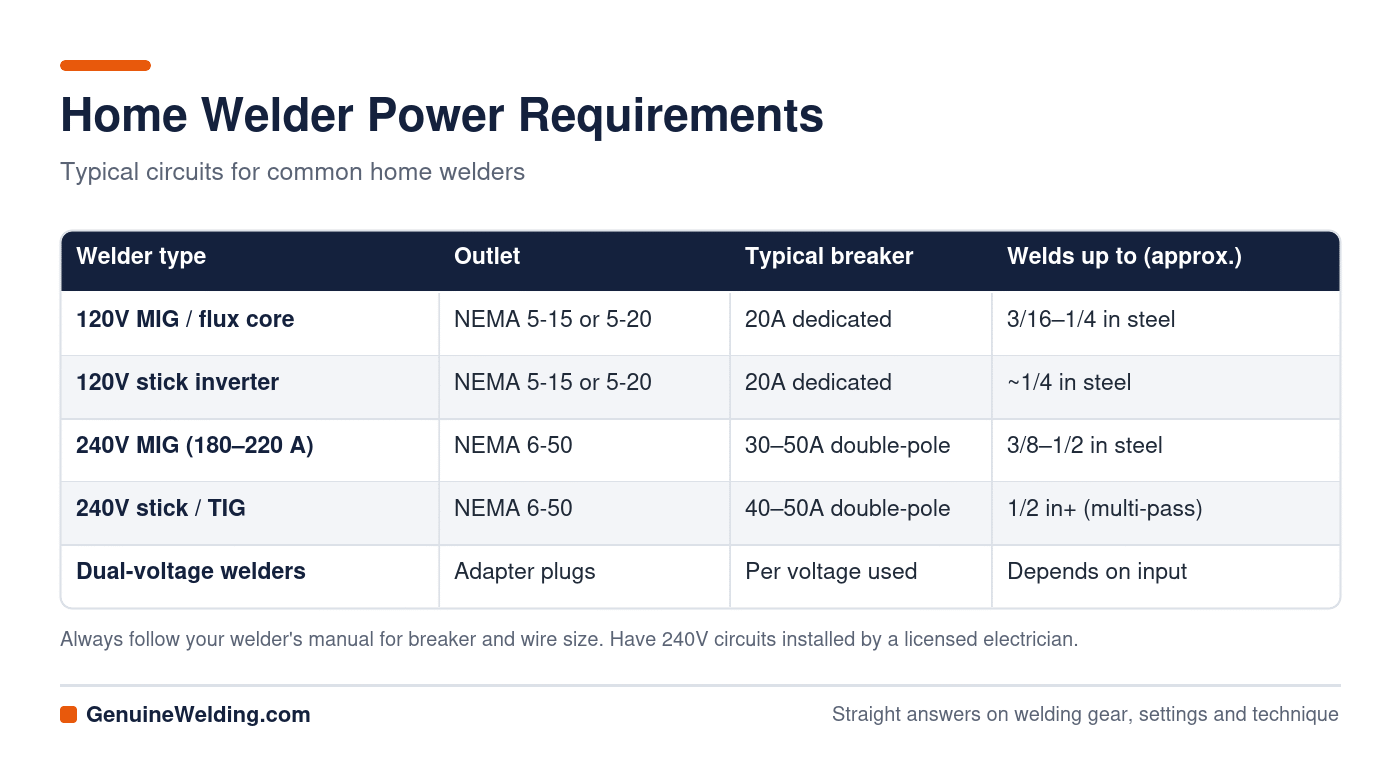
You can weld safely at home in a garage or shed if you have the right power, ventilation and fire protection. Most beginners start with a 120V MIG or flux-core welder on a dedicated 20-amp circuit; a 240V welder on a NEMA 6-50 outlet handles thicker steel. Set up a steel or fireproof welding area, clear flammables at least 35 feet away or cover them, ventilate the fumes outdoors, keep a fire extinguisher within reach, and wear a proper helmet, gloves and flame-resistant clothing.
Home welding is one of the most useful skills you can learn: fixing gates, building carts, repairing trailers and making art. But garages are full of things that burn, and welding produces sparks, UV light and fumes. This guide covers everything you need to set up a safe, productive home welding space.
Choosing a Welder for Home Use
- 120V MIG/flux-core welder: plugs into a household outlet, welds up to about 3/16 to 1/4 in steel. Best first welder for most people.
- Dual-voltage MIG or multi-process welder: runs on 120V or 240V, so you can grow into thicker metal.
- Stick welder: inexpensive and great for thicker, rusty steel and outdoor repairs.
- TIG welder: best for thin metal, stainless and aluminum, but slower to learn.
Compare all options in types of welders and best welders for home use.
Power Needs for Welding at Home
Tips for home power:
- Use a dedicated circuit when possible; sharing with a freezer or compressor trips breakers.
- Keep extension cords short and heavy-gauge. See welder extension cord wire size.
- Have a licensed electrician install a 240V outlet, and check local permit and GFCI requirements. See welder plug types.
- Running off a generator? See what size generator for welding.
Setting Up Your Home Welding Area
Space and layout
- Choose a concrete floor area. Never weld on wood floors or carpet.
- Give yourself at least a 10 x 10 ft clear zone around the welding bench.
- Use a steel welding table; it’s fireproof and acts as your ground. See DIY welding table plans or best welding tables.
- Keep a cart for the welder, gas bottle and tools; see best welding carts.
- Hang welding curtains or screens to protect others from arc flash.
Fire prevention
- OSHA hot-work rules call for moving combustibles at least 35 feet away or protecting them with fire-resistant covers. Use that as your home standard too.
- Remove sawdust, rags, paper, cardboard and fuel cans from the area.
- Cover cracks, drains and gaps where sparks can roll.
- Park cars and lawn equipment out of the garage or far from the bench.
- Keep a 10 lb ABC fire extinguisher within reach and a bucket of water for hot parts.
- Do a 30-minute fire watch after welding; smoldering fires often start after you’ve left.
Ventilation and fumes
- Open the garage door and use a fan to push fumes outside, positioned so it doesn’t blow away your shielding gas.
- Keep your head out of the fume plume.
- Use a fume extractor or a respirator rated for welding fumes (P100 filters) for regular welding.
- Never weld galvanized, painted or plated metal without removing the coating and using strong ventilation; see welding galvanized steel safely and metal fume fever.
- Never weld near chlorinated solvents (like brake cleaner); UV from the arc can turn their vapors into toxic phosgene gas.
More in our welding ventilation guide.
Safety Gear for Home Welding

Gas Cylinder Safety at Home
- Chain cylinders upright to a wall or cart.
- Keep the valve cap on when not in use.
- Store away from heat sources and out of direct sun.
- Close the cylinder valve when you’re done for the day.
- Check local fire code limits on how much gas you can store in a home garage.
Neighbors, Noise and Rules
Check HOA rules, local ordinances and your homeowner’s insurance; some policies have specific requirements for hot work. Use screens so the arc flash isn’t visible to neighbors or passersby, and keep kids and pets out of the area entirely.
Basic Home Welding Starter Kit
- 120V or dual-voltage MIG/flux-core welder
- Auto-darkening helmet, gloves and FR jacket
- Angle grinder with flap discs, cut-off and wire wheels
- Welding magnets, C-clamps and locking pliers
- Steel welding table or bench
- Fire extinguisher, fire blanket and bucket of water
- Soapstone, square and tape measure
Full list: welding tool list. Ready to start? Try easy welding projects for beginners and learn how to set up a MIG welder.
Welding at Home: FAQs
Is it legal to weld at home?
In most places, yes, for personal use. Check local fire codes, HOA rules and your insurance, especially if you plan to do paid work at home.
Can I weld in my garage with the door closed?
Not safely. You need fresh air to remove fumes. Open the door or use a fume extraction system that vents outside.
Can I run a welder on a regular outlet?
Yes, a 120V welder runs on a standard outlet, ideally a dedicated 20-amp circuit. 240V welders need a 240V outlet.
Does welding at home affect insurance?
It can. Some insurers ask about hot work. Call your agent to confirm coverage and any requirements.
Can welding damage my car or electronics nearby?
Sparks can pit glass and paint, and stray current can damage electronics if you clamp to a vehicle. Move vehicles away and always clamp the ground close to the weld.
Sources
- OSHA 1910.252: Welding, Cutting and Brazing – General Requirements (fire prevention)
- OSHA: Welding, Cutting and Brazing
- NFPA 51B: Fire Prevention During Welding, Cutting and Other Hot Work