Oxy-acetylene flame types are controlled by the balance of oxygen and acetylene at the torch. The three standard settings are neutral, carburizing (reducing), and oxidizing, and each changes the flame’s appearance, heat concentration, and chemical effect on the weld pool. For most gas-welding work, the neutral flame is the normal starting point.
Quick Answer
Use a neutral flame for most oxy-acetylene welding. A carburizing flame has excess acetylene and a visible feather, while an oxidizing flame has excess oxygen, a shorter pointed cone, and a sharper hiss. Use either non-neutral setting only when the metal, filler, brazing operation, or welding procedure specifically calls for it.
Key Takeaways
Key Takeaways
- A neutral flame has approximately balanced torch flows and is the standard choice for most welding.
- A carburizing or reducing flame contains excess acetylene and shows a distinct acetylene feather.
- An oxidizing flame contains excess oxygen, producing a shorter cone and more forceful hissing sound.
- Flame choice depends on the exact alloy and process; brass, cast iron, hardfacing, brazing, and fusion welding can require different settings.
- Always establish a neutral flame first, then make small adjustments when a procedure requires a reducing or oxidizing condition.
What Are Oxy-Acetylene Flame Types?
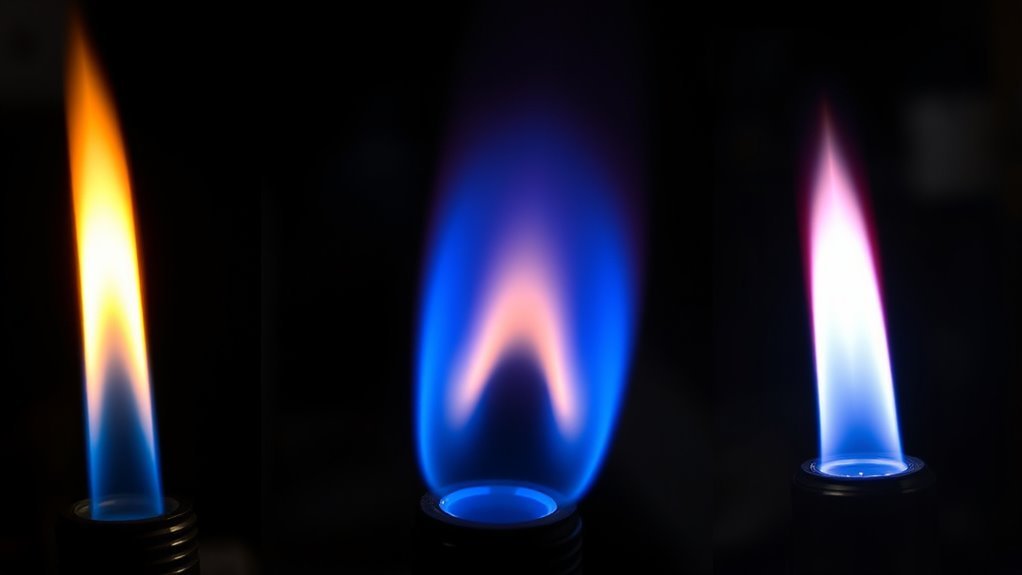
Oxy-acetylene flames are classified by the oxygen-to-acetylene balance leaving the torch. The three recognized settings are neutral, carburizing, and oxidizing. According to TWI’s oxy-fuel welding guide, changing that gas ratio changes both the flame and its chemical action on the heated metal.
A neutral flame has no obvious excess of oxygen or acetylene and normally shows a clear inner cone with an outer envelope. A carburizing flame has extra acetylene and develops a luminous feather beyond the inner cone. An oxidizing flame has extra oxygen, making the cone shorter, sharper, and more forceful.
The gas supplied through the torch is only part of the combustion process. The outer envelope also draws oxygen from the surrounding air. This is why describing a neutral torch setting simply as “complete combustion at a 1:1 ratio” can be misleading.
For most welding, neutral is the baseline. The other two settings are specialized rather than universally “better” for particular families of metal. If you are selecting hardware as well as learning the flame, this oxy-acetylene cutting torch kit guide covers complete torch outfits.
| Flame type | Gas condition | Main visual clue | Typical role |
|---|---|---|---|
| Neutral | Approximately balanced oxygen and acetylene | Well-defined bluish-white inner cone | Most general welding |
| Carburizing | Excess acetylene | Visible acetylene feather | Selected reducing, hardfacing, alloy, or brazing procedures |
| Oxidizing | Excess oxygen | Short, pointed cone and sharper hiss | Brass, bronze, brazing, and other procedure-specific work |
Neutral Flame: The Best All-Purpose Choice
The neutral flame is the normal all-purpose setting for oxy-acetylene welding. It is produced with approximately equal oxygen and acetylene flow at the torch and is identified by a clean, clearly defined inner cone without an obvious acetylene feather.
The inner cone is bluish-white, surrounded by a lighter outer envelope. A commonly quoted textbook temperature near the hottest part of the flame is about 5,850°F (3,232°C), although the exact temperature depends on gas flow, tip design, measurement point, and operating conditions.
Neutral is widely used because it avoids deliberately adding excess oxygen or excess fuel to the weld zone. On steel, a properly adjusted neutral flame produces a relatively calm, clear weld pool rather than the excessive sparking associated with an oxygen-rich flame.
For mild steel and many general welding operations, this is the setting to establish first. If a job specification does not call for another flame chemistry, neutral is normally the safest technical starting point.
The same principle also helps when comparing gas welding with other equipment. A multi-process welder guide explains how MIG, TIG, and stick systems differ from flame-based welding.
Carburizing Flame: When Extra Acetylene Helps
A carburizing flame, also called a reducing flame, contains excess acetylene. Its easiest visual identifier is the luminous acetylene feather that extends beyond the bright inner cone.
The flame is generally softer and cooler than the commonly quoted oxidizing setting. A textbook inner-cone value of about 5,700°F (3,149°C) is often cited, but practical temperature varies with torch setup and where the flame is measured.
| Feature | Effect |
|---|---|
| Excess acetylene | Creates a fuel-rich, reducing condition |
| Feathery inner zone | Shows that the flame is richer than neutral |
| Lower nominal heat | Less concentrated than an oxidizing setting |
| Selected steel uses | Hardfacing and procedure-specific high-carbon work |
| Alloy service | Selected nickel alloys such as Monel |
A carburizing flame can be useful where a reducing atmosphere is specified, including some hardfacing, high-carbon-steel, nickel-alloy, and brazing procedures. It should not be treated as a universal setting for steel because excess carbon can alter the weld metal and may contribute to a hard or brittle deposit.
The practical goal is a controlled reducing condition, not the largest possible feather. If the flame becomes very rich, it can become sooty and contaminate the work.
TIG uses a different heat source and shielding method, but readers comparing precision processes may also find this AC/DC TIG welder guide useful.
Oxidizing Flame: Hotter, But More Oxidizing
An oxidizing flame contains more oxygen than a neutral torch setting. The added oxygen shortens and sharpens the inner cone and normally gives the flame a more pronounced hissing sound.
Its concentrated heat can be useful for selected alloys and brazing work, but the excess oxygen also reacts aggressively with many molten metals. That makes it a poor general-purpose choice for welding steel.
Do not confuse an oxidizing welding flame with the separate cutting-oxygen jet used in oxy-fuel cutting. A cutting torch relies on an additional stream of oxygen to oxidize and remove heated steel.
The role of gas is also completely different in MIG welding, where shielding gas protects an electric-arc weld pool rather than producing the heat source. This MIG shielding-gas guide explains that distinction.
Oxidizing Flame Traits
The oxidizing flame has a short, pointed inner cone and a sharper sound than neutral. Training references commonly describe the cone as slightly purplish or pale blue and quote a nominal inner-cone temperature near 6,300°F (3,482°C).
Because oxygen is present in excess, the weld pool can oxidize rapidly. On unsuitable metals this can contribute to excessive sparking, loss of alloying elements, porosity, reduced ductility, or brittle weld metal.
The adjustment should therefore be deliberate and modest. More oxygen does not automatically mean a better weld simply because the nominal flame temperature is higher.
Best Metal Uses
An oxidizing flame is mainly a special-purpose setting. Training references commonly specify it for brass, bronze, or certain brazing operations rather than ordinary steel fusion welding.
Brass is an important example because it contains zinc. A slightly oxidizing condition may be used in procedures intended to limit zinc loss and control the surface reaction. The exact setting still depends on the filler, flux, alloy, and documented procedure.
Copper should not automatically be grouped with brass. Neutral is commonly listed for general copper welding, while some specialized copper procedures may use a more oxidizing condition because copper conducts heat rapidly.
How to Spot Each Flame Type
You can identify oxy-acetylene flame types by watching the inner cone, acetylene feather, outer envelope, and sound. Establishing neutral first makes the other two conditions much easier to recognize.
- Neutral: a clear, well-defined inner cone with no obvious acetylene feather. The flame is stable and comparatively smooth.
- Carburizing: a bright feather extends beyond the inner cone. The flame becomes longer and softer as acetylene increases.
- Oxidizing: the inner cone becomes shorter and sharper, while the sound becomes more forceful or hiss-like.
Watch the transition instead of relying only on color, which can look different in daylight, through protective lenses, or with different torch tips. The disappearance or appearance of the acetylene feather is usually the clearest adjustment cue.
For a broader look at joining methods beyond flame welding, the existing welding-process overview provides additional process context.
Flame Temperatures by Type
Oxy-acetylene flame temperature is not uniform from the torch tip to the end of the outer envelope. The hottest region is around the end of the inner cone, so temperature figures should always be understood as approximate values for a particular part of the flame.
The Virtual Labs gas-welding lesson gives the following commonly taught inner-cone values.
| Flame | Approx. temperature | Practical meaning |
|---|---|---|
| Neutral | 5,850°F (3,232°C) | General welding baseline |
| Carburizing | 5,700°F (3,149°C) | Fuel-rich and nominally cooler |
| Oxidizing | 6,300°F (3,482°C) | More concentrated and chemically aggressive |
Other reputable references give somewhat different peak figures because flame temperature depends on gas ratio, measurement location, equipment, and test method. Treat the numbers as useful comparison values rather than exact temperatures every torch will reproduce.
If your main task is cutting rather than welding, flame preheat is only one part of the process. A plasma-cutter guide covers an alternative cutting method that does not use an oxy-acetylene flame.
Which Flame Type Fits Which Metal?
The correct flame depends on both the base metal and the joining process. A material may use one flame for fusion welding and another for brazing, so a simple “one metal equals one flame” rule can lead to mistakes.
Neutral is the normal starting point for most welding. Carburizing and oxidizing settings should be chosen when the alloy, filler-metal instructions, or qualified procedure specifically benefits from their chemical effect.
For readers comparing gas welding with electrode processes, this stick-welder guide covers equipment used for SMAW instead.
Mild Steel And Stainless
For mild steel, a neutral flame is the standard choice because it supplies welding heat without intentionally creating either a carbon-rich or oxygen-rich atmosphere.
An oxidizing flame is generally avoided for ordinary steel welding because excess oxygen can react with the molten metal. A strongly carburizing flame is also unsuitable for routine mild-steel welding because excess carbon can alter the deposit.
If stainless steel is gas welded, neutral is also the normal flame baseline. Stainless procedures can additionally depend on suitable filler metal, cleanliness, flux, and heat control, so the flame setting alone does not determine weld quality.
High-Carbon And Alloyed
High-carbon steels and specialty alloys need more procedure-specific guidance than mild steel. Some traditional oxy-acetylene procedures use a slightly carburizing or reducing flame for high-carbon work, hardfacing, nickel alloys, and Monel.
That does not mean every high-carbon or alloy steel should be welded with excess acetylene. Carbon pickup can be harmful when the procedure does not call for it. Start at neutral and shift toward reducing only when the alloy or filler procedure specifies that condition.
Copper, Brass, And Castings
Copper, brass, and cast iron should not be treated as one group. Neutral is commonly used for copper, while brass and bronze procedures may call for a slightly oxidizing flame. Cast-iron fusion welding normally uses neutral or slightly reducing conditions.
For cast iron specifically, Aufhauser’s cast-iron welding procedure specifies a neutral or slightly reducing flame for oxy-acetylene fusion welding, while its braze-welding guidance allows neutral or slightly oxidizing conditions.
| Metal | Preferred flame | Risk |
|---|---|---|
| copper | neutral flame for general welding | oxidation and rapid heat loss |
| brass | slightly oxidizing in many procedures | zinc loss or excessive oxidation |
| castings | neutral or slightly reducing for fusion welding | cracking, hard zones, or distortion |
Adjust an Oxy-Acetylene Flame
Adjust the flame by first establishing a stable neutral condition, then changing the gas balance only if the job requires carburizing or oxidizing chemistry. Gas pressure itself should come from the torch manufacturer’s tip chart, not from a universal pressure number.
Warning: Oxy-acetylene equipment can cause fire, explosion, burns, or flashback if assembled or operated incorrectly. Use the regulator, tip, check-valve or flashback-protection arrangement specified for your equipment, leak-test connections, purge the hoses as directed, and get hands-on instruction before operating an unfamiliar torch.
The Miller/Smith oxy-fuel guide instructs users to purge the fuel and oxygen sides separately before lighting and to adjust regulator delivery pressure for the specific tip being used.
- Inspect the equipment. Check the torch, hoses, regulators, connections, and tip before lighting.
- Set the correct delivery pressures. Follow the manufacturer’s chart for the exact torch, tip, gas, and job.
- Purge each hose separately. Follow the equipment manufacturer’s procedure so mixed gases are not left in the hoses.
- Light the fuel with an approved striker. Follow the lighting sequence specified for your torch design.
- Increase oxygen until neutral. Watch the acetylene feather shrink until it disappears and a clean inner cone remains.
- For carburizing, add fuel richness carefully. A visible acetylene feather indicates the reducing condition.
- For oxidizing, add oxygen slightly. The cone shortens and sharpens and the flame develops a more noticeable hiss.
Do not choose flame type by regulator pressure alone. The visible flame condition, correct tip, manufacturer settings, and material procedure all matter.
If you are still deciding which welding process is easiest to learn, the existing beginner welder guide compares common arc-welding options.
Common Flame Problems and How to Fix Them
Most flame problems come from the wrong gas balance, incorrect tip or pressure, contamination, restricted flow, or overheating. Correct the basic flame condition before trying to compensate with torch angle or travel speed.
- Long feather or soot: the flame is too acetylene-rich. Move toward neutral by increasing oxygen as directed for the torch.
- Short cone and harsh hiss: the flame is oxygen-rich. Reduce the oxidizing condition unless the procedure specifically requires it.
- Popping or backfire: stop and check the tip, gas flow, seating, overheating, and manufacturer’s troubleshooting procedure before continuing.
- Unstable flame: verify the correct tip, clean passages, gas supply, hose condition, and regulator settings.
- Excessive weld-pool sparking: confirm that the flame has not moved into an oxidizing condition and that the base metal is clean.
Do not keep welding through repeated popping, flashback, damaged hoses, or suspected leakage. Those are equipment or safety problems, not normal variations in flame type.
For comparison with electric welding equipment, this TIG welder guide explains AC/DC machine choices rather than oxy-fuel flame adjustment.
Oxy-Acetylene Flame Safety
Safe oxy-acetylene work depends on more than choosing the right flame. Cylinders, regulators, hoses, protective devices, ventilation, eye protection, and fire control all need to be correct before the torch is lit.
The OSHA oxygen-fuel gas standard requires approved equipment, limits acetylene use to no more than 15 psig, requires oxygen equipment to be kept free from oil and grease, and includes requirements for backflow and flashback protection in covered systems.
Protect your eyes from radiant energy as well as sparks and molten metal. OSHA’s filter-lens requirements list minimum protective shades of 4 for light gas welding, 5 for medium work, and 6 for heavy gas welding, based on plate thickness.
- Keep oxygen fittings, valves, gloves, and equipment free of oil and grease.
- Secure cylinders upright and protect them from sparks, slag, impact, and heat.
- Use the torch, regulators, hoses, tips, and protective devices only for their approved service.
- Leak-test the system with an approved solution and correct leaks before lighting.
- Keep combustible material away from the work and provide suitable ventilation.
- Wear appropriate eye protection, gloves, protective clothing, and other PPE required by the job.
Frequently Asked Questions
What Are the Three Types of Welding Flames?
The three oxy-acetylene welding flames are neutral, carburizing or reducing, and oxidizing. Neutral is the normal general-welding setting. Carburizing contains excess acetylene and shows a feather, while oxidizing contains excess oxygen and has a shorter, sharper inner cone.
What Are the 7 Basic Types of Welding?
There is no single universal list of exactly seven basic welding types. A common introductory grouping includes oxy-fuel, stick or SMAW, MIG or GMAW, TIG or GTAW, flux-cored arc welding, submerged arc welding, and resistance welding, but formal process classifications can divide welding differently.
What Are the Differences Between Neutral, Carburizing, and Oxidizing Welding Flames?
Neutral has an approximately balanced torch mixture and no acetylene feather. Carburizing has excess acetylene and a visible feather, creating a reducing condition. Oxidizing has excess oxygen, a shorter pointed cone, and a sharper hiss. Those differences change both heat concentration and chemical action on the metal.
What Is the Difference Between a Carburizing Flame and an Oxidizing Flame?
A carburizing flame is fuel-rich, with excess acetylene and a visible feather; an oxidizing flame is oxygen-rich, with a shorter pointed cone and stronger hiss. Carburizing conditions can add carbon or provide a reducing atmosphere, while oxidizing conditions increase oxidation and are unsuitable for routine steel welding.
Conclusion
For most oxy-acetylene welding, establish a neutral flame first. Use a carburizing flame only where a reducing or carbon-rich condition is specified, and use an oxidizing flame selectively for suitable alloys or brazing procedures. Read the inner cone and acetylene feather, follow the material procedure, and use the torch manufacturer’s settings rather than relying on one universal gas-pressure rule.
Sources
- TWI — Oxy-fuel Welding Guide: Flame classifications, gas balance, process characteristics, and flashback information.
- Virtual Labs — Gas Welding or Oxyfuel Gas Welding: Flame appearance, applications, and commonly taught temperature values.
- Aufhauser — Cast Iron Welding Procedures: Flame recommendations for oxy-acetylene fusion and braze welding of cast iron.
- Miller/Smith — Ultimate Guide to Oxy-Fuel: Torch setup, purging, lighting, flame recognition, and shutdown guidance.
- OSHA 29 CFR 1910.253: Oxygen-fuel equipment, acetylene pressure, cylinder handling, and protective-device requirements.
- OSHA 29 CFR 1910.133: Eye protection and minimum filter-lens shades for gas welding.