

A plasma cutter with a built-in air compressor is useful when you need to cut metal without hauling a separate air system. The trade-off is that self-contained models usually favor portability over heavy continuous cutting.
Our top pick is Hypertherm Powermax30 AIR because it combines a built-in compressor with 120–240V input and a stronger verified cut range. For lighter 120V work, the Hobart AirForce 12ci is the best-value choice among the current models in this original list.
We checked manufacturer specifications, current retail availability, model status, and safety information before rebuilding the picks.
Plasma Cutters With Built-In Air Compressors: Our Top Picks
Plasma Cutters With Built-In Air Compressors Compared
| Product | Best for | Input power | Cut capacity |
|---|---|---|---|
|
Premium
|
Best overall | 120–240V | 5/16 in. at 20 ipm; 3/8 in. at 10 ipm |
|
Mid-range
|
Best value | 120V | 1/8 in. rated; 1/4 in. maximum |
1. Hypertherm Powermax30 AIR
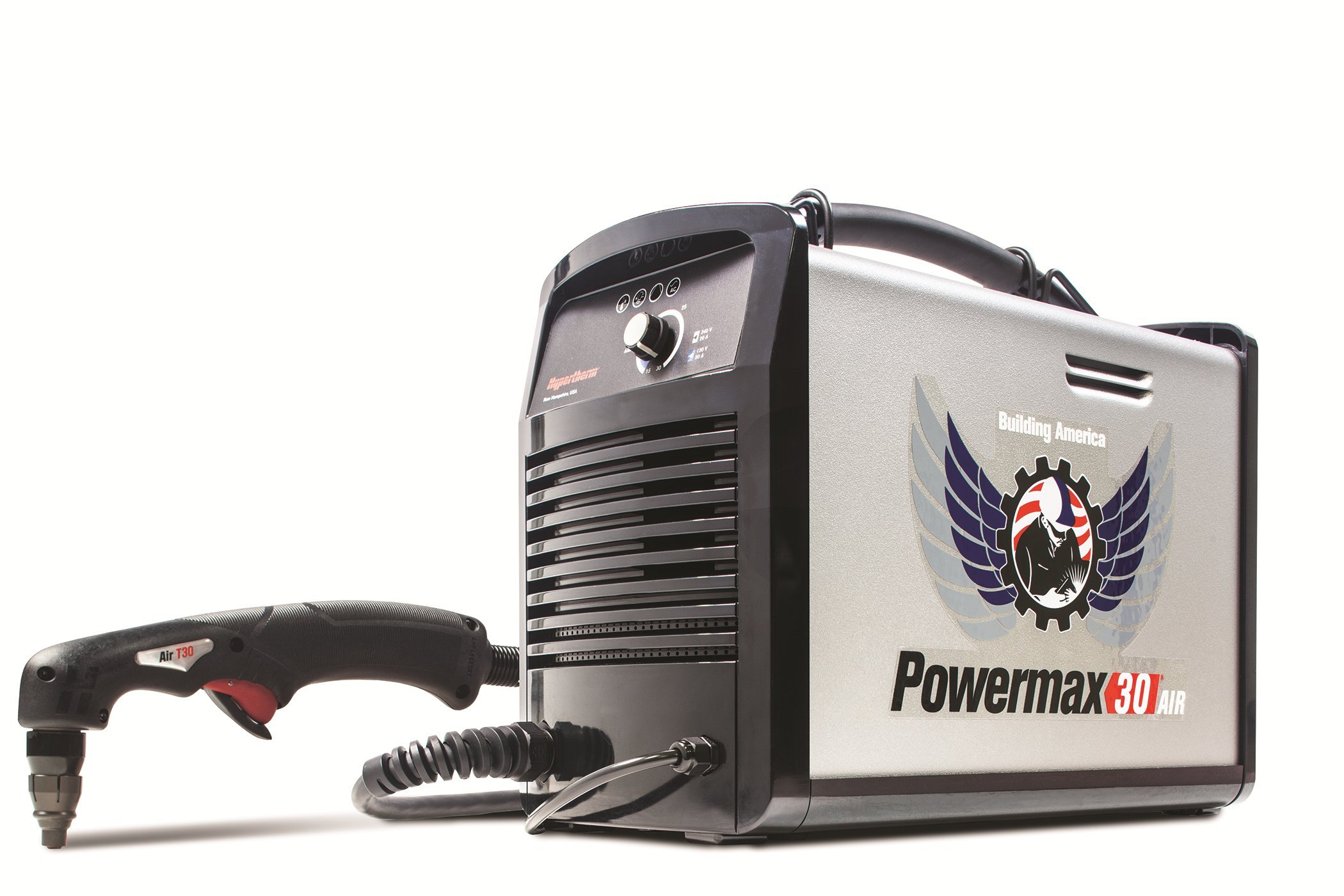
Bottom line: The Hypertherm Powermax30 AIR is the strongest current all-rounder in this list for mobile repair, maintenance, and fabrication. Its built-in compressor and dual-voltage input give you more flexibility than a 120V-only unit.
- Input power: 120–240V, useful across shops and job sites
- Output: 15–30A, with more output available on 240V
- Cut capacity: 5/16 in. at 20 ipm, 3/8 in. at 10 ipm
- Duty cycle: 35% at 240V, 20% at 120V
- Weight: 21.8 lb with the 15-ft torch
The internal compressor removes the separate tank, hose, and air-treatment setup from most portable jobs. Hypertherm also includes Auto-Voltage support, so the same system can run from 120V or 240V single-phase power.
Cut capacity is the main reason to choose it over the smaller Hobart. Hypertherm rates mild-steel cutting at 5/16 inch at 20 ipm and 3/8 inch at 10 ipm, with 5/8-inch severance. On 120V, the recommended output is lower, so 240V is the better match when you need the full 30A output.
The catch is price tier and duty cycle. This is a premium self-contained cutter, not a replacement for a high-output shop system with a large external compressor.

- Built-in compressor removes the need for external shop air
- Runs on both 120V and 240V single-phase power
- Higher verified cut capacity than the other current pick
- Lightweight for a self-contained plasma system
- Premium price tier
- Duty cycle is limited at full output
- Internal-air format is not aimed at heavy continuous plate cutting
2. Hobart AirForce 12ci
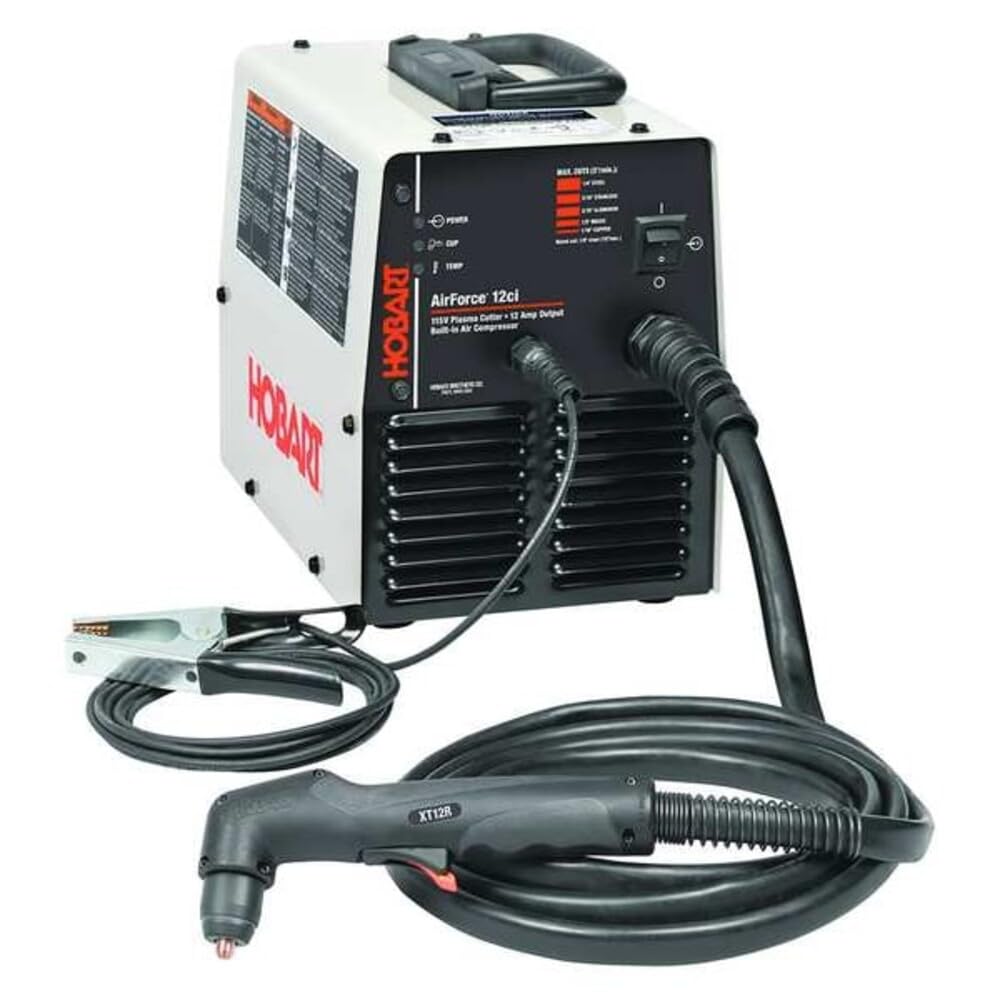
Bottom line: The Hobart AirForce 12ci is a simple 120V option for thin metal, bodywork, and light repair jobs. It is easier to carry and use where a standard 120V circuit is the only practical power source.
- Input power: 120V, convenient for standard jobsite power
- Output: 12A at 110 VDC
- Cut capacity: 1/8 in. rated, 1/4 in. maximum
- Duty cycle: 35% at rated output
- Weight: 26.7 lb, manageable for mobile work
The built-in piston-driven compressor and preset pressure keep setup straightforward: connect power, attach the work clamp, and use the torch without a separate air supply. Hobart includes a 12-ft torch, a 12-ft work cable, and extra consumables.
Its limits are clear. Hobart rates it for clean cuts through 1/8-inch mild steel, while 1/4 inch is the maximum cut specification. That makes it better for sheet metal and lighter repairs than thicker fabrication.
Hobart does not recommend adding a larger external compressor to this model. If you routinely work near the upper thickness limit, a higher-capacity plasma cutter is the safer fit.

- Built-in compressor and preset pressure simplify setup
- Runs from 120V input power
- Compact and under 27 lb
- Rated for common thin-sheet repair work
- Lower cut capacity than the Hypertherm
- 120V-only input limits output flexibility
- Not intended for sustained heavier cutting
3. Lincoln Electric Tomahawk 375 Air
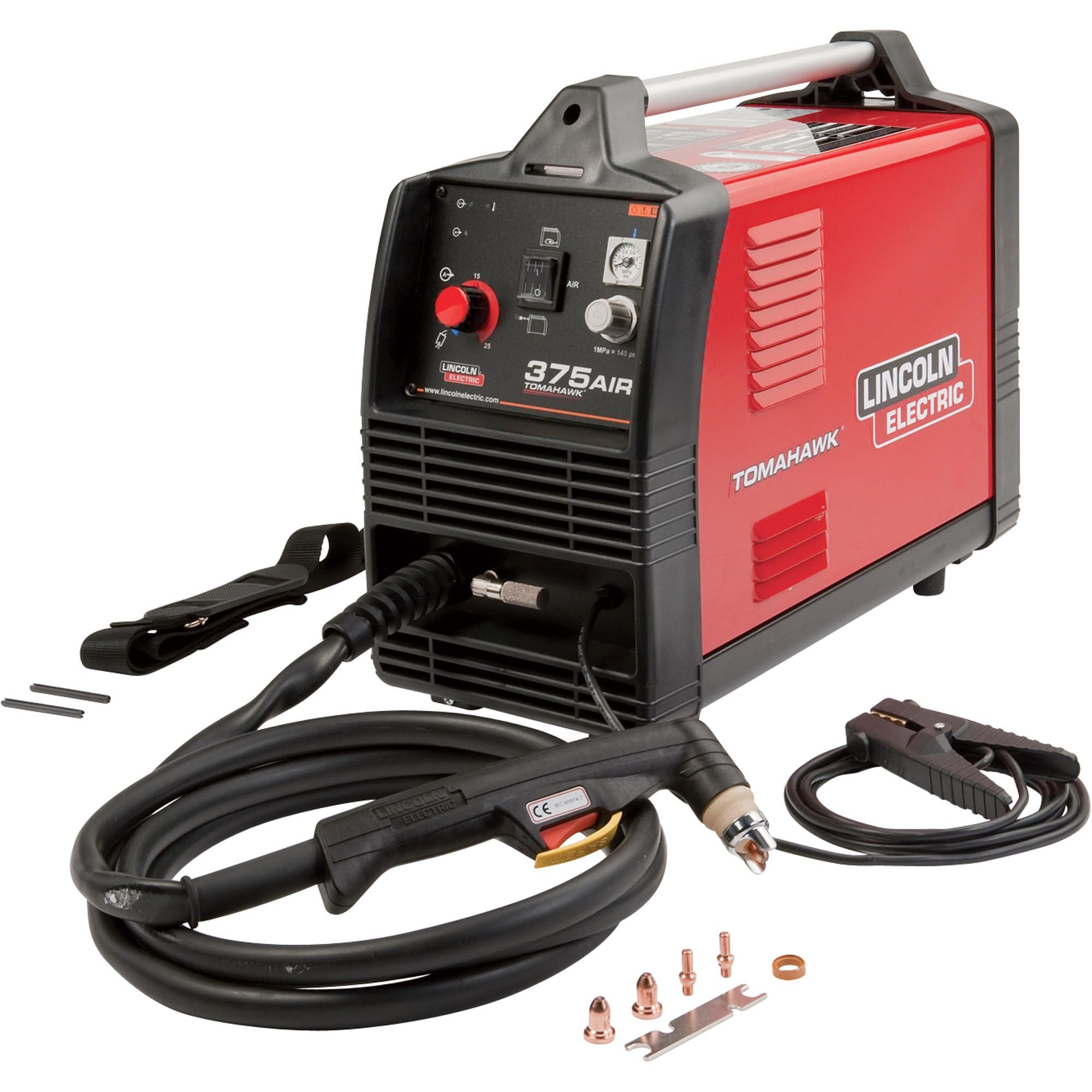
Bottom line: The Tomahawk 375 Air K2806-1 is a discontinued model, so it is not included in the current recommendations above. Existing owners still get a built-in compressor plus an external-air connection.
This 208/230V single-phase cutter has a 10–25A output range. Lincoln rated it for 5/16-inch recommended cutting, 3/8-inch maximum cutting, and 1/2-inch severance on mild steel.
The original article overstated its duty cycle. The published ratings are 100% at 13A, 60% at 18A, and 35% at the full 25A output. Net weight is 40 lb.
Legacy Sentiment Visualization

Long-Term Cost Benefits
For an existing owner, the internal compressor can reduce the amount of separate air equipment needed for field work. The machine also accepts external air, which can be useful when a shop compressor is already available.
Return On Investment
Because the model is discontinued, a new purchase should be compared with current supported alternatives instead of assuming the original value proposition still applies.
Situational Benefits
|
Situation |
How It Helps |
|---|---|
|
Small Fabrication Shop |
The 208/230V input and 10–25A output suit light and medium fabrication work. |
|
On-Premise Production |
The unit can use either its internal compressor or an external air connection. |
|
Occasional Thicker Cuts |
Lincoln listed 3/8 inch as the maximum cut and 1/2 inch as severance. |
|
Portable Use |
The integrated compressor avoids a separate air source when mobility matters. |
Ease Of Use
Controls include continuous output adjustment, front-panel purge control, and a parts-in-place safety system. The cutter also supports rapid arc restrike for cutting across gaps and expanded metal.
Versatility
The machine was designed for mild steel, stainless steel, aluminum, brass, and copper, with internal or external air available.
Durability
Consumables remain wear items. Lincoln specified replaceable LC25 torch consumables and routine air-system maintenance for this platform.
Problem Solving
The self-contained air system was intended to make field cutting possible where a separate compressor was unavailable.
Speed & Response
Lincoln rated the model at 5/16 inch for recommended cutting, 3/8 inch maximum cutting, and 1/2 inch severance; cutting speed drops as thickness increases.
Key Benefits
- Internal compressor with external-air capability
- 208/230V single-phase input
- 10–25A adjustable output
- 40-lb portable chassis
4. Forney 250 P+
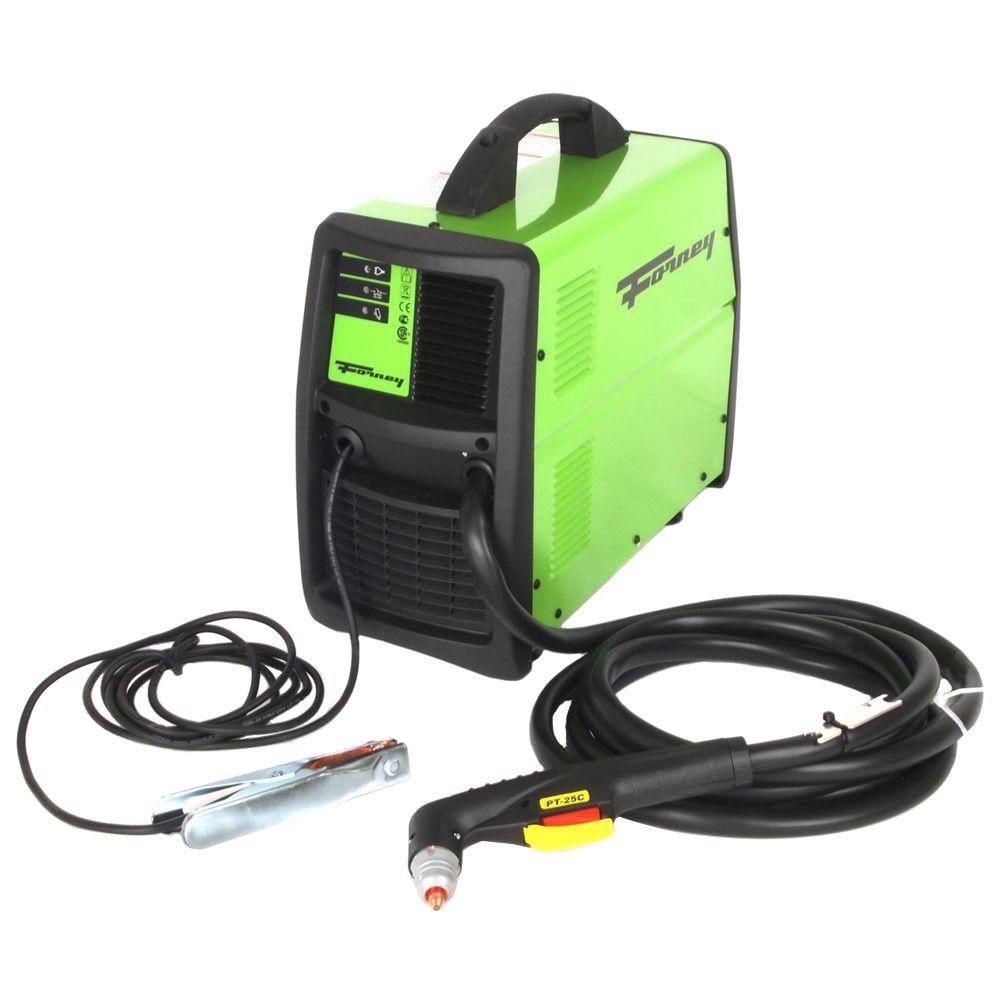
Bottom line: Forney item 317, the 250 P+ with integrated compressor, is now listed in Forney’s legacy discontinued-machine resources. It remains here for accuracy and image continuity, but it is not a current recommendation.
The confirmed specifications are 120V input, 12A rated output, 25% duty cycle, and a 41-lb machine weight. Forney rated it to cut up to 1/8-inch mild steel and sever up to 1/4 inch.
The built-in compressor, integrated air regulator and dryer, and 15-ft torch, ground cable, and power cable were aimed at portable light-duty repair work.
Legacy Sentiment Visualization

Long-Term Cost Benefits
For existing owners, the integrated compressor reduces the need to maintain a separate portable air system for light cutting tasks.
Return On Investment
Because this exact machine is discontinued, buyers should compare current supported models rather than rely on its original purchase case.
Situational Benefits
|
Situation |
How It Helps |
|---|---|
|
Quick Field Repairs |
The built-in compressor and 120V input reduce setup equipment. |
|
Sheet Metal Work |
Forney rated the machine for up to 1/8-inch mild-steel cutting. |
|
Sculpture and Art |
The drag-torch design supports controlled cutting on conductive metal within capacity. |
|
Mobile Service Calls |
The integrated air system avoids carrying a separate compressor. |
Ease Of Use
Forney designed the 250 P+ with no air-pressure adjustment required for normal operation, diagnostic LEDs, drag-torch technology, and onboard consumable storage.
Versatility
It is a light-duty 120V cutter for sheet metal, repair, HVAC, plumbing, farm, and contractor work within its published capacity.
Durability
Thermal-overload protection and post-flow air cooling were included to protect the machine during normal use.
Problem Solving
The integrated compressor was designed to remove the external-air requirement from smaller mobile cutting jobs.
Speed & Response
The machine is intended for thin material. As thickness approaches its 1/4-inch severance limit, expect slower cutting than on its 1/8-inch rated work.
Key Benefits
- Integrated compressor and air dryer
- Standard 120V input
- Drag-torch operation
- 15-ft torch, ground cable, and power cable
5. Thermal Dynamics AirCut 15C

Bottom line: The Thermal Dynamics AirCut 15C, part 1-1110-1, is listed as discontinued by current welding suppliers. It stays in this article for historical accuracy but is not a current recommendation.
The confirmed configuration is a 120V single-phase plasma system with a built-in compressor, 15A output, and a 35% duty cycle. Its published cutting capacity is 1/8 inch recommended and 3/16 inch maximum, with a 29-lb machine weight.
The original speed-focused positioning applied to this legacy light-duty system. Current buyers should compare supported models with available consumables and service.
Legacy Sentiment Visualization

Long-Term Cost Benefits
For an existing owner, the built-in compressor keeps the system self-contained for light cutting and removes a separate portable air source.
Return On Investment
Because this model is discontinued, its original value case should not be used as a current buying reason.
Situational Benefits
|
Situation |
How It Helps |
|---|---|
|
Light Fabrication |
The 1/8-inch recommended capacity suits thinner conductive metal. |
|
Mobile Work |
The built-in compressor and 29-lb weight reduce separate equipment. |
|
Light Repair Work |
120V input supports locations where higher-voltage shop power is unavailable. |
Ease Of Use
The system was sold as a plug-in portable cutter with the air supply built into the chassis.
Versatility
Its published 1/8-inch recommended and 3/16-inch maximum capacities place it in light-duty cutting rather than heavy plate work.
Durability
Consumables, torch parts, and the internal air system require normal maintenance; support should be checked before buying remaining old stock.
Problem Solving
The integrated compressor solves the need for a separate air tank on smaller mobile cutting jobs.
Speed & Response
It was built around fast setup and light-material cutting, not sustained heavy-plate production.
Key Benefits
- Built-in air compressor
- 120V single-phase input
- 15A output with 35% duty cycle
- 29-lb portable format
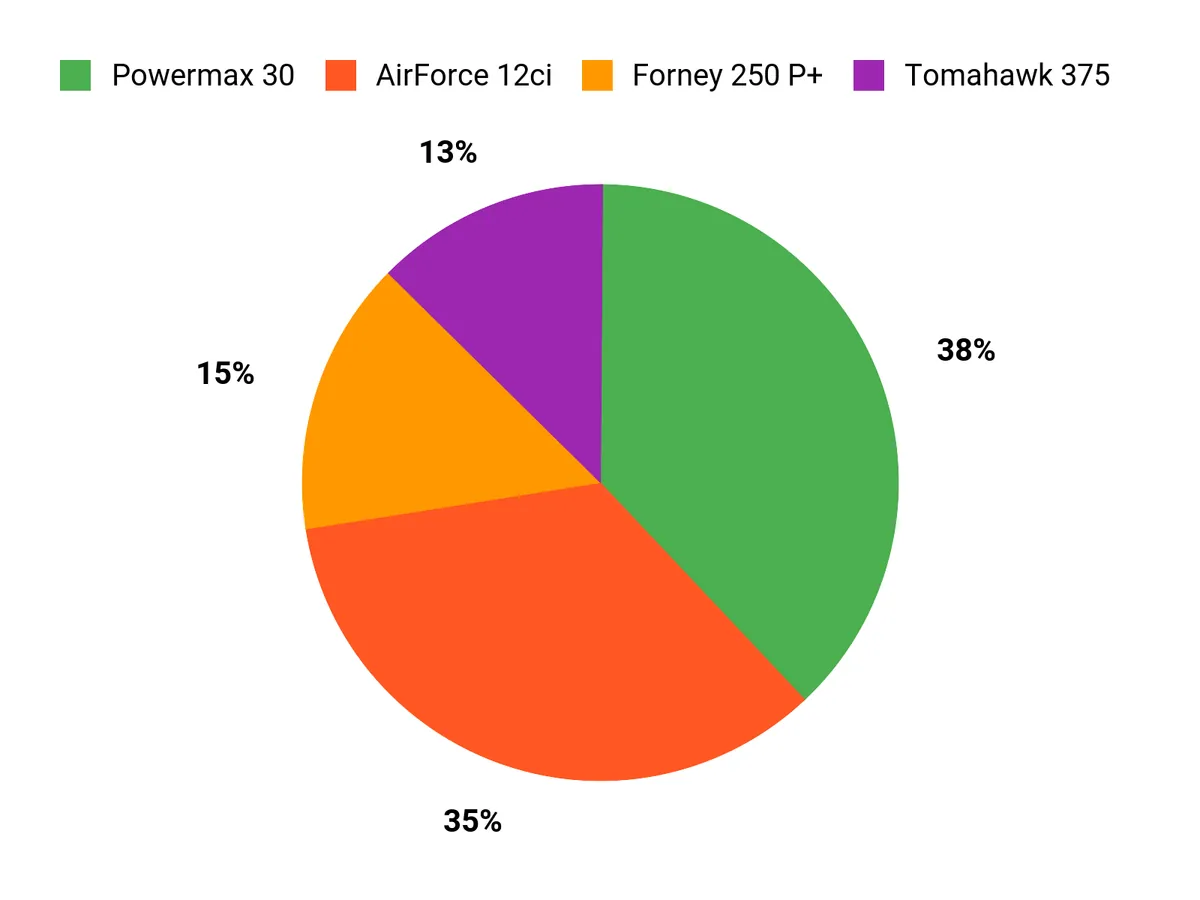
Hypertherm Powermax30 AIR vs Hobart AirForce 12ci: Is the Upgrade Worth It?
The Hypertherm gives you more voltage flexibility and more verified cutting capacity. The Hobart is the simpler choice when your work is mainly thin sheet and you want a 120V self-contained cutter.
- Input power: Hypertherm runs on 120–240V; Hobart is 120V.
- Output: Hypertherm reaches 30A; Hobart is rated at 12A.
- Cut range: Hypertherm is rated higher for recommended and maximum work.
- Portability: Both avoid external shop air; both remain easy to carry.
Which Plasma Cutter With a Built-In Air Compressor Should You Buy?
- For the widest power flexibility: get the Hypertherm Powermax30 AIR.
- For thin sheet on 120V power: get the Hobart AirForce 12ci.
- For the higher verified cut range: get the Hypertherm Powermax30 AIR.
- For the lighter-duty value choice: get the Hobart AirForce 12ci.
How We Chose
- Built-in air: A current recommendation had to include an onboard compressor.
- Cut capacity: We prioritized manufacturer-rated recommended, maximum, and severance specifications.
- Power and duty cycle: Input voltage, rated output, and duty cycle had to match the exact model.
- Current status: We checked manufacturer pages, current major retailers, and discontinuation evidence.
- Safety and ownership: We checked recall information and owner feedback, but used no owner trend unless independent sources aligned.
Customer Preferences
If portability and stronger cutting capacity matter most, the Hypertherm Powermax30 AIR is the better fit. If your work is mostly thin-gauge metal and a 120V outlet is your normal power source, the Hobart AirForce 12ci keeps the setup simpler.
Maintenance and Safety
Plan on routine consumable changes and inspect the torch tip, nozzle, leads, work clamp, and power cord before cutting. Keep compressor inlets and air passages clear, and follow the manufacturer’s maintenance schedule for the exact model.
Use the correct circuit and extension-cord gauge, keep the work area dry, and make a solid work-clamp connection. Wear the eye, face, hand, hearing, and respiratory protection specified for plasma cutting, and provide adequate ventilation for fumes and particles.
Buying Guide: Plasma Cutters With Built-In Air Compressors
Cut Capacity
Separate recommended cutting thickness from maximum cut and severance. Recommended capacity is the most useful number for routine work because maximum and severance cuts are slower and rougher. Match the machine to the thickness you cut most, not the thickest piece you might encounter once.
Input Power and Circuit
A 120V cutter is convenient where household-style power is all you have. Dual-voltage models can deliver more output when 240V is available. The Hypertherm Powermax30 AIR supports 120–240V, while the Hobart AirForce 12ci is a 120V machine.
Duty Cycle
Duty cycle tells you how long the cutter can operate within a 10-minute period at a stated output and ambient temperature before cooling is required. Do not compare duty-cycle percentages without also checking the amperage and voltage at which each rating applies.
Built-In Air vs External Air
An onboard compressor is valuable for service trucks, farms, maintenance teams, and small shops that do not want to move a separate compressor. The trade-off is capacity: internal-air models are generally aimed at portable cutting rather than continuous heavy production. Some machines accept external air, while others do not recommend it.
Weight and Lead Length
Machine weight matters if you carry the cutter up stairs, across a site, or in and out of a service truck. Torch and work-lead length also affect where you can place the power source, so check both before assuming a compact machine will reach the work comfortably.
Consumables and Manufacturer Support
Consumables are part of plasma-cutter ownership. Before buying, confirm that electrodes, nozzles, retaining caps, and torch parts are still supported for the exact model. Current manufacturer support matters more than a low entry cost on a discontinued machine.
Mistakes to Avoid When Buying a Plasma Cutter
- Buying by severance capacity: use recommended thickness for everyday sizing.
- Ignoring circuit needs: confirm voltage, amperage, plugs, and generator capacity first.
- Assuming every onboard-air model accepts external air: check the exact manual.
- Overlooking consumables: verify replacement torch parts are easy to source.
- Choosing discontinued stock without support: compare current models before committing.
FAQs
Do built-in compressors work well?
Yes, built-in compressors work well for the portable cutting range the machine was designed to handle. They remove the separate compressor, hose, and air-treatment setup from many jobs. Their main limit is capacity: a self-contained cutter is usually better for mobile and light-to-medium work than long, heavy production cuts.
How do I choose the right unit?
Start with the material thickness you cut most, then check recommended cut capacity, input voltage, duty cycle, and machine weight. A dual-voltage model gives more flexibility across shops and job sites. Also confirm that current consumables and service support are available for the exact model before buying.
Can a built-in compressor plasma cutter cut 1/4-inch steel?
Some can, but the rating matters. The Hypertherm Powermax30 AIR has verified capacity above 1/4 inch under its published cut chart. The Hobart AirForce 12ci lists 1/8 inch as rated capacity and 1/4 inch as its maximum cut, so 1/4 inch is not its ideal routine workload.
Can I connect an external compressor to a built-in model?
It depends on the model. Some self-contained plasma cutters are designed with both internal and external air connections. Hobart does not recommend using a larger external compressor with the AirForce 12ci, so check the exact manufacturer manual instead of assuming every built-in-air machine supports both modes.
What maintenance and safety should I expect?
Replace worn consumables, keep the torch and air inlets clean, inspect cables and the work clamp, and follow the manufacturer’s service schedule. Use the correct electrical circuit and extension-cord gauge. Plasma cutting also requires proper eye, face, hand, hearing, and respiratory protection plus adequate ventilation for fumes and particles.
Can these cutters handle aluminum and stainless steel?
Plasma cutters can cut electrically conductive metals, including mild steel, stainless steel, and aluminum, when the machine and consumables are used within their published limits. Capacity and cut quality vary by material, thickness, power input, and torch setup, so use the exact model’s cut chart rather than one thickness number for every metal.
Final Verdict
For a current plasma cutter with a built-in air compressor, the Hypertherm Powermax30 AIR is the best overall choice from this original list. Its 120–240V input, 15–30A output, and stronger verified cut chart give it the broadest useful range.
The Hobart AirForce 12ci is the better fit for lighter 120V work where thin-sheet portability matters more than maximum capacity.
For the lower price tier, compare the Hobart AirForce 12ci before you buy.
Model Status Reference
The original roundup included the five models below. The status column separates the two current recommendations from the three discontinued legacy models.
| Product Name | Image | Current Status |
|---|---|---|
| Hypertherm Powermax30 AIR |
|
Verified current recommendation |
| Hobart AirForce 12ci |
|
Verified current recommendation |
| Lincoln Electric Tomahawk 375 Air |
|
Discontinued legacy model |
| Forney 250 P+ |
|
Discontinued legacy model |
| Thermal Dynamics AirCut 15C |
|
Discontinued legacy model |


[…] position, and keyhole closure must stay closely balanced. If you also shop for plasma cutters, built-in air compressors improve cutting portability but are not a core PAW torch […]
[…] it should not be confused with cutting equipment. If you are building a mobile fabrication setup, plasma cutters with built-in air compressors are a separate equipment […]
[…] and structural integrity. Additionally, the efficiency of the process can greatly benefit from built-in air compressors, which enhance portability and reduce setup […]
[…] gas itself also affects the result. Different plasma gas and air-supply setups can change edge finish, dross, speed, and consumable […]
[…] do not use compressed air merely to hurry a hot repair. Equipment such as plasma cutters with built-in air compressors serves a different purpose; cooling strategy must follow the cast-iron welding […]