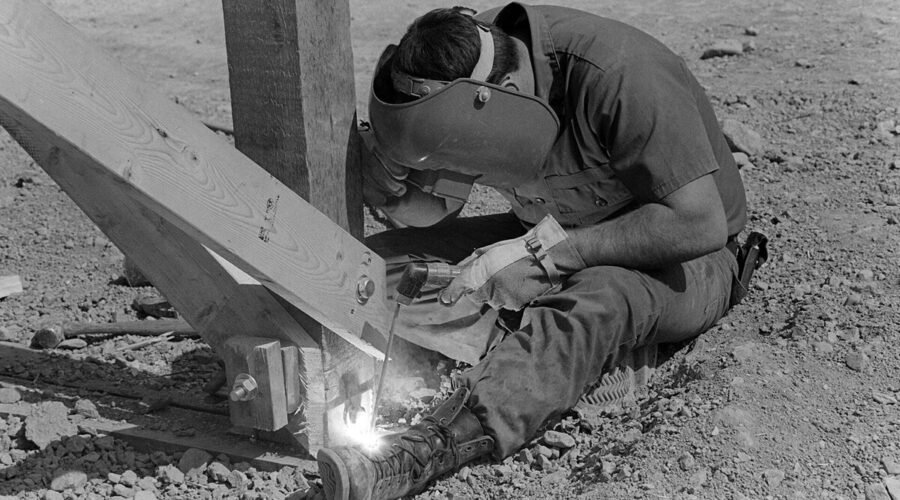
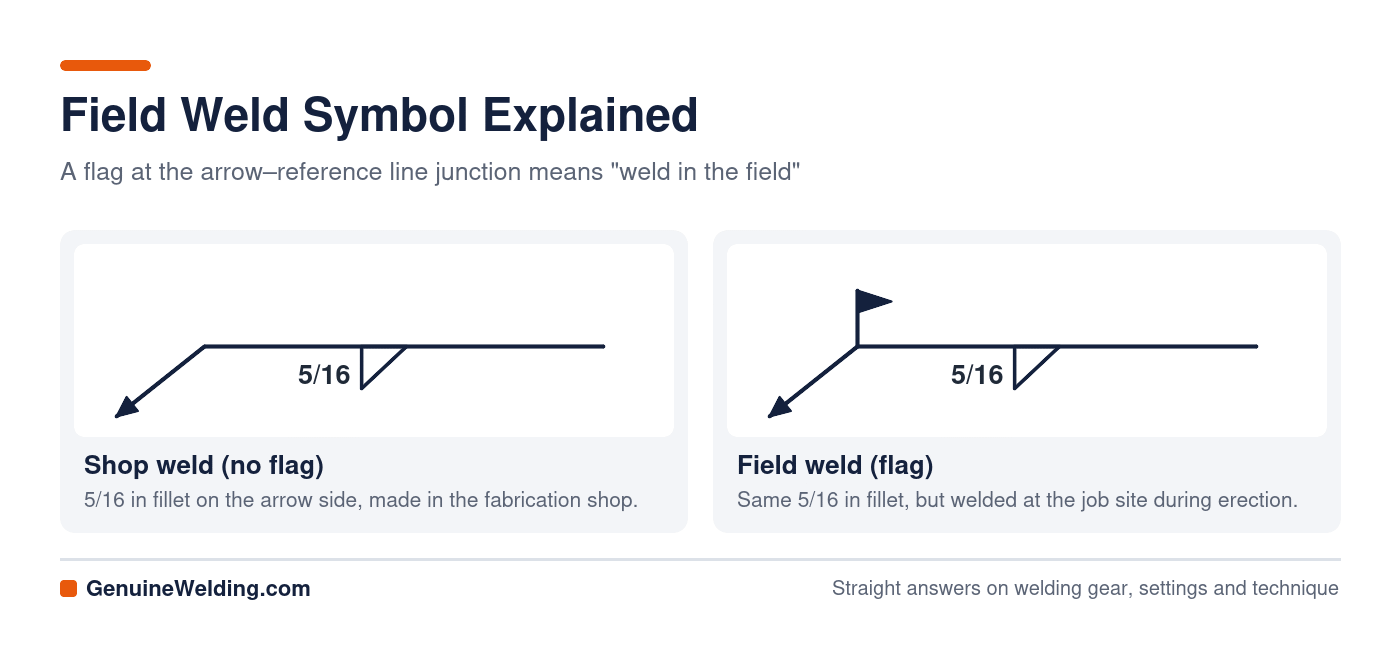
The field weld symbol is a small flag placed at the junction where the arrow meets the reference line of a welding symbol. It means the weld is made in the field, at the job site or during erection, rather than in the fabrication shop. Under AWS A2.4 the flag may point in either direction. It can be combined with any weld type, such as a fillet or groove weld, and with the weld-all-around circle.
Field welds matter for planning: they affect how parts are shipped, which crew makes the weld, what equipment is needed on site and how the weld is inspected. Here’s how to read the field weld flag and what it means for your job.
How to Read the Field Weld Symbol
- Find the flag at the arrow-reference line junction. A flag means “field weld.” No flag means a shop weld.
- Read the weld symbol on the reference line as usual: below the line is the arrow side, above is the other side.
- Read the size and length to the left and right of the weld symbol.
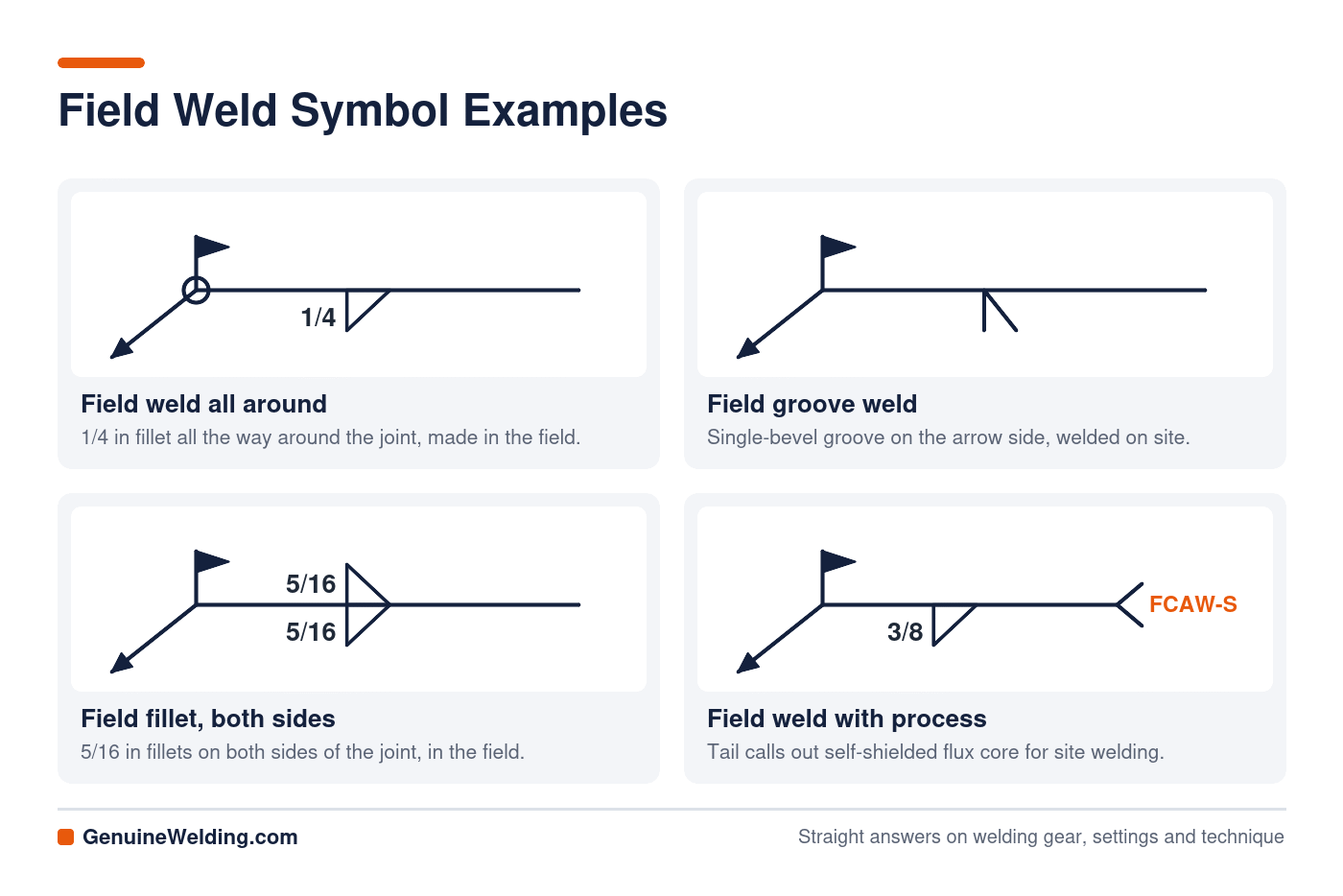
- Check for a weld-all-around circle at the same junction; together they mean “weld all the way around, in the field.”
- Read the tail for the process, WPS or notes such as “E71T-8” or “SEE NOTE 3.”
New to symbols? Start with the welding symbols chart.
Which Way Should the Flag Point?
In older drawings you’ll often see the flag pointing toward the tail, and some company standards still require that. Current AWS A2.4 allows the flag to point either direction; the direction has no meaning. The flag must be at the junction of the arrow and reference line. ISO 2553 uses a similar flag symbol for site welds.
Field Weld Symbol Examples
Why Some Welds Are Made in the Field
- Shipping limits: large assemblies can’t be transported in one piece.
- Erection fit-up: connections must be adjusted to fit the actual structure on site.
- Connections to existing structures: new steel welded to existing beams, embeds or equipment.
- Pipelines and tanks: almost all girth welds and large tank seams are made in place.
What Field Welding Means in Practice
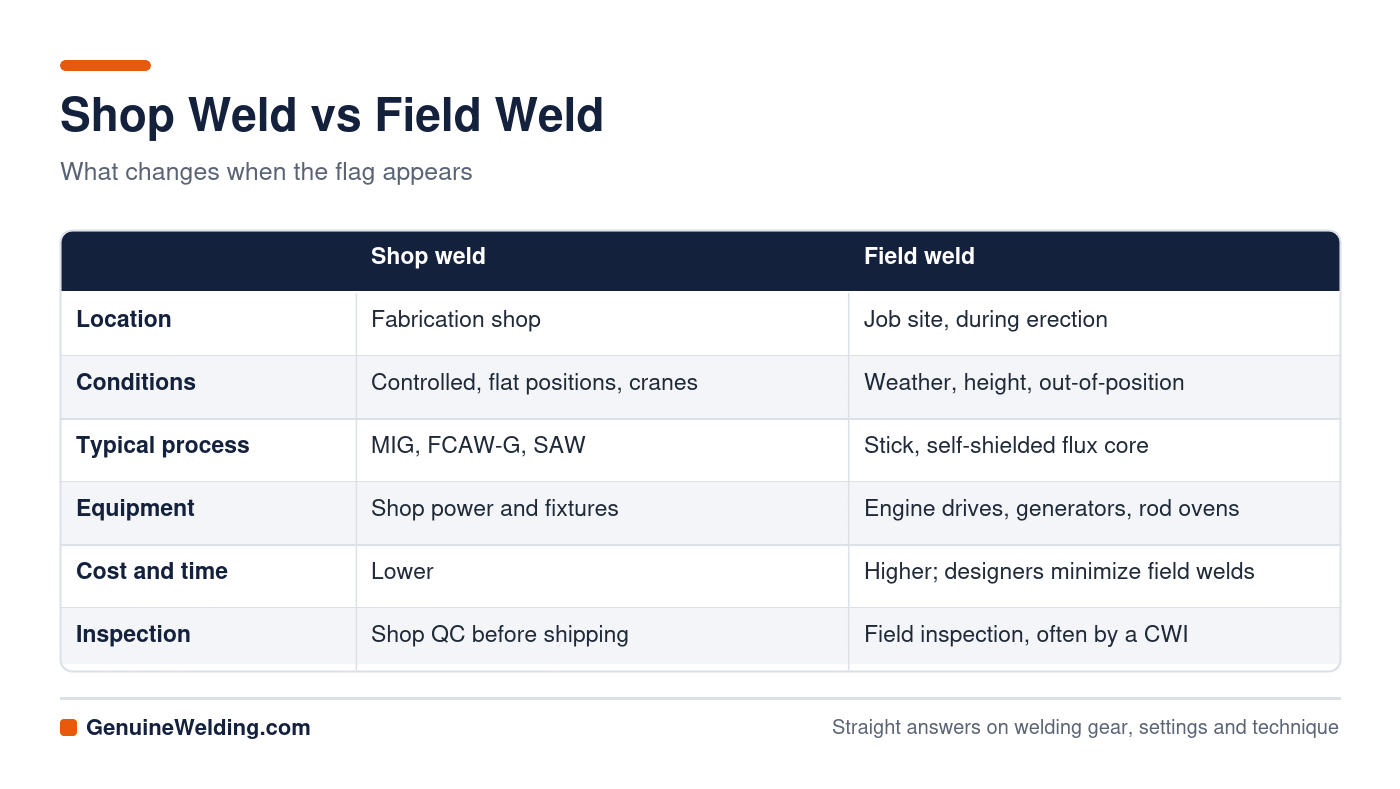
Because field welds are harder to make and more expensive, designers try to minimize them and favor bolted field connections where possible. When you do see the flag, plan the field crew, equipment and inspection early.
Field Welding Tips
- Use processes that tolerate wind: stick or self-shielded flux core. Shield gas-shielded processes with windbreaks.
- Check preheat requirements, especially in cold weather.
- Protect rods and wire from moisture; keep 7018 in a portable rod oven. See 7018 storage.
- Plan fall protection and fire watch for work at height.
- Bring adequate power: an engine-driven welder or a properly sized generator. See welding rig setup.
- Follow overhead technique when welding connections from below; see overhead welding.
Learn more about field structural work in structural welding.
Common Mistakes When Reading Field Weld Symbols
- Missing the flag on a crowded drawing. The flag is small and easy to overlook on detail sheets; check every arrow at connections that will be assembled on site.
- Welding a field joint in the shop. If the shop welds a joint marked for the field, parts may not fit at erection or may exceed shipping limits.
- Confusing the flag with the tail. The tail is the open fork at the far end of the reference line and holds notes; the flag is at the arrow end.
- Ignoring the arrow side. The flag doesn’t change which side gets welded; the weld symbol’s position above or below the line still controls that.
- Overlooking tail notes. Field welds often carry process or inspection notes in the tail, such as a required electrode or 100% UT.
AWS vs ISO Field Weld Symbols
| AWS A2.4 | ISO 2553 | |
|---|---|---|
| Name | Field weld | Site weld |
| Symbol | Flag at arrow–reference line junction | Flag at the same location |
| Flag direction | Either direction | Commonly drawn toward the tail |
| Reference line | Single line | Solid line plus a dashed identification line |
Because ISO drawings use a dashed line to show which side is welded, always confirm which standard a drawing follows before reading arrow and other side. See groove weld symbols and fillet weld symbols for more examples.
Field Weld Symbol FAQs
What does a flag on a weld symbol mean?
It means the weld is a field weld, made at the job site or during installation, not in the shop.
Does the direction of the field weld flag matter?
Not under current AWS A2.4; the flag may point either way. Some older drawings and company standards point it toward the tail.
What does a flag and a circle mean on a weld symbol?
Field weld, all around: the weld goes completely around the joint and is made in the field. See weld all around symbol.
Is the field weld symbol the same in ISO?
ISO 2553 also uses a flag at the junction to mark site welds.
Can a shop make a field weld if it’s convenient?
Only with approval from the engineer. Moving a field weld to the shop can affect shipping, fit-up and inspection plans.
Sources
- American Welding Society: AWS A2.4 Standard Symbols for Welding, Brazing and NDE
- ISO 2553: Symbolic representation of welds on drawings