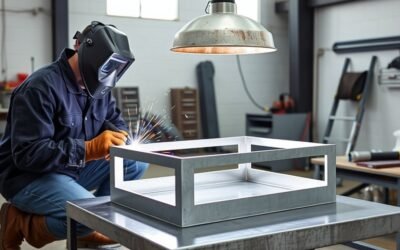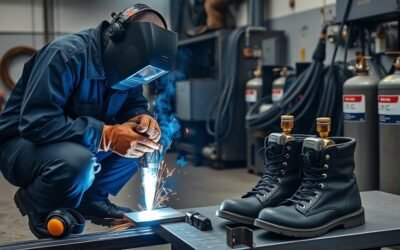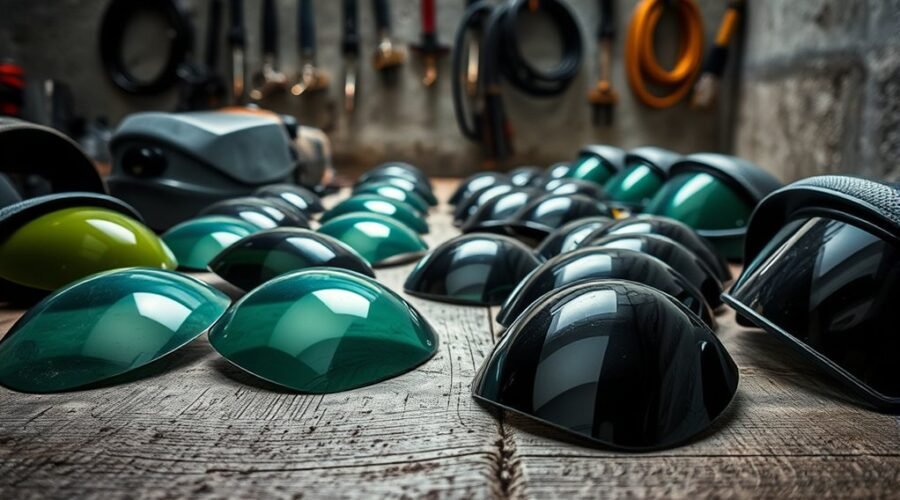
Choosing the correct welding lens shade means matching the filter to the welding or cutting process, arc current, and actual viewing conditions. The most important distinction is between the minimum protective shade and a darker suggested shade for viewing comfort. OSHA and AWS guidance should be treated as the starting point, not replaced by guesswork or personal preference.
Quick Answer
For common arc welding, lens shades generally fall between about 7 and 14 depending on the process and amperage. AWS Z49.1:2021 lists both minimum protective shades and darker suggested comfort shades. Never go below the applicable minimum; start darker and move lighter only until you can clearly see the weld zone.
Key Takeaways
- A higher shade number means a darker filter with lower visible-light transmission; it does not by itself describe impact protection or every aspect of helmet safety.
- AWS distinguishes between a minimum protective shade and a usually darker suggested comfort shade.
- For SMAW at 250–550 A, for example, AWS lists minimum shade 11 and suggested shade 14—not a universal minimum of 14.
- MIG/GMAW, FCAW, TIG/GTAW, stick/SMAW, plasma welding, and plasma cutting use different amperage bands.
- ANSI/ISEA Z87.1-2025 is the current U.S. consensus standard for occupational eye and face protectors, while AWS Z49.1:2021 provides welding-specific safety guidance.
- A welding helmet does not eliminate the need for approved secondary eye protection such as safety spectacles with side protection when required.
What Welding Lens Shade Numbers Mean for Welders
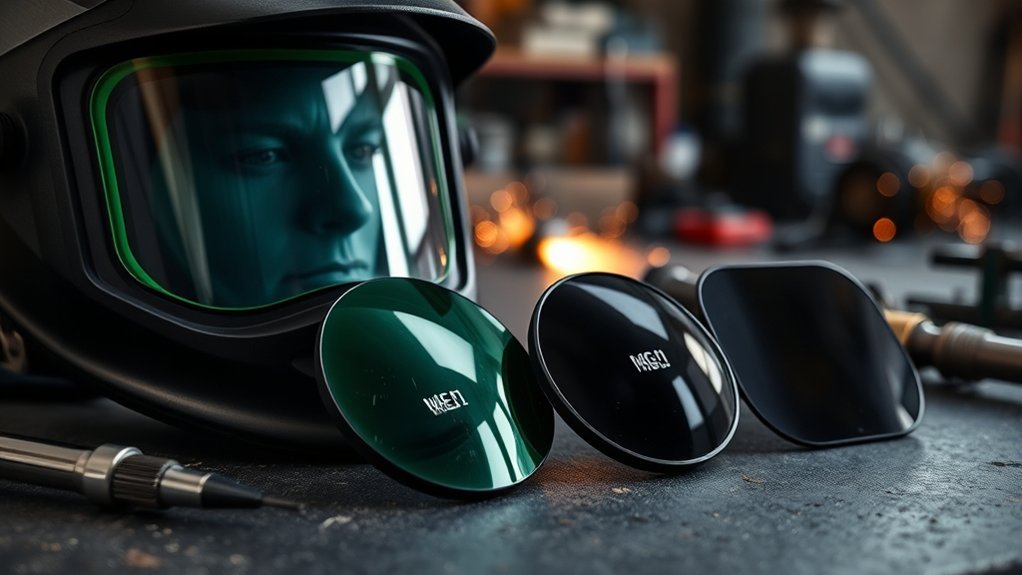
Welding lens shade numbers indicate how strongly a filter reduces transmitted light. A higher number is darker. The correct number depends on the process, amperage, electrode size in some applications, and whether the operator can see the arc directly.
The full range of welding-related filters is broader than the common 4-to-14 description. AWS Z49.1:2021, for example, lists shade 2 for torch soldering, shades 3 or 4 for torch brazing, and values reaching shade 14 for several high-intensity arc processes.
For common arc welding, mid-to-high filter settings are normal. MIG, TIG, stick, FCAW, plasma welding, and plasma cutting each have their own current ranges, so there is no single shade that is correct for every welding job.
Note: Shade number primarily concerns optical attenuation. It should not be confused with impact resistance, face coverage, spatter protection, or the other performance requirements that apply to compliant eye and face protection.
Compliant filters must also control hazardous ultraviolet and infrared radiation. AWS Z49.1:2021 requires welding filter lenses to meet applicable ANSI/ISEA Z87.1 radiation-transmittance requirements and to be marked with their shade number.
Helmet design also affects real-world performance. Features such as sensor count and performance can be especially useful with auto-darkening filters because the sensors must reliably detect the arc.
Choose the Right Shade by Welding Process
The safest way to choose a welding lens shade is to identify the process and amperage first, find the applicable minimum protective shade, and then use a darker setting if it improves comfort without making the work difficult to see.
For stick welding (SMAW), AWS Z49.1:2021 lists minimum shades from 7 to 11 over its specified current ranges, while suggested comfort settings can reach shade 14.
For MIG welding (GMAW) and flux-cored arc welding (FCAW), AWS groups the two processes together. At 60–160 A, the minimum protective shade is 10 and the suggested comfort shade is 11. At 250–500 A, the minimum remains 10 while the suggested comfort value rises to 14.
For TIG welding (GTAW), the minimum is shade 8 below 150 A and shade 10 from 150–500 A. Suggested comfort settings are shade 10 below 50 A, shade 12 at 50–150 A, and shade 14 at 150–500 A.
Plasma arc cutting uses substantially lighter filters at low amperage than the original article suggested. AWS lists shade 4 below 20 A, 5 at 20–40 A, 6 at 40–60 A, and progressively darker filters as the cutting current increases.
Helmet optics also affect how clearly the puddle can be seen at an appropriate shade. Features such as true-color optics may improve color perception and visibility, but they do not change the minimum shade required for the process.
Pro Tip: AWS recommends starting with a shade that is too dark to clearly see the weld zone, then moving to a lighter shade until visibility is adequate—without going below the applicable minimum protective shade.
Welding Lens Shade Chart by Amperage
The table below separates the minimum protective shade from the darker suggested comfort shade in AWS Z49.1:2021. This distinction prevents a common mistake: treating the suggested value as though it were the regulatory or technical minimum.
| Process | Current | Minimum Protective Shade | Suggested Shade for Comfort |
|---|---|---|---|
| Stick / SMAW | Under 60 A | 7 | Not specified |
| Stick / SMAW | 60–160 A | 8 | 10 |
| Stick / SMAW | 160–250 A | 10 | 12 |
| Stick / SMAW | 250–550 A | 11 | 14 |
| MIG / GMAW and FCAW | Under 60 A | 7 | See AWS note |
| MIG / GMAW and FCAW | 60–160 A | 10 | 11 |
| MIG / GMAW and FCAW | 160–250 A | 10 | 12 |
| MIG / GMAW and FCAW | 250–500 A | 10 | 14 |
| TIG / GTAW | Under 50 A | 8 | 10 |
| TIG / GTAW | 50–150 A | 8 | 12 |
| TIG / GTAW | 150–500 A | 10 | 14 |
| Plasma Arc Welding | Under 20 A | 6 | 6–8 |
| Plasma Arc Welding | 20–100 A | 8 | 10 |
| Plasma Arc Welding | 100–400 A | 10 | 12 |
| Plasma Arc Welding | 400–800 A | 11 | 14 |
| Plasma Arc Cutting | Under 20 A | 4 | 4 |
| Plasma Arc Cutting | 20–40 A | 5 | 5 |
| Plasma Arc Cutting | 40–60 A | 6 | 6 |
| Plasma Arc Cutting | 60–80 A | 8 | 8 |
| Plasma Arc Cutting | 80–300 A | 8 | 9 |
| Plasma Arc Cutting | 300–400 A | 9 | 12 |
| Plasma Arc Cutting | 400–800 A | 10 | 14 |
These values come from the AWS/ANSI Z49.1:2021 Guide for Shade Numbers. Precision work, including precision TIG work, still must stay at or above the applicable minimum even when a lighter view of the puddle would be convenient.
Oxyfuel, Brazing, Soldering, and Air-Carbon Arc Shades
Not every hot-work process uses the same shade scale as electric arc welding. AWS Z49.1:2021 gives the following guidance:
- Air-carbon arc cutting under 500 A: minimum shade 10; suggested shade 12.
- Air-carbon arc cutting at 500–1,000 A: minimum shade 11; suggested shade 14.
- Torch brazing: suggested shade 3 or 4.
- Torch soldering: suggested shade 2.
- Carbon arc welding: shade 14.
- Light oxyfuel welding under 1/8-inch material: suggested shade 4 or 5.
- Medium oxyfuel welding from 1/8 to 1/2 inch: suggested shade 5 or 6.
- Heavy oxyfuel welding over 1/2 inch: suggested shade 6 or 8.
- Oxygen cutting under 1 inch: suggested shade 3 or 4.
- Oxygen cutting from 1 to 6 inches: suggested shade 4 or 5.
- Oxygen cutting over 6 inches: suggested shade 5 or 6.
When to Use a Darker Welding Lens
A darker welding lens becomes appropriate when the selected process and amperage produce enough visible radiation that the applicable chart calls for a higher shade or the minimum shade is uncomfortable to view through.
For example, stick welding at 250–550 A has a minimum protective shade of 11, but AWS suggests shade 14 for viewing comfort. Likewise, MIG/FCAW at 250–500 A has a minimum shade of 10 and a suggested shade of 14.
For TIG welding above 150 A, AWS lists shade 10 as the minimum and shade 14 as the suggested comfort value. That distinction allows the welder to select an adequately protective filter while still considering visibility.
FCAW can produce significant spatter, but a darker shade should not be described as the control for that physical hazard. The filter shade controls radiant energy. The helmet shell, protective lenses, safety glasses, clothing, and other PPE address sparks, spatter, and impact hazards.
Excessive exposure to welding radiation can injure the eyes. NIOSH describes acute welding-related keratoconjunctivitis, often called arc eye or welder’s flash, as one possible result of ultraviolet exposure.
Equipment selection also matters. Understanding features such as multi-process capability helps operators recognize that changing from TIG to MIG, stick, or another process may require changing the helmet’s shade setting as well.
Warning: Never look directly at an exposed welding arc without the appropriate filter protection. AWS also requires approved secondary eye protection for open-arc welding and cutting, such as protective spectacles with side shields, arc goggles, or other approved eye protection. A welding helmet alone should not be treated as the only eye protection against every impact hazard.
ANSI Z87.1 and AWS Welding Shade Standards
Three different types of guidance are easy to confuse: OSHA regulations, the ANSI/ISEA eye-protection standard, and the AWS welding-safety standard.
ANSI/ISEA Z87.1 Basics
ANSI/ISEA Z87.1-2025 is the current edition of the American National Standard for Occupational and Educational Personal Eye and Face Protection Devices. It covers performance, testing, markings, selection, care, and use of protectors for hazards that include impact and non-ionizing radiation.
A compliant welding filter therefore involves more than simply choosing a dark piece of glass. Lens markings, radiation-transmittance performance, product condition, and proper use all matter.
Features such as 4C optics or similar manufacturer-specific optical technology can improve the user’s view, but those features are separate from the required protective shade and applicable compliance markings.
AWS Shade Requirements
AWS/ANSI Z49.1:2021, Safety in Welding, Cutting, and Allied Processes, is the current AWS Z49.1 edition and replaced the 2012 edition.
Section 4.2 addresses eye and face protection. It requires welding filter lenses to comply with ANSI/ISEA Z87.1 and directs shade selection to AWS F2.2 or the shade-number table in Z49.1.
AWS also separates minimum protective shade from suggested shade for comfort. These columns should not be treated as interchangeable.
OSHA Welding Eye-Protection Requirements
For covered U.S. workplaces, OSHA 29 CFR 1910.133 requires affected employees to use filter lenses with a shade number appropriate for protection from injurious light radiation.
OSHA’s regulatory requirements and consensus standards should not be described as identical documents. OSHA rules are enforceable workplace requirements within their scope, while ANSI/ISEA and AWS standards provide detailed consensus guidance that may also be incorporated or referenced by applicable rules, contracts, employers, or authorities having jurisdiction.
Process-Specific Shade Levels
Process-specific selection is therefore a four-part check:
- Identify the process: SMAW, GMAW, FCAW, GTAW, PAW, PAC, oxyfuel, brazing, or another operation.
- Determine the actual current or material thickness: use amperage for the applicable arc-process table and thickness where the oxyfuel guidance requires it.
- Find the minimum protective shade: never intentionally select below that minimum.
- Adjust for comfortable visibility: start darker and move lighter only while remaining at or above the minimum.
Fixed-Shade vs Auto-Darkening Welding Lenses
A fixed-shade helmet uses a filter with one shade value. It is simple and predictable, but the helmet normally has to be positioned before striking the arc.
An auto-darkening filter (ADF) has a lighter state for setup and automatically changes to its selected dark state when its sensors detect the welding arc. Many common ADF helmets provide welding settings around shades 8–13, although the exact range varies by model.
Auto-darkening does not mean that the helmet automatically chooses the correct welding shade on every model. Many helmets require the operator to manually select the dark-state shade.
Features such as natural color technology can improve the appearance of the weld pool and surrounding work, but the shade setting must still match the welding process and amperage.
Shade, Sensitivity, and Delay Controls
These controls perform different jobs:
- Shade: determines how dark the ADF becomes after activation.
- Sensitivity: affects how readily the sensors react to an arc. Higher sensitivity can help with low-current TIG or situations where the arc signal is weaker.
- Delay: determines how long the lens remains dark after the arc stops.
Changing sensitivity or delay does not substitute for selecting the correct dark-state shade.
Grind Mode Is Not a Welding Shade
Some auto-darkening helmets include a Grind mode that locks the lens in a light state. A common implementation is approximately shade 3, but the exact design depends on the helmet.
Warning: Do not weld while an auto-darkening helmet is intentionally set to Grind mode. Check the mode indicator and perform the manufacturer’s recommended helmet test before starting work.
Welding Helmet and Eye Protection Checklist
The shade chart is only one part of welding eye safety. Before welding or cutting:
- Confirm the process and amperage.
- Set the filter at or above the applicable minimum protective shade.
- Make sure an auto-darkening helmet is in Weld or the correct cutting mode rather than Grind mode.
- Verify that ADF sensors are clean and unobstructed.
- Inspect the outer cover lens for heavy scratching, pitting, cracks, or spatter damage.
- Check the helmet shell and filter assembly for damage.
- Wear the required approved safety spectacles, goggles, or other secondary eye protection.
- Protect nearby workers from direct arc viewing with appropriate barriers, screens, or eye protection.
- Follow the helmet manufacturer’s instructions for testing, cleaning, storage, and replacement.
The correct welding shade is not simply the darkest lens available. It is a filter at or above the required minimum that still allows the operator to see the weld zone clearly enough to work safely.
How to Choose the Best Welding Helmet Shade
Choosing the correct welding helmet shade starts with the process and amperage—not with a favorite shade number.
- Check your welding process. MIG, FCAW, TIG, stick, plasma welding, and plasma cutting have different ranges.
- Check the welding current. Use the actual operating amperage rather than the machine’s maximum output rating.
- Find the minimum protective shade. Use the OSHA/AWS guidance applicable to your work.
- Start darker. AWS recommends beginning with a filter that is too dark to see the weld zone clearly.
- Lighten gradually. Move lighter until the puddle and joint are adequately visible, but never go below the applicable minimum.
- Check your helmet manual. Confirm that its available shade range and operating mode cover the intended process.
For example, MIG/FCAW from 60–160 A has an AWS minimum shade of 10 and suggested comfort shade of 11. TIG below 50 A has minimum shade 8 and suggested shade 10. A welder can therefore choose an appropriate setting within the permitted range based on visibility and working conditions rather than assuming one universal shade is always best.
Auto-darkening helmets can make positioning and repeated starts easier because the operator can see through the lighter state before the arc is struck. Their convenience does not remove the need to select the right welding shade, maintain the filter, and wear appropriate secondary eye protection.
Frequently Asked Questions
What is the appropriate shade for each welding process?
It depends on both process and amperage. Under AWS Z49.1:2021, SMAW ranges from minimum shade 7 to 11 over the listed current bands, GMAW/FCAW from 7 to 10, GTAW from 8 to 10, plasma arc welding from 6 to 11, and plasma cutting from 4 to 10. AWS also lists darker suggested comfort shades for many of these operations.
Is Shade 10 or 11 better for welding?
Neither is universally better. The correct choice depends on the process and amperage. For MIG/FCAW at 60–160 A, AWS lists shade 10 as the minimum and shade 11 as the suggested comfort shade. For SMAW at 250–550 A, both are below the suggested shade 14, although shade 11 is the listed minimum.
What shade should I use for TIG welding?
AWS lists minimum shade 8 below 150 A and minimum shade 10 from 150–500 A. Its suggested comfort values are shade 10 below 50 A, shade 12 from 50–150 A, and shade 14 from 150–500 A.
What shade should I use for plasma cutting?
AWS Z49.1:2021 lists shade 4 below 20 A, shade 5 at 20–40 A, shade 6 at 40–60 A, shade 8 at 60–80 A, minimum 8 with suggested 9 at 80–300 A, minimum 9 with suggested 12 at 300–400 A, and minimum 10 with suggested 14 at 400–800 A when the arc is viewed.
Do I need safety glasses under a welding helmet?
Yes, appropriate secondary eye protection is an important part of welding PPE. AWS Z49.1:2021 requires protective spectacles with side shields, arc goggles, or other approved eye protection in addition to the helmet or hand shield for open-arc welding and cutting.
Can I weld with my auto-darkening helmet in Grind mode?
No. Grind mode commonly holds an auto-darkening lens in a light state intended for grinding visibility rather than arc welding. Switch to the correct welding mode and shade and follow the helmet manufacturer’s test procedure before striking an arc.
Conclusion
Selecting the correct welding lens shade is about more than choosing the darkest lens available. First match the process and amperage to the applicable minimum protective shade. Then, if needed, use a darker setting for comfortable viewing while keeping the weld pool visible.
AWS Z49.1:2021 provides clear minimum and suggested values for stick, MIG/FCAW, TIG, plasma welding, plasma cutting, and related processes. ANSI/ISEA Z87.1-2025 addresses eye-and-face-protector performance, while OSHA requires appropriate protection from injurious light radiation in covered workplaces. Combine the correct shade with properly maintained equipment and suitable secondary eye protection for a complete approach to welding eye safety.
Sources
- American Welding Society — ANSI Z49.1:2021, Safety in Welding, Cutting, and Allied Processes — minimum and suggested welding-filter shades, eye protection, helmet requirements, and filter selection.
- OSHA — 29 CFR 1910.133 Eye and Face Protection — U.S. workplace requirements for appropriate filter-lens shade numbers and eye protection.
- ANSI/ISEA Z87.1-2025 — current consensus standard covering occupational and educational eye and face protectors.
- NIOSH — Welding, Brazing, and Thermal Cutting Radiation Guidance — health effects associated with ultraviolet, visible, and infrared welding radiation.
- Miller — Selecting the Right Welding Helmet — practical information on auto-darkening helmet light states, welding shades, and sensors.