
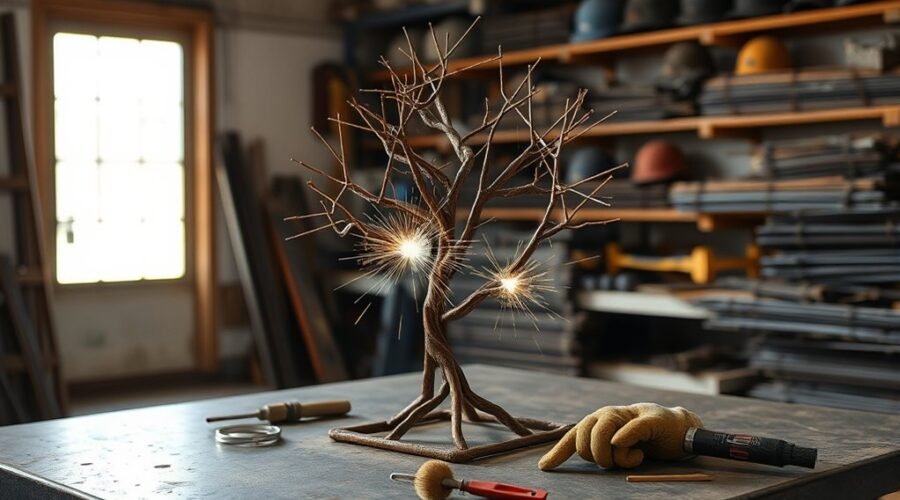
Rebar welding projects offer a practical way to turn low-cost steel into art, garden supports, and household tools. Beginners often start with simple shapes, coat hooks, wine racks, tomato cages, or wall sculptures because rebar is easy to source and manipulate. Strong results depend on clean joints, steady heat, PPE, and a stable work area. With grinding, rust-resistant coating, and basic finishing, these projects become durable and useful, with more methods and examples ahead.
Key Takeaways
- Rebar is affordable, easy to source, and great for beginners practicing welding skills on simple projects.
- It works well for garden supports like tomato cages, trellises, and climbing plant frames.
- Rebar can be welded into functional home items such as coat racks, wine racks, hooks, and shelves.
- Simple art pieces and seasonal decor, like wall sculptures and holiday shapes, are easy to create with bends and welds.
- Safe setup, strong joints, and rust-resistant finishing are essential for durable, long-lasting rebar projects.
Rebar Welding Projects for Beginners

Rebar welding projects offer beginners a practical starting point because rebar is affordable, readily available, and easier to manipulate than many other metals. For DIY Rebar Welding, the material supports disciplined practice without excessive cost or complexity.
Rebar offers beginners an affordable, accessible way to practice welding with confidence and control.
A MIG welder, cutting torch, and basic protective equipment are typically enough to begin shaping simple forms. Straightforward builds such as coat hooks or garden trellises let the welder rehearse cutting, bending, and joining in a controlled sequence.
These tasks develop accurate heat control, fit-up, and bead consistency while keeping the process efficient. Many beginner projects can be completed in under an hour, which reinforces momentum and supports steady skill acquisition.
As each rebar project is finished, the craftsperson gains a measurable foundation for more advanced work. This methodical progression gives newcomers practical competence and a sense of autonomy through tangible creation.
Rebar Welding Safety and Setup
Safe rebar welding begins with a controlled setup that reduces exposure and improves stability throughout the task.
The operator relies on sound welding skills and applies personal protective equipment (PPE) without exception: gloves, a properly shaded welding helmet, and flame-resistant clothing shield the body from sparks and ultraviolet radiation.
The work zone must remain well ventilated, with flammable materials removed to a safe perimeter so fumes and heat do not accumulate.
A sturdy welding table or other rigid surface is essential, because it holds rebar securely and limits movement that can cause defects or accidents.
Equipment inspection is part of disciplined preparation; gas connections require verification, and wires must remain intact to prevent malfunction.
MSDS documents should be reviewed before work begins, since they define handling, storage, and hazard limits.
This methodical setup supports safer, more autonomous fabrication.
Easy Rebar Art Ideas for Home
Simple rebar wall sculptures can be formed from basic bends and welds, producing durable decorative pieces with minimal fabrication steps.
Functional decor pieces, such as hooks, holders, or small stands, extend the material’s utility while retaining a clean welded aesthetic.
Seasonal metal shapes like snowflakes or reindeer require only straightforward cuts and joins, making them practical options for home display.
Simple Wall Sculptures
Wall-mounted sculptures made from rebar offer a straightforward entry point into metal art, with basic shapes such as hearts, trees, and abstract forms assembled through cutting, bending, and tack welding.
This wall art suits a DIY project because rebar is lightweight enough for simple mounting and easy repositioning. A raw metallic finish preserves industrial character, while paint can refine contrast or soften edges.
- Heart outline with clean bends
- Branching tree silhouette for vertical balance
- Geometric abstract form for modern restraint
Each piece encourages accurate measurement, controlled heat, and steady weld placement. The process builds foundational skill without unnecessary complexity, giving makers a disciplined path to personal expression and visually assertive home decor.
Functional Decor Pieces
Functional decor pieces made from rebar combine structural utility with visual definition, making them suitable for coat hooks, wine racks, bookends, and candle holders in residential settings.
In DIY welding, measured bends and clean joints produce forms that support daily use while preserving a stripped-down industrial character. Rebar’s durability gives each piece long service life, resisting wear without sacrificing appearance.
Bookends can stabilize shelves; candle holders can organize tables; hooks can free entryways from clutter. When fabricated with consistent spacing and sound welds, these functional decor pieces extend beyond ornament, offering practical autonomy through orderly storage and efficient display.
Their restrained geometry suits interiors seeking clarity, control, and a sense of self-directed design.
Seasonal Metal Shapes
Seasonal metal shapes extend the same measured fabrication used in functional decor into holiday-specific forms such as rebar snowflakes, reindeer, and other simple silhouettes.
These seasonal metal shapes require modest welding skill, allowing beginners to execute clean joins with basic tools. Their geometry can be adjusted for scale, then finished with paint, patina, or small ornaments to refine the decor pieces.
- Snowflake frames for windows or walls
- Reindeer outlines for yards or porches
- Star and tree forms for tabletops
Because rebar resists weathering, the assemblies remain stable outdoors through winter exposure.
The process also builds design discipline while preserving creative freedom, giving makers a direct path to expressive, durable holiday metalwork.
Useful Rebar Projects for Everyday Use
Rebar is well suited to practical everyday projects because it combines strength, low cost, and ease of fabrication. In rebar welding projects, simple bends and welds produce functional items that improve daily routines without dependence on expensive store goods.
Coat hooks and racks can be formed for entryways, delivering durable organization with an industrial finish. Wine racks made from rebar provide secure bottle storage while preserving a restrained, modern appearance. A wall-mounted hay feeder offers an efficient feeding station for livestock, and it can be assembled with minimal welding skill.
Coat hooks, wine racks, and hay feeders show how rebar brings durable function to everyday spaces.
For workshop use, a rebar handle or clamp can strengthen DIY tools, improving grip, control, and throughput. Welded tomato cages also demonstrate how rebar supports repeated use and resists deformation over time.
Each project favors direct construction, long service life, and practical independence through self-made equipment.
Rebar Garden Projects for Outdoors
Rebar garden projects for outdoors often center on trellis and climbing support structures that provide rigid load-bearing support for vines and vertical plants.
Welded assemblies such as arches, plant stands, and tomato cages can be fabricated to withstand weather exposure while maintaining dimensional stability.
These durable pieces also allow practical garden function to be combined with controlled, repeatable form.
Trellis And Climbing Support
When properly fabricated, a welded trellis provides reliable, durable support for climbing plants, keeping growth upright while improving light exposure and overall plant health.
In rebar form, the trellis offers high load capacity, rust resistance, and a restrained rustic finish suited to open garden systems. Welded joints stabilize straight or curved frames, allowing precise adaptation to vines, beans, or flowering climbers without constraining their reach.
- Custom dimensions support varied layouts.
- Welded rebar maintains structure in weather.
- Finishes or accents enable personal expression.
This method gives gardeners a practical framework for disciplined growth while preserving visual freedom.
Durable Outdoor Garden Pieces
Beyond basic trellises and arches, welded rebar can be fabricated into durable outdoor pieces that combine utility with long service life.
In a rebar garden, plant stands, benches, and fire pits deliver structure while resisting wind, rain, and seasonal stress. The material’s stiffness supports climbing growth, and its open geometry preserves airflow and light.
Custom layouts permit decorative wall art and other forms of welding art without sacrificing function. Because rebar is often recovered from scrapyards, the process remains economical and resource-conscious, supporting practical self-reliance.
Each assembly may be finished with corrosion-resistant coating to extend service. For gardeners seeking autonomy, these pieces transform outdoor space into a resilient, expressive system.
Rebar Home Organization Ideas
A range of rebar-based home organization pieces can be fabricated to combine structural durability with visual utility. When rebar together is bent and welded into coat racks, entryways gain a rigid support system that remains open, accessible, and visually clean. Custom hat racks may be formed with simple crossbars, then finished with paint or sealant to increase longevity and personal expression.
- Wall-mounted coat racks for coats, hats, and bags
- Welded wine racks that conserve floor space
- Rebar shelving with wood inserts for storage
Additional applications include paper towel dispensers and kitchen racks, where compact geometry improves workflow without sacrificing rustic character. The material’s tensile strength supports repeated use, while its industrial profile pairs well with wood or coated finishes.
For households seeking practical autonomy, these components provide organized storage that resists failure and adapts to evolving needs.
Rebar Decor for Holidays
Holiday shapes formed from welded rebar can include snowflakes, reindeer, and simple tree profiles for seasonal display.
Seasonal wall pieces and lettered signs provide a structured method for adding personalized decor to interior or exterior surfaces.
Quick festive builds are practical for beginners because basic weld joints can produce durable holiday art with minimal fabrication time.
Holiday Shapes
Rebar holiday shapes transform plain steel into durable seasonal decor, with welded forms such as reindeer, snowflakes, letters, and word sculptures providing rustic visual interest for exterior displays.
Holiday shapes made from welded rebar suit liberated makers who prefer resilient, low-maintenance pieces that resist winter exposure. Fabrication typically begins with layout, cutting, and tack welding, then progresses to final welds and surface finishing.
Simple geometric assemblies support efficient production, while more elaborate silhouettes allow precise artistic control.
- Reindeer outlines for yards
- Snowflake frames for pathways
- Lettered greetings for gatherings
Welded rebar flowers can also extend the theme, using painted or raw finishes to create durable garden accents.
These projects remain accessible across skill levels and reinforce welding practice through direct, practical execution.
Seasonal Wall Pieces
Seasonal wall pieces fabricated from rebar provide durable holiday decor with strong visual definition and low maintenance requirements. Their forms can be engineered as snowflakes, reindeer, hearts, or stars, allowing seasonal wall art to align with multiple celebrations while remaining structurally sound.
| Form | Use | Effect |
|---|---|---|
| Snowflake | Winter wall display | Crisp geometry |
| Word sculpture | Family greeting | Personalized message |
| Flower trellis | Spring support | Decorative utility |
Rebar garden trellises may also be shaped for festive mounting, merging support and ornament in one liberated design system. Welded joints should be consistent, and surface finish should resist weather exposure. The result is a precise, reusable installation that supports expression without excessive upkeep.
Quick Festive Builds
Quick festive builds in rebar focus on simple forms that can be cut, bent, and welded into durable holiday decor with minimal material variation.
A welded snowflake uses equal-length segments for symmetry and weather resistance, while a reindeer requires a longer spine, shorter legs, a shaped head, and antlers.
Custom letters or words can mark a family name, greeting, or Christmas Tree display, creating a direct expression of choice.
- Snowflake: balanced geometry, outdoor durability
- Reindeer: scaled proportions, festive accents
- Letters: personalized, indoor or exterior use
A flower sculpture, formed around a circular center with a stem, adds rustic contrast.
Rebar structures remain accessible, repeatable, and suited to hands that prefer practical making over decorative dependence.
Tools You Can Make From Rebar
A well-planned use of rebar can turn scrap material into practical shop tools, expanding a welding setup with durable, purpose-built equipment. This welding project idea shows how tools you can make from rebar can support independent fabrication.
A chipping hammer built from rebar offers a sturdy striking edge for slag removal. A rebar clamp can secure workpieces with repeatable pressure, improving alignment during welding. Custom handles made from rebar give jigs, brackets, and hand tools an industrial profile while remaining adaptable to specific dimensions.
A third-hand welding tool fabricated from rebar adds holding capability without constant clamp adjustment, increasing flexibility at the bench. A DIY rebar welding table provides a stable surface for beginners to practice bead control and assemble smaller projects.
Each tool extends utility from discarded steel, reduces dependence on purchased equipment, and supports a self-directed shop environment built on precision, resilience, and practical reuse.
How to Weld Strong Rebar Joints?
Strong rebar joints depend on surface preparation and controlled heat input. Before any rebar to weld is struck, the surfaces should be cleaned of rust and mill scale so fusion is not blocked.
For builders seeking practical freedom, MIG welding is an excellent choice because it delivers steady heat and reliable penetration with manageable control.
- Set wire feed speed and voltage to match bar diameter.
- Use a brief preheat on thicker sections to lower cracking risk.
- Let the joint cool slowly to preserve alignment and strength.
During welding, the operator should maintain a stable arc and move methodically to avoid burn-through. Proper settings support full fusion without weakening the surrounding metal.
Preheating thicker rebar reduces thermal shock, while controlled cooling limits warping and protects structural integrity. The result is a joint that holds firm, serves the design, and supports independent fabrication with precision.
Finishing and Rust Protection
Once the welds have cooled, the rebar project should be finished by grinding and smoothing any sharp edges or uneven beads to improve both appearance and durability.
These finishing techniques reduce stress points, remove slag, and prepare the surface for coating. After cleaning dust and oil, a rust-resistant primer should be applied in thin, even layers to block moisture and slow oxidation.
Follow with paint for added protection, or use clear polyurethane or epoxy when a raw-metal look is preferred. For projects exposed to harsh conditions, galvanization or powder coating offers stronger corrosion resistance and a cleaner finish.
Each layer should cure fully before handling. Regular maintenance matters: inspect the surface, clean away debris, and renew protective coatings as needed.
In this way, welded rebar work remains resilient, visually ordered, and ready for long service without surrender to decay.
Frequently Asked Questions
What Are Some Cool DIY Welding Projects I Can Do?
Cool DIY welding projects include rebar coat hooks, trellises, welded flowers, snowflakes, bookshelves, and chandeliers. Each project rewards methodical planning, welding safety, and tool maintenance, while offering practical, expressive freedom through durable, customized fabrication.
What Are Some Welding Projects I Can Do to Make Money?
Metal furniture, decorative gates, garden art, custom sculptures, fire pits, and tool racks can generate income. A savvy smith may fabricate them with medieval rigor, sell locally, price by material, weld quality, and finish.
What Can I Make With Rebar?
Rebar can be made into garden trellises, rakes, coat racks, furniture, chandeliers, and rebar sculptures. Its strength supports practical, modular builds, enabling users to fabricate resilient tools and expressive forms with self-directed utility.
What Are Some Cool DIY Metal Projects I Can Do?
Cool DIY metal projects include rebar metal sculptures, coat racks, wine holders, trellises, plant stands, and garden art. Heavy steel becomes delicate form; utility becomes expression. Each build refines skill and grants creative freedom.
Conclusion
Rebar welding projects offer a practical balance of function and creativity. Studies in metal fabrication report that nearly 30% of hobby welders begin with simple structural or decorative steel work, making rebar an accessible entry point. From garden frames to storage tools and seasonal decor, the material supports durable, low-cost builds. With proper joint technique, safety setup, and corrosion protection, rebar can produce reliable projects that remain useful and visually distinctive over time.