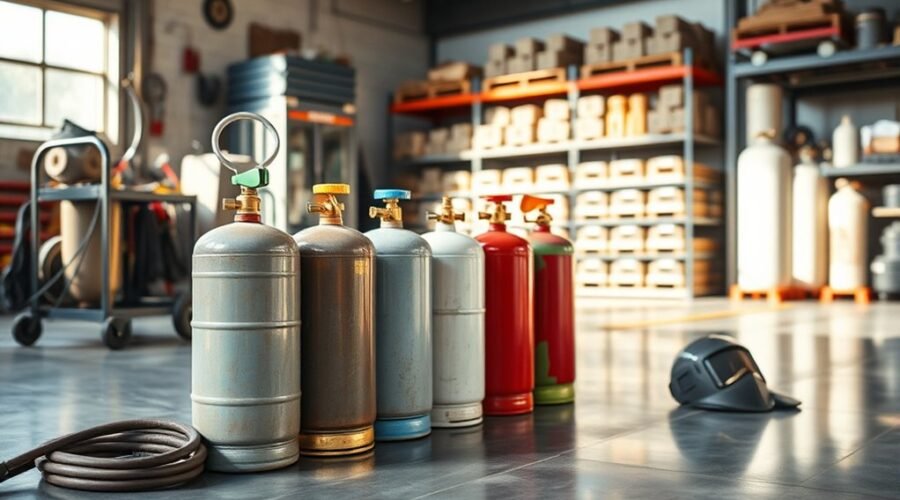
Welding gas costs can vary sharply with cylinder size, gas type, supplier, and whether you buy, exchange, rent, or lease the cylinder. Small tanks are easier to move and cheaper to buy initially, but their gas often costs much more per cubic foot. Larger cylinders cost more upfront but can reduce refill frequency and operating cost for regular welders.
Quick Answer
As a September 2026 retail benchmark, 100% argon fills range from about $50 for 20 CF to about $120 for 330 CF at one major U.S. retailer. The larger fill costs more in total but far less per cubic foot. Local welding-supply prices, cylinder programs, fees, and gas mixtures can change the final cost substantially.
Key Takeaways
- Small 20- to 40-CF cylinders are portable, but their refill cost per cubic foot is usually much higher than larger tanks.
- Current public retail examples show 100% argon fills of about $49.99 for 20 CF, $59.99 for 40 CF, $69.99 for 80 CF, $82.99 for 125 CF, and $119.99 for 330 CF.
- Cylinder purchase prices and refill prices are separate costs. Always confirm whether a quoted price includes the cylinder, gas, exchange, inspection, deposit, rental, or delivery.
- A 125-CF cylinder often provides a strong balance of portability, runtime, and gas cost for home shops and regular fabrication.
- Supplier policies vary, so confirm that a local gas distributor will fill or exchange the cylinder you plan to buy before purchasing it.
How Much Does Welding Gas Cost by Cylinder Size?
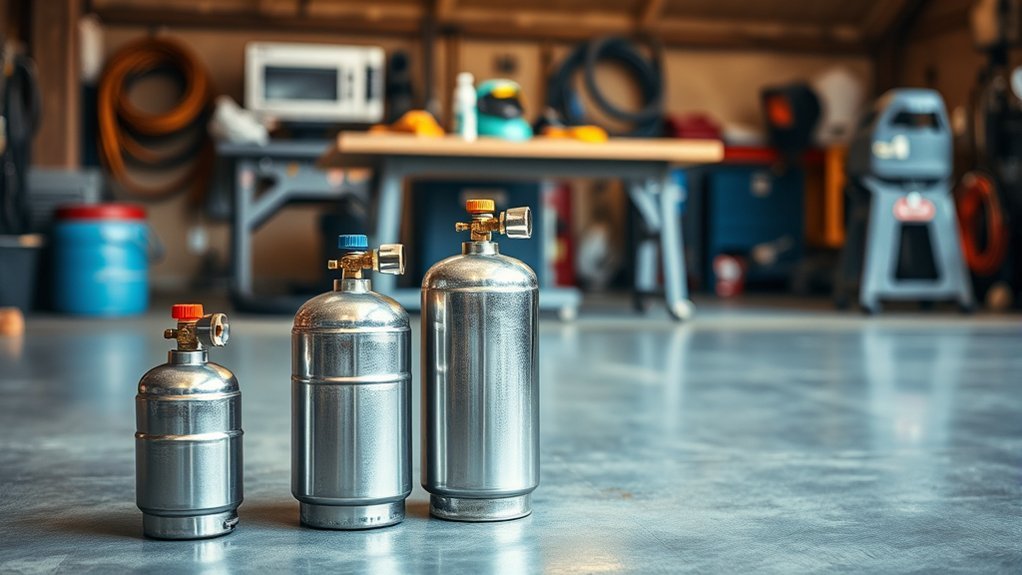
Cylinder size is one of the biggest factors in welding gas pricing, but there is no single nationwide price. The same nominal tank size can cost differently depending on gas composition, retailer, region, cylinder brand, and whether the transaction is a purchase, fill, or exchange.
The table below uses public 100% argon listings from Northern Tool/Thoroughbred as a September 2026 benchmark. These are examples, not guaranteed national averages. Local welding-supply shops may quote lower or higher prices.
| Cylinder Size | Example Empty Cylinder Price | Example Argon Fill / Exchange | Approx. Fill Cost per CF | Theoretical Runtime at 15–20 CFH |
|---|---|---|---|---|
| 20 CF | About $220 | About $50 | About $2.50/CF | 1.0–1.3 hours |
| 40 CF | About $320 | About $60 | About $1.50/CF | 2.0–2.7 hours |
| 80 CF | About $400 | About $70 | About $0.87/CF | 4.0–5.3 hours |
| 125 CF | About $455 | About $83 | About $0.66/CF | 6.3–8.3 hours |
| 330 CF | About $620 | About $120 | About $0.36/CF | 16.5–22 hours |
Price note: These figures are dated retail examples rather than national averages. Current listings can be checked through Northern Tool’s welding gas cylinder listings. Always get a local quote before choosing a cylinder program.
Cylinder size can dramatically change gas cost per cubic foot. In the benchmark above, a 20-CF argon fill costs roughly seven times more per cubic foot than a 330-CF fill, even though the larger refill costs more at the counter.
For MIG welding mild steel, a 75% argon/25% CO2 blend, commonly called C25, is a popular all-purpose shielding gas. Miller notes that it provides good arc characteristics, low spatter, and good bead appearance on mild steel. Straight CO2 is another option and may cost less, but it generally produces more spatter. See our best gas for MIG welding guide for process-specific gas selection.
What Drives Welding Gas Prices?
Welding gas prices depend on more than cylinder capacity. Gas composition, supplier, region, cylinder program, delivery method, and current industrial-gas pricing can all change the final bill.
- Gas type: Pure argon, C25, straight CO2, helium-containing blends, oxygen, and specialty mixtures are priced differently.
- Cylinder size: Larger cylinders usually provide more gas for each handling or exchange transaction, which often lowers the cost per cubic foot.
- Ownership model: Buying a customer-owned cylinder creates a larger initial expense but can avoid recurring rental charges. Rental or lease programs can reduce the initial purchase cost but may add recurring fees.
- Exchange policy: A supplier may accept only certain cylinder sizes, brands, test dates, or ownership documentation.
- Delivery and handling: Delivery, hazardous-material handling, inspection, or exchange charges may apply depending on the seller.
- Location: Local competition, transportation distance, and regional demand can produce noticeably different quotes.
Note: Do not compare two gas quotes until you know whether each price is for the empty cylinder, gas only, a cylinder exchange, a lease, or a cylinder-and-gas package. Those are different transactions.
If you are budgeting for the rest of a welding setup as well as gas, our useful gifts and gear for welders guide covers additional shop equipment ideas.
Welding Gas Costs for 20 to 40 CF Tanks
Small 20- to 40-CF cylinders are attractive to occasional welders because they are easier to store, transport, and handle. Their main disadvantage is the relatively high gas cost per cubic foot.
As a current example, Northern Tool lists a 20-CF 100% argon fill at about $49.99 and a 40-CF fill at about $59.99. That means doubling capacity from 20 to 40 CF adds only about $10 to the listed refill cost in this particular program.
A small cylinder can still make sense if you weld only occasionally or need maximum portability. However, a user who regularly consumes shielding gas may spend more over time because the tank must be exchanged or refilled frequently.
Runtime also matters. The basic formula is:
Cylinder capacity in cubic feet ÷ gas-flow setting in CFH = theoretical arc-on hours.
| 20-CF Cylinder Flow | Theoretical Gas Time |
|---|---|
| 10 CFH | About 2 hours |
| 15 CFH | About 1.3 hours |
| 20 CFH | About 1 hour |
Actual welding time can be lower because pre-flow, post-flow, purging, leaks, setup work, and stopping and restarting consume gas differently. If your shop budget also includes cutting equipment, our budget plasma cutter guide covers that equipment separately.
Welding Gas Costs for 80 to 125 CF Tanks
The 80- to 125-CF range is often a practical middle ground for home garages, hobby fabrication, repair work, and regular MIG or TIG use. These cylinders hold substantially more gas without becoming as cumbersome as large industrial cylinders.
In the September 2026 benchmark used here, an 80-CF 100% argon fill is about $69.99 while a 125-CF fill is about $82.99. That works out to roughly $0.87 per cubic foot for the 80-CF fill and $0.66 per cubic foot for the 125-CF fill.
For C25, Northern Tool currently lists an 80-CF exchange at about $69.99 and a 125-CF exchange at about $69.99 in its Thoroughbred program. This is a good example of why the larger cylinder can produce much better gas economics even when the counter price is similar.
Pro Tip: Ask your local supplier for prices on at least two cylinder sizes. Divide each refill price by the cylinder’s cubic-foot capacity. The lowest sticker price is not necessarily the lowest gas cost.
If you are choosing equipment for a home shop at the same time, see our best welders for home use guide.
Welding Gas Costs for 200 to 300 CF Tanks
Large cylinders are designed for users who consume gas regularly and want fewer interruptions. Exact capacities vary by gas and supplier, so one company may offer a nominal 300-CF cylinder while another lists 330 CF or another nearby capacity.
Current examples show how seller programs differ. Northern Tool lists a 300-CF C25 cylinder at about $699.99, while its 330-CF 100% argon fill is about $119.99. The larger reservoir can significantly reduce refill frequency and gas cost per cubic foot.
| Large-Cylinder Factor | What It Means |
|---|---|
| Gas cost | Usually lower per cubic foot than small fills. |
| Refill frequency | Much less frequent for the same welding workload. |
| Upfront cost | Higher if purchasing a customer-owned cylinder. |
| Portability | Lower; large steel cylinders can be very heavy and should be moved with appropriate equipment. |
| Supplier acceptance | Confirm the supplier’s cylinder ownership, exchange, inspection, and size policies before purchase. |
Customer-owned large cylinders are not universally accepted or rejected. Policies differ by distributor and exchange program. Check with the supplier you expect to use before spending money on a large bottle. Welders still learning which equipment and processes fit their needs can also review our beginner welder guide.
Warning: Compressed-gas cylinders can cause severe injury if mishandled. Keep cylinders properly secured, close the valve when the cylinder is empty or being moved, use valve protection as required, and store cylinders in a protected, ventilated area. OSHA provides detailed requirements for compressed-gas cylinder handling and storage.
How Refill Fees Add Up
The most useful number for comparing welding gas is often the cost per cubic foot, not the refill price alone.
For example, a $50 refill for 20 CF equals about $2.50 per cubic foot. An $83 refill for 125 CF is about $0.66 per cubic foot. A $120 refill for 330 CF is about $0.36 per cubic foot. The larger refill costs more at checkout but delivers much more gas for every dollar.
Your real annual cost depends on how much shielding gas you consume:
Annual gas cost = number of fills per year × price per fill + recurring cylinder fees.
Recurring expenses can include cylinder rental or lease charges, delivery, inspections, exchanges, and other supplier-specific fees. Ask for a written quote so you can compare the complete cost rather than relying on the advertised gas price alone.
Consumables beyond shielding gas also affect welding expenses. Our all-around welding rod guide covers common electrode choices separately.
Where to Buy Welding Gas for Less
Local industrial-gas distributors, welding-supply stores, participating hardware/tool retailers, and some online welding suppliers all sell gas or cylinder packages. The cheapest option depends on both the first purchase and the cost of every later refill or exchange.
Before buying a cylinder, ask each supplier these questions:
- Do you fill the customer’s cylinder or exchange it for another one?
- Do you accept customer-owned cylinders from other sellers or brands?
- What cylinder sizes do you support?
- Is the quote for gas only, the cylinder only, or both?
- Are there inspection, exchange, rental, lease, delivery, or handling fees?
- What is the current refill or exchange price for the exact gas I need?
- Will I receive the same cylinder back, or another cylinder from the exchange pool?
Airgas publishes branch contact information and recommends contacting the local branch for specific gas availability and pricing. Policies can differ with account type, gas, location, and cylinder arrangement, so confirming locally is safer than assuming a national rule.
Online sellers are another option. PrimeWeld currently sells refillable 40-, 80-, and 125-CF 75/25 argon/CO2 cylinders delivered full, while Northern Tool operates its own participating Gas-To-Go fill/exchange program. Compare the full package price with what your local supplier will charge later to service the cylinder.
If you are timing equipment purchases around seasonal promotions, our Black Friday and Cyber Monday welding deals guide covers discounted welding equipment.
How to Choose the Best Welding Gas Cylinder Size
The cheapest cylinder is not automatically the best choice. Match the tank to your welding frequency, transport needs, available storage space, and local supplier program.
- 20 CF: Best when portability matters most or gas use is very occasional.
- 40 CF: Still portable, with somewhat better refill economics.
- 80 CF: A useful garage size for hobbyists who weld regularly.
- 125 CF: A strong compromise between runtime, refill value, and manageability for many home and small-shop users.
- 200–330+ CF: Better suited to frequent welding where lower gas cost per cubic foot and fewer exchanges matter more than portability.
Also choose the correct gas for the welding process. Miller identifies 75% argon/25% CO2 as a common all-purpose mix for MIG welding mild steel, while 100% argon is commonly used for TIG welding. The correct gas can change with material and process, so follow the welder and filler-metal manufacturer’s recommendations.
Frequently Asked Questions
How expensive is welding gas?
Welding gas can cost roughly $50 for a small 20-CF argon fill to around $120 for a 330-CF fill in one current U.S. retail program. Local prices can be higher or lower. Cylinder purchase, rental, exchange, delivery, and handling charges can make the total cost significantly different from the gas-only price.
How long will 20 cubic feet of argon last?
Divide the cylinder capacity by the flow rate. A 20-CF cylinder theoretically lasts about 2 hours at 10 CFH, 1.3 hours at 15 CFH, or 1 hour at 20 CFH. Real-world time can be shorter because pre-flow, post-flow, purging, leaks, and setup consume gas.
How much is a bottle of 100% argon?
It depends on whether you mean the cylinder or the gas fill. Current example empty-cylinder prices range from about $220 for 20 CF to more than $600 for a large 330-CF cylinder. The gas fill is separate and currently ranges from roughly $50 to $120 in the retail benchmark used in this guide.
How much does it cost to refill an argon/CO2 tank?
C25 refill or exchange prices depend on tank size and supplier. One current retailer lists approximately $47.99 for 20 CF, $69.99 for 80 CF, and $69.99 for 125 CF in its 75/25 argon/CO2 exchange program. Check your local supplier because regional prices and cylinder policies differ.
Is an 80-CF or 125-CF welding gas tank better?
An 80-CF tank is easier to move, while a 125-CF tank usually provides more welding time and a lower gas cost per cubic foot. For a stationary home shop with regular gas use, 125 CF can be attractive. For frequent transport, the smaller cylinder may be easier to manage.
Should I buy or rent a welding gas cylinder?
Buying can make sense for hobbyists who want to avoid recurring rental charges, but only if a convenient local supplier will service or exchange the cylinder. Rental or lease programs may suit businesses that want supplier-managed cylinders and predictable availability. Compare several years of fees before deciding.
Conclusion
Welding gas cost is strongly influenced by cylinder size, but size alone does not determine the best deal. Small cylinders are convenient and portable, while larger cylinders generally provide much lower gas cost per cubic foot and require fewer refill trips. For many regular home-shop users, the 80- to 125-CF range offers a useful compromise between portability and operating cost.
Before buying, compare the cylinder price, gas price, cost per cubic foot, rental or exchange fees, supplier acceptance policy, and how often you expect to refill. Most importantly, confirm that a convenient local supplier can service the exact cylinder you intend to purchase.
Sources
- Occupational Safety and Health Administration — 29 CFR 1926.350 — compressed-gas cylinder handling, securing, moving, and storage requirements.
- Miller Electric — MIG Welding for Mild Steel — C25 and CO2 shielding-gas selection for mild-steel MIG welding.
- Northern Tool — Welding Gas Cylinders — current public cylinder and gas-fill pricing benchmarks.
- Northern Tool — 20-CF C25 Fill/Exchange — small-cylinder C25 pricing benchmark.
- Northern Tool — 125-CF C25 Fill/Exchange — mid-size C25 pricing benchmark.
- PrimeWeld — Refillable 75% Argon / 25% CO2 Cylinders — current customer-owned 40-, 80-, and 125-CF cylinder options.