There is no dedicated tack weld symbol in AWS A2.4 or ISO 2553. Tack welds are usually not shown on drawings at all, because they’re a fit-up step left to the fabricator. When a drawing does need to control them, it uses a standard fillet or groove weld symbol with a note in the tail such as “TACK,” a length-pitch callout (for example 1/2-12), or a general note like “TACK WELD AS REQUIRED” or “TACK ONLY – DO NOT FULLY WELD.” Tack welds that stay in the final weld must be made to the same procedure and quality as the finished weld.
New fabricators often look for a tack weld symbol and can’t find one. That’s because it doesn’t exist as a standard symbol. Here’s how tack welds are actually communicated on drawings, and the rules you need to follow.
Why There’s No Standard Tack Weld Symbol
Welding symbols describe the welds the designer needs in the finished product: type, size, length and location. Tack welds are usually temporary welds used to hold parts in position until final welding, and their size and spacing depend on shop practice, part size and distortion control. Because of that, standards leave tack welds to the fabricator unless the engineer has a specific reason to control them.
How Tack Welds Are Shown on Drawings
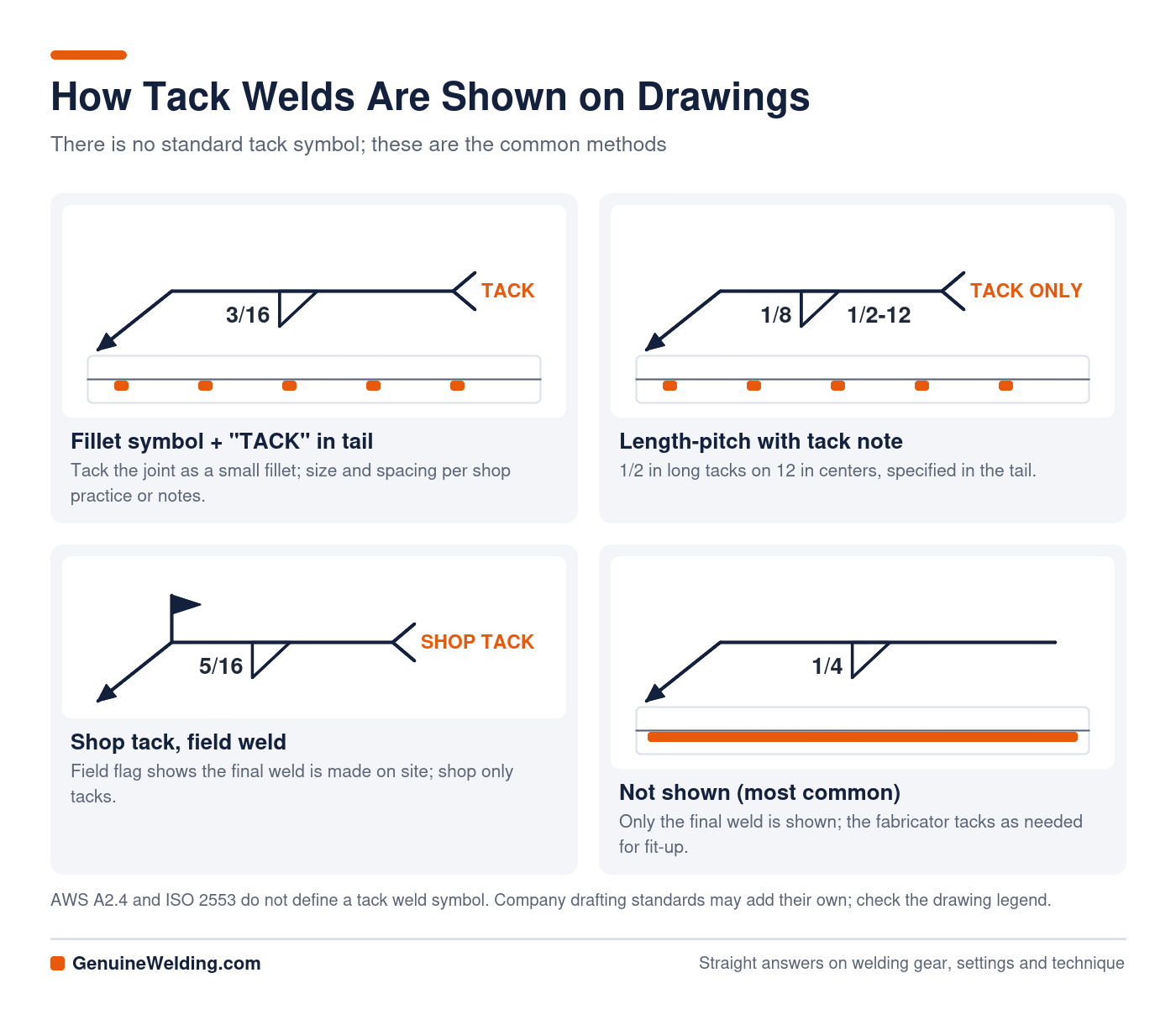
- Not shown: the most common case. The fabricator tacks as needed to hold fit-up.
- Weld symbol with “TACK” in the tail: a fillet or groove symbol where the tail note says the weld is a tack.
- Length-pitch callout with a note: for example 1/2-12 with “TACK” means 1/2 in long tacks every 12 in.
- General notes: drawing notes such as “TACK WELD ONLY,” “TACK FOR SHIPPING” or “FIELD WELD AFTER ERECTION, SHOP TACK ONLY.”
- Company standards: some companies define their own tack symbol or abbreviation (such as “TW”) in their drafting standard. These aren’t universal; check the drawing legend.
Tack Welds vs Stitch Welds

A stitch (intermittent) weld on a drawing is a final, full-size weld. A tack is a small, temporary weld. Don’t treat a 1-6 stitch callout as permission to tack; the stitches must meet the specified size and length. See the stitch weld symbol guide.
Code Rules for Tack Welds
Even when tack welds aren’t shown, codes still apply to them. Under AWS D1.1, for example:
- Tack welds that will be incorporated into the final weld must be made with the same type of filler metal and quality as the final weld, by qualified welders, and must be cleaned before final welding.
- Tack welds that aren’t incorporated into the final weld must generally be removed unless the engineer approves leaving them.
- Multipass tack welds should have cascaded ends so final welding can fuse cleanly over them.
- Preheat requirements for the final weld may also apply to tacks on thick or high-strength steel.
Always check the code and edition your job uses. Learn practical technique in tack welding techniques and spacing.
Typical Tack Weld Size and Spacing
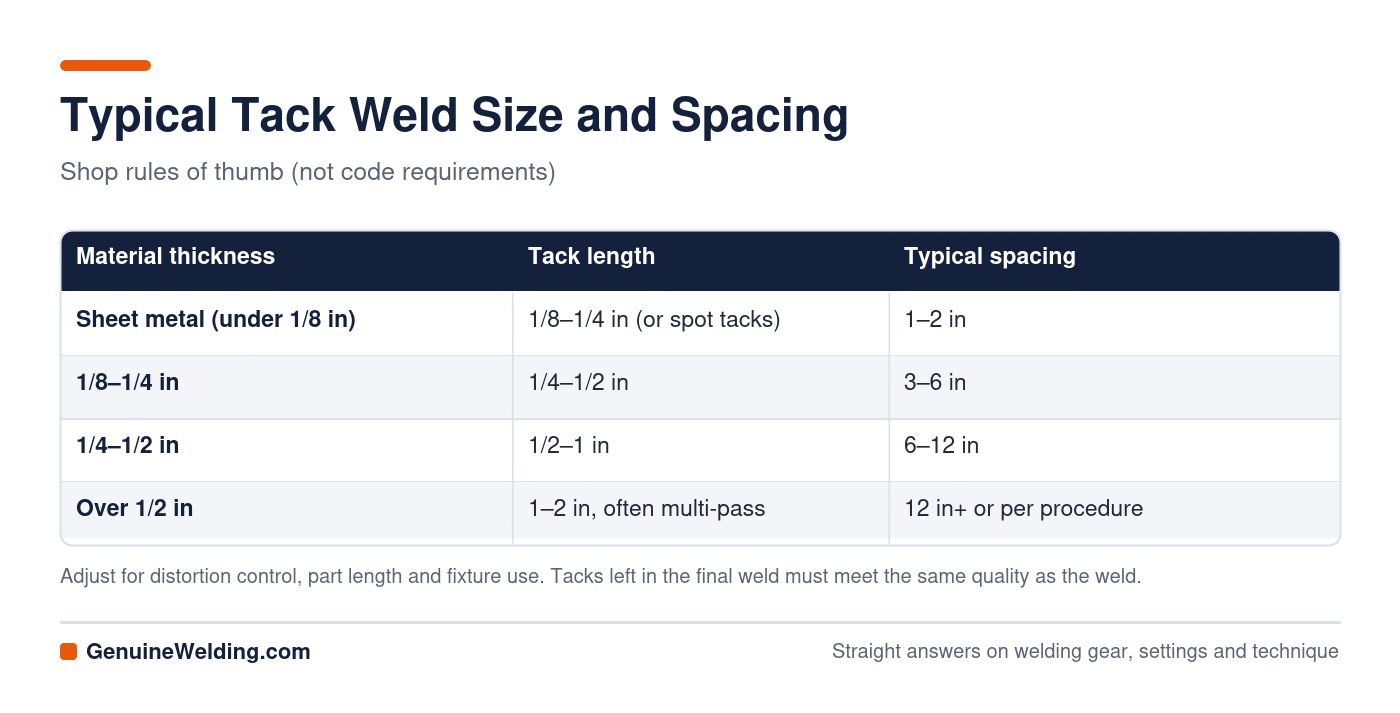
These are common shop rules of thumb, not code requirements. Thin metal needs more frequent, smaller tacks to control distortion; thick plate needs larger tacks to resist shrinkage forces.
How to Read Tack-Related Notes
- “TACK ONLY”: hold parts together; do not fully weld. Often used for parts that will be welded later in the field.
- “TACK FOR SHIPPING”: temporary tacks to keep parts together during transport; usually removed later.
- “SEAL WELD” vs tack: a seal weld is a continuous weld to prevent leakage, not a tack.
- Field-weld flag with “TACK” in the shop: the shop tacks parts; the final weld is made in the field. See the field weld symbol.
For the full system, read our welding symbols chart.
Tack Weld Symbol FAQs
Is there an AWS symbol for tack welds?
No. AWS A2.4 doesn’t define a tack weld symbol. Tacks are left to the fabricator or specified with notes.
How do you specify tack welds on a drawing?
Use a weld symbol with “TACK” in the tail, a length-pitch callout with a tack note, or a general drawing note describing size and spacing.
Do tack welds need to be removed?
Tacks that are fully incorporated into a sound final weld can stay. Tacks outside the final weld are usually removed unless the engineer approves leaving them.
Can a tack weld be a final weld?
Only if it meets the size, length and quality the drawing requires; at that point it’s a stitch or fillet weld, not a tack.
What does “TW” mean on a drawing?
In some company standards it means tack weld, but it isn’t an AWS symbol. Check the drawing legend or ask the engineer.
Sources
- American Welding Society: AWS A2.4 Symbols and AWS D1.1 Structural Welding Code
- ISO 2553: Symbolic representation of welds on drawings