

A good budget TIG welder should handle aluminum and steel without making you fight the arc or outgrow the controls too quickly. AC output, useful pulse settings, dual-voltage power and a practical accessory package matter more than a long feature list.
YESWELDER TIG-200P ACDC is the best overall pick here for its broad AC/DC process range and portable format. The ARCCAPTAIN TIG200P ACDC is the best value choice if you want clearly documented controls, a strong starter bundle and a longer verified core-component warranty.
We compared manufacturer specifications, exact-model documentation where available, current listing status, safety records and independent owner feedback. No new hands-on testing claims were added.
Best Budget TIG Welders Compared
| Product | Best for | Max TIG output | Input power | Score |
|---|---|---|---|---|
|
Budget
|
Aluminum versatility | 200 A | 110/220 V | 86/100 |
|
Mid-range
|
Beginners | 200 A at 220 V | 110/220 V | 90/100 |
|
Premium
|
Control range | 185 A at 240 V | 120/240 V | 93/100 |
Best Budget TIG Welders: Our Top Picks
1. YESWELDER TIG-200P ACDC
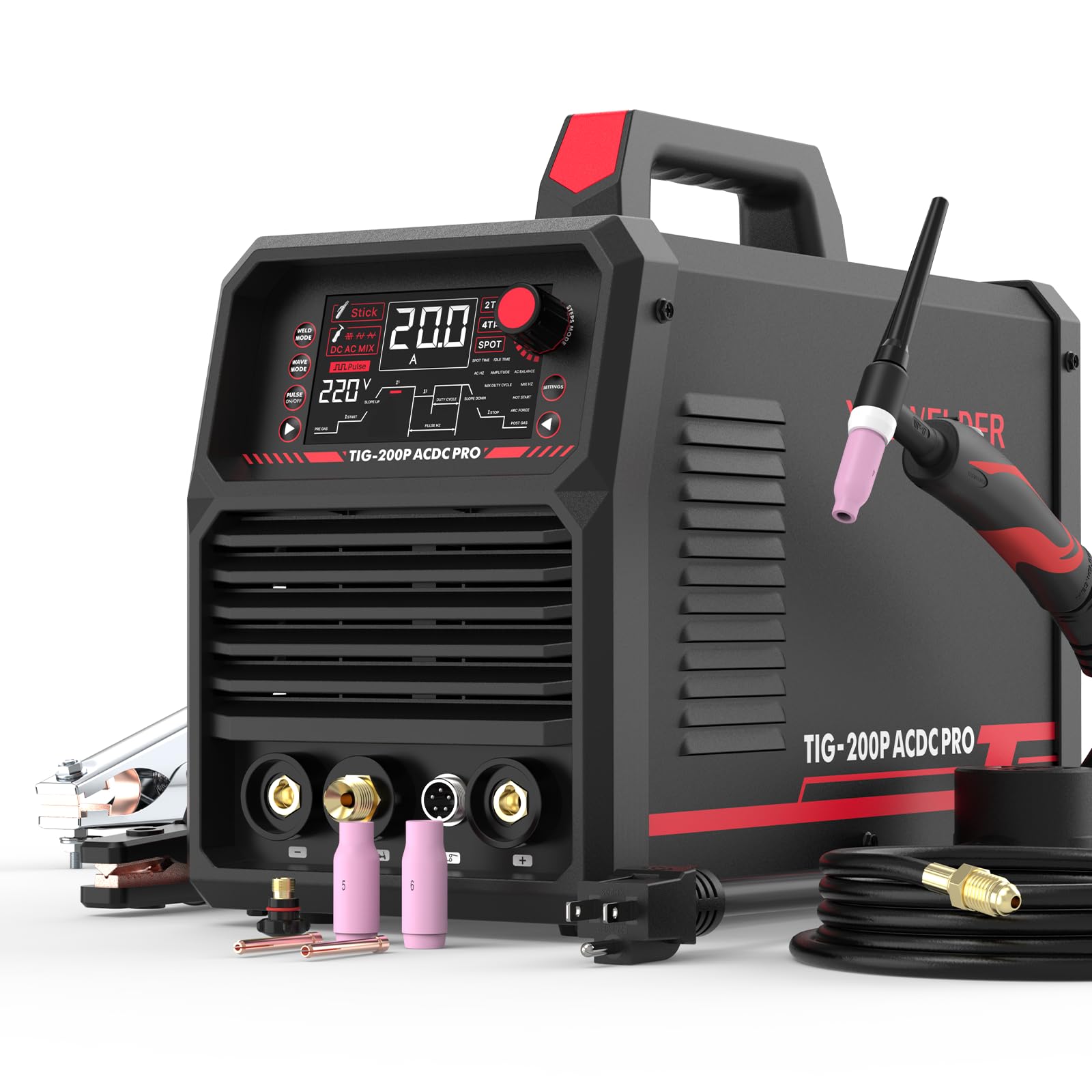
Bottom line: The YESWELDER TIG-200P ACDC is a flexible choice for hobbyists who want AC aluminum capability, DC steel welding and pulse functions in one portable machine. It gives you room to learn without forcing you into a single process.
- Max TIG output: 200 A, useful headroom for common shop work
- Input power: 110/220 V, works across common shop circuits
- Processes: AC TIG, DC TIG, pulse, spot and stick
- Foot control: Compatible interface, useful for variable heat control
The linked TIG-200P ACDC is built around both AC and DC TIG. AC is the key reason it belongs on an aluminum-focused shortlist, while DC TIG covers mild steel and stainless work. Pulse and spot functions give you more control when heat input matters.
Its dual-voltage design also makes it easier to use in a home garage or a better-equipped shop. The trade-off is that the TIG-200P ACDC name now exists alongside a newer PRO line, so confirm the exact panel, accessory package and pedal arrangement shown on the linked Amazon page before ordering.
- AC/DC TIG covers aluminum, steel and stainless projects
- Pulse and spot modes add heat-control options
- Dual-voltage input improves shop and mobile flexibility
- WP-26-style torch setup uses familiar TIG consumables
- Foot pedal may require a separate purchase depending on package
- Several modes and settings take time to learn
- Newer PRO branding can make model comparisons confusing

2. ARCCAPTAIN TIG200P ACDC

Bottom line: The ARCCAPTAIN TIG200P ACDC is the easiest recommendation for a beginner who wants documented AC waveform controls, dual voltage and a useful starter bundle. It reaches its full TIG output on the higher-voltage input.
- Max TIG output: 200 A at 220 V, 120 A at 110 V
- Input power: 110/220 V, flexible for garage or shop use
- Processes: AC/DC TIG, pulse TIG and MMA stick
- Foot control: Compatible, pedal sold separately in base package
ARCCAPTAIN documents square and triangular AC waveforms, pulse control and an AC frequency range designed to let you tune the arc for different aluminum jobs. The base package also includes the torch, regulator, tungsten and common starter accessories, which reduces the number of small items you need to source before practice begins.
At full TIG output, the manufacturer lists a 25% duty cycle. That is workable for intermittent hobby fabrication, but it is not meant to mimic a high-duty industrial power source. The machine weighs 26.5 pounds, so it remains practical to move between a bench and a job site.
- Full 200 A TIG output is available on 220 V
- Square and triangular AC waveforms expand aluminum control
- Base package includes regulator, tungsten and starter accessories
- Five-year core-component warranty is documented by the manufacturer
- Full TIG output is reduced on 110 V
- Manufacturer lists 25% duty cycle at maximum TIG output
- Foot pedal is an extra purchase with the base package

3. Everlast PowerTIG 185DV

Bottom line: The Everlast PowerTIG 185DV suits buyers who care more about AC adjustment range and documented duty cycle than headline amperage. It combines AC/DC TIG with DC stick and dual-voltage operation.
- Max TIG output: 185 A at 240 V, 125 A at 120 V
- Input power: 120/240 V, supports home and shop circuits
- Processes: AC TIG, DC TIG and DC stick
- Foot control: Supported, check linked package contents before ordering
Everlast lists a 35% TIG duty cycle at maximum output, plus 20–250 Hz AC frequency and 10–90% AC balance adjustment. Those controls are useful when you want to change arc focus and cleaning action instead of relying on a fixed AC setup.
The main limitation is pulse flexibility. The current specification lists fixed 1 Hz or 50 Hz pulse choices rather than a fully variable pulse range. The machine also weighs about 40 pounds, so it is portable in a shop sense but not the lightest option here.
- 35% TIG duty cycle is documented at maximum output
- AC frequency adjusts from 20 to 250 Hz
- AC balance adjusts from 10% to 90%
- HF and lift-start TIG plus DC stick broaden shop use
- 185 A maximum output is lower than the two 200 A picks
- Pulse is limited to fixed 1 Hz or 50 Hz settings
- About 40 pounds, making it the heaviest verified chassis here

YESWELDER TIG-200P ACDC vs ARCCAPTAIN TIG200P ACDC: Is the Upgrade Worth It?
Both are dual-voltage AC/DC TIG machines with a 200-amp class top end, but they differ in how clearly their current packages and controls are documented. Choose based on the control layout and accessory package you actually want, not the larger feature count on a listing.
- AC controls: ARCCAPTAIN explicitly documents square and triangular AC waveforms.
- Starter package: ARCCAPTAIN documents a regulator, tungsten and starter accessories in the base kit.
- Model generation: YESWELDER now markets a newer PRO line, so verify the exact linked legacy package.
- Pedal: Both support foot control, but package inclusion should be checked before checkout.
Which TIG Welder Should You Buy?
- One flexible machine for aluminum and steel: get the YESWELDER TIG-200P ACDC.
- A beginner-friendly base package: get the ARCCAPTAIN TIG200P ACDC.
- More documented AC tuning range: get the Everlast PowerTIG 185DV.
- A verified five-year core-component warranty: get the ARCCAPTAIN TIG200P ACDC.
- A higher documented max-output TIG duty cycle: get the Everlast PowerTIG 185DV.
How We Chose the Best Budget TIG Welders
- Material coverage: We prioritized AC TIG for aluminum plus DC TIG for steel and stainless.
- Arc control: Pulse, AC frequency, AC balance and waveform options mattered because they affect how much control you have over heat and cleaning action.
- Work rate: We checked manufacturer duty-cycle data where it was available for the exact model.
- Power flexibility: Dual-voltage input matters for buyers who move between household and shop circuits.
- Verification: We used manufacturer specifications and manuals first, then exact-model listing evidence, safety/recall searches and independent owner sources. We did not add a new owner-trend box unless the same trend appeared in at least two independent sources.
Customer Preferences
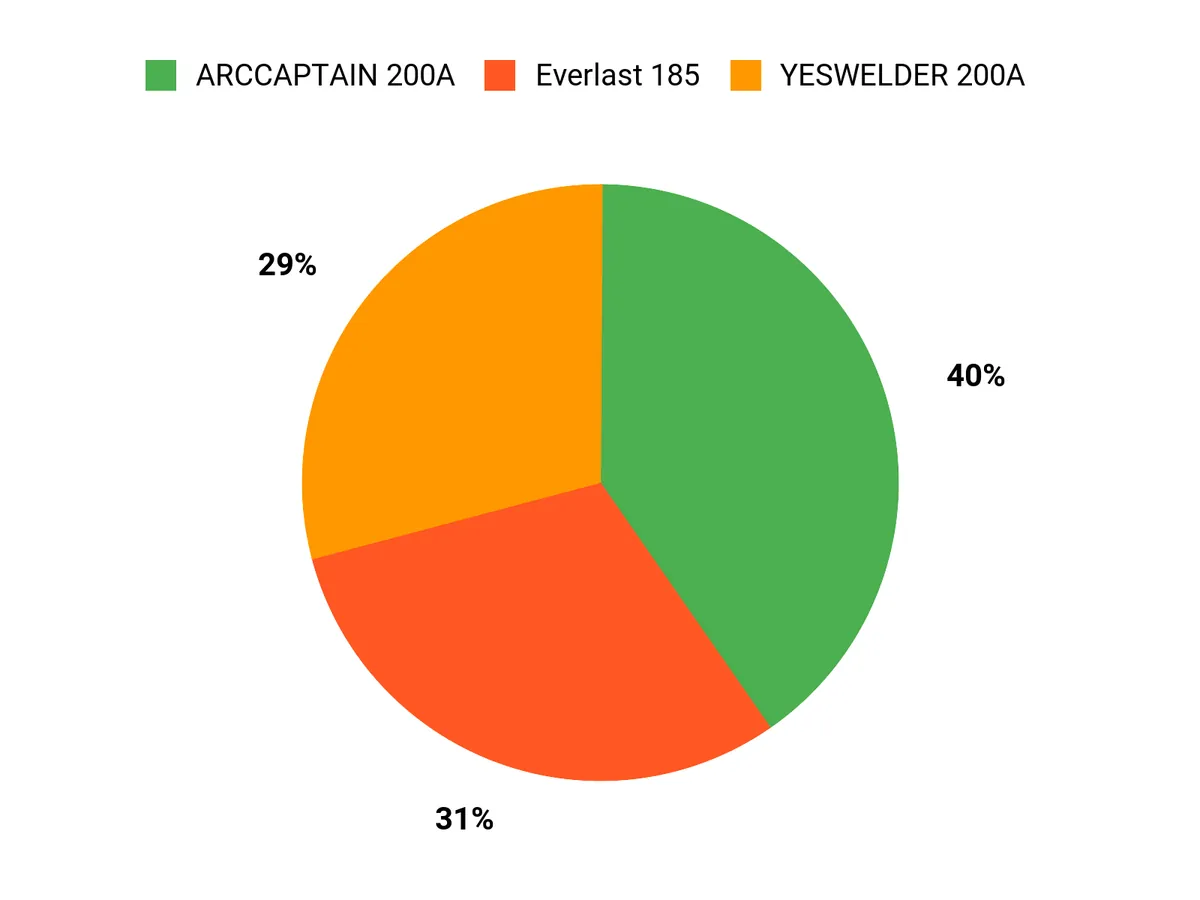
Most buyers in this category are choosing between four practical needs: AC control for aluminum, enough output for their typical material thickness, a duty cycle that matches their work rhythm, and an accessory package that does not force immediate upgrades. Portability matters too, but a lighter machine is not automatically the better choice if it gives up the controls or work rate you need.
Buying Guide for Budget TIG Welders
AC/DC vs DC TIG
If aluminum is part of your plan, buy an AC/DC TIG welder. AC helps break up the oxide layer on aluminum while DC is the normal choice for steel and stainless. All three picks here cover both AC and DC TIG, so the bigger decision is how much tuning you want. The YESWELDER TIG-200P ACDC is the broadest all-round starting point.
Max Output and Duty Cycle
Maximum amperage tells you the upper edge of the machine, but duty cycle tells you how long it can work before cooling is required. Short repair beads and practice sessions put less demand on duty cycle than repetitive fabrication. If work rate matters, the Everlast PowerTIG 185DV has a higher documented maximum-output TIG duty cycle than the ARCCAPTAIN.
Pulse, AC Frequency and AC Balance
Pulse can help manage heat input, while AC frequency changes arc focus and AC balance changes the relationship between cleaning and penetration. You do not need every adjustment to learn TIG, but more control can help as your aluminum work becomes more precise. The Everlast PowerTIG 185DV provides a wide documented AC frequency and balance range.
Dual Voltage and Circuit Requirements
Dual-voltage machines are convenient, but lower-voltage input can reduce available output. Use the plug, breaker and circuit size specified by the manufacturer, and avoid assuming that an adapter changes what the circuit can safely supply. If you expect to weld near maximum output, plan around the higher-voltage input listed for the machine.
Foot Pedals, Torches and Consumables
A foot pedal is not mandatory, but it gives you live amperage control while welding and is especially useful for thin material and changing heat conditions. Check connector compatibility and package contents before buying. The ARCCAPTAIN TIG200P ACDC supports a pedal, but the base package lists it separately.
Portability and Service
Weight matters if the welder moves often, but service support and replacement consumables matter longer. Look for a torch family with readily available cups, collets and tungsten sizes, then confirm the warranty terms for your exact region and seller. Keep the original receipt and serial information in case support is needed.
Mistakes to Avoid When Buying a TIG Welder
- Buying DC-only for aluminum: choose AC/DC if aluminum is a real requirement.
- Shopping by maximum amps alone: compare duty cycle and input-voltage limits too.
- Assuming the pedal is included: check the exact package contents on the linked listing.
- Ignoring circuit requirements: confirm the outlet, breaker and wiring before running high output.
- Comparing different generations as identical: match the model suffix, control panel and included accessories.
FAQs
Do I Need AC for Aluminum?
Yes. For normal TIG welding of aluminum, AC makes the job much easier because its alternating action helps manage the oxide layer while supporting a stable welding arc. DC TIG remains the normal choice for steels. If aluminum is a regular project material, choose a machine with adjustable AC controls rather than trying to work around a DC-only power source.
What Should I Look for When Choosing a Budget TIG Welder?
Start with the metals you will weld, then compare AC/DC capability, usable output on your available input voltage, duty cycle, pulse or AC tuning, torch compatibility and pedal support. After that, look at the accessory bundle and warranty. A long feature list matters less if the machine does not match your circuit, material or work rate.
Can I Run These TIG Welders on Household Power?
All three picks support dual-voltage operation, but their available output can change on the lower-voltage input. Use the manufacturer-specified plug, breaker and circuit capacity for the exact machine. A plug adapter does not increase the power available from the circuit, so plan higher-output welding around the machine’s higher-voltage input when required.
Is a Foot Pedal Necessary for TIG Welding?
No. You can TIG weld with panel-set amperage or a torch switch, but a compatible foot pedal gives you real-time heat control during the weld. That is especially helpful on thin material, corners and joints that heat up as you travel. Always confirm the pedal connector and whether the pedal is included with the exact package.
How Much Duty Cycle Do I Need?
That depends on how long you weld near the machine’s rated output. Hobby repairs, short beads and practice sessions usually allow natural cooling pauses, while repetitive fabrication demands more continuous capacity. Compare duty-cycle ratings at similar output levels rather than treating the percentage alone as a complete measure of performance.
Can These Machines Stick Weld Too?
Yes. The three models in this roundup include a stick-welding mode in addition to TIG. Stick can be useful for outdoor repairs, thicker steel or situations where shielding gas is inconvenient. The available stick output and electrode recommendations still vary by machine, so use the exact manual rather than assuming TIG and stick limits are the same.
How Do I Avoid Common TIG Welder Problems?
Start with clean metal, the correct tungsten and consumables, proper shielding-gas flow and secure torch and work connections. Keep the machine’s vents clear and follow its input-circuit requirements. If high-frequency starting becomes inconsistent, inspect the torch, consumables, ground connection and setup steps in the exact model manual before changing internal settings.
Final Verdict: Best Budget TIG Welder
For the broadest mix of AC/DC capability, pulse functions and dual-voltage flexibility, the YESWELDER TIG-200P ACDC is the best overall pick in this roundup. It covers the jobs most hobbyists expect from one affordable TIG platform while leaving room to grow into more settings.
Buy around your real workflow: input power, aluminum controls, duty cycle and package contents matter more than a headline feature count.
For a stronger documented starter package, compare the ARCCAPTAIN TIG200P ACDC. For wider documented AC tuning and a higher max-output TIG duty cycle, see the Everlast PowerTIG 185DV.
| YESWELDER 200A AC/DC Aluminum TIG Welder TIG-200P ACDC | ARCCAPTAIN TIG Welder AC/DC 200A with Pulse 7 in 1 Aluminum Welding Machine TIG200P ACDC | 2021 Everlast PowerTIG 185DV AC/DC TIG Stick Welder | |
|---|---|---|---|
|
|
|
|
|
| Rating | 4.0/5 (114 reviews) | 4.3/5 (243 reviews) | 4.5/5 (77 reviews) |
| Power Source | AC/DC | AC/DC | AC/DC |
| Amperage Capacity | 200 A | 200 A | 185 A |
| Weight | 31 pounds | 42.7 pounds | 40 pounds |
| Shop Now | Shop Now | Shop Now |



[…] confidence in demanding service. Additionally, choosing the right rod can significantly enhance bead quality enhancements for various welding applications. For welders seeking liberation from avoidable failure, 7018 […]
[…] rhythmic feeding builds coordination and helps produce clean, consistent beads. A capable TIG welder can provide stable output, but consistent hand movement is still […]
[…] still matter. If you are evaluating TIG machines at different price levels, this existing guide to budget TIG welder options provides additional equipment […]