The best reciprocating saw blade for most metal cutting is the Milwaukee The Torch 14 TPI: a bi-metal blade that handles steel pipe, angle and conduit. For stainless and cast iron, step up to the Diablo Steel Demon carbide blade. For a mixed kit, the DEWALT 10-piece set is the easiest starting point.
Choosing a blade matters more than choosing the saw. The wrong TPI makes slow, rough cuts and breaks blades. This guide compares popular metal-cutting blades on Amazon by tooth count, material and length, using listing details and manufacturer information.
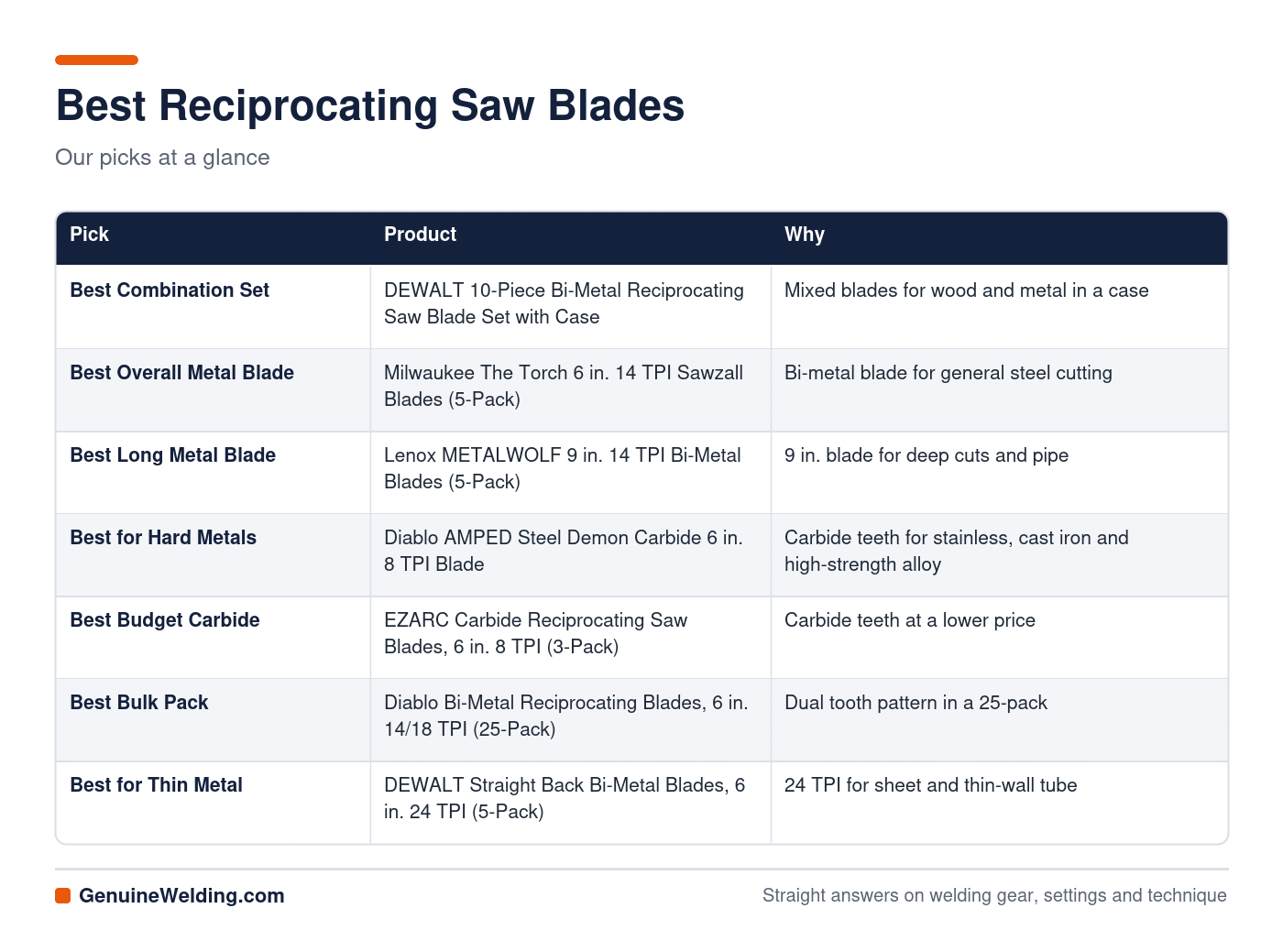
Our Top Picks
- Best Combination Set: DEWALT 10-Piece Bi-Metal Reciprocating Saw Blade Set with Case – Mixed blades for wood and metal in a case
- Best Overall Metal Blade: Milwaukee The Torch 6 in. 14 TPI Sawzall Blades (5-Pack) – Bi-metal blade for general steel cutting
- Best Long Metal Blade: Lenox METALWOLF 9 in. 14 TPI Bi-Metal Blades (5-Pack) – 9 in. blade for deep cuts and pipe
- Best for Hard Metals: Diablo AMPED Steel Demon Carbide 6 in. 8 TPI Blade – Carbide teeth for stainless, cast iron and high-strength alloy
- Best Budget Carbide: EZARC Carbide Reciprocating Saw Blades, 6 in. 8 TPI (3-Pack) – Carbide teeth at a lower price
- Best Bulk Pack: Diablo Bi-Metal Reciprocating Blades, 6 in. 14/18 TPI (25-Pack) – Dual tooth pattern in a 25-pack
- Best for Thin Metal: DEWALT Straight Back Bi-Metal Blades, 6 in. 24 TPI (5-Pack) – 24 TPI for sheet and thin-wall tube
We research every pick using manufacturer specifications, published manuals and long-term owner feedback. As an Amazon Associate, GenuineWelding earns from qualifying purchases at no extra cost to you. Prices change often, so check the current price before you buy.
Comparison Table
| Product | Best for | Key feature |
|---|---|---|
| DEWALT 10-Piece Bi-Metal Reciprocating Saw Blade Set with Case | Best Combination Set | Mixed blades for wood and metal in a case |
| Milwaukee The Torch 6 in. 14 TPI Sawzall Blades (5-Pack) | Best Overall Metal Blade | Bi-metal blade for general steel cutting |
| Lenox METALWOLF 9 in. 14 TPI Bi-Metal Blades (5-Pack) | Best Long Metal Blade | 9 in. blade for deep cuts and pipe |
| Diablo AMPED Steel Demon Carbide 6 in. 8 TPI Blade | Best for Hard Metals | Carbide teeth for stainless, cast iron and high-strength alloy |
| EZARC Carbide Reciprocating Saw Blades, 6 in. 8 TPI (3-Pack) | Best Budget Carbide | Carbide teeth at a lower price |
| Diablo Bi-Metal Reciprocating Blades, 6 in. 14/18 TPI (25-Pack) | Best Bulk Pack | Dual tooth pattern in a 25-pack |
| DEWALT Straight Back Bi-Metal Blades, 6 in. 24 TPI (5-Pack) | Best for Thin Metal | 24 TPI for sheet and thin-wall tube |
Reviews of Our Top Picks
1. DEWALT 10-Piece Bi-Metal Reciprocating Saw Blade Set with Case – Best Combination Set

DEWALT 10-Piece Bi-Metal Reciprocating Saw Blade Set with Case
Mixed blades for wood and metal in a case
Bottom line: DEWALT’s 10-piece set is a handy starting point because it covers the common jobs: thin metal, pipe and wood with nails. The listing describes a bi-metal combination set in a case. It is not the cheapest per blade, but you get a spread of tooth counts without buying several packs.
Key specs
- Material: Bi-metal
- Count: 10 blades with case
- Use: Combination wood and metal
Pros
- Covers many jobs
- Case keeps blades organized
- Trusted brand
Cons
- Fewer blades per type than bulk packs
- Not specialized for thick metal
Best for: a first kit for a home or job-site user.
2. Milwaukee The Torch 6 in. 14 TPI Sawzall Blades (5-Pack) – Best Overall Metal Blade

Milwaukee The Torch 6 in. 14 TPI Sawzall Blades (5-Pack)
Bi-metal blade for general steel cutting
Bottom line: The Torch is Milwaukee’s well-known metal-cutting Sawzall blade. The 6 in., 14 TPI version fits angle, pipe and conduit. Fourteen teeth per inch is a middle ground: it cuts steel at a reasonable speed while keeping at least three teeth in the work on typical wall thicknesses.
Key specs
- Length: 6 in.
- TPI: 14
- Pack: 5 blades
- Brand line: The Torch
Pros
- Good all-round steel tooth count
- Name-brand quality
- Matches Milwaukee Sawzall tools
Cons
- Premium price per blade
- Not a carbide blade for stainless
Best for: steel pipe, angle iron and conduit.
3. Lenox METALWOLF 9 in. 14 TPI Bi-Metal Blades (5-Pack) – Best Long Metal Blade

Lenox METALWOLF 9 in. 14 TPI Bi-Metal Blades (5-Pack)
9 in. blade for deep cuts and pipe
Bottom line: The 9 in. METALWOLF is for deeper cuts, such as through thick pipe or I-beam webs. The listing says the blade uses T2 technology for longer life and faster cutting. A longer blade flexes more, so use a slow, even stroke and a saw with a steady grip.
Key specs
- Length: 9 in.
- TPI: 14
- Material: Bi-metal
- Pack: 5 blades
Pros
- Reach for deep cuts
- Established Lenox brand
- Consistent 14 TPI
Cons
- Flexes more than 6 in. blades
- Higher price per blade
Best for: pipe, tube and deep structural cuts.
4. Diablo AMPED Steel Demon Carbide 6 in. 8 TPI Blade – Best for Hard Metals
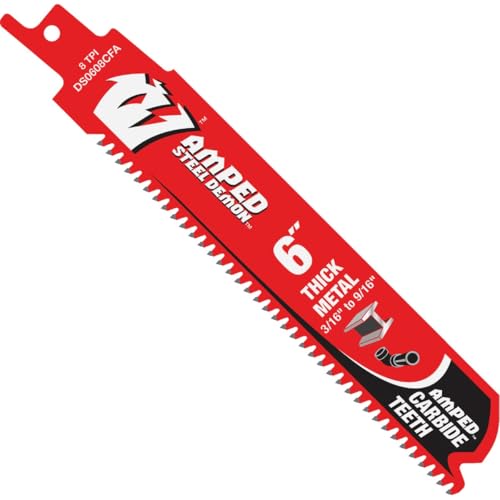
Diablo AMPED Steel Demon Carbide 6 in. 8 TPI Blade
Carbide teeth for stainless, cast iron and high-strength alloy
Bottom line: Diablo’s Steel Demon is described in the listing as a carbide-tipped blade for extreme metal cutting, including high-strength alloys, cast iron and stainless. Carbide costs more than bi-metal but lasts much longer on hard or abrasive materials. At 8 TPI, it is designed for thicker stock.
Key specs
- Length: 6 in.
- TPI: 8
- Teeth: Carbide
- Use: Stainless, cast iron, alloy
Pros
- Long life in hard metals
- Strong on thick steel
- Cuts stainless that bi-metal struggles with
Cons
- High cost per blade
- Carbide is brittle if the blade is forced
Best for: stainless, cast iron and heavy plate.
5. EZARC Carbide Reciprocating Saw Blades, 6 in. 8 TPI (3-Pack) – Best Budget Carbide
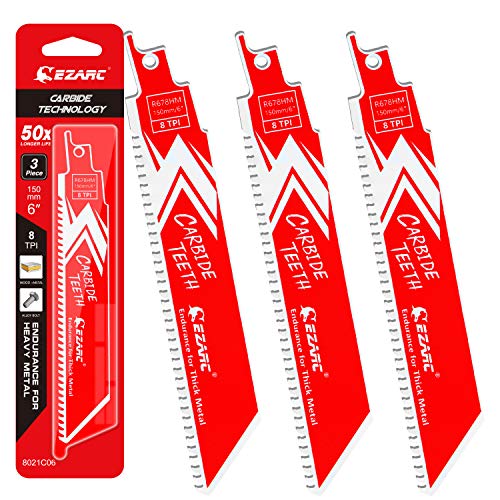
EZARC Carbide Reciprocating Saw Blades, 6 in. 8 TPI (3-Pack)
Carbide teeth at a lower price
Bottom line: EZARC’s carbide blades are a cheaper way to try carbide. The listing claims up to 50 times the life of bi-metal blades. That figure is a marketing claim, so treat it as best-case, but carbide does last much longer on hard or abrasive jobs.
Key specs
- Length: 6 in.
- TPI: 8
- Teeth: Carbide
- Pack: 3 blades
Pros
- Cheaper carbide
- 3-pack
- Fits most reciprocating saws
Cons
- Lower brand certainty
- Life claim is a best-case figure
Best for: trying carbide without paying premium prices.
6. Diablo Bi-Metal Reciprocating Blades, 6 in. 14/18 TPI (25-Pack) – Best Bulk Pack
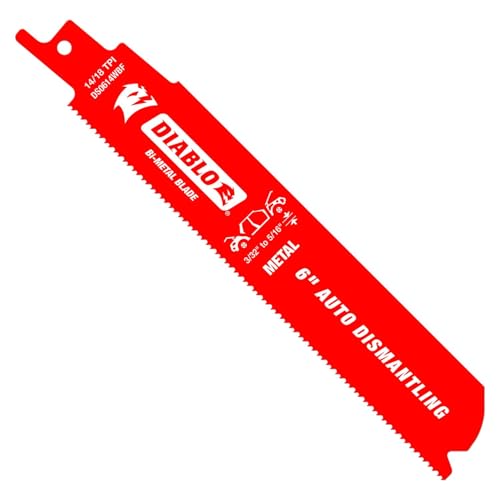
Diablo Bi-Metal Reciprocating Blades, 6 in. 14/18 TPI (25-Pack)
Dual tooth pattern in a 25-pack
Bottom line: A 25-pack of dual-tooth 14/18 TPI blades is a good value for shops that go through blades quickly. The listing says an ultra-hardened edge lasts up to five times longer than standard bi-metal blades, which is a claim to treat cautiously. The 14/18 mix handles sheet, tube and angle.
Key specs
- Length: 6 in.
- TPI: 14/18
- Pack: 25 blades
Pros
- Low cost per blade
- Dual TPI pattern
- Good bulk option
Cons
- Not for thick plate
- Needs storage
Best for: shops that use many blades.
7. DEWALT Straight Back Bi-Metal Blades, 6 in. 24 TPI (5-Pack) – Best for Thin Metal

DEWALT Straight Back Bi-Metal Blades, 6 in. 24 TPI (5-Pack)
24 TPI for sheet and thin-wall tube
Bottom line: At 24 TPI, this blade is for thin material: sheet metal, thin-wall tube and conduit. The fine teeth keep several teeth in contact with thin stock and reduce snagging. Do not use it on thick steel, where the teeth will clog.
Key specs
- Length: 6 in.
- TPI: 24
- Material: Bi-metal
- Pack: 5 blades
Pros
- Smooth cuts in thin material
- Less snagging
- Common size
Cons
- Slow in thick metal
- Teeth clog easily
Best for: sheet metal, thin tube and conduit.
How to Choose Reciprocating Saw Blades for Metal
- TPI: teeth per inch. Use 24 TPI for thin sheet, 14 to 18 for tube and angle, 8 to 10 for thick or solid stock.
- Rule of thumb: keep at least three teeth in the material at all times.
- Material: bi-metal blades have hardened teeth welded to a flexible body. Carbide is for hard or abrasive metals.
- Length: 6 in. is the standard; 9 in. reaches deeper.
- Thickness and shank: use blades that fit your saw’s universal shank.
Bi-Metal or Carbide?
Bi-metal blades are the practical default. They flex without breaking and cost far less than carbide. Carbide-tipped blades keep their edge much longer in stainless, cast iron and hardened steel, but they are brittle and expensive. If you cut mostly mild steel pipe and angle, bi-metal is enough.
Cutting Metal With a Reciprocating Saw
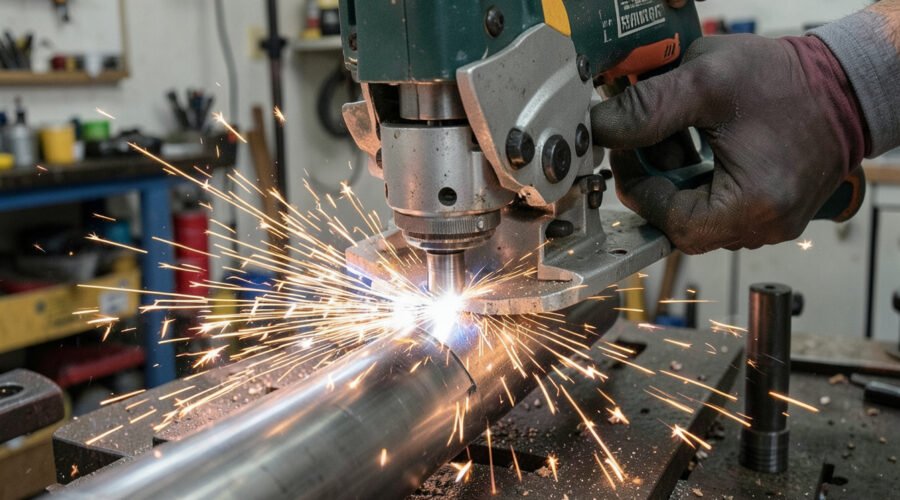
- Clamp the work so it cannot vibrate.
- Keep the saw shoe firmly against the metal.
- Use a lubricating cutting fluid or wax for thick or stainless material.
- Do not force the cut; let the blade work at a steady speed.
- Wear safety glasses, gloves and hearing protection.
For other ways to cut metal, see our guide on plasma cutters and the essential welding tools.
Matching the Blade to the Job
Pipe and tube need a medium to fine tooth count, as the thin wall can snag coarse teeth. Rebar and bolts need a thick-metal blade with 8 to 10 TPI. Demolition with nails needs thick bimetal blades or carbide. Match the blade to the thinnest and hardest part of the cut.
FAQs
What is the best reciprocating saw blade for metal?
Milwaukee’s The Torch 14 TPI blade is a strong all-round choice for steel pipe and angle. For stainless and cast iron, the Diablo Steel Demon carbide blade lasts longer.
What TPI should I use for cutting metal?
Use 24 TPI for thin sheet, 14 to 18 TPI for pipe and angle, and 8 to 10 TPI for thick or solid stock.
Are carbide reciprocating blades worth it?
For stainless, cast iron and hard alloys, yes. For mild steel, bi-metal is usually better value.
Why do my reciprocating saw blades keep breaking?
Common causes: too much pressure, work not clamped, the wrong TPI, or the saw shoe not held on the work.
Can I cut stainless steel with a reciprocating saw?
Yes, with a carbide or high-cobalt bi-metal blade at a slower speed with cutting fluid.
Can I use wood blades on metal?
No. Wood blades have teeth that are too coarse and soft for metal, and they will be damaged and may snag.
Final Verdict
Buy Milwaukee Torch or Lenox METALWOLF blades for everyday steel, DEWALT 24 TPI for thin material, and a Diablo carbide blade for stainless and cast iron. Match the TPI to the thickness of what you cut, clamp the work and wear eye protection.
Sources
- Milwaukee The Torch 14 TPI listing
- Lenox METALWOLF 9 in. listing
- Diablo Steel Demon carbide listing
- DEWALT 10-piece set listing
- OSHA 1910.243: Guarding of portable powered tools