

The best plasma cutters should match your real material thickness, available power, air supply, and work pace. A machine that looks powerful on paper can still be the wrong fit if it needs a circuit you do not have or its duty cycle slows long jobs.
For the strongest all-around current option here, Eastwood Versa-Cut 60 combines 120/240V input with up to 60A output and a 20-foot torch lead. For lower-cost garage work, LOTOS LTP5000D is the Best value pick.
We checked the linked listings, matched model numbers, and verified key specifications against manufacturer documentation before rebuilding the picks.
Best Plasma Cutters Compared
| Product | Best for | Input power | Cut capacity | Score |
|---|---|---|---|---|
|
Did not pass the September 2026 buyability check
|
Portable fine-cut work | 120/240V | 1/2 in. recommended; 5/8 in. severance | 95/100 |
|
Did not pass the September 2026 buyability check
|
Garage and entry-level cutting | 110/220V | Up to 1/2 in. clean cut | 82/100 |
|
Premium
|
Fixed-shop heavy cutting | 208/230V | 7/8 in. rated mild steel | 97/100 |
|
Budget
|
Rusty or painted metal | 120/240V | 5/8 in. clean cut at 220/240V | 88/100 |
|
Did not pass the September 2026 buyability check
|
Ranch and garage repairs | 120/230V | 11/16 in. clean cut at 230V | 90/100 |
|
Mid-range
|
Versatile shop and restoration work | 120/240V | 7/8 in. max at 240V | 74/100 |
Best Plasma Cutters: Our Top Picks
1. Hypertherm Powermax30 XP
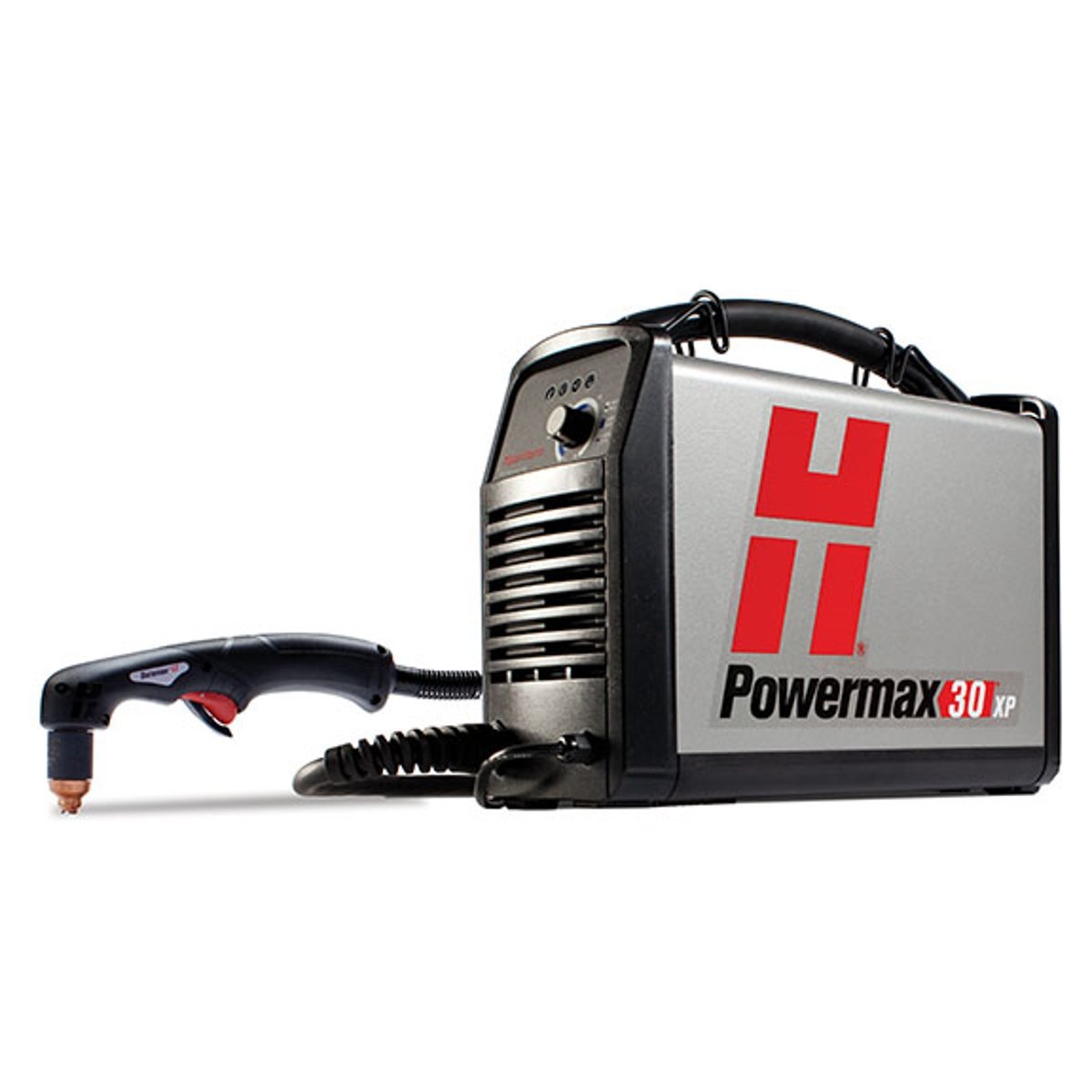
Bottom line: The Powermax30 XP remains a compact 30A cutter with strong manufacturer support, but the linked Amazon listing did not pass our September 2026 buyability check. Keep it on a legacy shortlist, not as a current recommendation from this page.
- Input power: 120/240V, flexible for home and shop circuits
- Output: 15–30A, sized for portable light-to-medium cutting
- Cut capacity: 1/2 in. recommended, 5/8 in. severance
- Duty cycle: 20% at 120V; 35% at 240V
- Arc system: Duramax LT with FineCut consumable support
Hypertherm built the Powermax30 XP around portability. Auto-Voltage operation lets the power supply work from 120V or 240V, and the 088079 package includes a carry case, strap, gloves, shade 5 glasses, and a 15-foot hand torch.
The two consumable approaches are the main reason the machine still stands out: standard consumables handle thicker work, while FineCut consumables help with thinner detail work. Its published duty cycle is lower than the 50–60A shop-oriented cutters below, so long heavy cuts are not its strength.
Sentiment Snapshot

- 120/240V Auto-Voltage input
- FineCut consumables for thin-detail work
- Compact package with 15-foot torch
- Manufacturer lists up to 1/2-inch recommended cutting
- Linked Amazon listing failed the current buyability check
- 30A maximum output is below the larger shop-focused picks
- Published duty cycle is 20% at 120V and 35% at 240V
2. YESWELDER CUT-55DS Pro

Bottom line: The linked CUT-55DS Pro is a 55A dual-voltage, non-touch pilot-arc cutter aimed at garage and DIY work. Its exact Amazon listing did not pass the current buyability check, so it stays here for reference rather than as a live recommendation.
- Input power: 110/220V, useful across garage circuits
- Output: 55A class, aimed at light and medium fabrication
- Cut capacity: Article-listed up to 1/2 in. clean cut
- Duty cycle: Manufacturer lists 60% at 55A
- Arc system: Non-touch pilot arc with digital controls
The non-touch pilot arc is the practical feature here. It is designed to start without dragging the tip on the workpiece, which is useful on rough, painted, or rusty conductive metal.
The manufacturer lists 110/220V input, a digital display, temperature and overload protection, and an external compressed-air requirement. Model naming around the CUT-55DS family has changed, so confirm the exact variant before buying consumables or torch parts.
Sentiment Snapshot

- Dual-voltage 110/220V operation
- Non-touch pilot arc for rough surfaces
- Digital display for setup
- Manufacturer lists overload and temperature protection
- Exact linked Amazon listing failed the current buyability check
- Requires an external compressed-air supply
- CUT-55DS variants use different start systems and accessories
3. Miller Spectrum 875
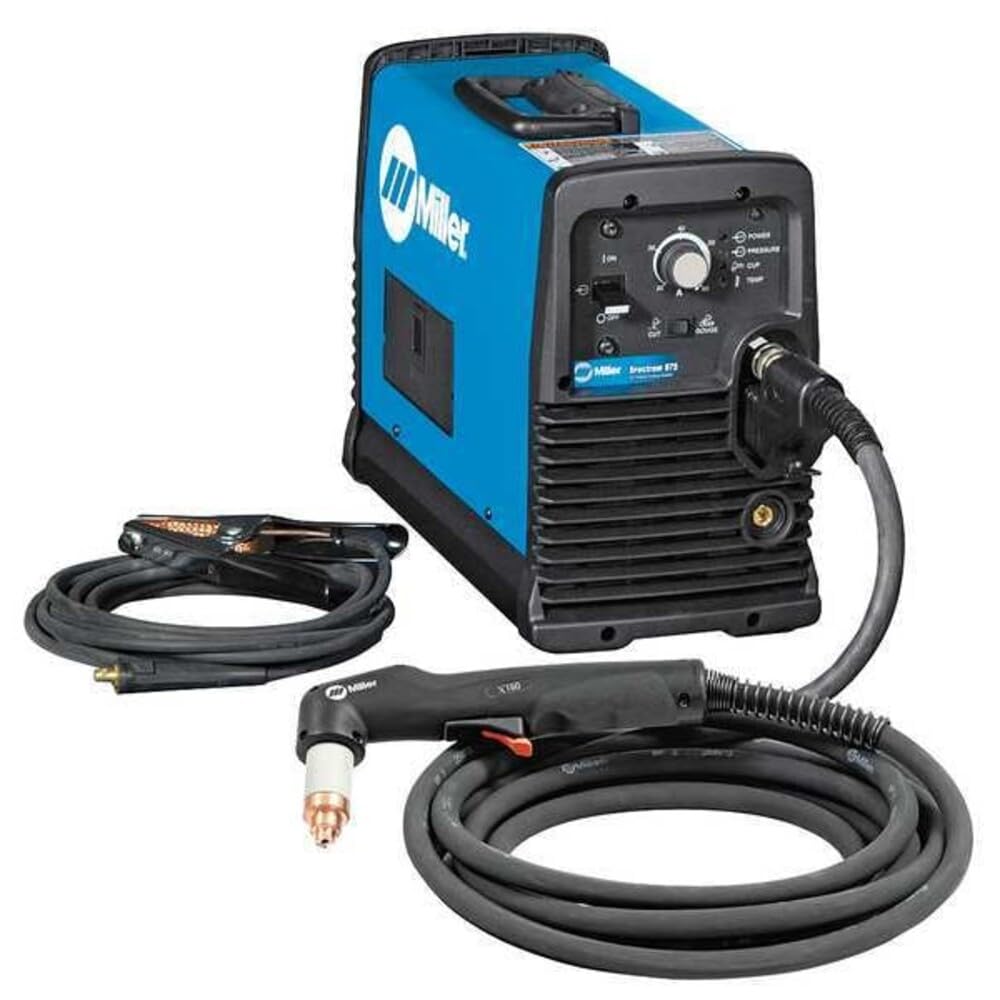
Bottom line: Miller Spectrum 875 is the premium fixed-shop choice when rated 7/8-inch mild-steel capacity and a long torch lead matter more than household-voltage flexibility.
- Input power: 208/230V, intended for a proper shop circuit
- Output: Up to 60A on the linked 907583 package
- Cut capacity: 7/8 in. rated mild steel
- Duty cycle: Up to 50% at 230V on the 907583 generation
- Arc system: XT60 torch with Auto-Refire support
The Spectrum 875 is built around sustained shop work rather than plug-anywhere convenience. The linked 907583 package uses a 20-foot hand torch and 208/230V single-phase input, so it fits fabrication bays, maintenance shops, and repair areas with suitable power.
Miller also uses automatic air regulation and Auto-Refire features in this line. The trade-off is simple: you get a professional cutting platform, but it is heavier and less convenient to move between household-power locations than the dual-voltage options.
Sentiment Snapshot

- 7/8-inch rated mild-steel cutting capacity
- 60A-class output on the linked 907583 generation
- 20-foot hand torch gives useful shop reach
- Automatic air regulation and Auto-Refire features
- Needs 208/230V single-phase power
- Heavier and less mobile than compact dual-voltage cutters
- Premium price tier
4. LOTOS LTP5000D
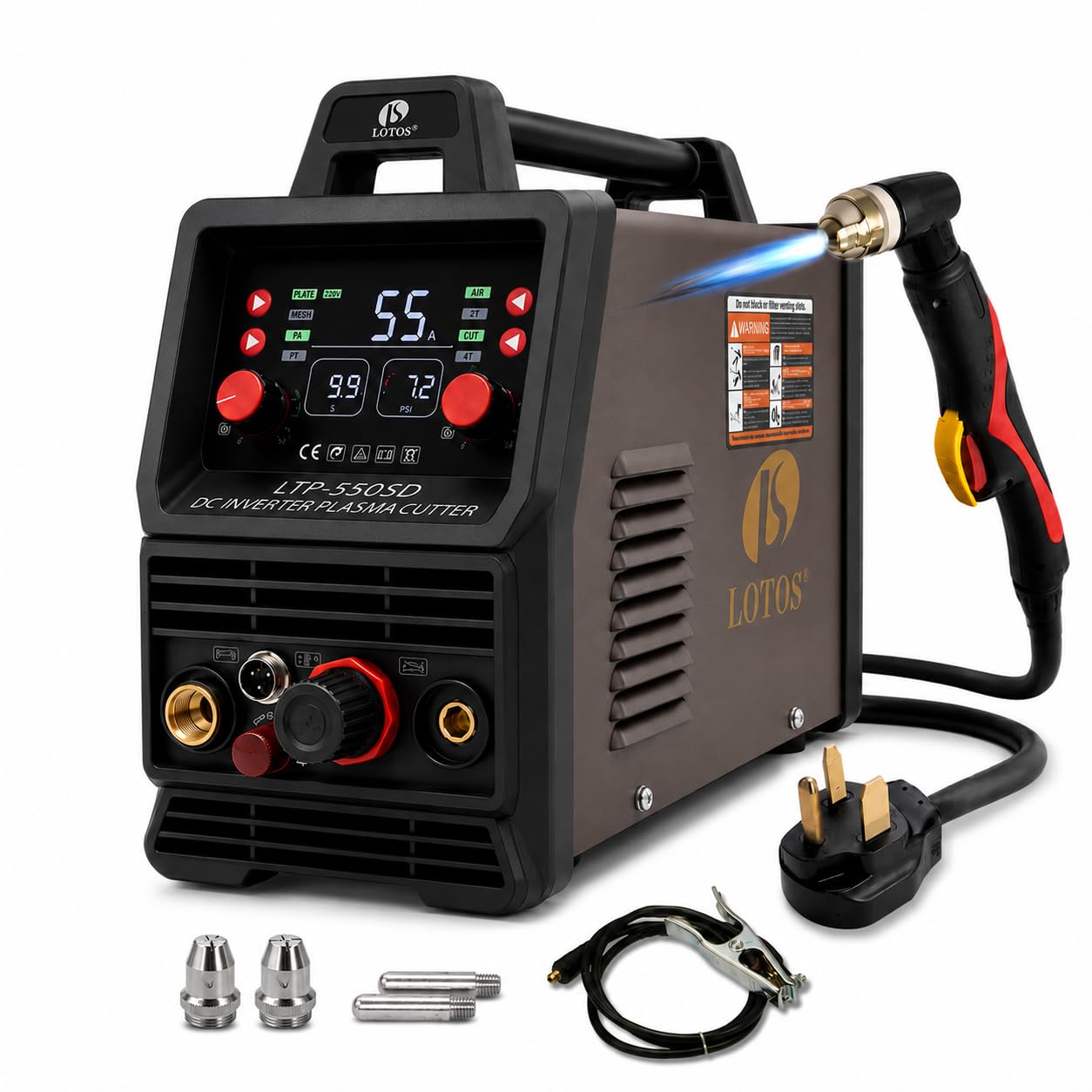
Bottom line: LOTOS LTP5000D is the value pick for garage users who want pilot-arc cutting, dual-voltage flexibility, and useful clean-cut capacity without moving into a premium shop machine.
- Input power: 120/240V, convenient for garage and shop use
- Output: 10–50A at 220/240V; 10–35A at 110/120V
- Cut capacity: 5/8 in. clean at 220/240V; 3/8 in. at 110/120V
- Arc system: Non-touch pilot arc for conductive metal
The original article called this linked ASIN the LTP5505D, but the Amazon page identifies it as the LTP5000D. We kept the original affiliate URL and corrected the model name throughout the buying copy.
On 220/240V, the listing specifies up to 50A output and a 5/8-inch ideal clean cut. On 110/120V, available output and clean-cut capacity drop, so use the higher-voltage circuit when you expect thicker work.
Sentiment Snapshot

- Dual-voltage 120/240V operation
- Non-touch pilot arc works without tip contact
- 5/8-inch listed clean cut on 220/240V
- Compact setup with pre-installed air regulator hardware
- 120V operation limits output to 35A
- 50A maximum output is below the Eastwood Versa-Cut 60
- Still requires a suitable external air compressor
5. Klutch PFC700
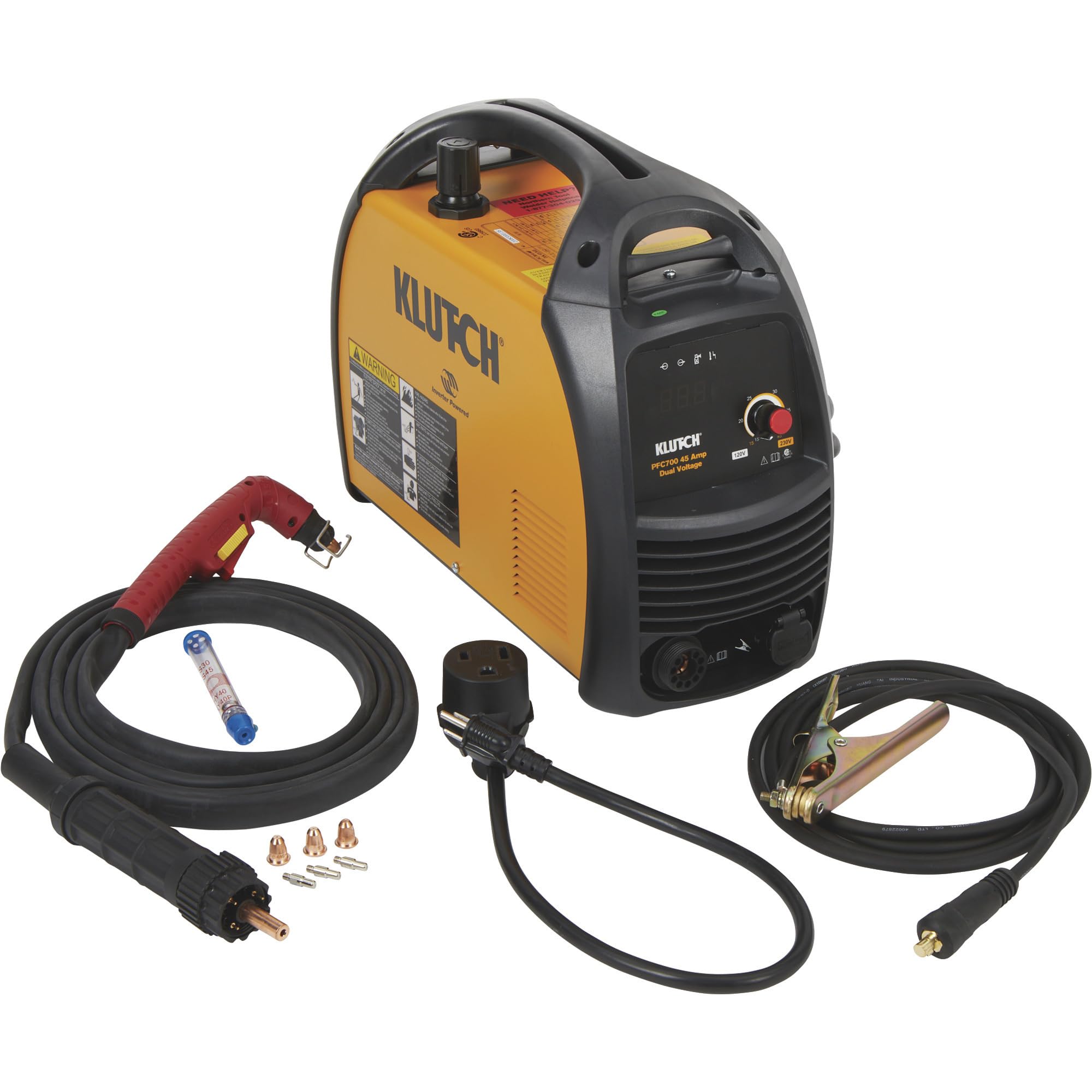
Bottom line: The Klutch PFC700 has useful farm-and-garage specifications, including dual voltage and a continuous pilot arc, but the verified Northern Tool page says this model is no longer available. It stays in the roundup only because the original product cannot be deleted.
- Input power: 120/230V, adaptable to common work locations
- Output: 45A rated, suitable for repair-oriented cutting
- Cut capacity: 11/16 in. clean at 230V; 1/4 in. at 120V
- Duty cycle: 50% at 45A on 230V; 35% at 23A on 120V
- Arc system: Continuous pilot arc with blowback start
For field-style work, the package includes a 12-foot torch and 10-foot ground cable. Northern Tool also lists a 4.5 CFM at 60 PSI air requirement and CSA approval.
The main limitation is availability rather than capability. Northern Tool lists the PFC700 as no longer available and points shoppers toward newer alternatives, so it should not be one of the current picks above.
Sentiment Snapshot

- Dual-voltage 120/230V input
- Continuous pilot arc for expanded or rusty metal
- 11/16-inch listed clean cut at 230V
- 12-foot torch and 10-foot ground cable
- Northern Tool lists the model as no longer available
- Not designed for CNC plasma-table use
- Requires an external air supply of 4.5 CFM at 60 PSI
6. Eastwood Versa-Cut 60

Bottom line: Eastwood Versa-Cut 60 is the best overall pick here because it combines 120/240V flexibility with up to 60A output, a 20-foot torch, and a published 60% duty cycle at full 240V output.
- Input power: 120/240V, flexible across garage and shop circuits
- Output: 20–60A at 240V; 20–30A at 120V
- Cut capacity: 7/8 in. max at 240V; 3/16 in. max at 120V
- Duty cycle: 60% at 60A on 240V; 60% at 30A on 120V
- Arc system: Pilot arc with a 20-foot Trafimet CB70 torch
The Versa-Cut 60 covers a wider range of shop conditions than a 240V-only machine. You can run it from 120V for lighter work, then use 240V when you need the full 60A output and published maximum material thickness.
The 20-foot torch and 10-foot ground lead also reduce how often you need to move the power source around a vehicle or fabrication bay. Its 31-pound machine weight and external-air requirement are the main practical trade-offs.
Sentiment Snapshot

- 120/240V dual-voltage input
- Up to 60A output on 240V
- 20-foot torch and 10-foot ground lead
- 60% duty cycle at 60A on 240V
- Three-year manufacturer warranty
- 31-pound unit is heavier than smaller value cutters
- 120V mode is limited to 30A output
- Needs 5–7 CFM of external compressed air
Eastwood Versa-Cut 60 vs LOTOS LTP5000D: Is the Upgrade Worth It?
The Eastwood costs more, but the verified specifications show where that extra tier goes: higher maximum output, a longer torch lead, and a heavier-duty published duty cycle. The LOTOS remains the simpler value choice for typical garage work.
- Maximum output: Eastwood reaches 60A on 240V; LOTOS reaches 50A on 220/240V.
- Reach: Eastwood includes a 20-foot torch, useful around larger workpieces and vehicles.
- Duty cycle: Eastwood publishes 60% at 60A on 240V, a clearer fit for longer cutting sessions.
- Value: LOTOS sits in the budget tier and still provides dual voltage plus non-touch pilot arc.
Which Plasma Cutter Should You Buy?
- Best all-around garage and shop flexibility: get the Eastwood Versa-Cut 60.
- Best lower-cost dual-voltage choice: get the LOTOS LTP5000D.
- Best fixed-shop professional option: get the Miller Spectrum 875.
- Need a long hand-torch lead: choose Eastwood or Miller; both use a 20-foot hand torch in the verified configurations here.
- Mostly cutting rusty or painted metal: the LOTOS pilot arc is the value-focused verified option.
How We Chose
- Live listing match: we checked each original Amazon ASIN or linked listing and kept the original affiliate URLs unchanged.
- Cutting capability: we compared manufacturer-stated clean, rated, maximum, and severance capacities without treating those terms as interchangeable.
- Power and duty cycle: input voltage, maximum output, and duty cycle were weighed against garage, mobile, and fixed-shop use.
- Air and torch setup: we checked air requirements, pilot-arc features, and lead length where manufacturers published them.
- Safety and freshness: recall searches and current manufacturer documentation were reviewed; owner claims were not added unless independently corroborated.
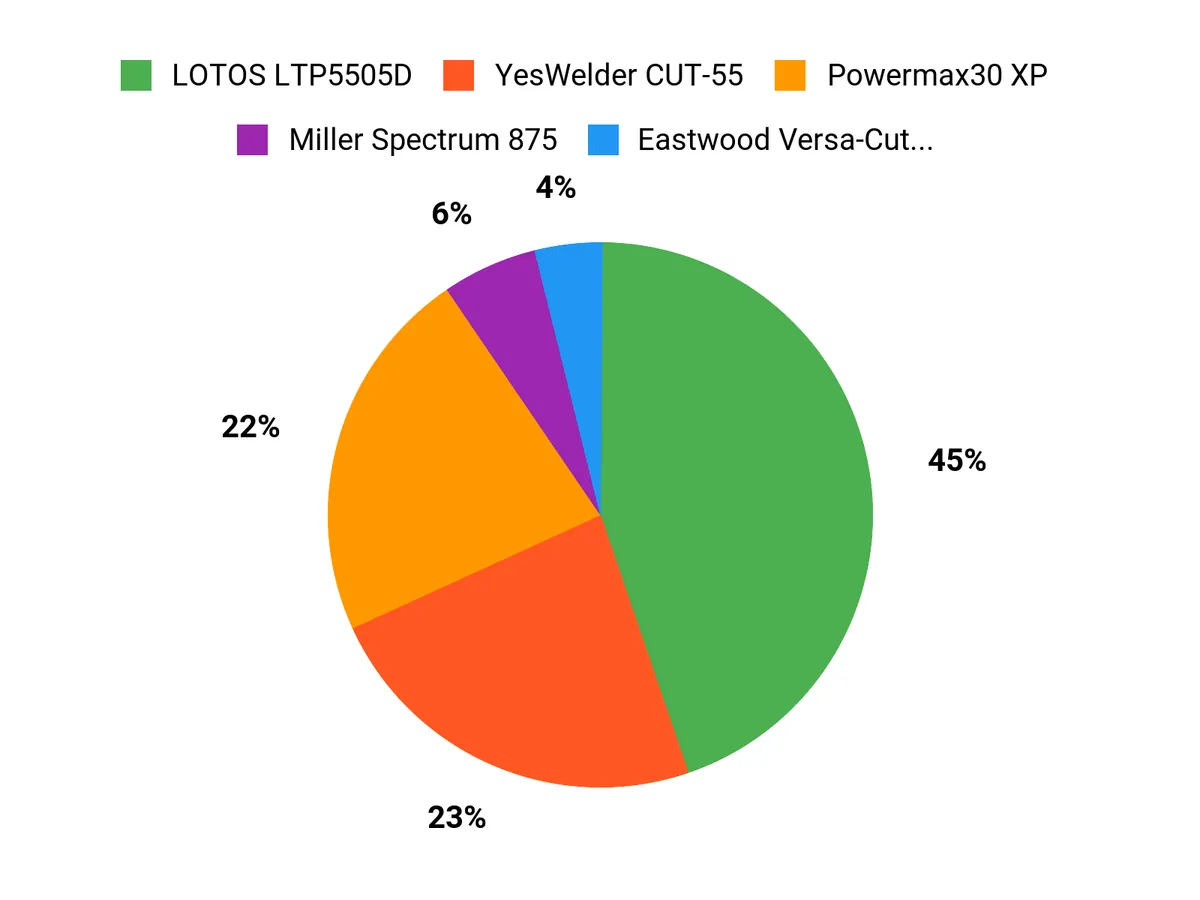
Original Customer Preference Snapshot
This source chart is retained because the original image cannot be altered or removed. Product availability and model matching have changed, so use the live-verified picks and specifications above for current buying decisions.
Plasma Cutter Buying Guide
Match Input Voltage to Your Workspace
Voltage changes what many cutters can actually deliver. Dual-voltage models may run on 120V for convenience but reduce output and cutting capacity. If you have both circuits, use the manufacturer’s higher-voltage setup for thicker work. The Eastwood Versa-Cut 60 is the most flexible verified pick here because it supports both 120V and 240V.
Use Rated or Clean Cut Capacity, Not Just Severance
Rated or clean-cut thickness is the useful number for repeatable work. Severance tells you the machine can get through thicker material, usually more slowly and with a rougher edge. Compare the same rating type across products and size the cutter around the material you cut most often, not the thickest piece you might encounter once.
Duty Cycle Matters on Long Jobs
Duty cycle tells you how long a cutter can operate within a ten-minute test period at a stated output and temperature. Higher duty cycles matter when you make long cuts or work in batches. For heavier shop use, the Eastwood Versa-Cut 60 publishes 60% at 60A on 240V.
Check Airflow and Air Quality
Most air-plasma cutters need an external compressor. Match both CFM and PSI to the machine, not just tank size. Clean, dry air also helps protect consumables and cut quality. Miller specifies 6.75 CFM at 90 PSI minimum for the Spectrum 875 line, while Eastwood specifies 5–7 CFM for the Versa-Cut 60.
Pilot Arc Helps on Rough Surfaces
A pilot arc can start without dragging the torch tip directly on the metal. That helps on expanded, painted, or rusty conductive material. The LOTOS LTP5000D is the value pick here when that feature matters.
Think About Torch Reach and Portability
A compact power source is useful only if the torch and ground leads suit your work area. Long leads reduce repositioning around vehicles, sheet, and benches, but they add bulk. Eastwood and Miller both provide 20-foot hand-torch configurations in the verified models covered here.
Mistakes to Avoid When Buying Plasma Cutters
- Comparing severance to clean-cut ratings: use the same capacity definition before deciding one machine is stronger.
- Ignoring circuit limits: confirm voltage, breaker, plug, and input-current requirements before ordering.
- Undersizing the compressor: match the machine’s required CFM and PSI and keep the air dry.
- Buying by amperage alone: also compare duty cycle, torch reach, cut rating, and consumable support.
- Skipping model-number checks: similar names can hide different torches, start systems, and specifications.
FAQs
Which plasma cutter should I choose?
Choose by material thickness, available power, duty cycle, and how often you move the machine. For broad garage and shop use, the Eastwood Versa-Cut 60 offers the strongest verified balance here. LOTOS LTP5000D suits lower-cost dual-voltage work, while Miller Spectrum 875 makes more sense in a fixed shop with 208/230V power.
Can I run a plasma cutter on household 120V power?
Yes, several dual-voltage plasma cutters can run on 120V, but output and cutting capacity usually drop. The Eastwood Versa-Cut 60, for example, is limited to 30A on 120V and reaches its full 60A output on 240V. Always confirm the required circuit, breaker, plug, and input current before cutting.
How thick can a 50A plasma cutter cut?
It depends on the exact machine, voltage, material, and whether the manufacturer is quoting clean cut or severance. The linked LOTOS LTP5000D lists a 5/8-inch ideal clean cut on 220/240V and 3/8 inch on 110/120V. Do not assume every 50A cutter has the same capacity.
What size air compressor do I need for a plasma cutter?
Match the cutter’s published airflow and pressure, not just compressor tank size. Eastwood specifies 5–7 CFM for the Versa-Cut 60, while Miller specifies 6.75 CFM at 90 PSI minimum for the Spectrum 875 line. Clean, dry air is also important because moisture and contamination shorten consumable life and can hurt cut quality.
Will a pilot-arc plasma cutter cut rusty or painted metal?
A pilot arc can make rough-surface cutting easier because it can establish the arc without dragging the tip directly on the workpiece. Manufacturers of the LOTOS LTP5000D and similar pilot-arc machines specifically position the feature for rough, painted, or rusty conductive metal. Good grounding and sensible surface preparation still help produce cleaner results.
Is 240V better than 120V for a plasma cutter?
For dual-voltage models, 240V usually unlocks more of the machine’s rated output and thicker cutting capacity. It is not automatically better for every job, but it is the better choice when you need the full performance published for the cutter. Use 120V when convenience matters and the material is within the lower-voltage limits.
How do I keep a plasma cutter reliable?
Use clean, dry compressed air, set pressure to the manufacturer’s specification, and replace worn consumables before cut quality falls apart. Inspect the torch lead, ground connection, air fittings, and strain reliefs regularly. Avoid exceeding the stated duty cycle, and confirm that replacement consumables match the exact torch and model variant.
Final Verdict: Best Plasma Cutters
For this verified September 2026 lineup, Eastwood Versa-Cut 60 gives the best combination of dual-voltage flexibility, 60A output, shop-friendly duty cycle, and torch reach. It is the strongest fit when you want one cutter to cover both lighter 120V work and heavier 240V jobs.
Choose the value or premium alternative only when your budget, power supply, or shop setup points clearly in that direction.
For a lower price tier, compare the LOTOS LTP5000D. For a fixed professional shop with 208/230V power, compare the Miller Spectrum 875.
Detailed Product Reference
| Product Name | Image | Verification Status | Cutting Capacity | Input Voltage | Special Highlights |
|---|---|---|---|---|---|
| Hypertherm 088079 Powermax30 XP |
|
Flagged in September 2026 verification | 1/2 in. recommended; 5/8 in. severance | 120V/240V | Auto-Voltage; FineCut support; 15-foot torch |
| YESWELDER CUT-55DS Pro |
|
Flagged in September 2026 verification | Up to 1/2 in. clean cut | 110V/220V | Non-touch pilot arc; digital controls |
| Miller Spectrum 875 |
|
Verified | 7/8 in. rated mild steel | 208V/230V | 60A class; 20-foot torch; shop-focused |
| LOTOS LTP5000D |
|
Verified | 5/8 in. clean at 220/240V | 120V/240V | Non-touch pilot arc; dual voltage |
| Klutch PFC700 |
|
Flagged in September 2026 verification | 11/16 in. clean at 230V | 120V/230V | Continuous pilot arc; 12-foot torch |
| Eastwood Versa-Cut 60 |
|
Verified | 7/8 in. max at 240V | 120V/240V | 60A output; 20-foot torch; 2T/4T mode |



[…] reducing dependence on brute force and expanding precision for liberated fabrication. Understanding dual-voltage operation can enhance versatility in various welding […]
[…] it suitable where material economy and operator autonomy matter, especially in applications like hobby metal art and industrial […]
[…] you are also comparing plasma cutters, remember that cutting-tool ratings do not indicate PAW weld quality. Cutting removes metal with a […]