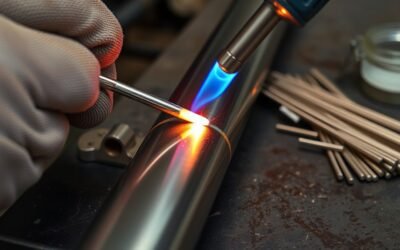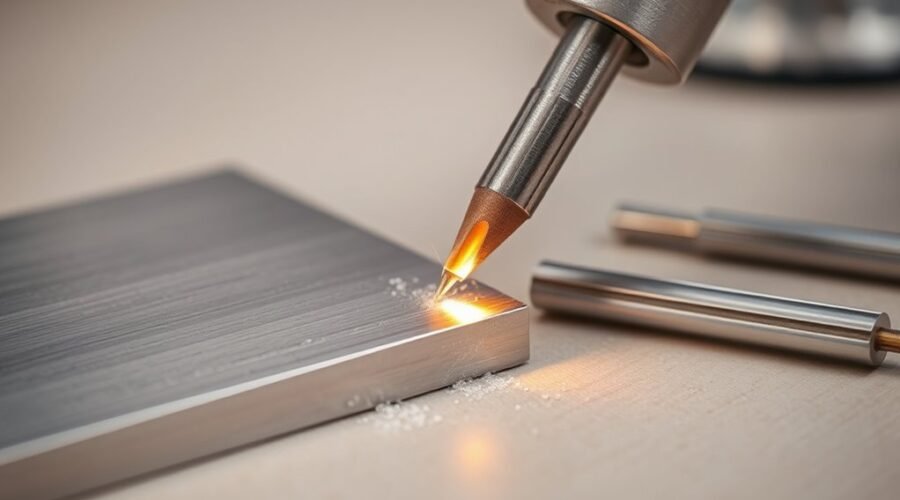
Soldering aluminum is possible, but it is less forgiving than soldering copper because aluminum develops a tough oxide film that blocks solder from wetting the metal. Reliable results depend on matching the aluminum alloy with an appropriate flux and solder, heating the workpiece within the consumable’s specified temperature range, and removing active flux residue afterward. The temperature is not universally “above 300°C”; it depends on the exact solder-and-flux system.
Quick Answer
To solder aluminum, clean the joint, use flux specifically rated for aluminum, and choose a compatible solder alloy such as a suitable tin-zinc formulation. Heat the aluminum itself until the solder wets and flows, then let the joint cool without movement and thoroughly remove any corrosive flux residue.
Key Takeaways
Key Takeaways
- Aluminum-specific flux is normally required because ordinary rosin flux does not reliably remove the metal’s tenacious oxide film.
- 1000 and 3000 series aluminum are generally easier to solder than 6000 series, while many 5000-series alloys require pre-tinning or may not suit the process.
- Indalloy #201 is a 91Sn/9Zn solder that melts at 199°C and is compatible with Indalloy Flux #3 for appropriate mechanical applications.
- Indalloy #176 melts at 382°C, outside Flux #3’s activation range, so Indium specifies a different oxide-removal approach.
- Post-solder cleaning is part of the joining process because many active aluminum flux residues can remain corrosive.
Why Aluminum Soldering Works
)
Aluminum can be soldered once its surface oxide is controlled well enough for molten filler metal to wet the underlying metal. The Aluminum Association’s soldering guidance covers alloy solderability, cleaning, corrosion, joint design, flux-cored wire, direct solder pastes, and aluminum-to-other-metal joints.
The oxide is the central problem. Bare aluminum reacts readily with oxygen, so simply melting solder onto an untreated surface often produces beads that sit on top instead of spreading into a proper joint.
Flux formulated for aluminum chemically assists oxide removal and protects the prepared surface during heating. Once wetting occurs, solder forms a metallurgical bond with the aluminum rather than acting like a loose coating.
Joint quality still depends on the base alloy, filler metal, flux chemistry, temperature, heating method, fit-up, and cleaning. Aluminum-to-aluminum joints are generally harder than aluminum-to a more solderable metal such as copper.
Choose the Right Flux and Solder
The correct flux and solder must work as a system. A strong flux alone cannot compensate for a filler alloy that is unsuitable for the substrate or temperature, and ordinary electronics rosin flux is generally not active enough for bare aluminum.
Indium Corporation’s guidance for soldering aluminum lists Indalloy #201 as 91Sn/9Zn with a 199°C eutectic melting temperature. Indalloy Flux #3 activates from 96°C to 343°C, so #201 falls within that range. Indium describes Flux #3 as very corrosive and recommends it for mechanical assembly rather than electronics.
Indalloy #176 is different. It is 95Zn/5Al and melts at 382°C, which is above the activation range of Flux #3. Indium therefore recommends another oxide-removal route, such as an appropriate brazing flux or forming gas, rather than pairing #176 with Flux #3.
- Use only a flux specifically rated for aluminum and your selected filler alloy.
- Match the solder’s melting or working range to the flux’s active temperature range.
- Do not assume that two aluminum solders from the same manufacturer use the same flux.
- Check whether the flux residue must be washed, scrubbed, or otherwise removed after soldering.
Alloy series also matters. Superior Flux’s aluminum soldering guidance describes 1000 and 3000 series alloys as easier to solder than 6000 series and says 5000-series aluminum can be inconsistent, with pre-tinning needed where soldering is practical.
| Aluminum series | General solderability | Practical point |
|---|---|---|
| 1000 series | Relatively easier | A good candidate when the flux and solder are matched correctly. |
| 3000 series | Relatively easier | Often responds well to purpose-made aluminum soldering systems. |
| 5000 series | Variable | Some applications require pre-tinning, while some alloys may not be suitable. |
| 6000 series | More difficult than 1000/3000 | Use a process and consumables specifically proven for the alloy and joint combination. |
How to Solder Aluminum Step by Step
A reliable aluminum soldering process controls contamination, oxide removal, heat, wetting, and cleanup in that order. Do not choose an arbitrary iron or torch temperature first; begin with the technical data for the exact solder and flux you are using.
Warning: Hot metal and active flux can cause burns and irritating fumes. Follow the product SDS and use suitable ventilation and personal protection. OSHA’s hot-work requirements specifically warn that heated fluoride-containing fluxes can irritate the eyes, nose, and throat and should be used with adequate ventilation.
- Identify the aluminum and joint. If possible, confirm the alloy series and whether you are joining aluminum to aluminum, copper, brass, or a plated surface. This affects both solderability and consumable selection.
- Remove contamination. Clean away oil, dirt, coatings, and loose oxidation from the joint area. Mechanically prepare the surface as required by the flux or process manufacturer, then avoid touching the cleaned area with bare fingers.
- Apply the aluminum-rated flux. Cover the area where solder must wet. Work promptly because aluminum forms fresh oxide readily after the surface is exposed.
- Heat the workpiece, not just the solder. Bring the aluminum into the specified working range using an iron, hot plate, induction system, oven, or controlled torch method suited to the part. Large pieces may need greater heat input because aluminum conducts heat away quickly.
- Feed solder when the base metal is hot enough. Touch the filler to the joint rather than simply melting it in the flame. Correct wetting is shown by solder spreading across the prepared area instead of forming isolated balls.
- Cool and clean the joint. Stop heating once adequate flow is achieved, keep the parts still while the solder solidifies, and remove post-solder flux residue by the method stated in the flux manufacturer’s instructions.
The American Welding Society definition also helps separate soldering from brazing. Soldering uses filler metal with a liquidus below 450°C, while brazing uses filler above 450°C but below the solidus of the base material.
Why Aluminum Needs Fast, Controlled Heat
Aluminum pulls heat away from the joint quickly, so the heat source must deliver enough energy to bring the workpiece into the filler and flux system’s working range before the flux is exhausted. That does not mean every aluminum soldering job needs the same temperature.
For example, some commercial direct-solder systems operate below 200°C, while other systems require much higher surface temperatures. Superior Flux’s direct aluminum solder-paste data lists one low-temperature product capable of soldering below 200°C, a tin-silver system with a 240–290°C recommended range, and another product whose process requires the aluminum surface to reach at least 300°C.
This is why “heat aluminum above 300°C” is not a universal rule. The correct target comes from the solder’s melting range, the flux’s active range, the alloy, joint mass, and heating method.
Preheating can help on large parts by reducing the heat-sink effect. However, excessive or prolonged heat can consume the flux, oxidize the surface again, damage nearby components, or move the process outside its qualified temperature range.
Why Nickel Plating Helps Aluminum Solder
Nickel plating can make aluminum easier to solder because the solder wets the nickel surface instead of fighting bare aluminum’s oxide layer. Indium identifies nickel plating as an alternative approach when direct soldering with aggressive aluminum flux is undesirable.
Nickel plating changes the soldering interface from oxide-prone aluminum to a surface that conventional solder systems can wet more predictably.
- Many solder alloys wet nickel more readily than untreated aluminum.
- Milder flux classifications such as RA or ROL1 may be usable on a properly plated surface.
- The plating step separates the solder joint from direct interaction with the native aluminum surface.
- Process control still matters because poor or contaminated plating can produce poor wetting of its own.
Nickel plating is therefore useful when the manufacturing process can justify an extra surface-treatment step. It is not automatically necessary for every aluminum joint because direct aluminum fluxes, flux-cored wires, tinning systems, and direct solder pastes are also available.
Fix Common Aluminum Soldering Problems
Most aluminum soldering failures can be traced to poor oxide removal, insufficient workpiece temperature, an incompatible solder-and-flux combination, overheated flux, or residue left after soldering. The appearance of the molten solder often points to the cause.
| Problem | Likely cause | What to do |
|---|---|---|
| Solder beads up | Oxide remains, flux is unsuitable, or the aluminum is too cool | Stop, clean the joint again, confirm the flux is aluminum-rated, and heat the base metal into the specified range. |
| Flux darkens before solder flows | Excessive temperature or heating time | Let the joint cool, remove spent residue, reprepare it, and use faster or better-distributed heat within the product’s range. |
| One part wets but the other does not | Uneven heating, different metals, or different surface conditions | Prepare both surfaces correctly and make sure both reach the solder’s working temperature. |
| Joint becomes loose after cooling | Poor wetting or movement during solidification | Remove the defective solder as appropriate, restore clean surfaces, and hold the assembly still during cooling. |
| Corrosion appears later | Active flux residue or an unsuitable service combination | Clean residues exactly as specified and reconsider the solder, plating, or joining method for the service environment. |
A maintained solder puddle is useful only when it is actually wetting the substrate. Molten solder that slides around or stays as a rounded bead is a sign to stop and correct the surface, consumables, or heat rather than adding more solder.
Frequently Asked Questions
Do I need flux to solder aluminum?
Yes, bare aluminum usually needs an aluminum-specific flux or another proven oxide-removal process before solder will wet it reliably. The native oxide film is the main barrier. Follow the flux maker’s cleaning instructions afterward, because active aluminum flux residues can be corrosive and may damage the joint if left behind.
What kind of flux should I use for aluminum soldering?
Use a flux that the manufacturer specifically rates for aluminum and for your chosen solder alloy and temperature range. General rosin flux is usually not active enough on bare aluminum. For example, Indalloy Flux #3 is intended for aluminum with tin-containing solders, but Indium limits it to mechanical assembly applications because of corrosive residue concerns.
What type of solder is best for aluminum?
There is no single best solder for every aluminum joint. Tin-zinc solders are common for lower-temperature work, while zinc-aluminum solders operate hotter. Indalloy #201 is 91Sn/9Zn and melts at 199°C; Indalloy #176 is 95Zn/5Al and melts at 382°C. Match the filler to the flux, alloy, and service conditions.
How do I make flux for soldering aluminum?
Do not improvise an aluminum flux from raw chemicals unless you have an established industrial formulation, proper controls, and the relevant safety data. Aluminum fluxes can be corrosive, and some flux families can release irritating fumes when heated. For shop work, use a commercial aluminum-rated flux and follow its technical and safety data sheets.
Can I use regular rosin flux on aluminum?
Regular rosin flux is generally a poor choice for bare aluminum because it does not adequately remove the tenacious oxide film. A purpose-made aluminum flux, a compatible direct-solder paste, or an approved fluxless process is normally required. Nickel plating can also create a surface that conventional solder and milder fluxes wet more predictably.
Is soldering aluminum the same as brazing aluminum?
No. The American Welding Society separates the processes by filler-metal liquidus temperature: soldering uses filler below 450°C, while brazing uses filler above 450°C but below the base metal’s solidus. Both can join aluminum without melting the base metal, but the filler, flux, heat level, joint design, and strength expectations differ.
Conclusion
Successful soldering aluminum comes down to controlling the oxide layer, choosing compatible flux and filler metal, and heating the workpiece within the correct process window. The solder should wet the prepared aluminum rather than simply melt on top of it.
If direct soldering remains unreliable, reconsider the aluminum alloy, pre-tinning method, nickel plating, or joining process instead of applying more heat. Just as important, finish by removing active flux residue exactly as the manufacturer specifies.
Sources
- The Aluminum Association — Aluminum Soldering Handbook: aluminum solderability, cleaning, corrosion, soldering methods, and filler/flux technologies.
- Indium Corporation — Soldering to Aluminum: Flux #3 activation range, #201 and #176 compositions and melting temperatures, nickel plating, cleanup, and application limits.
- Superior Flux — Techniques for Soldering Aluminum: alloy-series solderability, heat behavior, pre-tinning, flux, and solder selection.
- Superior Flux — Direct Aluminum Solder Pastes: manufacturer-specified working ranges showing that aluminum soldering does not use one universal temperature.
- American Welding Society — Brazing and Soldering Manufacturers Committee: soldering and brazing definitions and wetting fundamentals.
- Occupational Safety and Health Administration — 29 CFR 1910.252: ventilation and heated-flux safety guidance.