
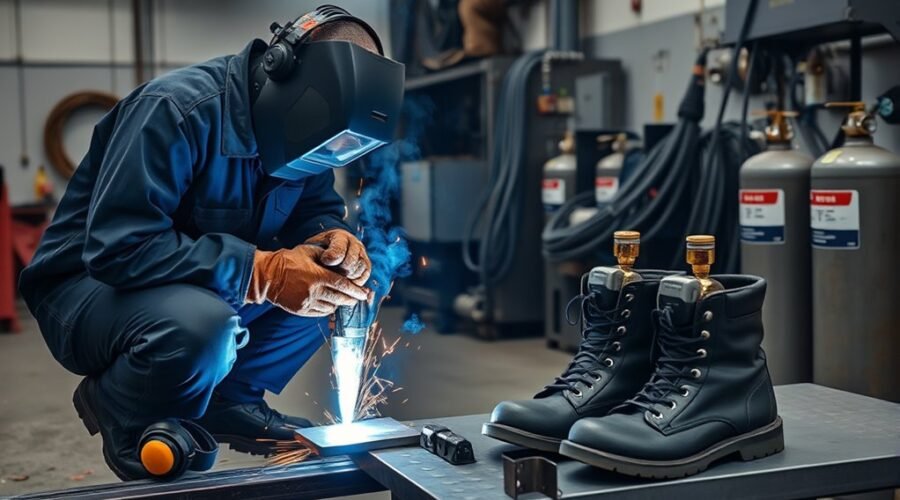
Welding safety depends on controlling electric shock, toxic fumes, fire, burns, flying slag, and UV exposure. Safe welders use flame-resistant clothing, heat-resistant gloves, steel-toed boots, and a helmet with the correct shade lens. Eye and face protection should include a helmet, goggles, and intact lenses. Shops need strong ventilation, grounded equipment, cleared flammables, and fire barriers. Good storage, inspection, and signage reduce injuries, and longer welds require constant awareness of heat and fumes.
Key Takeaways
- Welding hazards include electric shock, toxic fumes, fire, intense heat, flying slag, and ultraviolet radiation.
- Wear flame-resistant clothing, a welding helmet, heat-resistant gloves, steel-toed boots, and a respirator when fumes build up.
- Use proper eye and face protection, including a correct-shade helmet, safety goggles, and clear retainer lenses.
- Prevent fumes, fires, and shocks with local exhaust ventilation, clear flammable materials, good grounding, and regular equipment inspection.
- Follow shop rules by keeping pathways clear, marking hot work areas, removing combustibles, and inspecting PPE before each use.
What Are the Main Welding Hazards?
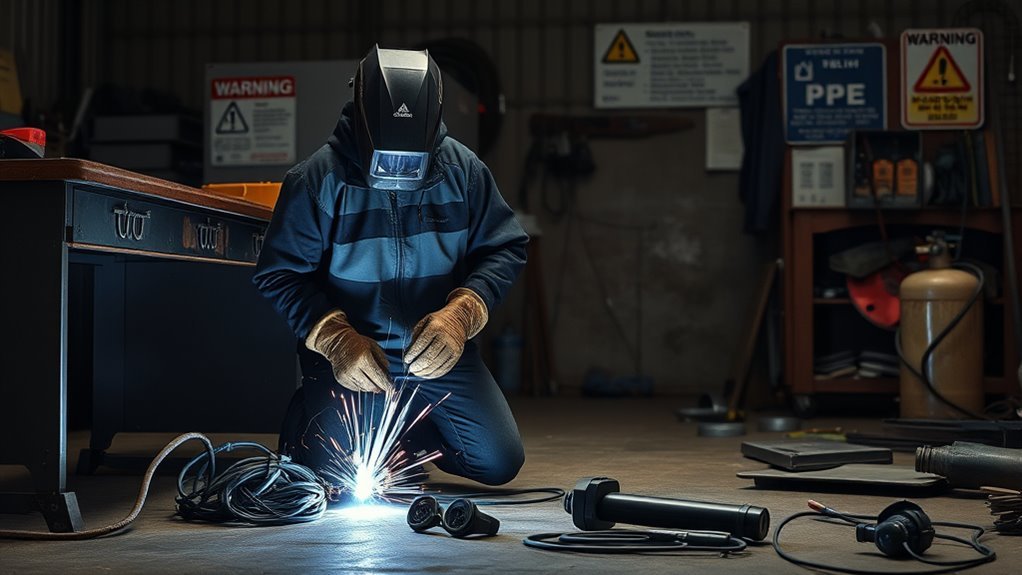
Welding presents several serious hazards that must be controlled to prevent injury and property damage.
Welding Safety depends on recognizing electric shock, toxic fumes, fire hazards, burns, and eye damage before work begins. Current can pass through a body when metal parts are touched without proper grounding, making insulation essential.
Fumes from manganese, zinc, and other metals can injure lungs and increase long-term disease risk, so ventilation and respiratory protection are necessary.
Fumes from manganese, zinc, and other metals can harm lungs; ventilation and respiratory protection are essential.
Sparks can travel far enough to ignite combustibles, so a cleared work area and fire barriers reduce danger.
Extreme temperatures from the arc can exceed 10,000°F, creating severe burn risks and igniting nearby materials.
Flying slag, sharp edges, and ultraviolet radiation add further hazards.
Effective personal protective equipment (PPE), including eye protection, supports worker freedom by allowing welding to proceed with disciplined control rather than avoidable harm.
What Welding Safety PPE Do You Need?
Proper welding PPE starts with flame-resistant clothing made from heavyweight, tightly woven 100% cotton or wool to reduce burn risk from sparks and heat. This personal protective equipment (PPE) forms the baseline for health and safety in any welding space.
A welding helmet with the correct filter shade is required for eye protection and face shielding against UV radiation, infrared exposure, and flying debris. Heat-resistant gloves should fully cover hands, wrists, and lower forearms; heavy-duty leather gloves are preferred for high-amperage work to limit burns and electric shock.
Steel-toed boots, ideally ankle-height, protect against falling objects, sparks and molten metal, and hot debris entering the footwear. A respirator may be necessary where fumes accumulate, supporting cleaner breathing conditions.
Each item serves a specific control measure. When worn together, these protections reduce exposure, preserve mobility, and support a safer, more liberated welding practice.
How to Protect Your Eyes and Face?
Eye and face protection must begin with a welding helmet fitted with the correct filter shade, typically in the 10 to 14 range, to block harmful UV and infrared radiation during welding operations.
Welding eye protection starts with the right helmet shade, typically 10 to 14, blocking harmful UV and infrared radiation.
A welding helmet should also have an impact-resistant shell and a clear retainer lens so broken filter fragments cannot reach the eyes. For added eye protection, safety goggles with side shields should be worn beneath the helmet to guard against flying sparks and hot slag.
Face shields may supplement, but they do not replace the helmet during active welding. Equipment must be inspected, cleaned, and replaced when damaged to preserve visibility and protection.
CSA standard Z94.3-20 should guide selection, including Class 3 helmets for arc welding.
- Check the filter shade before every task.
- Verify side shields and retainer lens integrity.
- Replace scratched or cracked gear immediately.
How to Prevent Fumes, Fire, and Electric Shock?
Effective control of welding fumes, fire, and electric shock begins with engineered safeguards and disciplined work practices. Adequate ventilation, especially local exhaust at the welding area, removes fumes and helps maintain safe oxygen levels. Air quality should be monitored routinely so toxic fumes and gases are detected early.
Fire prevention depends on removing flammable materials at least 35 feet away and using fire-resistant barriers to contain sparks and hot slag. Before work starts, all equipment and cables should be inspected for damage, and grounding should be verified to reduce electric shock hazards.
Workers should wear personal protective equipment (PPE), including flame-resistant clothing, gloves, and respiratory protection, to limit exposure to heat, fire, and inhalation risks. Training must reinforce these safety practices so each operator can weld with greater control, reduced danger, and more freedom from preventable harm.
What Welding Shop Rules Prevent Injuries?
Safe welding shops rely on strict rules that reduce preventable injuries before work begins. A clear standard keeps welding operations orderly, protects workers, and supports safe welding across the shop.
Equipment must be stored so pathways stay free of cables, scrap, and other tripping hazards. Personal protective equipment (PPE) requires inspection before each use; gloves, helmets, flame-resistant clothing, and safety glasses must remain in serviceable condition, because protection required is only effective when gear is intact.
- Mark work areas and implement clear signage for hot metal and other hazards.
- Remove combustible materials from designated welding zones and use fire-resistant barriers when needed.
- Foster a culture of accountability so workers report violations and review procedures without fear.
These rules strengthen discipline, limit exposure, and preserve freedom to work with confidence.
How to Stay Safe During Long Welds
Long welding sessions require the same discipline that supports a well-run shop, but endurance adds its own risks. To protect health, the welder should follow safety guidelines that limit fatigue and preserve focus.
| Practice | Purpose |
|---|---|
| 5-10 minute breaks each hour | Reduce fatigue |
| Hydration and nourishment | Sustain performance |
| Clutter-free workspace | Prevent trips |
| Proper ventilation | Cut exposure to fumes |
Personal protective equipment (PPE) remains essential, but it is not enough alone. The welder should wear appropriate gear, keep the workspace orderly, and use ergonomic tools to reduce strain. Frequent posture changes help prevent repetitive stress injuries, especially during extended passes. Proper ventilation is critical to limit exposure to fumes and gases. With steady breaks, water, food, and organized tools, the operator can work with greater freedom from preventable harm, maintaining control over the weld and the body throughout the shift.
Frequently Asked Questions
What Are the Safety Rules for Welding Shops?
Welding shops require welding ventilation systems, fire prevention measures, electrical safety practices, protective equipment types, workspace organization tips, hazard communication standards, first aid procedures, training certifications required, equipment maintenance protocols, and emergency evacuation plans.
What Are the 7 Welding Hazards?
Seven welding hazards include arc flash, fume exposure, fire risks, electrical shock, eye damage, noise hazards, and heat stress; chemical burns, manual handling strains, and equipment failure also demand vigilant prevention and disciplined control.
What Are the 10 Welding Safety Rules?
Ten welding safety rules: like a shield against sparks, the operator follows safety training, wears protective clothing and eye protection, maintains welding equipment, uses ventilation systems, practices fire prevention, knows first aid, emergency procedures, hazard communication.
Why Do Welders Drink Milk After Welding?
Welders drink milk for perceived Health benefits, Calcium sources, Welding hydration, and Post welding recovery; some cite Dairy nutrition, Milk alternatives, Industry practices, Personal preferences, Cultural significance, and Nutritional myths, though safety controls remain primary.
Conclusion
Welding safety demands constant attention to hazards, PPE, and shop discipline. Proper eye and face protection, ventilation, grounding, and fire prevention reduce risks that can turn a routine task into a catastrophe of epic scale. Clear rules, regular inspections, and controlled work habits help prevent injury during long welds. When every precaution is treated as essential, welders protect themselves, their coworkers, and the quality of every finished job.