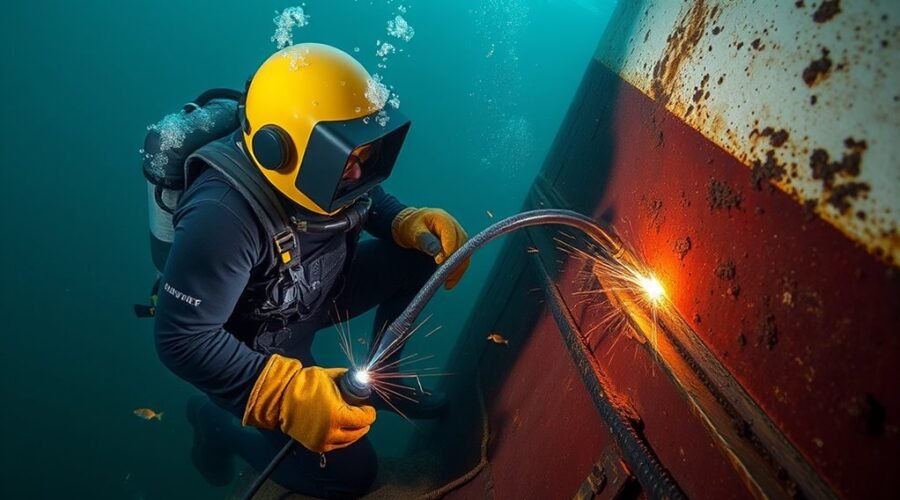
Underwater welders repair and build submerged metal structures on ships, pipelines, and offshore platforms. They usually start with welding training, then add commercial diving certification and safety instruction. Entry-level pay is often about $40,000 to $60,000, while experienced welders can earn $80,000 to $150,000 or more with hazard pay and overtime. The job carries serious risks, including drowning and decompression sickness, but strong training and certifications make it a rewarding path with more to explore.
Key Takeaways
- Underwater welders repair and maintain submerged structures like ships, pipelines, and offshore platforms using wet or dry welding methods.
- Entry-level pay is typically $40,000–$60,000, while experienced welders can earn $80,000–$150,000+ with overtime and hazard pay.
- The work is dangerous, with risks including drowning, decompression sickness, poor visibility, and electrocution.
- To get certified, earn welding skills and certifications, then complete commercial diving school and required physical and safety training.
- Extra credentials like AWS or underwater welding certifications can improve job prospects, advancement, and access to higher-paying roles.
What Does an Underwater Welder Do?
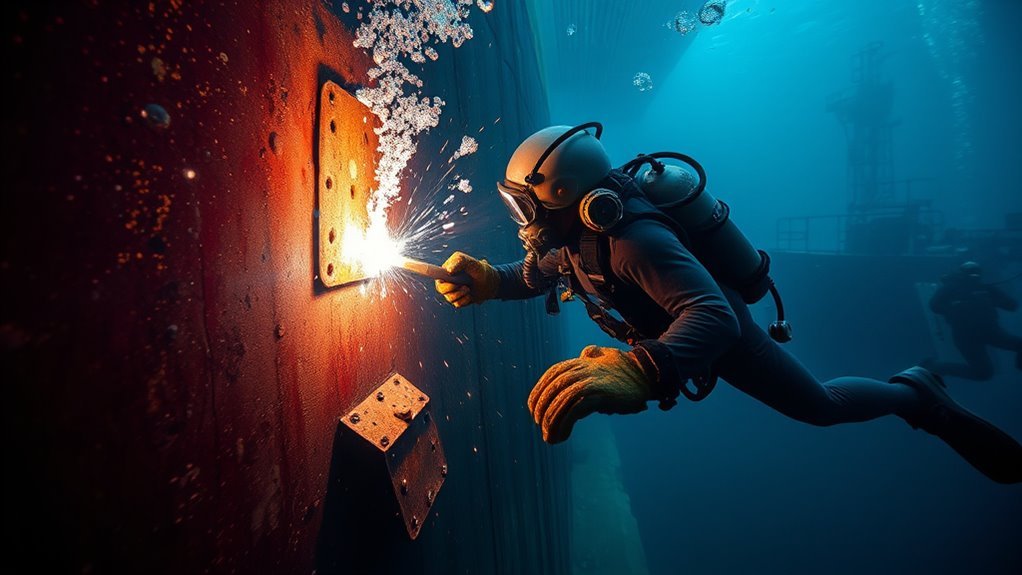
Underwater welders repair, maintain, and help construct submerged metal structures such as ships, pipelines, and offshore platforms. Their work combines welding with underwater commercial diving to support infrastructure maintenance where ordinary crews cannot reach.
Depending on the task, they use wet welding or dry welding, with wet welding often chosen for its lower cost and practical speed. The role demands certification in both welding and diving, plus specialized training in safety protocols and dive planning.
In extreme conditions, they may inspect joints, patch leaks, replace sections, and reinforce critical structures at offshore oil rigs, ships, and industrial sites. The work is demanding, yet it serves a clear purpose: keeping essential systems strong, functional, and safe.
For those drawn to skilled labor with real impact, underwater welding offers a disciplined path where competence, courage, and preparation can open space for meaningful work.
How to Become an Underwater Welder
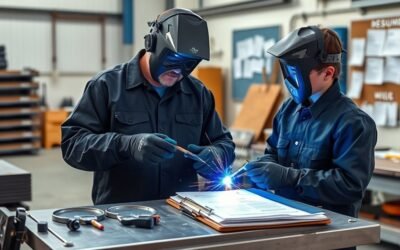
The path to underwater welding begins with strong welding skills, usually built through a high school diploma or GED followed by focused training in MIG, TIG, and stick welding.
From there, commercial diving training becomes essential, since it teaches the safety, endurance, and underwater techniques needed for the job.
With steady preparation and the right certifications, a motivated person can move confidently toward this specialized career.
Welding Skills First
Building a foundation in welding comes first for anyone aiming to become an underwater welder. A high school diploma or GED opens the door to welding training programs, where the core welding skills are built through MIG, TIG, stick, and pipe welding. These welding techniques can often be learned in 9–10 months, giving a practical start to the skills needed for the field.
- Complete foundational welding training
- Earn welding certifications
- Prepare for commercial diving school
Once a learner is certified in welding, the next step is a commercial diving school, often after diver certification. Both welding and underwater welding certification matter for job access.
Continued study strengthens safety, freedom, and long-term growth in a demanding trade.
Commercial Diving Training
After completing foundational welding training and earning the necessary welding certification, candidates can move on to commercial diving school, where they learn the underwater skills required for the trade.
This commercial diving training adds practical control in underwater environments, blending specialized welding with safety, buoyancy, and communication. Programs usually teach core welding techniques such as MIG, TIG, and stick welding in about 9 to 10 months.
Admission is competitive, often favoring applicants with sports diver certification and space in limited slots. Recognized certifications from AWS and a commercial diving credential are standard, and a physical exam is usually required.
The work is physically and mentally demanding, yet it opens a strong career path. Continued study, plus endorsements like NDT or Hazmat Diving Certification, can improve job postings for underwater and support greater earning freedom.
How Much Do Underwater Welders Make?
Underwater welders often begin with annual pay in the $40,000 to $60,000 range, offering a solid starting point for a specialized trade.
With experience, earnings can rise to $80,000 and beyond $150,000, especially for saturation divers working at extreme depths.
Extra compensation from hazard pay, per diem, and overtime can further strengthen overall income.
Entry-Level Pay Range
Entry-level underwater welders can typically expect to earn between $40,000 and $60,000 a year, with pay varying based on location, employer, and project demands. This entry-level pay range offers a practical start for underwater welders entering commercial diving, especially those holding a certified welder credential.
- Local demand can lift salaries in busy coastal regions.
- Infrastructure maintenance work may provide steadier entry-level opportunities.
- Specialized assignments can improve pay while building experience.
These salaries can support a path toward independence, while helping workers develop confidence in a specialized trade.
As demand grows for offshore projects and maintenance, new entrants may find more openings and stronger negotiating power. For those willing to train, work safely, and stay adaptable, underwater welding can become a solid foundation for a freer financial future.
Experienced Earnings Potential
As experience grows, underwater welders can see earnings rise sharply, with many moving from the $40,000 to $60,000 entry range into salaries of $80,000 to more than $150,000 a year.
This experienced earnings potential reflects the value of specialized skills, steady certification, and proven reliability in demanding conditions. Among commercial divers, the average annual wage is about $76,000, yet skilled underwater welders often exceed that figure as they build competence and reputation.
Demand for underwater welders is expected to keep rising because aging bridges and offshore projects need ongoing maintenance. That outlook supports real career advancement for those willing to train, adapt, and work with discipline.
For people seeking independence through skilled labor, the field offers a clear path to stronger salary growth and greater opportunity.
Extra Pay Factors
Pay for underwater welders can rise well beyond base wages when extra factors come into play. For many underwater welders, extra pay factors include hazard pay, overtime, and per diem support in remote jobs. These additions can lift earning potential from the standard $40,000-$60,000 range toward far higher totals for skilled hands.
- Saturation diving at extreme depths often brings premium rates.
- Certifications such as NDT or Commercial Diving Supervisor can open better roles.
- Offshore maintenance and infrastructure projects may add demand, boosting pay.
With growing need for repair work, the field offers a path toward greater freedom and stronger income. Those who build certifications and accept challenging assignments can move toward pay that reflects their skill, risk, and readiness.
Dry Vs. Wet Underwater Welding
Underwater welding is generally divided into wet and dry methods, each suited to different conditions and priorities.
Wet welding places underwater welders directly in marine environments, using waterproof electrodes and specialized tools for quick structural repairs. It is practical, faster to deploy, and less costly, making it useful when urgency matters. However, wet welding usually delivers lower weld quality and reduced visibility than dry welding.
Dry welding, also called hyperbaric welding, takes place inside a controlled chamber that keeps the work area dry. That setup supports better visibility, cleaner welds, and higher weld quality, which is why it is favored for critical work such as offshore pipelines. The tradeoff is added setup time and expense.
In practice, the best choice depends on project needs, environmental conditions, and the level of weld integrity required. For workers seeking freedom through skill, understanding both methods opens more paths to solid, dignified work.
Underwater Welding Safety Risks
Safety remains one of the biggest concerns in underwater welding, where even skilled commercial divers face hazards such as drowning, decompression sickness, poor visibility, and electrocution. These safety risks shape every job and demand disciplined preparation. In U.S. records, 39 commercial diver fatalities from 2011 to 2017 show how serious the work can be.
- Low visibility can hide defects, obstacles, and moving equipment.
- Electric welding tools in wet conditions increase electrocution danger.
- Life support equipment, including oxygen supplies and diving suits, must be maintained.
Decompression sickness can follow rapid ascent, so pressure changes must be managed carefully. With the right certification, training, and respect for procedures, underwater welding becomes more controllable, not risk-free.
Proper checks, steady communication, and reliable gear help divers protect themselves while keeping access to essential underwater work and the freedom to earn in a demanding field.
Underwater Welding Certifications to Get
Building a career in this field requires proof of competence in both welding and commercial diving. For aspiring underwater welders, the most important certifications begin with the Commercial Diver Certification, which teaches diving physics, safety rules, and emergency protocols.
A Certified Welder credential then confirms skill in core welding techniques such as SMAW and TIG, showing employers that the diver can produce sound work under pressure. A specialized Underwater Welding Certification adds wet and dry welding methods, strengthening confidence for demanding repair jobs.
First Aid and CPR Certification is equally practical, because dive teams must respond quickly to emergencies and may need oxygen administration training. For greater mobility, AWS Certified Welding Inspector training can open supervisory paths in welding inspections.
Together, these certifications help workers build freedom, credibility, and safer opportunities in a challenging trade.
Frequently Asked Questions
How Do You Get Certified in Underwater Welding?
They get certified through accredited training programs, completing the certification process with welding and diving exams, mastering equipment requirements, safety standards, risk management, skill development, and industry regulations, which opens job opportunities and supportive advancement.
Do Underwater Welders Make $100 an Hour?
Yes, some do. Underwater welding salary expectations can reach $100 an hour for elite saturation roles, though most job opportunities pay less. Strong safety measures, demanding work environments, equipment requirements, career progression, and industry demand shape earnings.
How Much Does It Cost to Get an Underwater Welder Certification?
Certification expenses range from about $50 to $15,000; like a ladder to freedom, Training programs, Course duration, Equipment costs, and Certification validity shape the total. Financial aid, Industry demand, and Job placement can ease the climb.
Can You Make $200,000 as a Welder?
Yes, a welder can reach $200,000 with advanced welding techniques, steady industry demand, and strong career advancement. Specialized training programs, careful equipment safety, awareness of underwater hazards, and sought-after job opportunities raise salary expectations considerably.
Conclusion
In the deep blue depths, underwater welders blend bravery with skill, bridging broken metal where sea and structure meet. Their work demands discipline, dry training, and dependable certification, yet it can reward with steady pay and purposeful pride. Though dangers lurk in dark waters, careful preparation and safety habits help keep each dive secure. For those drawn to challenging careers, underwater welding offers a sturdy, striking path beneath the surface.