The Miller Digital Infinity is one of the best welding helmets for visibility: it has a 13.4 square inch viewing area, ClearLight 4X lens technology, four arc sensors and AutoSense. It is worth the money for people who weld daily or need to see detail on MIG and TIG work.
We reviewed it using the Amazon listing, Miller product information and our understanding of how welders use these features in the shop.
We research every product using manufacturer specifications, published manuals and owner feedback. As an Amazon Associate, GenuineWelding earns from qualifying purchases at no extra cost to you. Prices change often, so check the current price before you buy.

Miller Digital Infinity Welding Helmet, ClearLight 4X
13.4 sq in viewing area with ClearLight 4X and four arc sensors
Key Specs
| Spec | Detail |
|---|---|
| Viewing area | 13.4 sq in |
| Lens technology | ClearLight 4X |
| Arc sensors | 4 independent sensors |
| Modes | Weld, Cut, Grind and X-Mode |
| AutoSense | Automatic sensitivity adjustment |
| InfoTrack 2.0 | Tracks arc time and arc count |
Viewing Area and Lens Quality
The listing calls the 13.4 square inch window an industry-leading size, and the ClearLight 4X lens aims for a brighter, more natural color view of the puddle and joint. A large, clear window helps when you are welding in tight positions and need to see where the joint goes.
Modes and Sensors
Four arc sensors help the lens respond even when a sensor is blocked. X-Mode senses the weld electromagnetically, which reduces sunlight interference and keeps the helmet working outdoors or in tight spaces. Weld, Cut and Grind modes let you use one helmet for a variety of tasks, and AutoSense adjusts sensitivity to your environment.
InfoTrack 2.0
InfoTrack 2.0 tracks arc time and count. That data is useful for quoting jobs and checking productivity, though casual hobbyists may never use it.
Who Should Spend This Much?
If you weld daily, a premium helmet is a worthwhile investment because you will notice the clarity every day. If you weld on weekends, a cheaper helmet from our best welding helmets under $200 list may be enough. See how it compares in our Miller helmet roundup, and read the Digital Elite review for the lighter alternative.
How the Infinity Compares
The Infinity competes with other premium helmets that promise clear optics and big windows. Here is how they stack up using each manufacturer’s Amazon listing:
| Helmet | Viewing area | Lens | Sensors | Stand-out features |
|---|---|---|---|---|
| Miller Digital Infinity | 13.4 sq in | ClearLight 4X | 4 | X-Mode, AutoSense, InfoTrack 2.0 |
| Miller Digital Elite | Smaller than Infinity (Miller does not list it on Amazon) | ClearLight 4X | 4 | X-Mode, AutoSense, InfoTrack 2.0, quick-release lens |
| Lincoln Viking 3350 | 12.5 sq in | 4C, 1/1/1/1 clarity | Not listed | X6 headgear, 5-year warranty |
| ESAB Sentinel A60 | 4.65 x 2.80 in (about 13 sq in) | OpTCS true color | 4 | Shade 3/5-13 in 0.5 steps, 9 memory settings |
The Infinity’s main advantage is the 13.4 sq in window, the largest in this group. The Lincoln Viking 3350 is close behind and stands out for its five-year warranty, while the ESAB Sentinel A60 adds memory presets and fine half-shade steps.
Alternatives Worth Considering
If the Infinity is more than you need, or you want a different brand, these are the closest rivals:

Miller Digital Elite
Same ClearLight 4X lens, sensors and X-Mode in a smaller, lighter-feeling helmet.
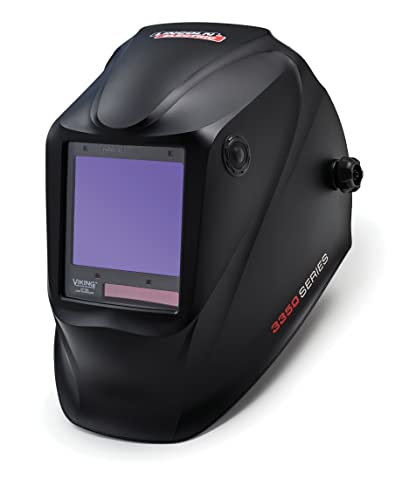
Lincoln Electric Viking 3350
12.5 sq in 4C lens with 1/1/1/1 clarity and a five-year warranty.

ESAB Sentinel A60
Four sensors, true-color lens, 0.5-step shade control and nine memory settings.
Setting Up the Infinity for Best Results
- Fit the headgear first. Adjust the crown strap and ratchet so the helmet sits level and the lens is close to your eyes without touching your nose.
- Choose the shade from the arc, not habit. Use a shade chart for your process and amperage. Low-amp TIG usually needs a lighter shade than high-amp stick or flux-core.
- Set sensitivity and delay. AutoSense handles sensitivity for you on the Miller digital line, but set a longer delay for high-amp work so the lens does not open while the puddle is still glowing.
- Use X-Mode outdoors. It senses the arc electromagnetically, so sunlight and blocked sensors do not cause flicker.
- Replace cover lenses regularly. Spatter-pitted clear covers make any lens look worse. Keep spares on hand.
Who Should Skip It
If you weld a few hours a month on a hobby project, the Infinity is more helmet than you need. A mid-range helmet with true-color optics and four sensors costs much less and protects you just as well. See our YESWELDER helmet review for a budget option. Pipeliners who work in tight spaces may also prefer a smaller hood, such as a leather pipeline hood. Read our Outlaw leather hood review.
Pros and Cons
Pros
- Huge viewing area
- ClearLight 4X is bright and clear
- Four sensors and X-Mode for blocked-sensor situations
- Tracks arc time and count
Cons
- High price
- Large lens makes the helmet bulkier than compact designs
- Many graphics options cost more
Who Should Buy It
professional and serious hobby welders who want a big clear view for MIG, TIG and grinding.
Alternatives to Consider
- Lighter premium option: Miller Digital Elite.
- Budget picks: best welding helmets under $200.
- Other brands: Jackson welding helmets and Lincoln welding helmets.
FAQs
How big is the Miller Digital Infinity viewing area?
The listing gives a 13.4 square inch viewing area.
What is ClearLight 4X?
It is Miller’s lens technology designed to give a brighter, more realistic color view of the weld.
Does the Digital Infinity work for TIG?
Yes. The listing says it is suited to MIG, TIG and grinding, with four arc sensors and X-Mode for low-amp or blocked-sensor situations.
What does X-Mode do?
X-Mode electromagnetically senses the weld, so the helmet can still darken when sunlight or blocked sensors might otherwise interfere.
Is the Digital Infinity worth it over the Digital Elite?
Choose the Infinity for the largest window and the Elite for a lighter helmet. See our Elite review for details.
Is the Miller Digital Infinity better than the Lincoln Viking 3350?
The Infinity has a slightly larger 13.4 sq in window and X-Mode, while the Viking 3350 offers a 12.5 sq in lens and a five-year warranty. Both use high-clarity lenses, so fit and features matter more than optics.
Does the Infinity work outdoors?
Yes. X-Mode senses the arc electromagnetically, which helps prevent sunlight interference and keeps the lens dark if sensors are blocked.
Final Verdict
The Miller Digital Infinity is an excellent helmet if visibility is your priority. The window is huge, the lens is clear and the feature set is strong. If you weld every day and can afford it, buy it. Check the current price on Amazon.
Sources
- Miller Digital Infinity listing
- Miller Electric welding helmets
- OSHA: eye and face protection in welding