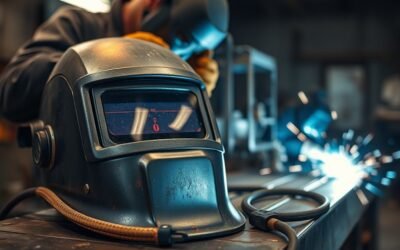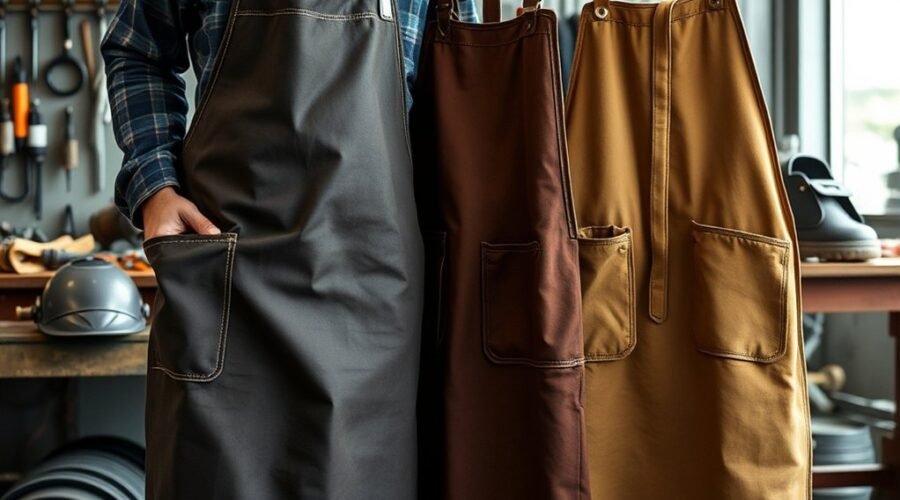
A welding apron adds a durable barrier between the front of your body and sparks, spatter, hot slag, radiant heat, and abrasion. The right choice depends on the welding process, how much spatter you produce, your working position, and how long you wear it. Leather, flame-resistant fabrics, coverage, straps, seams, and pocket design all matter, but an apron should always be treated as one part of a complete welding PPE setup.
Quick Answer
Choose a welding apron that provides enough flame-resistant coverage for your actual spark, spatter, and heat exposure without restricting movement. Leather is commonly used for heavier MIG, stick, flux-core, grinding, and high-spatter work, while lighter FR fabrics can improve comfort for lower-spatter tasks. Prioritize secure fit, covered pockets, strong seams, and undamaged material.
Key Takeaways
- Match the apron to the hazard rather than assuming one material is best for every welding process.
- Leather is a practical choice for heavier sparks, spatter, radiant heat, and abrasion; FR fabric may be more comfortable where exposure is milder.
- Coverage should protect the chest, abdomen, lap, and upper legs that are actually exposed during your normal working positions.
- Cross-back or otherwise well-designed adjustable straps can distribute weight and reduce neck strain.
- Avoid open pockets, damaged seams, burn-through, holes, and contamination with oil, grease, or solvents.
- An apron does not replace a welding helmet, eye protection, gloves, appropriate clothing, footwear, ventilation, or other PPE required by the task.
What a Welding Apron Protects
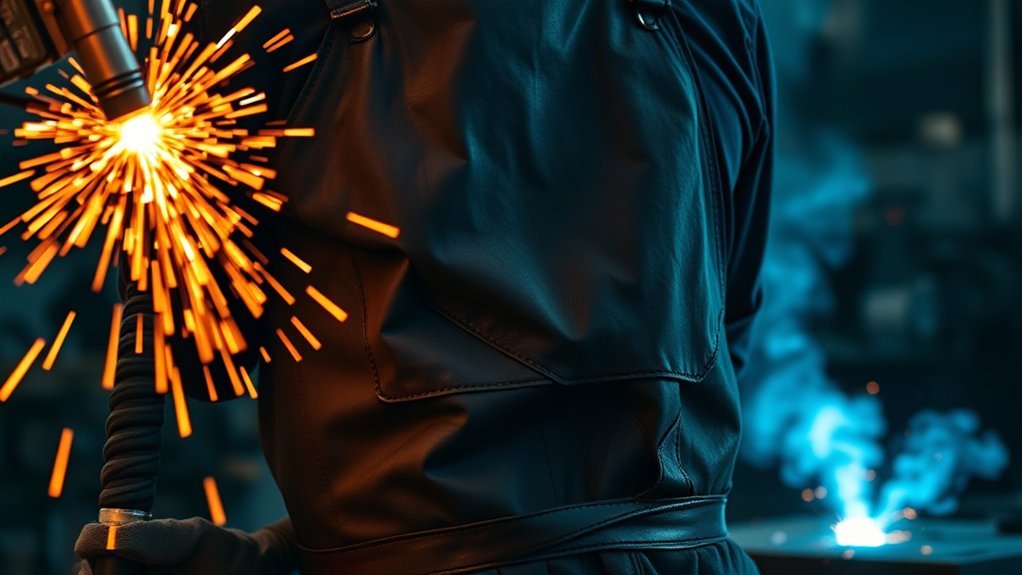
A welding apron protects the front of the chest, abdomen, lap, and upper legs from hazards such as sparks, spatter, slag, radiant heat, and abrasion. The American Welding Society’s ANSI Z49.1:2021 welding safety standard states that durable flame-resistant aprons should be used when additional front-body protection against sparks and radiant energy is needed.
The amount of protection required depends on the work. OSHA’s welding requirements explain that appropriate protective clothing varies with the size, nature, and location of the welding, cutting, or brazing operation. That makes hazard level more important than choosing an apron by appearance or material name alone.
Warning: A welding apron is supplemental PPE. It does not replace a welding helmet, safety glasses, welding gloves, suitable flame-resistant clothing, protective footwear, hearing protection where needed, or ventilation and respiratory controls required for the job.
Coverage also has to remain useful while you move. The apron should protect exposed areas while standing, sitting, crouching, leaning, or reaching without creating loose material that can catch on equipment.
A well-fitted apron works together with jackets, gloves, sleeves, and other protective equipment. For workers comparing heavier apron designs, full-grain leather materials are one available construction option, but leather grade alone does not determine protection. Thickness, coverage, seams, condition, and suitability for the hazard also matter.
Choose the Right Welding Apron Material
Material selection should start with the amount of sparks, molten spatter, radiant heat, abrasion, and wear expected during the job. Heavier protective materials generally tolerate harsher exposure better, while lighter flame-resistant materials can improve mobility and comfort when the hazard is lower.
Leather Welding Aprons
Leather is widely used for welding aprons because it resists sparks, spatter, abrasion, and heat better than ordinary work clothing. Split leather is common in welding PPE and can provide a useful balance of durability, flexibility, and cost. Grain leather is another option, but neither label automatically makes one apron suitable for every welding application.
For high-spatter MIG, stick, flux-core, grinding, or similar work, a properly constructed leather apron can offer valuable front-body protection. The exact level of protection still depends on material thickness, seams, coverage, design, and condition.
FR Cotton and Other FR Fabrics
Flame-resistant cotton is lighter and more breathable than many all-leather garments. Manufacturer guidance from Miller notes that FR cotton can provide a useful combination of comfort, cost, and protection where sparks and spatter are relatively mild, while also warning that it is not adequate for every welding application.
That makes flame-resistant cotton useful for some lower-spatter work, including certain TIG and light-fabrication tasks, provided the garment is appropriate for the actual hazard.
Ordinary cotton or heavy denim should not automatically be treated as equivalent to purpose-built welding PPE. Natural fibers do not melt like common polyester or nylon clothing, but untreated material can still ignite, char, or smolder under sufficient heat or sparks.
Synthetic and Hybrid Materials
Avoid ordinary meltable synthetic clothing such as common polyester, nylon, acrylic, or similar blends in welding exposure unless the garment has been specifically engineered and rated for the hazard. The Canadian Centre for Occupational Health and Safety warns that common synthetic fabrics can burn, melt, and cause serious skin burns.
At the same time, not every man-made fiber is unsuitable. Specialized inherently flame-resistant materials and hybrid garments are made specifically for thermal hazards. The important distinction is between ordinary clothing and protective garments designed for welding or comparable hot work.
Hybrid designs can combine leather in high-exposure areas with lighter flame-resistant fabric where more flexibility or airflow is useful.
Choose the Right Apron Coverage
Apron coverage should match the areas exposed during the actual task. A common full-length welding apron protects from the upper chest down over the abdomen, lap, and upper legs. A shorter apron may improve mobility, but it also leaves more of the lower body dependent on other protective clothing.
Full Vs Half Coverage
Full welding aprons provide broader front-body protection and are often a practical choice for jobs with frequent sparks or spatter. They can be especially useful during MIG, stick, flux-core, grinding, and fabrication work where hot particles may reach the lap or thighs.
Half aprons protect less area but may interfere less with bending, kneeling, or frequent movement. They are better treated as a task-specific option rather than a substitute for sufficient protective clothing.
The correct choice is the one that leaves no important exposure gap during the positions you actually use.
Chest To Knee Length
Chest-to-knee coverage is a useful practical target for many full-length aprons because it protects much of the front torso, lap, and upper legs. It is not, however, a universal requirement for every welding operation.
A shorter or longer apron may be appropriate depending on the process, work height, body position, spatter direction, and other PPE being worn. OSHA’s general PPE rule requires equipment to be selected for the identified hazard and to fit the worker properly.
Check the apron while standing, seated, crouching, and leaning. The lower edge should not ride so high that the lap or thighs become exposed, and the apron should not be so long or loose that it creates a trip or snag hazard.
Position-Specific Protection Needs
MIG, stick, and flux-core welding can create enough sparks and spatter to justify heavier front-body protection, especially when the work directs hot material toward the torso or lap.
TIG welding generally produces less spatter, so some operators can use lighter flame-resistant protective clothing when the overall hazard assessment supports it. The arc still produces intense optical radiation and heat, so exposed skin remains unacceptable.
During grinding, sparks can enter open pockets or strike seams repeatedly. Covered, side-entry, or otherwise protected pockets are preferable to open upward-facing pockets.
For overhead welding or work that sends sparks onto the shoulders, arms, neck, or head, an apron alone is not enough. Additional jackets, cape sleeves, shoulder protection, hoods, or other suitable PPE may be required.
Workers who need additional arm coverage can also consider flame-resistant welding sleeves as part of a task-appropriate PPE system.
Get the Right Welding Apron Fit
A welding apron should fit securely enough to stay in place without restricting breathing, bending, arm movement, or access to tools. Adjustable straps make it easier to position the chest panel and control how the apron sits across the torso and legs.
Cross-back designs can distribute weight across the shoulders and back instead of placing most of it on the neck. This can be especially useful with heavier leather aprons worn for long periods.
Check the fit in every position you normally use:
- Stand upright and reach both arms forward and overhead.
- Sit as you would at a welding bench.
- Crouch or kneel if the job requires it.
- Lean toward the workpiece without allowing the apron to open large gaps.
- Confirm that straps, buckles, and hardware do not contact hot work or interfere with equipment.
Pro Tip: Do not judge apron fit while standing still in front of a mirror. Put on your normal welding clothing and gloves, then sit, crouch, reach, and lean exactly as you do at the bench. Coverage gaps often appear only after you change position.
Tool access should remain convenient, but pockets must not become spark traps. Worn straps, torn stitching, stretched holes, or damaged attachment points can also allow the apron to shift during work.
Check Welding PPE Standards and Labels
For U.S. workplaces, OSHA 29 CFR 1910.132 requires employers to assess hazards, select suitable PPE, and ensure that it properly fits affected workers. OSHA’s welding rule, 29 CFR 1910.252, separately states that protective clothing must be appropriate for the welding operation.
ANSI Z49.1:2021 from the American Welding Society provides welding-specific safety guidance. It calls for sufficient coverage, suitable materials, and durable flame-resistant aprons when additional front-body protection is needed.
For products sold to international standards, ISO 11611:2024 is the current published ISO standard for protective clothing used in welding and allied processes. It covers protective garments including aprons, sleeves, hoods, and gaiters and addresses hazards such as spatter, short flame contact, radiant heat, and welding-generated optical radiation.
Note: A standards reference on a product is useful only when it applies to the actual garment and hazard. Follow the manufacturer’s label, instructions, laundering limits, and replacement guidance rather than assuming every leather or FR-looking apron has the same performance.
Leather or FR Cotton?
Neither material is automatically right for every job. Choose between leather and FR fabric according to expected sparks, spatter, heat, abrasion, working time, and mobility.
| Factor | Leather | FR Cotton / FR Fabric |
| Sparks and spatter | Often preferred for heavier exposure | Best suited to exposure within the garment’s rating and design |
| Weight | Usually heavier | Usually lighter |
| Breathability | Lower in many designs | Generally better |
| Abrasion resistance | Often strong | Depends strongly on fabric and construction |
| Typical use | High-spatter welding, grinding, fabrication | Lower-spatter work where lighter weight and mobility are useful |
Leather aprons, especially common split-leather designs, are often selected for MIG, stick, flux-core, and other jobs with substantial spatter or abrasion. FR cotton can be more comfortable in hot environments and during lower-spatter work, including some TIG applications.
Whichever material you choose, the rest of the PPE system still matters. Suitable welding gloves protect the hands and wrists, while the apron primarily protects the front of the torso and legs.
Check the Final Details Before You Buy
Before buying or using an apron, inspect the details that determine whether it will stay protective in real work.
Inspect Material, Seams, and Hardware
- Look for holes and burn-through: Pinholes, cuts, thin spots, or charred areas can create direct exposure paths.
- Check stitching: Loose, broken, or heavily burned seams can allow panels to separate.
- Inspect straps and buckles: They should hold securely without slipping during movement.
- Check pocket direction: Avoid open upward-facing pockets that can collect sparks or hot metal.
- Confirm useful coverage: Make sure the chest, abdomen, lap, and exposed upper legs remain protected in your normal positions.
- Check comfort: Excessive weight, poor balance, or restricted movement can make consistent PPE use less likely.
Cross-back harnesses can help distribute the weight of heavier aprons. Reinforced high-stress areas can also improve service life, although construction quality matters more than decorative rivets or extra layers that do not protect an exposed zone.
Other PPE should receive the same attention. For example, helmet fit and optical clarity affect how well you can see and work while maintaining face and eye protection.
Keep the Apron Clean and Serviceable
Keep protective clothing free of oil, grease, solvents, and other combustible contamination. OSHA hot-work guidance notes that leather or other fire-retardant garments provide protection when they are free of flammable or combustible materials, and AWS also warns that contamination can reduce protective qualities.
Follow the manufacturer’s cleaning instructions. FR fabrics can lose performance if they are washed with products that damage the treatment, while leather requires care appropriate to the specific product. Do not improvise with oils, waxes, conditioners, or solvents unless the apron manufacturer says they are compatible with the protective garment.
Allow wet gear to dry as directed before use. Inspect the apron regularly for holes, damaged stitching, stiff or cracked areas, worn straps, and heat damage. Replace it when damage can no longer be repaired without compromising coverage or protection.
The best welding apron is not simply the thickest or heaviest one. It is the apron that provides sufficient flame-resistant coverage for the actual hazard, fits properly, stays in position, and remains in serviceable condition.
Frequently Asked Questions
What Is the Best Type of Apron for Welding?
There is no single best apron for every welding job. A durable leather apron is often a strong choice for heavier sparks, spatter, abrasion, MIG, stick, flux-core, and grinding work. Lower-spatter applications may allow a lighter FR-fabric apron. Choose according to the process, heat, spatter direction, coverage, fit, and applicable workplace requirements.
What Type of Material Is Best for a Welding Apron?
Leather or another suitable flame-resistant material is appropriate when its construction and coverage match the hazard. Leather is commonly used for substantial sparks, spatter, heat, and abrasion. FR fabrics can reduce weight and improve breathability where the exposure is lower. Ordinary clothing should not be assumed to provide equivalent protection.
What Are the Different Types of Welding Aprons?
Common welding aprons include leather aprons, FR-fabric aprons, hybrid leather-and-fabric designs, full-length aprons, shorter waist aprons, and task-specific protective bibs. Differences in coverage, thickness, pocket design, straps, seams, and material determine where each style works best.
What Fabric Should You Not Wear When Welding?
Avoid ordinary meltable synthetic clothing such as common polyester, nylon, acrylic, acetate, and similar blends in areas exposed to welding heat and sparks. These materials can melt and worsen burn injuries. Use protective clothing suitable for the welding hazard, and follow the garment manufacturer’s instructions and applicable workplace requirements.
Is Leather Always Better Than FR Cotton for Welding?
No. Leather generally offers strong resistance to sparks, spatter, abrasion, and heat but is heavier and less breathable. FR cotton and other FR fabrics can be more comfortable for lower-spatter work. The correct choice depends on the hazard, garment rating, coverage, and the welding process.
Can a Welding Apron Replace a Welding Jacket?
Not when the arms, shoulders, back, neck, or other exposed areas also face sparks, spatter, heat, or arc radiation. An apron mainly adds front-body protection. Depending on the job, you may still need a welding jacket, sleeves, shoulder protection, gloves, helmet, protective footwear, and other PPE.
Conclusion
A welding apron works best when its material, coverage, fit, and condition match the actual welding hazard. Leather is often a practical choice for heavier sparks, spatter, heat, and abrasion, while suitable FR fabrics can reduce weight and improve comfort in lower-spatter work. Check coverage while moving, inspect seams and straps, keep the apron free of combustible contamination, and replace damaged gear before protection is compromised. Most importantly, use the apron as one part of a complete, task-appropriate welding PPE system.
Sources
- OSHA 29 CFR 1910.252 — Welding, Cutting, and Brazing — backs task-specific protective-clothing requirements.
- OSHA 29 CFR 1910.132 — Personal Protective Equipment — backs hazard assessment, PPE selection, fit, and maintenance requirements.
- ANSI Z49.1:2021 — Safety in Welding, Cutting, and Allied Processes — backs flame-resistant clothing, apron use, sufficient coverage, and contamination guidance.
- ISO 11611:2024 — Protective Clothing for Use in Welding and Allied Processes — backs current international requirements for welding protective clothing including aprons.
- CCOHS — Welding Personal Protective Equipment and Clothing — backs leather-apron use, pocket design, clothing inspection, and warnings about ordinary synthetic fabrics.
- Miller — How to Choose the Proper Welding Apparel for Safety — backs practical differences between FR cotton, leather, and hybrid welding apparel.