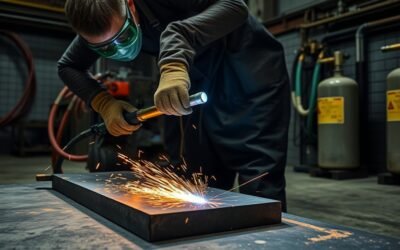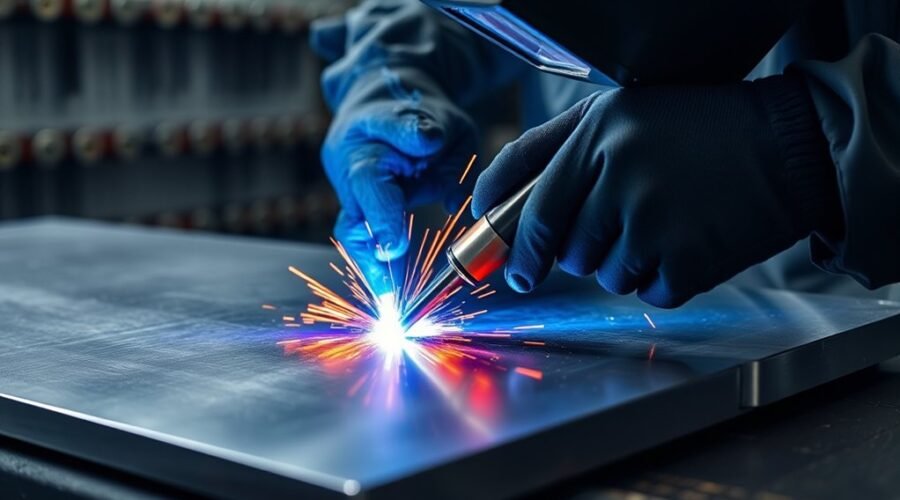
Stainless steel welding is less forgiving than mild-steel welding because many common stainless grades retain heat, expand significantly, and can lose corrosion performance when the weld area is overheated or contaminated. A sound joint starts with grade identification, clean dedicated tools, suitable filler and shielding, then finishes with proper weld cleanup. The goal is not simply to make the metals join, but to preserve the properties that made stainless steel useful in the first place.
Quick Answer
Stainless steel welding succeeds when you match the filler and process to the grade, keep the joint clean, and control heat. TIG gives the most control and cleanest appearance; MIG improves productivity. For common austenitic grades, ER308L suits 304/304L, ER316L suits 316/316L, and ER309L is commonly used for stainless-to-carbon-steel joints.
Key Takeaways
- Use stainless-only brushes, abrasives, and clean work surfaces to avoid iron contamination that can later show as rust.
- Keep the arc controlled and avoid unnecessary heat buildup, especially on thin austenitic stainless where distortion occurs easily.
- Protect the back side of full-penetration TIG welds when oxidation of the root would reduce corrosion resistance.
- Do not treat one shielding-gas blend as universal; TIG, solid-wire MIG, and stainless flux-cored wires have different requirements.
- Remove harmful heat tint, scale, slag, spatter, and embedded contamination before the part enters corrosion-sensitive service.
Understand Why Stainless Steel Welding Is Tricky
)
Stainless steel is readily weldable, but it reacts differently to heat than ordinary carbon steel. Common austenitic grades have relatively low thermal conductivity and high thermal expansion, so heat remains concentrated around the joint and distortion can develop quickly.
The British Stainless Steel Association’s welding guidance notes that TIG is especially useful where low current, low heat input, and a clean finish matter. MIG, flux-cored, submerged-arc, resistance, plasma, and laser processes also have useful stainless-steel applications.
Heat is only part of the problem. Oil, grease, iron particles from carbon-steel tools, unsuitable filler, poor shielding, or heavy root oxidation can all reduce weld quality and corrosion resistance.
A stainless weld can look sound yet still lose corrosion resistance if excessive oxidation, contamination, or damaging heat input is left uncorrected.
Sensitization is another concern in austenitic stainless. During an unfavorable thermal cycle, carbon can combine with chromium near grain boundaries. This reduces the chromium available locally to maintain corrosion resistance.
That is why filler chemistry and time at elevated temperature matter. The Miller stainless steel welding guide identifies roughly 500–800°C (932–1,472°F) as a typical sensitization range and recommends limiting time there through appropriate heat input and interpass control.
Warning: Stainless-steel welding can expose workers to hazardous fumes containing chromium and nickel. OSHA identifies stainless-steel welding as a source of hexavalent chromium exposure, while HSE recommends controlling welding fume at the source with suitable engineering controls such as local exhaust ventilation and additional respiratory protection where required.
Good preparation and process control give you much more influence over the finished joint. If you need one machine to cover several processes, understanding the capabilities of multi-process welders can also help you choose equipment that suits the job.
Choose the Right Stainless Steel Filler
The correct filler must suit the base grade, service environment, and welding procedure. Low-carbon “L” fillers are common with austenitic stainless because they reduce the amount of carbon available for chromium-carbide formation.
For common work, ER308L is widely used with 304/304L, ER316L with 316/316L, and ER309L for many stainless-to-carbon-steel joints. ESAB’s stainless-steel guidance confirms these common filler pairings for thin stainless fabrication.
- 304 or 304L: ER308L is a common TIG rod or MIG-wire choice.
- 316 or 316L: ER316L retains the molybdenum-bearing chemistry expected from the 316 family.
- Stainless to carbon steel: ER309L is commonly chosen because its higher alloy content helps compensate for dilution from the carbon-steel side.
- Stabilized, duplex, martensitic, or specialty grades: use the filler specified for that grade and service rather than assuming a 308-series filler is suitable.
Filler choice also depends on temperature, corrosion exposure, required mechanical properties, and the qualified welding procedure. A filler that produces an attractive bead is not automatically suitable for the part’s service conditions.
Stabilized stainless grades need particular care. Consumables containing suitable stabilizing alloy additions may be specified to control carbide formation, so the base-metal grade should be identified before welding rather than guessed from appearance.
For stick welding and general electrode selection, the same principle applies: match the consumable to the material and service requirements instead of choosing only by ease of use. This overview of all-around welding rods can help explain the broader differences between electrode types.
Choose the Right Process for the Job
The best stainless steel welding process depends on thickness, joint access, finish requirements, production speed, and the welding procedure. TIG favors control and appearance, while MIG and flux-cored processes can increase deposition and productivity.
| Process | Best suited to | Main consideration |
|---|---|---|
| TIG / GTAW | Thin material, pipe roots, high-quality or visible welds | Excellent control but generally slower than wire-fed processes |
| MIG / GMAW | Production welding, sheet, plate, and longer seams | Faster wire deposition; shielding gas and transfer mode must suit stainless |
| FCAW / SMAW | Heavier fabrication, field work, and joints where flux-based processes are practical | Slag and post-weld cleaning requirements depend on the consumable |
| Laser | Automated production requiring concentrated heat and low distortion | Specialized equipment and process control are required |
TIG welding commonly uses 100% argon for stainless shielding. When a single-sided full-penetration weld exposes the root to air, an inert back purge is often used to prevent severe oxidation or “sugaring.”
MIG shielding is more application-dependent. Argon-rich or helium-rich blends with a small active-gas addition are common for solid stainless wire; pure argon is generally not the normal choice for stainless MIG because arc behavior differs from TIG. Stainless flux-cored wires may specify different gas mixtures, so always follow the wire manufacturer’s requirements and the welding procedure.
Beginners often find wire-fed welding easier to start with, but the correct process is still determined by the joint. A comparison of beginner-friendly MIG, TIG, and stick welders can help clarify how the machines differ.
Note: Structural, pressure, sanitary, pharmaceutical, and other code-governed work should follow an approved or qualified welding procedure. Use the specified filler, gas, heat limits, inspection method, and welder qualification rather than substituting general workshop settings.
Control Stainless Steel Welding Heat and Fit-Up
Tight, consistent fit-up helps stainless steel weld with less filler and less unnecessary heat. Poor gaps or mismatch force the welder to spend longer filling the joint, which expands the heat-affected zone and increases distortion risk.
| Control | Target | Effect |
|---|---|---|
| fit-up | tight, uniform, and suited to the procedure | less unnecessary filler and heat |
| heat input | within the qualified process range; avoid excess | less distortion and oxidation |
| base material | clean, with dedicated stainless tools | less iron contamination |
| filler | matched to grade and service, often a low-carbon type | better corrosion and weld performance |
| temperature | minimize unnecessary time around 500–800°C (932–1,472°F) | helps limit sensitization in susceptible austenitic grades |
Start with clean edges and accurate alignment. Use brushes, files, grinding wheels, and abrasives reserved for stainless steel so carbon-steel particles are not embedded into the surface.
During welding, keep the arc as controlled as the process permits and use a consistent travel speed. Excessively slow travel can put too much heat into the part, while rushing beyond the usable parameter range can create incomplete fusion or an unstable bead.
Thin stainless often benefits from a planned tack sequence and restrained weld length. Pulsed TIG or pulsed MIG can also help manage the weld pool where the equipment, procedure, and joint allow it.
Pro Tip: Keep a separate set of brushes and abrasives marked “stainless only.” A tool that previously ground carbon steel can transfer iron to stainless even when the tool itself looks clean.
For TIG work, stable torch movement and adequate shielding are especially important because the process exposes the weld pool directly. Choosing equipment with good low-current and pulsing control can make thin stainless easier to manage; this guide to TIG welders and their controls explains the machine features in more detail.
Clean and Protect the Weld After Welding
Post-weld cleaning should remove the residues and oxidation that could reduce corrosion resistance. What you need to remove depends on the process: flux processes can leave slag, MIG can leave spatter, and TIG or MIG can leave heat tint and root oxidation.
Remove slag where present and clean away spatter, embedded particles, oils, and other contamination. Use tools dedicated to stainless steel instead of ordinary carbon-steel wire brushes.
Heat tint deserves special attention in corrosion-sensitive service. According to the BSSA post-weld cleaning guidance, visible weld oxidation can correspond with chromium depletion immediately beneath the surface, which may reduce local corrosion resistance.
Mechanical finishing, pickling, or electrochemical cleaning can be used where appropriate to remove oxide and heat tint. Passivation is a separate step: it is performed on a clean surface and supports formation of the chromium-rich passive film. Passivation alone should not be treated as a substitute for removing heavy scale or weld oxidation first.
Do not deliberately slow the cooling of ordinary austenitic stainless merely because slower cooling is assumed to prevent cracking. For susceptible grades, unnecessary time in the sensitization temperature range can instead increase the risk of chromium-carbide precipitation. Follow the welding procedure when preheat, interpass limits, or post-weld heat treatment are specified.
Root surfaces matter as much as the visible face. A heavily oxidized or sugared root can lose corrosion resistance, so single-sided full-penetration TIG welds often use an argon back purge until the root is protected from damaging oxidation.
Cleanup also exposes you to sharp edges, hot metal, grinding debris, chemicals, and weld residue. Appropriate gloves, eye protection, protective clothing, and process-specific PPE remain necessary; a properly selected welding jacket is one part of that protection.
Frequently Asked Questions
What Are Some Tips for Welding Stainless Steel?
Start by identifying the stainless grade, cleaning the joint, and using tools reserved for stainless steel. Match the filler and shielding gas to the process, keep fit-up consistent, and avoid unnecessary heat. For full-penetration welds, protect the root when oxidation would reduce corrosion resistance.
Why Do Welders Drink Milk After Welding Galvanized Steel?
Milk does not protect a welder from metal fume fever or toxic welding fumes. The Cancer Council describes this as a welding myth and notes there is no scientific evidence that milk prevents these effects. Control fumes with ventilation, extraction, safe work practices, and appropriate respiratory protection.
What Filler to Use for Stainless Steel?
Use a filler that matches the stainless grade and service conditions. ER308L is common for 304/304L, ER316L for 316/316L, and ER309L for many stainless-to-carbon-steel joints. Specialty grades such as duplex, stabilized, ferritic, or martensitic stainless can require different consumables, so follow the welding procedure.
What Two Metals Cannot Be Welded Together?
There is no simple universal pair that can never be joined, but aluminum and steel or stainless steel are difficult to fusion weld directly because brittle intermetallic compounds can form. The American Welding Society describes specialized alternatives including bimetallic transition inserts, brazing, and other controlled joining methods.
Do You Need to Back Purge Stainless Steel?
Back purging is commonly used when the back side of a full-penetration stainless weld must retain good corrosion resistance and cleanliness. It shields the hot root from oxygen and helps prevent heavy oxidation or sugaring. Whether it is required depends on the process, joint, grade, service conditions, and welding procedure.
Can You Weld Stainless Steel With Mild-Steel Wire?
Mild-steel wire is generally not the right filler when the joint must retain stainless-steel corrosion resistance. The weld deposit can have inadequate alloy content and may rust. Use the stainless filler specified for the base-metal combination, such as an appropriate 308L, 316L, or 309L consumable where applicable.
Conclusion
Successful stainless steel welding comes down to grade identification, compatible filler, clean dedicated tools, correct shielding, disciplined heat control, and suitable post-weld cleaning. Choose TIG when control and finish dominate, MIG or other wire processes when productivity matters, and always follow the qualified procedure when the joint serves a critical application.
Sources
- British Stainless Steel Association — Popular Processes for Welding Stainless Steels: TIG, MIG, FCAW, plasma, submerged-arc, and laser process characteristics.
- Miller — Stainless Steel Tube and Pipe Welding Best Practices: low-carbon filler, sensitization, shielding gas, purging, preparation, and heat control.
- ESAB — Best Practices for Welding Thin Materials: common 304, 316, and stainless-to-carbon-steel filler selections and contamination control.
- British Stainless Steel Association — Post-Weld Cleaning and Finishing: heat tint, chromium depletion, oxide removal, and corrosion resistance.
- OSHA — Chromium: hexavalent chromium exposure associated with stainless-steel welding.
- Health and Safety Executive — Controlling the Risks From Welding: welding-fume control, local exhaust ventilation, and PPE guidance.
- Cancer Council Australia — Milk and Welding Fumes: evidence addressing the milk and metal-fume-fever myth.
- American Welding Society — Welding Aluminum to Steel: challenges of direct joining and specialized alternatives.