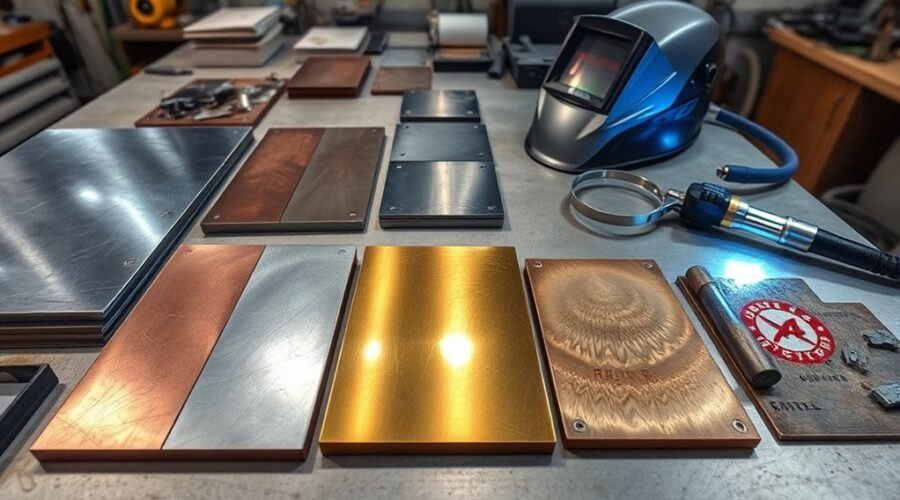
Metal plating deposits a thin metallic layer on a substrate to change its surface properties without replacing the underlying material. Depending on the coating and process, plating can improve corrosion resistance, electrical contact performance, solderability, hardness, wear resistance, reflectivity, or appearance. Common choices include nickel, zinc, chromium, gold, silver, tin, copper, and rhodium. Reliable results depend as much on cleaning, activation, bath control, racking, and inspection as on the plating metal itself. Plated parts also need special attention before welding because some coatings can interfere with the weld or create hazardous fumes when heated.
Quick Answer
Metal plating adds a metallic surface layer to improve properties such as corrosion resistance, conductivity, wear resistance, solderability, or appearance. Electroplating uses electrical current, while electroless plating uses chemical reduction. Good results require compatible materials, thorough surface preparation, controlled deposition, inspection, and special safety precautions when hazardous plating chemicals or welded coatings are involved.
Key Takeaways
Key Takeaways
- Metal plating changes surface properties by depositing metal onto a prepared substrate.
- Electroplating uses external electrical current; electroless plating uses a chemical reduction reaction and is useful for uniform coverage on complex shapes.
- Zinc, nickel, chromium, gold, silver, copper, tin, rhodium, and cadmium can serve different functional or decorative purposes, but some require significant health and environmental controls.
- Cleaning, activation, masking, racking, bath control, rinsing, post-treatment, and inspection all influence adhesion and coating quality.
- Hot-dip galvanizing and anodizing are related surface-finishing processes, but they are not the same as conventional metal electroplating.
- Hydrogen embrittlement can affect susceptible high-strength steels during some cleaning and plating operations and must be controlled according to the applicable specification.
- Before welding plated metal, identify the coating and evaluate fume, contamination, and corrosion-protection requirements.
What Is Metal Plating?
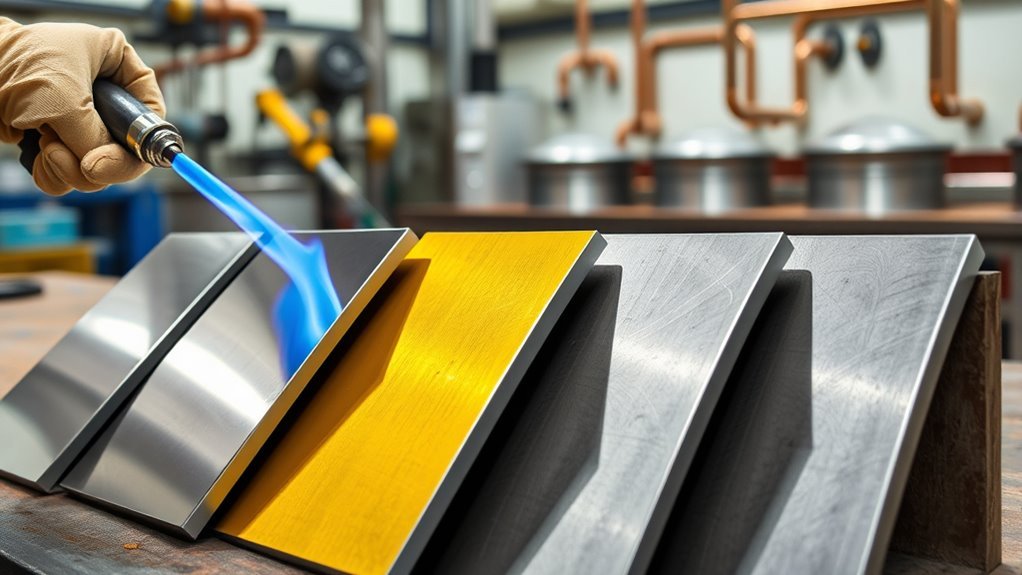
Metal plating is a surface-finishing process that deposits a metallic coating onto another material. The coating changes surface behavior while leaving most of the substrate’s bulk properties unchanged.
In electroplating, metal ions in an electrolyte are reduced onto the workpiece using electrical energy. The U.S. Environmental Protection Agency describes electroplating as the production of a thin metallic surface coating by electrodeposition. EPA metal-finishing guidance also distinguishes electroplating from electroless plating and other surface treatments.
Plating may be selected to improve corrosion resistance, electrical conductivity, solderability, hardness, wear resistance, dimensional restoration, reflectivity, or decorative appearance. No single coating provides every benefit, so the substrate, environment, mechanical requirements, electrical requirements, finishing specification, and cost should be considered together.
Surface preparation is critical. Oil, oxide, scale, fingerprints, polishing compound, corrosion products, and other contamination can prevent proper deposition or adhesion. A high-quality bath cannot compensate for an improperly prepared substrate.
Note: Metal plating, anodizing, and hot-dip galvanizing are related surface-engineering processes, but they are not interchangeable terms. Plating deposits metal; anodizing converts the existing surface to an oxide; hot-dip galvanizing immerses iron or steel in molten zinc to form a metallurgically bonded zinc coating.
Common Metal Plating Types
Plating metals are selected according to the performance required from the finished surface. Cost, coating thickness, substrate compatibility, service temperature, electrical requirements, corrosion exposure, wear, appearance, and downstream manufacturing all influence the choice.
| Plating Metal | Typical Strengths | Common Uses | Important Considerations |
|---|---|---|---|
| Nickel | Corrosion resistance, wear resistance, decorative finish, useful undercoat | Hardware, machinery, electronics, decorative finishes | Properties vary with bath chemistry and whether the coating is electrolytic or electroless |
| Zinc | Sacrificial corrosion protection for steel | Fasteners, brackets, automotive and general hardware | Electroplated zinc is different from hot-dip galvanizing |
| Chromium | Hardness, wear resistance, low friction, decorative appearance | Hydraulic components, machine surfaces, decorative finishes | Some chromium-plating processes involve hazardous hexavalent chromium chemistry |
| Gold | Stable electrical contact surface and strong corrosion resistance | Electrical contacts, connectors, electronics, decorative items | High material cost encourages carefully controlled coating thickness |
| Silver | High electrical and thermal conductivity | Electrical contacts, conductors, decorative products | Can tarnish in sulfur-containing environments |
| Copper | Electrical conductivity, leveling/undercoat capability, solderability | Electronics, decorative multilayer finishes, electrical components | Often used as an intermediate layer rather than the final exposed finish |
| Tin | Solderability and useful corrosion protection in suitable environments | Electrical components, connectors, tin-coated packaging materials | Do not assume all tin compounds or plating chemistries are harmless |
Common Plating Metals
Nickel plating is widely used because nickel coatings can provide corrosion resistance, wear resistance, and an attractive finish. Electrolytic nickel is also commonly used beneath decorative chromium, while electroless nickel can provide more uniform thickness over complex geometry.
Gold plating is valuable where stable electrical contact performance and corrosion resistance justify its cost. Electronics often use a carefully controlled gold layer rather than a thick decorative deposit.
Zinc electroplating protects steel primarily through sacrificial corrosion behavior. It is widely used for fasteners, clips, brackets, and other steel components. This process should not be confused with hot-dip galvanizing, which uses molten zinc rather than electrodeposition.
Chromium plating includes decorative and functional applications. Decorative chromium is generally thin and is commonly applied over other plated layers. Functional or hard chromium can be much thicker and is used where hardness, wear resistance, and low friction are required.
Some chromium electroplating operations use hexavalent chromium. OSHA warns that Cr(VI) electroplating mist can cause serious health effects and requires effective exposure controls. OSHA’s electroplating guidance identifies local exhaust ventilation as a key control.
OSHA’s permissible exposure limit for hexavalent chromium is 5 micrograms per cubic meter of air as an 8-hour time-weighted average.
Silver plating offers very high electrical and thermal conductivity and is used in electrical contacts, conductors, and selected decorative applications. Its suitability depends on the service environment because silver can tarnish when exposed to sulfur-containing compounds.
Specialty Plating Options
Rhodium plating produces a hard, bright, corrosion-resistant surface and is used in jewelry, contacts, and specialized decorative or functional applications.
Cadmium plating has historically been used where corrosion protection, lubricity, and reliable performance are required, including specialized aerospace and defense applications. Cadmium is toxic, however, and worker exposure, welding, waste disposal, and use restrictions require strict regulatory and process control.
Tin plating is widely used for solderability and corrosion protection. Metallic tin generally has relatively low toxicity compared with metals such as cadmium, but that does not make every tin compound or plating bath harmless. The chemistry, additives, exposure route, and intended end use must still be evaluated.
Copper plating provides excellent electrical conductivity and is frequently used as an undercoat or build-up layer before another finish is applied.
Aluminum electrodeposition also exists, but it requires specialized process chemistry and is less common than conventional aqueous zinc, copper, nickel, tin, or chromium plating. It should not be confused with anodizing an aluminum substrate.
How Metal Plating Processes Work
Most plating systems follow the same broad sequence: prepare the substrate, activate the surface, deposit the coating, rinse and post-treat the part as required, then inspect it against the applicable specification.
- Inspect the substrate. Confirm the base material, heat treatment, dimensions, surface condition, and required coating specification.
- Clean the part. Remove oil, grease, soil, polishing residue, corrosion products, and other contamination.
- Remove oxides or activate the surface. The correct treatment depends on the substrate and plating system.
- Mask and rack the component. Protect areas that must remain unplated and establish secure electrical contact when electroplating is used.
- Deposit the coating. Control bath chemistry, temperature, time, current density or reducing chemistry, agitation, and loading.
- Rinse and post-treat. Depending on the system, post-treatment may include passivation, sealing, drying, heat treatment, or another specified coating layer.
- Inspect and test. Verify appearance, thickness, adhesion, dimensional requirements, and any other specified performance criteria.
Electroplating vs. Electroless Plating
| Feature | Electroplating | Electroless Plating |
|---|---|---|
| Driving force | External electrical current | Chemical reduction reaction |
| Electrical contact | Required at the part during deposition | No external electrical connection is required for deposition |
| Thickness distribution | Affected by current distribution, geometry, anode position, shielding, and rack design | Usually more uniform on recesses and complex shapes when bath chemistry is properly controlled |
| Common examples | Zinc, nickel, copper, chromium, gold, silver, tin | Electroless nickel and electroless copper |
| Main advantage | Broad process choice and controllable deposition rate/thickness | Uniform coverage on complex geometry |
Immersion plating uses a chemical displacement reaction between the substrate and metal ions in solution. It generally produces a relatively thin deposit and is different from autocatalytic electroless plating, which uses a reducing agent and can continue depositing after the surface becomes coated.
Brush plating is a localized electroplating method in which electrolyte is delivered through an applicator rather than immersing the whole part. It is useful for selected repairs, dimensional restoration, or localized coating when the approved process specification permits it.
Hot-dip galvanizing is a related zinc-coating process rather than conventional electroplating. Iron or steel is chemically prepared and immersed in molten zinc, which reacts with the steel to form zinc-iron intermetallic layers.
How to Choose a Plating Method
Select a plating system by starting with the required function rather than simply choosing a familiar coating. The same component may need corrosion resistance, conductivity, wear resistance, solderability, dimensional build-up, appearance, or several of these properties at once.
| Question | Why It Matters |
|---|---|
| What is the substrate? | Steel, stainless steel, aluminum, copper alloys, plastics, and high-strength steels require different pretreatments and may have different compatibility limits. |
| What must the coating do? | Corrosion protection, electrical performance, wear, solderability, appearance, and dimensional restoration favor different coatings. |
| What environment will it face? | Humidity, salt, chemicals, temperature, abrasion, and contact with dissimilar metals affect coating life. |
| How complex is the geometry? | Deep recesses, blind holes, edges, and internal surfaces can make thickness control difficult in electroplating. |
| Will the part be welded, soldered, formed, or heat treated later? | Downstream manufacturing may affect coating selection, adhesion tests, weld preparation, and post-treatment. |
| Is hydrogen embrittlement a concern? | High-strength steels may require approved pretreatment, plating, testing, and post-plating relief procedures. |
| What specification applies? | Required thickness, adhesion, corrosion testing, heat treatment, and acceptance criteria should come from the drawing or governing standard. |
Gold and other precious-metal coatings can sharply increase material cost, while electroless processes may involve more expensive bath chemistry. The least expensive coating is not necessarily the lowest-cost choice if it fails prematurely or requires rework.
How to Prep Metal for Plating
Preparation must remove contamination and create the surface condition required by the selected plating system. The exact sequence varies with the substrate, prior processing, heat treatment, coating specification, and type of contamination.
Surface Cleaning Basics
Oil, grease, polishing compound, fingerprints, shop soil, corrosion products, oxide films, and scale can interfere with deposition. Depending on the material and process, preparation may include alkaline cleaning, solvent cleaning, electro-cleaning, ultrasonic cleaning, acid treatment, mechanical cleaning, or combinations of these steps.
A typical cleaning sequence may include:
- Remove heavy oil, grease, and loose contamination.
- Use the specified alkaline, solvent, ultrasonic, or electro-cleaning process.
- Rinse thoroughly to prevent one bath from contaminating the next.
- Remove oxide or scale using the substrate-appropriate activation treatment.
- Rinse and transfer the part promptly to the next operation so the surface does not reoxidize or become contaminated.
Pro Tip: Treat a failed adhesion test as a process-control problem, not merely a cosmetic defect. Review cleaning, rinsing, activation, handling, rack contact, bath contamination, delay time between steps, and the substrate’s actual material condition before changing the plating bath.
Surface Activation Methods
Surface activation removes or modifies films that interfere with deposition. Acid pickling or other chemical activation may remove oxides from some metals, while other alloys require specialized strikes or pretreatments. Abrasive blasting can remove heavy scale or coatings in selected applications, but it should not be treated as a universal plating-adhesion step.
The goal is a chemically and physically suitable surface for the specific coating system. Excessive etching, incorrect acid exposure, retained abrasive, smut, or reoxidation can create as many problems as inadequate cleaning.
Masking And Racking
Masking protects threads, sealing surfaces, electrical contacts, bearing fits, holes, or other areas that must remain free of deposited metal. Masking materials must tolerate the bath chemistry, temperature, and processing sequence.
Racking positions parts and, in electroplating, provides the electrical connection between the workpiece and power supply. Poor rack contact can cause thin, intermittent, or missing deposits.
- Identify all no-plate areas from the drawing or specification.
- Select compatible masking materials.
- Place rack contacts where they provide reliable current without damaging critical surfaces.
- Position the part to reduce trapped gas and solution pockets.
- Consider edges, recesses, shields, auxiliary anodes, and part spacing when thickness uniformity is critical.
How to Inspect and Test Metal Plating
Visual inspection alone cannot establish whether a coating meets all requirements. Inspection should follow the drawing, purchase specification, industry standard, or customer requirement for the particular coating.
- Visual condition: Check for peeling, blistering, pitting, roughness, burning, stains, nodules, bare areas, and obvious cracking.
- Coating thickness: Use a method appropriate to the coating/substrate combination and required accuracy.
- Adhesion: Use the specified adhesion method rather than improvising a destructive test.
- Dimensions: Confirm that plating buildup has not moved threads, fits, bores, or bearing surfaces outside tolerance.
- Porosity or gross defects: Certain coatings and service conditions require dedicated porosity or defect testing.
- Corrosion testing: Use only the required specification and exposure method; salt-spray hours should not be treated as a universal prediction of real-world service life.
- Hydrogen-embrittlement control: When applicable to high-strength steel, verify that the plating process and required relief/testing sequence meet the governing specification.
ASTM maintains dedicated standards for metallic-coating thickness, adhesion, porosity, corrosion exposure, and related tests. Its current coatings catalog includes B571-23 for qualitative adhesion testing. ASTM’s coating standards listing is a useful starting point when a drawing references an ASTM method.
Common Plating Defects and How to Fix Them
Most plating defects have more than one possible cause. Effective troubleshooting works backward through the entire process rather than changing bath chemistry immediately.
| Defect | Possible Causes | Corrective Direction |
|---|---|---|
| Peeling / poor adhesion | Oil, oxide, poor activation, wrong pretreatment, delays between steps, incompatible substrate condition | Trace the pretreatment sequence, verify chemistry and rinsing, strip defective coating where required, and reprocess correctly |
| Blistering | Poor adhesion, contamination, substrate porosity, trapped gases or fluids, process-related gas evolution | Identify the root cause before replating; do not assume a post-plating bake will repair an adhesion failure |
| Pitting | Gas bubbles, particles, organic contamination, poor wetting, filtration or agitation problems | Check cleanliness, filtration, agitation, wetting control, bath contamination, and part orientation |
| Burned / rough areas | Excessive local current density, poor solution movement, bath imbalance, edge effects | Correct current density, chemistry, agitation, anode arrangement, shielding, or rack position as required |
| Dull or hazy deposit | Temperature, chemistry, current density, contamination, additives, or substrate finish | Verify operating window and bath analysis before adding chemicals |
| Uneven thickness | Current distribution, part geometry, rack layout, anode position, shielding, poor contact | Review current path, racking, anodes, shielding, thieves, part spacing, and deposition time |
| Cracking | Internal deposit stress, excessive thickness, bath/additive problems, substrate movement, incompatible post-treatment | Determine the stress/thickness/process cause; cracked coatings commonly require stripping and correct reprocessing rather than a cosmetic repair |
Hydrogen Embrittlement After Plating
Hydrogen embrittlement is different from an ordinary visible plating defect. Hydrogen can enter susceptible high-strength steels during cleaning, pickling, stripping, electroplating, or other manufacturing operations. Under stress, an affected component can crack after processing even when the plated surface appears acceptable.
ASTM F519-23 provides mechanical test methods for evaluating plating/coating processes that may cause hydrogen embrittlement in steels. ASTM F519-23 should be used together with the component’s governing engineering or process specification where applicable.
Warning: Do not treat baking as a universal repair for blistered plating or an already damaged high-strength component. Hydrogen-relief requirements depend on material strength, pretreatment, coating process, timing, temperature, and the governing specification.
How Metal Plating Affects Welding
Metal plating can affect welding in two separate ways: it can interfere with the weld itself, and it can create hazardous fumes or dust when the coating is heated or removed.
- Identify the coating before hot work. Do not grind, weld, braze, cut, or chemically strip an unknown coating until the material and hazards have been identified.
- Review the drawing, procedure, and SDS information. Some components must have plating removed from the joint area; others require a specific qualified welding procedure.
- Remove coating only by an approved method. Mechanical or chemical removal can create its own exposure hazards, so the removal method needs suitable containment, ventilation, and PPE.
- Clean the actual weld surface. Residual coating, oil, oxides, masking compounds, or cleaning chemicals can disturb arc stability and weld-pool behavior.
- Control fumes. Local exhaust ventilation or other controls may be required depending on the coating and welding process.
- Restore corrosion protection afterward. Welding often destroys the original protective system around the joint, so the finished assembly may need approved touch-up, replating, galvanizing repair, paint, or another specified coating.
OSHA identifies zinc oxide from galvanized steel as a common cause of metal fume fever. Cadmium-coated steel presents a more serious toxic-fume hazard, and chromium-containing materials can also generate hazardous exposure during hot work. OSHA’s welding, cutting, and brazing requirements include ventilation provisions and special precautions for several hazardous coating metals.
Nickel- and chromium-bearing coatings can also affect weld contamination and fume composition. The safe approach is to identify the coating and follow the applicable welding procedure and exposure-control requirements rather than relying on a single rule for all plated metals.
For high-strength steel, welding decisions should also account for the base metal’s strength and heat-treatment condition. A post-plating hydrogen-relief bake does not substitute for a properly engineered welding procedure.
Safe Plating Practices and Waste Disposal
Plating safety depends on the actual chemicals and processes in use. A shop may handle strong acids or alkalis, nickel compounds, chromium compounds, cadmium, cyanide-bearing solutions, reducing agents, oxidizers, solvents, and other hazardous materials. Controls should therefore come from a documented hazard assessment, SDS information, applicable regulations, and the process supplier’s instructions.
| Control | Function |
|---|---|
| Substitution / process selection | Reduces hazards when a technically suitable lower-hazard process is available |
| Local exhaust ventilation | Captures hazardous mist or vapor near the tank before it reaches the worker’s breathing zone |
| Tank covers and process controls | Can reduce mist, splashing, evaporation, and contamination where compatible with the process |
| Chemical-resistant PPE | Protects skin and eyes when selected for the specific chemical exposure |
| Respiratory protection | Used when required after appropriate exposure assessment and within a compliant respiratory-protection program |
| Secondary containment and labeling | Helps prevent uncontrolled releases and chemical mix-ups |
| Inspection and maintenance | Finds leaks, blocked ventilation, damaged tanks, failing pumps, and electrical problems before they become incidents |
Incompatible chemicals must be segregated and handled according to the facility’s chemical-management plan. Plating workers should never improvise chemical mixtures or neutralization procedures.
Wastewater, spent baths, sludges, rinse water, filters, stripping solutions, and contaminated cleanup material may be regulated. They should not be discharged or discarded simply because they contain mostly water. EPA’s current Metal Finishing Effluent Guidelines cover wastewater discharges from many metal-finishing operations, while additional federal, state, and local hazardous-waste requirements may also apply.
Frequently Asked Questions
What are the different types of metal plating processes?
Common metal plating processes include electroplating, electroless plating, immersion or displacement plating, and localized brush plating. Hot-dip galvanizing is a separate zinc-coating process that immerses iron or steel in molten zinc. Anodizing is also separate because it converts the substrate surface into an oxide rather than depositing another metal.
How toxic is electroplating?
The hazard varies greatly with the process chemistry. Some plating systems use corrosive acids or alkalis, nickel or chromium compounds, cadmium, cyanide-bearing chemistry, or other hazardous substances. Hexavalent chromium plating can create carcinogenic Cr(VI) mist, so industrial plating requires ventilation, chemical handling controls, appropriate PPE, exposure assessment, and regulated waste management.
What are the different types of metal welding processes?
Common welding processes include MIG/GMAW, TIG/GTAW, Stick/SMAW, flux-cored arc welding/FCAW, and submerged arc welding/SAW. The best process depends on the base metal, joint, thickness, environment, production requirements, and applicable welding procedure. When metal is plated, the coating must also be considered before welding because it may affect weld quality and fume hazards.
What are the 7 common methods of metal processing?
There is no universal engineering rule that limits metal processing to exactly seven methods, but a useful basic list includes casting, forging, rolling, extrusion, drawing, machining, and heat treatment. Other major processes include welding, stamping, powder metallurgy, additive manufacturing, grinding, and surface finishing such as plating.
Is anodizing the same as metal plating?
No. Metal plating deposits another metal onto the substrate. Anodizing is an electrochemical conversion process that grows an oxide layer from the substrate itself, most commonly on aluminum.
Is hot-dip galvanizing the same as zinc plating?
No. Zinc electroplating deposits zinc using an electrolyte and electrical current. Hot-dip galvanizing immerses prepared iron or steel in molten zinc, producing zinc-iron intermetallic layers plus an outer zinc layer. Both can protect steel, but the processing, coating structure, thickness, and applications differ.
Can you weld plated metal?
Many plated parts can be welded, but the coating must be identified first. Some coatings should be removed from the joint area using an approved method, and welding can generate hazardous metal fumes. Ventilation, respiratory controls where required, qualified welding procedures, and restoration of corrosion protection after welding may all be necessary.
What usually causes plating to peel or blister?
Common causes include oil or oxide left on the substrate, incorrect activation, incompatible pretreatment, contamination between process steps, substrate porosity, trapped gas or fluid, and poor process control. A failed coating should be diagnosed from the pretreatment stage forward rather than assuming the plating bath alone is responsible.
Conclusion
Metal plating can improve corrosion resistance, electrical performance, solderability, wear resistance, dimensions, and appearance, but the coating itself is only one part of a successful process. Substrate compatibility, cleaning, activation, masking, racking, bath control, rinsing, post-treatment, and inspection all affect the final result.
Electroplating and electroless plating use different deposition mechanisms, while hot-dip galvanizing and anodizing should be treated as separate surface-finishing processes. Defects such as peeling, blistering, pitting, rough deposits, uneven thickness, and cracking should be traced to their root causes instead of treated with one-size-fits-all fixes. High-strength steels also require special attention to hydrogen-embrittlement controls.
When plated components will be welded, coating identification and fume control become essential. Following the applicable engineering specification, OSHA requirements, environmental regulations, and recognized coating-test standards provides a much more reliable path than relying on appearance alone.
Sources
- U.S. EPA — Guidance Manual for Electroplating and Metal Finishing Pretreatment Standards — definitions and distinctions among electroplating, electroless plating, anodizing, and related metal-finishing operations.
- U.S. EPA — Metal Finishing Effluent Guidelines — current regulatory framework for applicable metal-finishing wastewater discharges.
- OSHA — Controlling Hexavalent Chromium Exposures During Electroplating — Cr(VI) health hazards, permissible exposure limit, local exhaust ventilation, and work-practice controls.
- OSHA — 29 CFR 1910.252 Welding, Cutting, and Brazing — ventilation and hazardous-metal requirements relevant to welding coated materials.
- ASTM International — F519-23 — mechanical hydrogen-embrittlement evaluation of plating/coating processes and service environments.
- ASTM International — Metallic and Related Coating Standards — current standards covering adhesion, thickness, defects, corrosion exposure, and related coating tests.