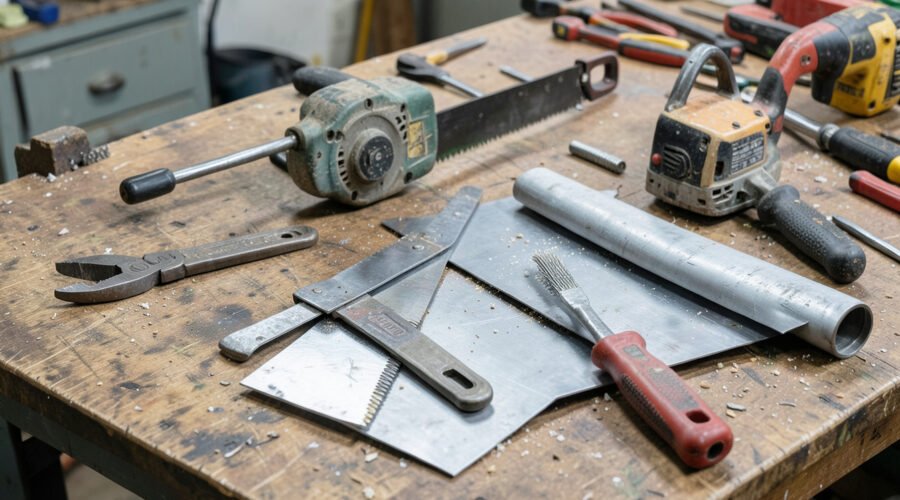
The best way to cut metal depends on its thickness and type. Use snips or shears for thin sheet, a hacksaw or reciprocating saw for bar and pipe, an angle grinder with a cut-off wheel for fast rough cuts, a band saw or chop saw for straight accurate cuts, and a plasma cutter for plate. Laser and waterjet cutting are best left to specialist shops.
Whether you are cutting sheet for a project, pipe for a frame or plate for a base, there is a tool that does it faster and safer. This guide compares nine methods by speed, cost and what they cut, and shares tips for clean cuts.
Quick Guide to Cutting Metal
- Thin sheet (under 1/16 in.): aviation snips, shears or a nibbler.
- Bar, tube and angle: hacksaw, band saw, reciprocating saw or chop saw.
- Fast rough cuts: angle grinder with a thin cut-off wheel.
- Plate: plasma cutter, oxy-fuel torch or band saw.
- Always: clamp the work and wear eye protection.
9 Ways to Cut Metal
| Method | Best for | Pros | Cons |
|---|---|---|---|
| Hacksaw | Bar, tube, small jobs | Cheap, quiet | Slow and tiring |
| Aviation snips or shears | Thin sheet | Clean, no sparks | Thin metal only |
| Angle grinder | Bar, rebar, bolts, plate | Fast, portable | Sparks, kickback risk |
| Reciprocating saw | Pipe, angle, demolition | Easy to use anywhere | Rough cuts |
| Band saw | Bar, tube, plate | Accurate straight cuts | Needs bench space |
| Chop saw or cold saw | Repeated cuts of tube and bar | Square, repeatable | Bulky |
| Plasma cutter | Plate up to 1 in. or more | Fast, cuts any conductive metal | Needs power and air |
| Oxy-fuel torch | Thick steel | Cuts very thick steel | Steel only, heat and slag |
| Laser or waterjet | Precision parts | Very precise | Equipment and service cost |
1. Hacksaw
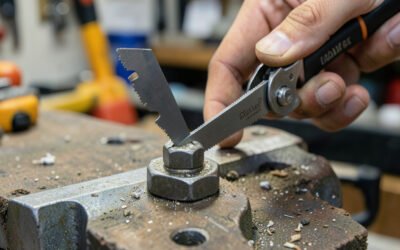
A hacksaw is the starter tool for cutting steel bar, pipe and rod. Use 18 to 24 TPI for thin material and 14 to 18 TPI for thicker stock. Keep at least three teeth in the cut. Use long, steady strokes with pressure on the push stroke only.
2. Snips, Shears and Nibblers
Aviation snips cut thin steel and aluminum in straight lines or curves. Shears are better for straight cuts in sheet. Nibblers make curved cuts and cutouts without much distortion. All leave a sharp edge, so file or deburr after cutting.
3. Angle Grinder With Cut-Off Wheel
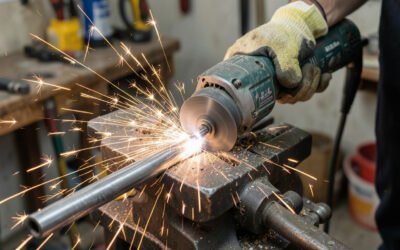
An angle grinder cuts quickly, but it is also dangerous if misused. Use a Type 1 or 41 cut-off wheel, the right guard and a face shield. Our guide on cutting metal with an angle grinder has the steps.
4. Reciprocating Saw
A reciprocating saw cuts pipe, rebar, angle and demolition work anywhere. Choose the blade by thickness; see reciprocating saw blades for metal. Clamp the work and keep the shoe against the metal.
5. Band Saw
A band saw gives accurate, clean cuts in bar, tube and plate. Horizontal band saws are ideal for repeated square cuts, while vertical band saws cut curves. Match the blade TPI to the thickness.
6. Chop Saw and Cold Saw
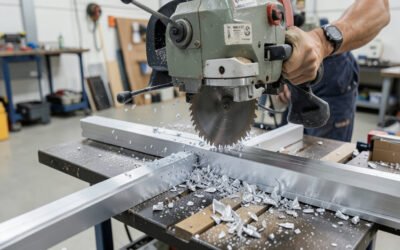
Abrasive chop saws are cheap and fast but burn the metal and throw sparks. Cold saws cut with a carbide or HSS blade and leave a clean, burr-free cut. Both are good for cutting tube and angle to length.
7. Plasma Cutter
Plasma cutters melt and blow through conductive metal with a hot ionized gas. They cut steel, stainless and aluminum quickly, and handle thicknesses far beyond what a grinder can do. See our guide to the best plasma cutters and how plasma arc cutting works.
8. Oxy-Fuel Torch
An oxy-acetylene torch cuts carbon steel of any thickness by burning it in oxygen. It is a classic in fabrication and demolition. See our guide to oxy-fuel cutting.
9. Laser and Waterjet
Laser cutters give very fine cuts in sheet and plate and are used by manufacturers. Waterjet cuts almost any material without heat distortion. Both are usually done by an outside shop.
Safety When Cutting Metal
- Eye and face protection every time.
- Clamp the work.
- Gloves for handling, but not near rotating tools.
- Respirator when cutting galvanized or coated metal.
- Keep sparks away from flammables.
FAQs
What is the easiest way to cut metal at home?
Aviation snips for thin sheet and a hacksaw or angle grinder for bar and tube are the easiest and cheapest.
What is the best tool to cut thick metal?
A plasma cutter, band saw or oxy-fuel torch handles thick plate best.
Can I cut metal with a circular saw?
Yes, with a metal-cutting carbide blade made for the purpose and proper safety precautions.
How do I cut metal without sparks?
Use snips, shears, a band saw, a cold saw or a tubing cutter. Those create little or no sparking.
How do I cut stainless steel?
Use carbide or cobalt blades, slow speeds and cutting oil, or a plasma cutter.
What is the cheapest way to cut metal?
A hacksaw or snips, depending on the metal. Both are inexpensive.
Bottom Line
Match the tool to the thickness and the accuracy you need. Snips and hacksaws handle small jobs, grinders and reciprocating saws handle rough cuts, band saws give precision and plasma cutters take care of plate. Clamp the work and protect your eyes.
Sources
- The Fabricator: Grinding and cutting safely
- McGill University: Circular saw (cutting non-ferrous metals)
- OSHA 1910.252: Welding, cutting and brazing