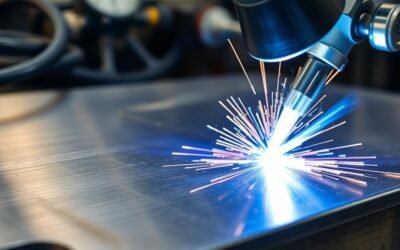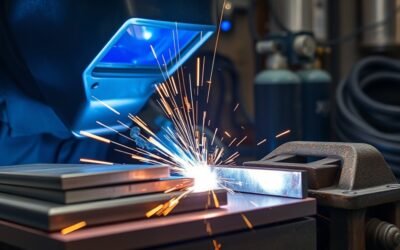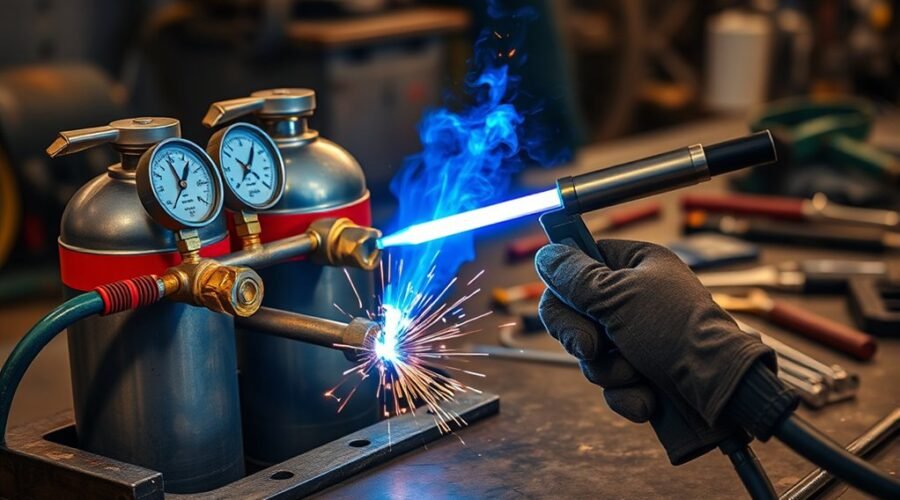
Oxy-fuel welding combines oxygen and fuel gas to generate a concentrated flame for joining and cutting metal. The process depends on correct equipment selection, flame adjustment, and surface preparation. Regulators, hoses, torch tips, and safety devices must work together under controlled pressure. Flame chemistry then determines weld quality and heat distribution. Yet the practical difference between a usable setup and a poor one often begins with details that are easy to overlook.
Key Takeaways
- OFW uses oxygen and acetylene to produce a very hot flame for welding, cutting, and brazing metals.
- Core equipment includes gas cylinders, pressure regulators, hoses, a torch, and protective PPE.
- Neutral flame is standard for welding, while carburizing and oxidizing flames are used for specific applications.
- Proper technique requires correct tip size, gas pressure, clean surfaces, and matching filler rod to the base metal.
- Safety depends on flashback arrestors, ventilated workspaces, leak-free color-coded hoses, and regular equipment maintenance.
What Is Oxy-Fuel Welding?
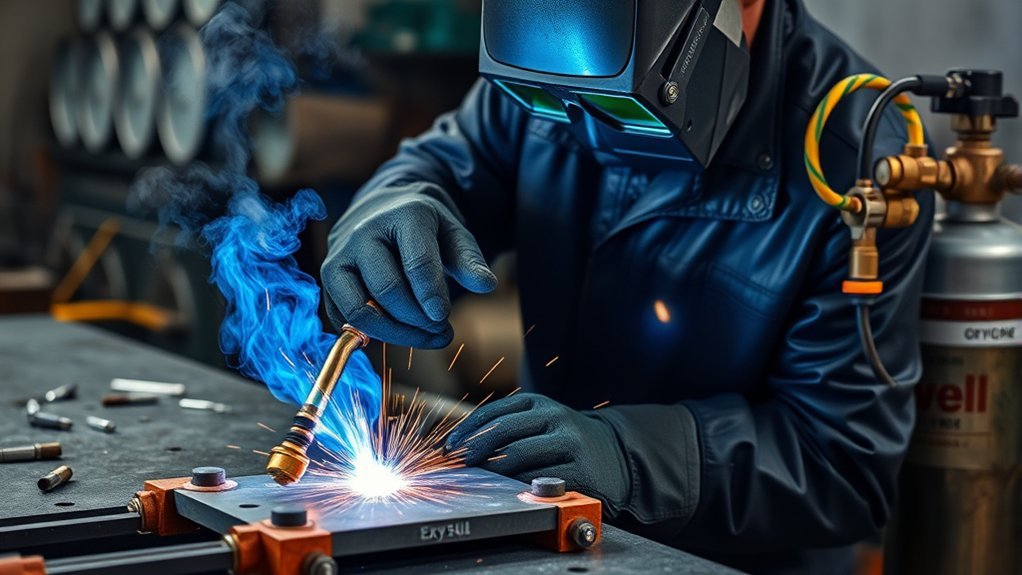
Oxy-fuel welding is a joining process that uses oxygen and acetylene to generate a high-temperature flame, reaching approximately 3,773 K (3,500 °C), capable of melting and fusing metals.
In Oxy-Fuel welding, the controlled combustion of oxygen and acetylene produces a high-temperature flame that localizes heat at the joint, enabling precise fusion without external electrical power.
Controlled combustion of oxygen and acetylene localizes heat at the joint, enabling precise fusion without external electrical power.
This welding process is portable, which grants access to repair, maintenance, and fabrication tasks in remote or constrained environments, and supports practical autonomy in field operations.
Its technical value lies in adaptability: the operator may select flame conditions to suit material behavior and desired weld characteristics.
The method is especially effective for thin sections and localized repairs, where careful heat input is essential.
While less efficient on thick metals than high-density arc methods, it remains a versatile, transportable means of metal joining for users seeking material control and operational independence. Additionally, using a well-equipped oxy-acetylene cutting torch kit can enhance the overall effectiveness and safety of the welding process.
Oxy-Fuel Welding Equipment and Kits
The practical performance of oxy-fuel welding depends on a defined set of equipment arranged to control gas supply, pressure, and flame delivery. An oxy-fuel welding setup typically includes gas cylinders for oxygen and fuel, pressure regulators, flexible hoses, and a welding torch that mixes the gases before ignition.
Pressure regulators commonly use two stages and gauges to indicate cylinder and delivery pressure, enabling stable flow and controlled flame adjustment. Hose color coding supports safe identification: green or blue generally marks oxygen, while red marks acetylene, depending on region.
Portable kits may mount the components on wheeled trolleys for mobility in constrained workspaces. Specialized cutting torches may also be included for advanced applications. Additionally, the use of proper clamping and grounding practices enhances safety during oxy-fuel welding operations.
Personal protective equipment, or PPE, normally consists of shade 5 goggles, a welding helmet, flame-resistant clothing, and gloves. Each element serves disciplined control, supporting safe, autonomous metalworking without unnecessary dependence on external systems.
Choosing Oxygen, Acetylene, and Other Fuels
Among the available fuels, acetylene remains the standard choice in oxy-fuel welding because its flame temperature of about 3,200 to 3,500 °C supports efficient welding and cutting of steel. Oxygen must be paired with the selected fuel gas to sustain stable oxyacetylene welding. The choice among fuel gases affects cost, storage, and application scope.
| Fuel | Principal use |
|---|---|
| Acetylene | General welding and cutting |
| Propylene | Lower-cost production work |
| Gasoline | Steel plate cutting |
| Diesel | Steel plate cutting |
Acetylene requires special cylinders for dissolved storage, but it delivers broad utility and adjustable performance. Propylene is increasingly adopted where lower operating expense is prioritized. Liquid fuels such as gasoline and diesel provide economical cutting options for heavy plate. In practice, the fuel selection determines available flame temperature and process economy, allowing technicians to match energy source to task with disciplined efficiency and technical freedom. Additionally, the choice of fuel can impact the durability of equipment, affecting the overall long-term costs associated with oxy-fuel welding.
Understanding Oxy-Fuel Flame Types
Three principal oxy-fuel flame types govern welding practice: neutral, carburizing, and oxidizing.
In the oxy-fuel torch, the neutral flame is the standard reference because its oxygen and acetylene balance supports controlled fusion without excess chemical bias. Its inner cone reaches about 6,000 °F (3,320 °C), enabling efficient work on most metals and preserving the operator’s freedom to select sound joints without distortion.
The carburizing flame contains surplus acetylene; it is used for high-carbon steels and selected nonferrous alloys where limiting oxidation improves weld quality.
The oxidizing flame contains surplus oxygen and is generally rejected for welding, since it promotes oxides and defects in the joint.
Flame adjustments are made through torch valves and regulator settings, and correct flame type selection remains essential for precise, effective, and liberated welding practice. Additionally, understanding welding processes can greatly enhance the quality of your work and ensure safety during operations.
How to Set Pressure and Tip Size
Proper pressure and tip selection determine whether an oxy-fuel torch produces a stable, controllable flame suitable for the intended weld. For most welding applications, the oxygen pressure regulator is set between 5-10 psi, while the acetylene regulator is maintained near 5-7 psi to support reliable combustion.
Tip size must match material thickness: small tips such as #0 or #1 suit thin sheet metal, whereas #3 or #4 tips are preferred for heavier sections.
- Select tip size by gauge and heat demand.
- Set oxygen pressure within the stated range.
- Adjust the acetylene regulator for steady delivery.
- Balance both gases until a neutral flame forms, with a clear inner cone.
Regular recalibration preserves flame stability, limits pressure drift, and sustains weld quality. Additionally, understanding welding processes is crucial for achieving optimal results across different applications.
With correct settings, the torch remains efficient, precise, and suited to liberated, disciplined metalwork.
Oxy-Fuel Welding Rods and Fluxes
Oxy-fuel welding depends on consumables matched to the base metal and joint requirements. Oxy-fuel welding rods are selected to melt into the joint and become part of the deposited metal, so rod composition directly affects strength, soundness, and weld integrity.
Carbon steel rods suit carbon steel work, while specialized alloys serve aluminum and stainless steel, preserving compatibility where freedom from mismatch matters.
Carbon steel rods suit carbon steel work, while specialized alloys preserve compatibility for aluminum and stainless steel.
Fluxes are applied to shield the molten metal from oxidation, forming a protective barrier that stabilizes the weld pool. Appropriate fluxes also produce a fusible slag that supports flow and assists fusion, especially when paired with the correct rod.
Together, rods and fluxes govern penetration, control defects such as undercut and overlap, and improve continuity across the joint. Their proper selection allows the welder to obtain efficient, precise results without surrendering quality to contamination or poor fusion. Additionally, understanding low-hydrogen characteristics is crucial for preventing weld defects in structural applications.
Preparing Base Metal for Welding
Proper base metal preparation begins with surface cleaning to remove rust, paint, oil, and other contaminants that can impair weld quality and adhesion.
Edge preparation may require beveling, particularly on thicker sections, to promote complete penetration and sound joint formation.
A fit-up check should then verify alignment and expose defects such as cracks or pits, while preheating or flux use may be applied as material conditions require. Additionally, ensuring that the metal is free from any contaminants is crucial for achieving optimal weld integrity.
Surface Cleaning
Clean metal surfaces are essential for effective oxy-fuel welding, since rust, oil, paint, and other contaminants can disrupt fusion and produce weak welds. Surface cleaning should thus be systematic and exacting, so the base metal is ready for effective fusion and superior weld quality.
- Remove scale and rust by mechanical abrasion, such as grinding, sanding, or wire brushing.
- Wipe the surface with a suitable solvent to eliminate grease, oil, and residue.
- Preheat the base metal when needed to drive off moisture and improve cleaning efficiency.
- Verify that the exposed surface is free of oxides and contaminants before heating further.
This disciplined preparation supports stronger penetration, more reliable joints, and a cleaner path to technical freedom through skilled fabrication.
Edge Preparation
Edge preparation determines whether the joint will achieve full penetration and sound fusion, and it typically requires beveling the base metal into a V- or U-shaped profile so the molten filler can flow and bond effectively. A clean surface, free of rust, oil, and paint, supports this discipline and reduces weld defects.
| Thickness | Bevel angle | Result |
|---|---|---|
| Thin | Minimal | Efficient fusion |
| >1/4 in. | 30–45° | Deeper penetration |
| Heavy | Wider | Stronger joint |
Fit-Up Check
A careful fit-up check verifies that the base metal edges are clean, properly aligned, and free of contaminants before welding begins. In gas welding, this inspection supports sound fusion, stable alignment, and reliable liberation from avoidable defects.
The joint gap should be held near 1/16 to 1/8 inch to permit penetration. Beveling or chamfering may improve fusion at the root.
- Confirm edge cleanliness.
- Verify alignment and clamping.
- Measure the gap precisely.
- Inspect for cracks or inclusions.
Attention to flame types remains secondary until the metal is secured and prepared. A disciplined fit-up check reduces distortion, prevents movement, and strengthens weld integrity.
Oxy-Fuel Welding Techniques
Oxy-fuel welding techniques depend on precise flame control methods to establish a neutral flame and maintain stable heat transfer during fusion.
The welder regulates tip size, torch angle, and travel speed to control bead formation and penetration in the molten puddle.
Consistent adjustment of combustion conditions is essential to prevent insufficient fusion, oxidation, or other weld defects. Additionally, understanding gas composition is crucial for optimizing weld quality and performance in various applications.
Flame Control Methods
Precise flame control in oxy-fuel welding depends on adjusting the oxygen-to-acetylene ratio to produce a neutral, carburizing, or oxidizing flame according to the material and joint requirements.
Effective flame control begins with the proper gas mixture, selected through flame adjustment at the torch valves and regulators. The neutral flame remains the standard for most oxy-fuel welding tasks because its balanced chemistry supports stable heating and clean fusion.
Its inner cone reaches about 3,200 to 3,500 °C, enabling efficient melting.
- Select tip size to match heat demand.
- Maintain a constant flame shape and size.
- Use carburizing flames for high-carbon steels.
- Avoid oxidizing flames to limit oxides and preserve quality.
Bead And Penetration
With the flame properly adjusted, bead formation and penetration become the primary indicators of weld quality in oxy-fuel welding. A neutral flame is generally selected because it delivers balanced heat, supports even melting, and reduces oxidation.
Bead size is governed by travel speed and the amount of filler metal added; a uniform width signals disciplined workmanship. The welder directs the flame to sustain a molten puddle, maintaining sufficient heat input without causing burn-through or leaving a weak joint.
Penetration must be complete, with fusion visible on the underside and no gaps or voids. Weld gauges may be applied to verify reinforcement and confirm that the bead satisfies required strength and durability standards.
This measured control enables reliable, emancipated fabrication.
Cutting Steel and Cast Iron With Oxy-Fuel
Steel cutting by oxy-fuel begins when the base metal is heated to roughly 1600ºF (871ºC), at which point it ignites in a stream of oxygen and the resulting molten metal is expelled from the cut. In Oxy-fuel cutting, the cutting torch directs oxygen after preheating, a principle shared with acetylene welding practice.
- Carbon steel with 0.25% carbon or less cuts readily.
- Higher-carbon grades benefit from preheating to limit hardening and cracking.
- Cast iron demands preheating and excess acetylene to sustain the cut.
- Torch angle must match thickness for speed and edge quality.
Surface scale, rust, and alloy variation can degrade results; consequently, preheating passes help cleanse the path and stabilize ignition. Proper control of flame and travel grants the operator disciplined separation of metal, supporting efficient work and material independence. Additionally, maintaining regular consumable changes ensures optimal performance and cut quality during operations.
Oxy-Fuel Welding Safety Tips
Safe oxy-fuel welding depends on disciplined control of personal protection, gas handling, and the work environment. Effective safety tips begin with personal protective equipment: shade 5 goggles, flame-resistant clothing, and gloves reduce burn and eye hazards while preserving operational freedom. Flame-resistant welding sleeves are essential for protecting the arms from sparks and heat during welding tasks.
Welding gases must be managed through color-coded, undamaged hoses—green for oxygen and red for acetylene in the US—to limit leaks and maintain stable gas flow. Flashback arrestors should be verified on both torch and regulators, because they restrain dangerous backflow in oxygen and fuel circuits.
The workspace must remain clear of flammable materials and be adequately ventilated to disperse fumes and support safe, independent work. Correct tip sizes should be selected for each task to prevent overheating, poor control, and equipment damage.
These safety tips establish a technically sound practice that protects the operator while sustaining efficient, precise oxy-fuel welding.
Frequently Asked Questions
What Equipment Is Needed for Oxy-Fuel Welding?
The equipment needed for oxy-fuel welding includes oxygen and fuel gas cylinders, pressure regulators, color-coded hoses, a welding torch, welding rods, and fluxes.
Welding safety depends on protective gear such as shade 5 goggles, a helmet, flame-resistant clothing, and gloves.
Proper equipment maintenance supports stable gas mixtures and precise flame adjustments.
This apparatus enables controlled fusion, protects against oxidation, and serves skilled operators seeking technical autonomy through disciplined thermal joining.
What Type of Flame Is Used for Oxy-Fuel Cutting?
The oxidizing flame is typically used for oxy-fuel cutting because its higher flame temperature and oxygen-rich gas mixtures improve cutting efficiency.
A neutral flame may first preheat the workpiece, especially for mild steel, before the oxygen jet is applied. Carburizing flames are generally avoided.
Proper selection also depends on metal thickness, while strict safety precautions and correct torch control are essential to prevent excessive oxidation, burn-through, and instability during the cut.
Is Oxy-Fuel Welding Still Used?
Yes, oxy-fuel welding remains used, especially in maintenance and repair. Its historical significance is notable: oxyacetylene can reach 3,773 K, enabling localized heating for thin materials and small pipes.
Industry applications persist in brazing, forming, and heat treating. The advantages and disadvantages balance favors portability and low cost, while safety precautions remain essential.
Future trends suggest niche relevance rather than broad replacement, supporting practical, independent industrial choice.
What Is OFW Welding?
OFW welding is a process that fuses metals using a flame generated by combining oxygen with a fuel gas. It is valued for portability, controlled flame characteristics, and suitability across several metal types.
Effective welding safety depends on proper joint preparation and disciplined welding techniques. The method supports repair, fabrication, and artistic work, offering accessible metalworking without dependence on external power, thereby expanding practical freedom in workshop and field applications.
Conclusion
Consequently, the oxy-fuel torch may be seen as a disciplined smith’s lantern, its twin flames guided by measured pressure and proper tip selection. When metal is cleaned, settings are balanced, and the neutral flame is held steady, fusion follows as surely as dawn follows night. Yet, like any fire under human command, it rewards restraint and punishes negligence. In skilled hands, OFW becomes not mere heating, but controlled transformation, joining separate pieces into durable unity.