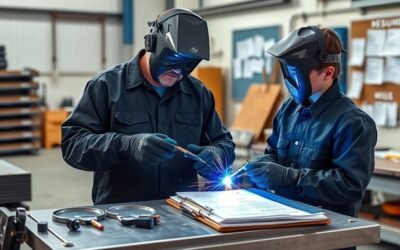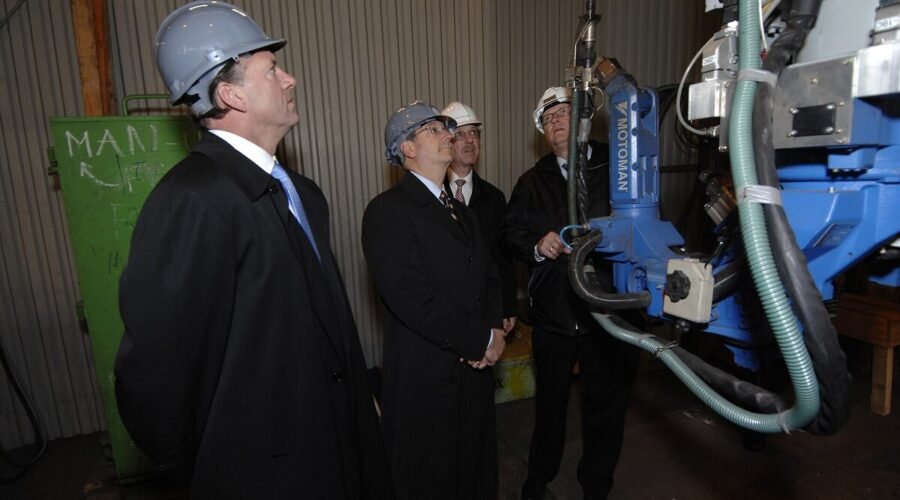
A welding engineer designs welded joints, selects welding processes and filler metals, writes and qualifies welding procedures, and solves welding problems so parts are strong, code-compliant and cost-effective to build. Most welding engineers have a bachelor’s degree in welding engineering, materials engineering or mechanical engineering, and they earn about $103,000 a year on average in the U.S., with most between roughly $96,000 and $110,000.
Welding engineers sit between the design office and the shop floor. They understand metallurgy and codes, but they also know what a welder can actually do with a torch in hand. Here is what the job involves, which degrees lead to it and what it pays.
What Does a Welding Engineer Do?
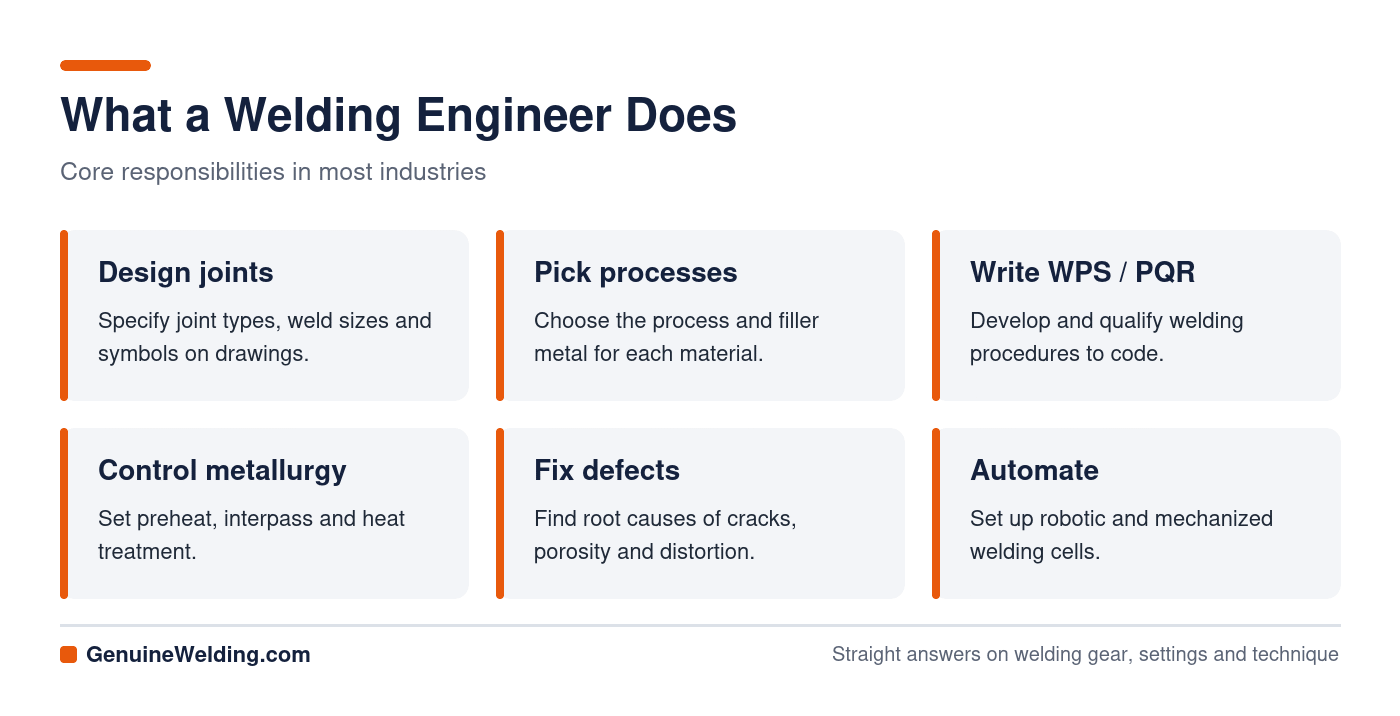
Day to day, a welding engineer might:
- Design welded joints and specify weld sizes, joint types and symbols on drawings
- Select processes and consumables, such as MIG, TIG, submerged arc, laser or friction stir, and the right filler metal for each base metal
- Write welding procedure specifications (WPS) and run the test welds that become procedure qualification records (PQR)
- Qualify welders and maintain records required by AWS D1.1, ASME Section IX, API 1104 or other codes
- Control metallurgy: set preheat, interpass temperature and post-weld heat treatment to avoid cracking and distortion
- Troubleshoot defects such as porosity, cracking and lack of fusion using inspection and NDT results
- Automate welding with robotic and mechanized systems, and improve speed and quality
- Reduce cost by optimizing joint design, filler use and welding time
New to the documents involved? See our guide to welding codes and standards and how to read welding symbols.
Where Do Welding Engineers Work?
- Aerospace and defense
- Automotive and heavy equipment manufacturing
- Shipbuilding and offshore
- Oil, gas, pipelines and petrochemical plants
- Power generation, including nuclear
- Structural steel, bridges and construction
- Welding equipment and consumable manufacturers
- Engineering consulting and inspection firms
- Research labs and universities
Welding Engineer Salary
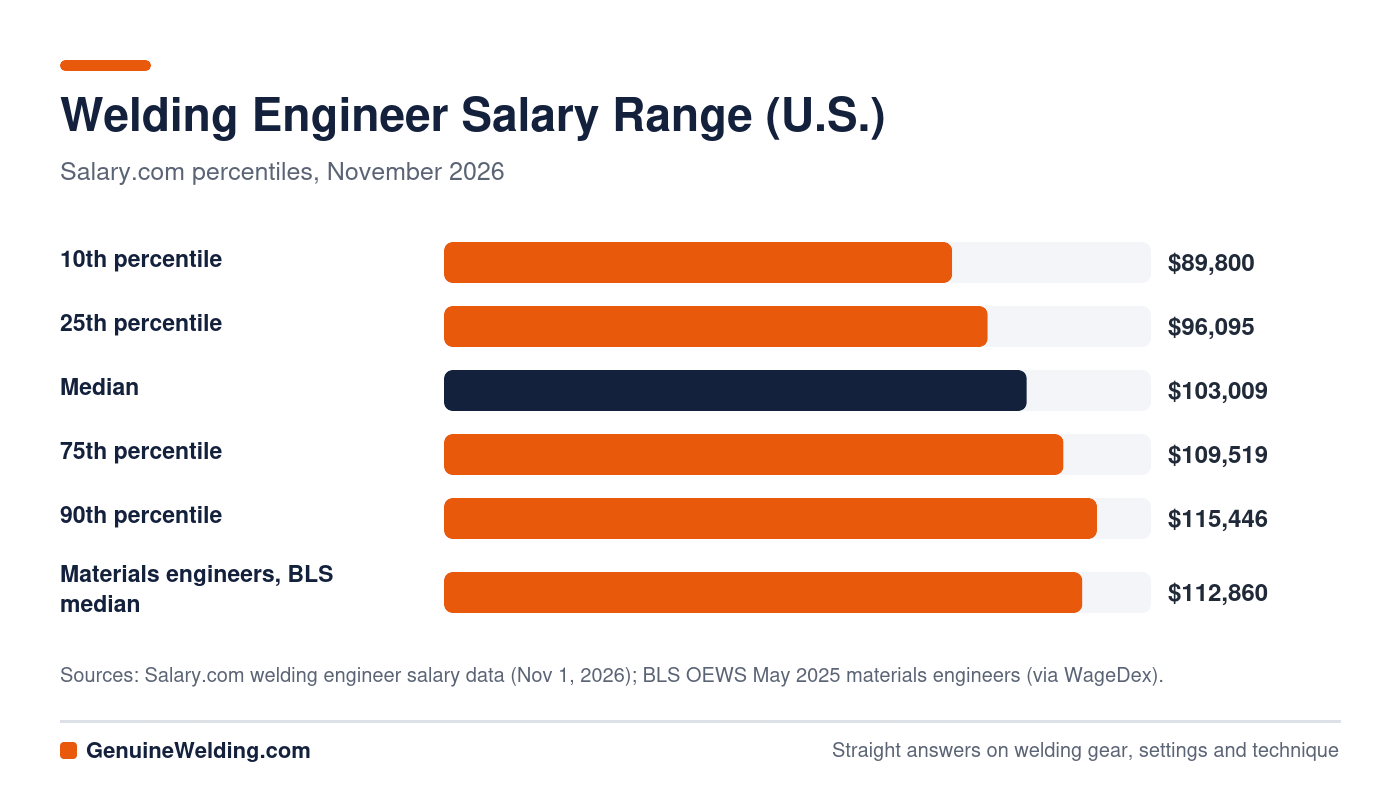
Salary.com puts the average U.S. welding engineer salary at $103,009 as of November 2026, with the middle half earning between $96,095 and $109,519. The BLS does not track welding engineers separately, but its closest category, materials engineers, had a median of $112,860 in May 2025.
Pay rises with experience, a professional engineer (PE) license, code expertise and work in high-paying industries such as aerospace, oil and gas, and nuclear. Senior welding engineers and welding engineering managers often earn well above the averages. For comparison with hands-on roles, see the highest paying welding jobs.
What Degree Do You Need to Be a Welding Engineer?
Most employers want a four-year engineering degree. You have three main routes:
- B.S. in Welding Engineering: the most direct path. Programs include The Ohio State University and LeTourneau University. Coursework covers welding metallurgy, processes, design, NDT and codes.
- B.S. in Welding Engineering Technology: more hands-on and applied, offered by schools such as Ferris State University and Pennsylvania College of Technology.
- B.S. in Materials, Metallurgical or Mechanical Engineering: many welding engineers start here and specialize through work experience, electives or a master’s degree.
A master’s or Ph.D. leads to research, advanced metallurgy and leadership roles. Some welders move into engineering later by earning a degree while working, since shop experience is valued highly.
Helpful certifications
- AWS Certified Welding Engineer (CWEng)
- AWS Certified Welding Inspector (CWI), useful for engineers who manage quality
- Professional Engineer (PE) license, after passing the FE exam and gaining experience
- International Welding Engineer (IWE), recognized in Europe and globally
Skills Welding Engineers Need
- Welding metallurgy and heat treatment
- Knowledge of processes from stick and MIG to laser and friction stir welding
- Codes: AWS D1.1, ASME Section IX, API 1104, AWS D17.1
- CAD, joint design and weld symbols
- Nondestructive testing basics (UT, RT, MT, PT)
- Robotics and automation
- Statistics and problem-solving (root cause analysis)
- Clear communication with welders, designers and managers
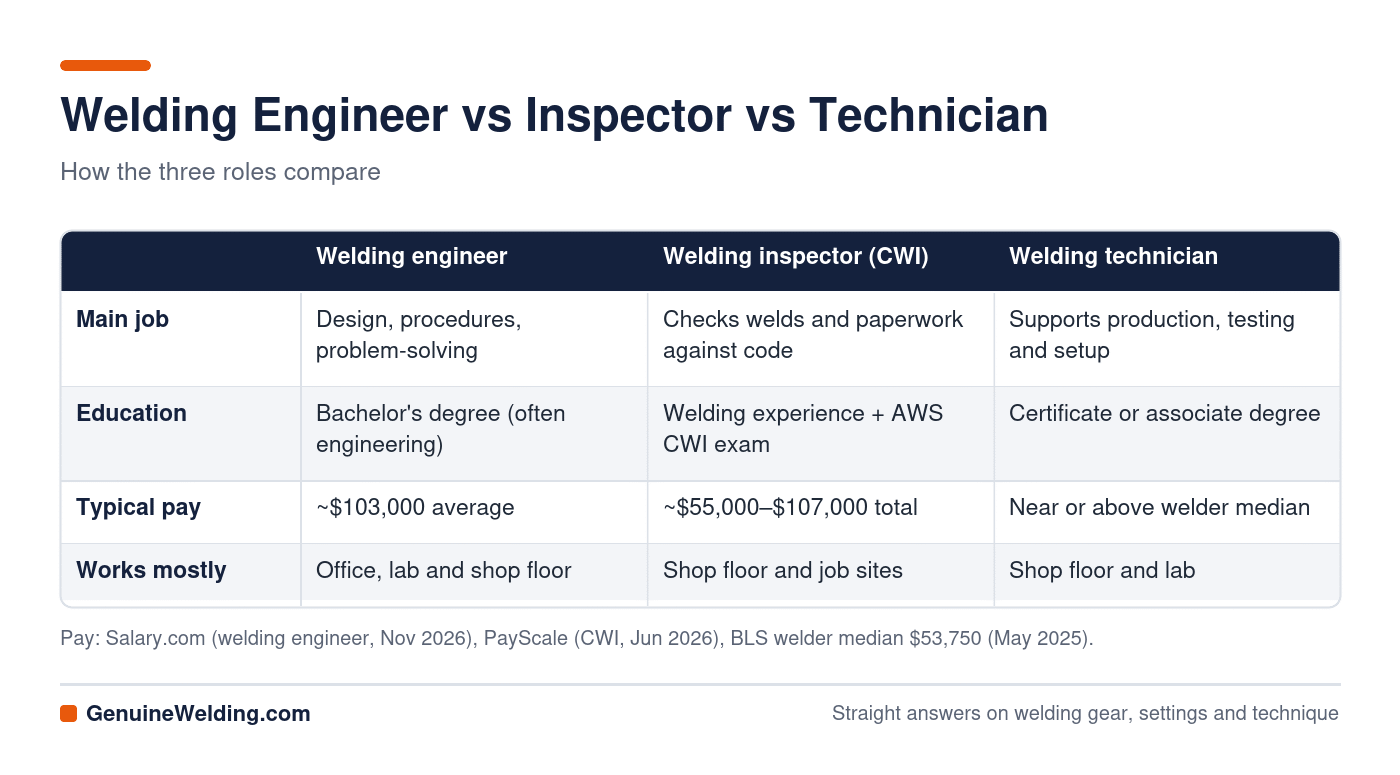
Welding Engineer vs Welding Inspector vs Welding Technician
How to Become a Welding Engineer
- Take math and science in high school: algebra, calculus, physics and chemistry.
- Earn a bachelor’s degree in welding engineering or a related field.
- Get hands-on welding time. Learn to weld yourself; it earns respect on the shop floor and improves your designs. Our guide on how to weld is a good start.
- Complete internships or co-ops with manufacturers, fabricators or energy companies.
- Start as a junior welding or manufacturing engineer, writing procedures and supporting production.
- Add credentials such as CWEng, CWI or a PE license as you gain experience.
Welding Engineer FAQs
Is welding engineering a good career?
Yes. It pays well, is in demand across many industries and is hard to automate because it requires judgment about metallurgy, codes and production.
Do welding engineers weld?
Some do, especially when developing procedures, but most of their time is spent on design, documentation, testing and problem-solving rather than production welding.
How long does it take to become a welding engineer?
About four years for a bachelor’s degree, plus a few years of experience to become a fully independent welding engineer.
Can a welder become a welding engineer?
Yes. Many welders return to school for a welding engineering technology or engineering degree. Their practical experience is a big advantage.
What is the difference between a welding engineer and a metallurgist?
A metallurgist studies metals broadly, while a welding engineer applies metallurgy, design and codes specifically to joining. The roles overlap, especially in failure analysis.
Sources
- Salary.com: Welding Engineer Salary
- WageDex (BLS OEWS May 2025): Materials Engineers
- American Welding Society: Certification and Education
- The Ohio State University: Materials Science and Engineering (Welding Engineering)