The basic metalworking skills every beginner should learn are measuring and marking, cutting, drilling, filing and deburring, bending, grinding, joining (bolting, riveting and welding) and finishing. Learn them in that order on cheap mild steel, with safety gear on, and every later project becomes easier.
Metalworking looks complicated, but nearly every project is a combination of a few repeatable skills. This guide lists them in the order a beginner should practice, with the tools that matter for each and the mistakes that waste material.
The Core Skills
- Measure twice, mark clearly: a scribe, combination square and center punch.
- Cut straight: hacksaw, band saw, angle grinder or chop saw.
- Drill accurately: center punch, pilot hole, correct speed and cutting oil.
- Finish edges: file, deburr and sand.
- Join metal: clamp, tack, then weld or fasten.
- Stay safe: eye, ear, hand and respiratory protection.
Skill, Tool and Practice Project
| Skill | Starter tool | Practice project |
|---|---|---|
| Measuring and marking | Tape, combination square, scribe | A square frame |
| Cutting | Hacksaw, angle grinder, band saw | Cut ten equal bars |
| Drilling | Drill press or drill, center punch, bits | A bracket with 4 holes |
| Filing and deburring | Files, deburring tool | Smooth the bracket |
| Bending | Vise, hammer, bender | A simple hook |
| Welding | Welder, clamps, helmet | A small stand |
| Finishing | Wire brush, paint, clear coat | A coated shelf bracket |
1. Measuring and Marking
Accuracy begins at the layout stage. Use a steel rule or tape, a combination square for right angles and a scribe or fine marker for lines. A center punch makes a small dimple that stops a drill bit from wandering. Always measure from the same edge, and mark with a light line so you do not lose accuracy. A fine line is easier to cut to than a thick one.
2. Cutting Metal
Start with a hacksaw to learn the feel, then move on to power tools. An angle grinder with a cut-off wheel cuts bar and tube quickly; see how to cut metal with an angle grinder. A band saw gives straight, controlled cuts. Clamp the work every time and wear eye protection. For thin sheet, use snips or shears.
3. Drilling and Tapping
Mark the hole with a center punch, drill a small pilot hole, then open it to size. Use a drill press if you can; a hand drill needs a firm grip. Run slowly in steel and use cutting oil. Clamp the work because a sticking bit can spin the part out of your hand. Tapping a thread needs the right tap drill size and lubricant.
4. Filing, Deburring and Grinding
Cut edges are sharp and rough. File them smooth and use a deburring tool on holes. A bench grinder or angle grinder removes more metal, but take care not to overheat the part. Always wear a face shield when grinding. See our bench grinder roundup.
5. Bending and Forming
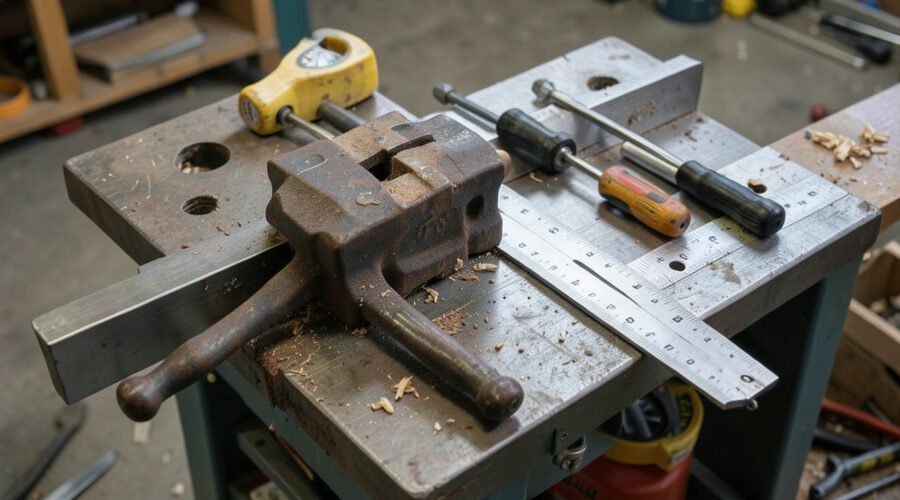
Bend small bar in a vise with a hammer, thicker bar with a bender and sheet with a brake. Mark the bend line, support the metal and bend slowly to avoid cracks. Metal springs back, so bend slightly past the angle you want.
6. Joining: Bolting, Riveting and Welding
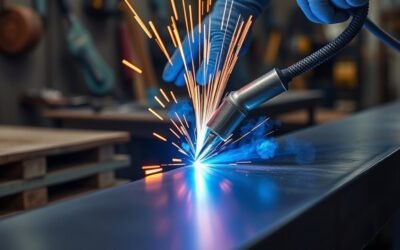
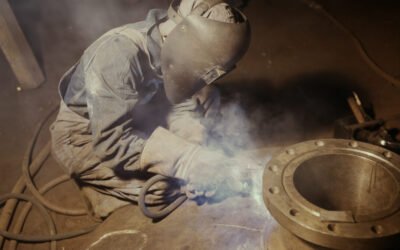
Bolts and rivets are the simplest ways to join metal, and welding makes strong permanent joints. Start with MIG welding because it is easiest to learn. Clamp, tack and check the fit before running a bead. Our MIG welding guide for beginners and best welders for beginners are good starting points.
7. Finishing and Protecting
Bare steel rusts. Clean with a wire brush or flap disc, degrease, and finish with primer and paint, powder coat or clear coat. Aluminum and stainless need different cleaning methods. A good finish makes a simple project look professional.
Safety Habits That Last
- Safety glasses plus a face shield for grinding and cutting.
- Hearing protection around loud tools.
- Leather gloves for handling metal, but no gloves near rotating drills.
- Tie back hair and avoid loose clothing.
- Keep a fire extinguisher nearby.
- Learn about fabrication safety hazards before you start.
FAQs
What tools do I need to start metalworking?
A vise, hacksaw, files, hammer, tape, square, scribe, drill with bits, angle grinder, clamps and safety gear. Add a welder when you are ready.
What metal should a beginner start with?
Mild steel. It is cheap, easy to cut, drill and weld, and forgiving of mistakes.
Is welding the first skill to learn?
No. Learn to measure, cut and drill first. Welding is easier when your parts fit well.
How long does it take to learn metalworking basics?
You can learn the basics in a few weekends of practice. Mastery takes years.
Do I need a big shop?
No. A garage corner with a workbench, vise and good lighting is enough to start.
Where can I learn metalworking?
Community college courses, makerspaces, trade schools and online videos are all good options.
Bottom Line
Metalworking is a set of simple skills practiced in order. Learn to measure, cut, drill and finish before welding, practice on mild steel, and keep safety first. In a few weekends you can build real projects.
Sources
- OSHA 1910.133: Eye and face protection
- OSHA 1910.212: General machine guarding
- OSHA 1910.252: Welding, cutting and brazing