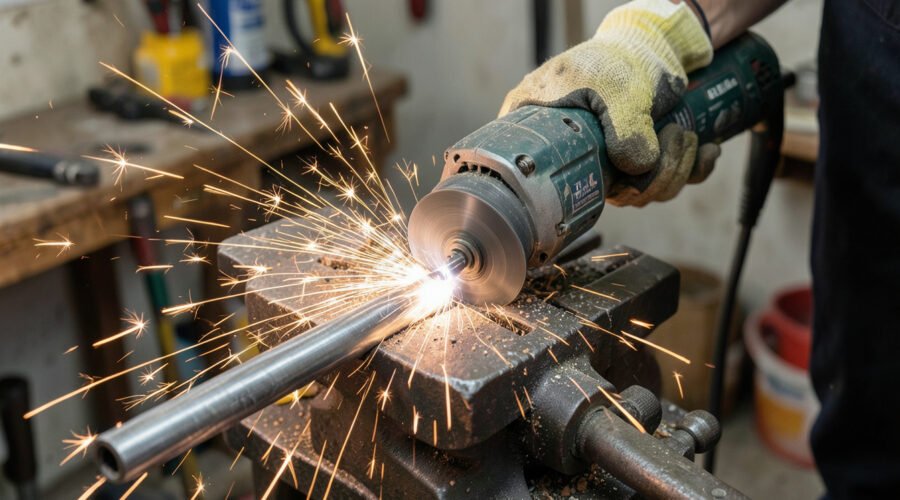
To cut steel with an angle grinder, fit a thin cut-off wheel rated for the tool’s speed, put the cutting guard between you and the wheel, clamp the work, let the grinder reach full speed, and make a straight cut with light pressure. Never twist the wheel, never grind with a cut-off wheel, and wear a face shield, safety glasses, gloves and hearing protection.
An angle grinder is one of the fastest ways to cut bar, angle, tube, rebar and bolts in a shop or on site. It is also one of the more dangerous hand tools, because the wheel spins at thousands of revolutions per minute. This guide explains the right setup, a step-by-step method and the mistakes that cause kickback and wheel breakage.
Quick Rules for Cutting Steel With a Grinder
- Use a Type 1 or Type 41 cut-off wheel for cutting. Use a Type 27 grinding wheel only for grinding.
- Match the wheel’s maximum RPM to the grinder. The wheel rating must be equal to or higher than the tool speed.
- Use a cutting guard that covers the wheel on the operator side. Many grinders ship with a grinding guard only.
- Clamp the work so the cut-off piece cannot pinch the wheel.
- Cut in the direction that the wheel is spinning away from you and never twist or lever the wheel.
Which Wheel for Which Job
| Job | Wheel | Notes |
|---|---|---|
| Cutting bar, tube, angle | Type 1 or 41 cut-off wheel, 1 mm to 3 mm thick | Thin wheels cut faster and cooler |
| Cutting stainless | Wheel marked for stainless (iron-free) | Prevents rust contamination |
| Grinding welds | Type 27 depressed-center wheel | Never cut with it |
| Cleaning and blending | Flap disc | See our flap disc roundup |
| Rust and paint | Wire wheel or strip disc | Wear a face shield |
What You Need Before You Start
- An angle grinder with a guard that suits cutting. A 4-1/2 in. grinder is typical; see our Milwaukee grinder roundup for cordless options.
- A cut-off wheel in good condition, with no cracks, chips or damp storage. Check the date or the condition label.
- A vise or clamps and a stable bench.
- PPE: safety glasses plus face shield, leather gloves, hearing protection, long sleeves and a dust mask or respirator.
- A clear area free of flammable liquids, rags and fiberglass.
Step-by-Step: Cutting Steel With an Angle Grinder
- Mark the cut with a scribe or soapstone.
- Clamp the work so it is rigid and the waste piece will not drop onto the wheel. Support both sides of the cut.
- Check the tool. Unplug or remove the battery, fit the correct guard, mount the wheel with the flanges the maker supplies, and tighten it.
- Test the wheel. Run the grinder away from the work and from other people for at least 30 seconds, standing out of the plane of the wheel.
- Start the cut. Bring the spinning wheel to the mark at a right angle. Let the abrasive do the work with light, steady pressure.
- Keep the wheel straight. Do not tilt, twist or lever the wheel in the kerf, which can snap the wheel or cause kickback.
- Finish the cut. Support the waste piece as it separates, then lift the grinder out and let the wheel stop completely before putting it down.
- Deburr. Remove the sharp edge with a flap disc or file.
Choosing the Right Cut-Off Wheel
Cut-off wheels are thin abrasive discs reinforced with fiberglass. They come in different sizes, speeds and abrasives. A thin wheel cuts faster and removes less metal but wears faster; a thicker one lasts longer but cuts slower. The wheel’s maximum operating speed must be at least equal to the grinder’s RPM. For stainless steel and aluminum, buy wheels made for those metals so the abrasive does not leave iron contamination or clog. OSHA’s abrasive wheel standard requires wheels to be inspected before mounting and operated within their rated speed (see Sources). Our roundup of cut-off wheels lists good choices.
Guard, Flanges and Setup
Most grinders come with a Type 27 grinding guard. The AISC guide to angle grinder safety explains that when you use a flat (Type 1) cut-off wheel, the guard must be a cutting guard that partially surrounds the wheel, or a clip-on conversion that the maker offers. Place the guard so that it sits between the wheel and you. The side handle should be on the guarded side. Do not remove or loosen the guard for convenience, and do not use a damaged flange.
How to Prevent Kickback
Kickback happens when the wheel stops suddenly and the grinder is thrown back at you. It usually follows pinching, twisting or a dropped piece of work. To avoid it: support the piece being cut off, never start the grinder with the wheel in the cut, restart only after reaching full speed, keep both hands on the tool, and cut with the guard side facing you. Pro tool reviews also warn against plunging the wheel straight down into the work.
Common Mistakes
- Cutting with a grinding wheel or grinding with a cut-off wheel.
- Using a wheel rated below the grinder speed.
- Removing the guard or using the wrong guard.
- Forcing the wheel or twisting it in the cut.
- Cutting sparks toward flammables.
- Not wearing a face shield.
Corded or Cordless?
Both cut well. Cordless M18-type grinders are convenient for jobs without power but drain batteries on long cuts. Corded grinders give steady power for repeated cutting. Our guides to reciprocating saw blades and plasma cutters cover other ways to cut when the grinder is not the right tool.
FAQs
Can you cut steel with a regular angle grinder?
Yes. Fit a thin cut-off wheel (Type 1 or 41), use the correct guard and follow the safety steps above. A regular grinding wheel is not designed for cutting.
What kind of disc do I use to cut metal with an angle grinder?
A reinforced abrasive cut-off wheel about 1 mm to 3 mm thick. For stainless, use an iron-free wheel marked for stainless.
Can I cut with a grinding wheel?
No. Grinding wheels are made for side loading, and a cutting load on them can break them. Use a wheel that is made for cutting.
What size angle grinder is best for cutting?
A 4-1/2 in. grinder suits most cutting of bar, tube and rebar. A 7 or 9 in. grinder cuts thicker stock but needs more care.
How do I stop an angle grinder from kicking back?
Support the work, keep the wheel straight in the cut, hold the tool firmly with both hands, wait for full speed, and use the correct guard.
Is it safe to cut galvanized steel with an angle grinder?
Cutting galvanized steel releases zinc dust and sparks. Use a respirator, ventilate the area and wear eye protection.
Can I cut aluminum with an angle grinder?
It is not recommended with a standard wheel because aluminum clogs it and the wheel can bind. Use a saw instead. See our guide on cutting aluminum.
Bottom Line
An angle grinder with a thin cut-off wheel is a quick, inexpensive way to cut steel, as long as you treat the wheel with respect. Use the right wheel and guard, clamp the work, make straight cuts with light pressure and wear a face shield. For long, clean cuts in thicker plate, a plasma cutter or band saw is a better tool.
Sources
- OSHA 1910.215: Abrasive wheel machinery
- AISC: A Lesson in Angle Grinder Safety (PDF)
- Weiler Abrasives: 6 tips for improving cutting performance with angle grinders
- The Fabricator: Grinding and cutting safely
- PRO Tool Reviews: How to use an angle grinder