The short answer is yes, but with conditions. Ordinary MIG wire on cracked cast iron is a gamble, while nickel-based wire, controlled heat and slow cooling give repairs a much better chance of holding. Cast iron is brittle and full of carbon, so it punishes shortcuts. This guide explains what to use, what to avoid and when a different process or a professional shop is the smarter call.
Quick answers
- MIG welding cast iron is possible, but standard steel wire tends to make hard, brittle welds that crack beside the repair.
- Nickel-based solid wires such as ERNiFe-CI (55% nickel) and ERNi-CI (99% nickel) are made for cast iron. They are expensive and sold in large spools.
- Preheating and slow cooling matter as much as the wire. One Lincoln Electric nickel-wire listing calls for at least 350 F preheat and interpass temperature.
- For one small repair, stick welding with nickel rod or brazing is often cheaper than buying a spool of nickel MIG wire.
- Never weld safety-critical parts such as brake or steering components, or pressure-bearing castings, unless a qualified shop does the repair.
Filler options for cast iron repair
| Filler | Process | Best for | Watch out for |
|---|---|---|---|
| ERNiFe-CI (55% nickel) | MIG or TIG | General machine repair, ductile or nodular iron | Costly spool, needs preheat |
| ERNi-CI (99% nickel) | MIG or TIG | Crack repair where the weld must be machinable | Highest cost, soft weld metal |
| Mild steel wire (ER70S-6) | MIG | Non-critical brackets and ornamental work only | Hard, brittle weld zone and cracking |
| Nickel or nickel-iron stick rod | Stick | Single repairs, field work | Needs peening and slow cooling |
Why cast iron is hard to weld
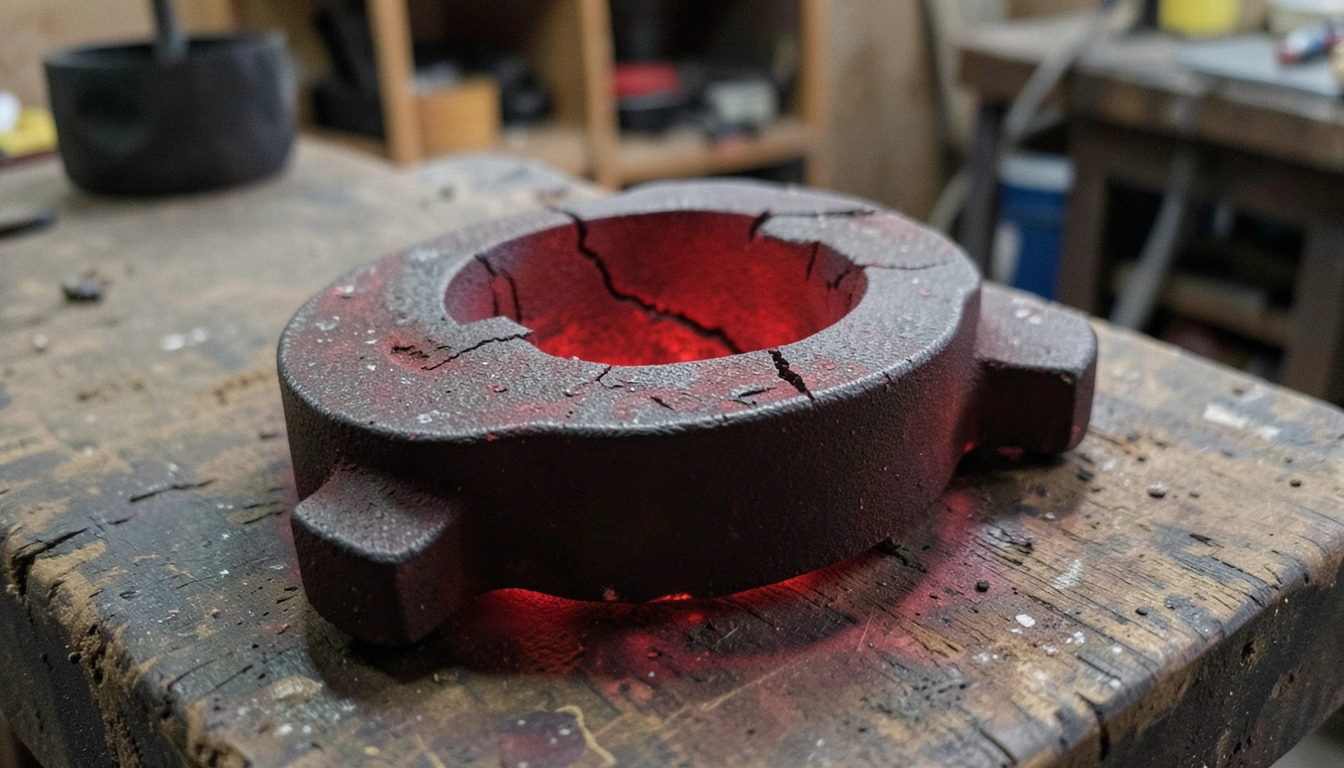
Cast iron holds a lot of carbon, often in the form of graphite flakes. When a weld heats it and the area then cools quickly, the carbon can form a hard, brittle structure next to the weld. Cast iron also has almost no ability to stretch, so the stresses of shrinking weld metal have nowhere to go and the part cracks, either in the weld or in the base metal beside it.
That is why almost every guide to cast iron repair says the same things: keep heat input low, preheat the part, and let it cool slowly.
Which MIG wire to use
Manufacturers such as Lincoln Electric sell nickel-based solid wires for cast iron under the Techalloy name. Nickel stays softer and more ductile than steel, so it can absorb some shrinkage stress instead of cracking. The 55% nickel-iron type is a common all-round choice and is listed as suitable for many grades of cast iron including ductile iron. The 99% nickel type is chosen when the weld needs to be machinable afterward.
Standard mild steel wire such as ER70S-6 is sometimes used on non-critical work. It can hold a light bracket or garden ornament, but the weld zone is hard and cracks easily, so it is a poor choice for anything that carries load. Stainless wire has also been used by hobbyists with mixed results. For important repairs, use the nickel wire your welding supplier recommends for the specific casting.
Step-by-step procedure
- Identify the part. Grey iron, ductile iron and malleable iron behave differently. If you do not know what you have, ask a welding shop.
- Clean thoroughly. Remove oil, paint and rust. Grind a V-groove along a crack, and drill small stop holes at the crack tips to keep it from running.
- Preheat evenly. Use an oven or torch and bring the whole casting up to the temperature your wire maker specifies, which for one nickel wire is at least 350 F.
- Weld in short beads. Run about an inch at a time at low amperage, and keep the part warm between passes.
- Peen each bead lightly while it is hot to relieve stress.
- Cool slowly. Bury the part in dry sand, lime or an insulating blanket and leave it until it is cool to the touch.
Machine setup tips
Nickel wire needs a wire feeder that handles soft wire without kinking, a clean liner and usually pure argon or an argon-rich mix, so check the wire datasheet. Use the lowest voltage and wire speed that give good fusion, and a stringer rather than a wide weave. If your machine is a small gasless flux-core unit, it cannot run solid nickel wire without gas, so stick or brazing is a better route. Our beginner MIG welder picks covers gas-capable machines.
When another process makes more sense
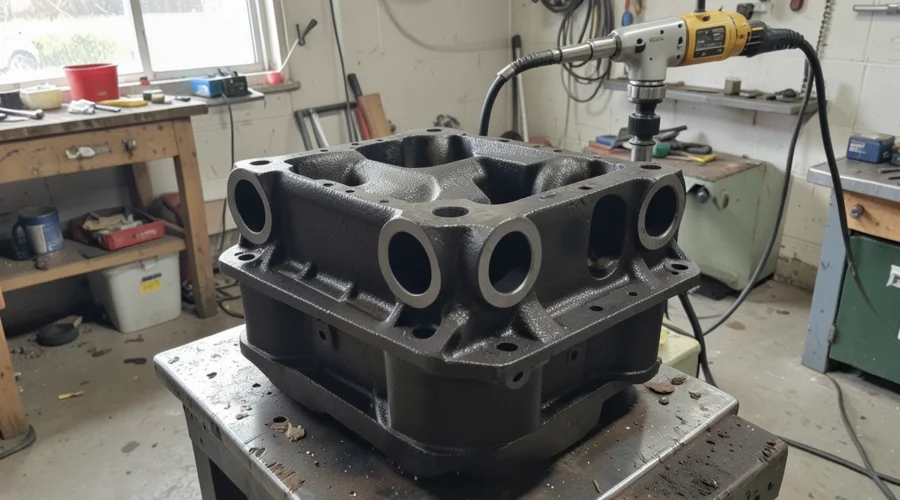
Stick welding with nickel-iron electrodes, TIG with nickel filler, and brazing with a bronze rod are all common ways to repair cast iron. For a single crack, a few nickel stick rods cost far less than a 33 lb spool of nickel MIG wire. Brazing uses less heat and can suit thin or intricate parts. If the casting is an engine block, cylinder head or other expensive part, a specialist repair shop is usually worth the cost.
See our stick welder guide if you want a low-cost machine that can handle nickel rod.
Safety notes
Cast iron repairs involve high preheat temperatures, so wear heavy leather gloves and sleeves, keep flammables away and use tongs or a heat-resistant surface. Fumes from nickel alloys and coatings are not good to breathe, so weld with strong ventilation and a suitable respirator where needed. Do not weld parts that are safety-critical unless the repair is done and approved by a qualified professional.
FAQs
Can I use regular MIG wire on cast iron?
You can, but the weld zone is usually hard and brittle and tends to crack. It is only suitable for light, non-critical repairs. Nickel-based wire is the better choice for anything that matters.
What is the best MIG wire for cast iron?
Nickel-based solid wires such as ERNiFe-CI (about 55% nickel) and ERNi-CI (about 99% nickel) are made for cast iron. Choose by whether the weld must be machinable and which type of cast iron you have.
Do I have to preheat cast iron before welding?
Preheating is strongly recommended. It reduces the thermal shock that causes cracking. Check your filler metal datasheet for the preheat temperature and cool the part slowly.
Can I MIG weld cast iron with flux core wire?
Standard flux-core wire is not designed for cast iron and tends to give brittle results. Nickel-based stick rods or brazing are better options if you do not have gas-shielded MIG gear.
Bottom Line
You can MIG weld cast iron, but the wire, preheat and cooling matter more than the machine. For a one-off repair, nickel stick rod or brazing is usually cheaper and easier. Keep MIG with nickel wire for shops that repair castings regularly, and send safety-critical parts to a qualified professional.
Sources
- Lincoln Electric: Techalloy 99 (GTAW/MIG wire)
- Welding Mart: Lincoln Techalloy 55 MIG wire listing
- MaterialWelding: Welding Cast Iron by TIG and MIG
- Industrial Monitor Direct: Welding Cast Iron rods and preheat