The ESAB Renegade VOLT ES 200i is a cordless stick and DC TIG welder that runs on interchangeable DeWalt FlexVolt batteries, on 120/230V mains or in a hybrid mode. It is a genuinely new kind of welder for remote sites, but it is expensive and limited to about 130 amps of stick output on battery.
We reviewed it using ESAB’s product literature, industry press coverage and dealer listings. It is sold through welding distributors rather than Amazon, so we list Amazon alternatives at the end.
We research every product using manufacturer specifications, published manuals and owner feedback. As an Amazon Associate, GenuineWelding earns from qualifying purchases at no extra cost to you. Prices change often, so check the current price before you buy.
Key Specs
| Spec | Detail |
|---|---|
| Processes | Stick (SMAW) and DC (live) TIG (GTAW) |
| Power modes | Battery, mains (120/230V) and AMP+ hybrid |
| Battery stick output | 10-130 A (Cyberweld: up to 140 A with four batteries) |
| Battery TIG output | 10-150 A |
| Mains output | Up to 200 A |
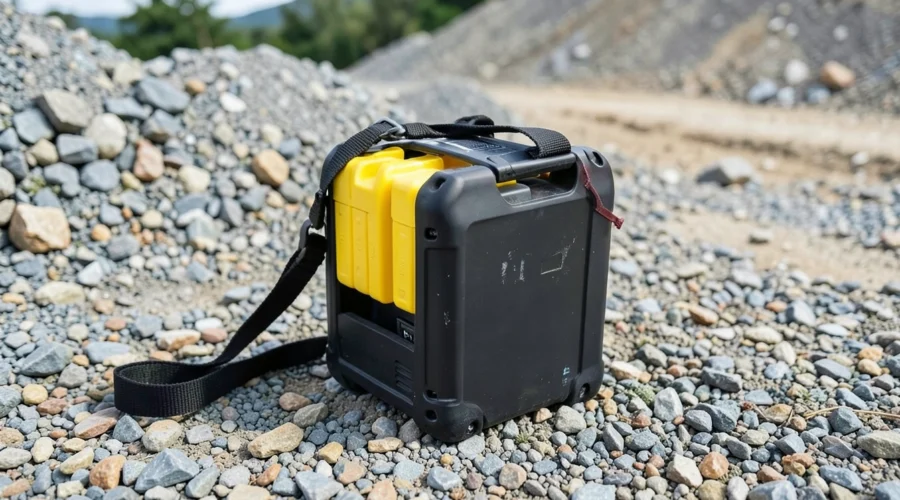
| Batteries | DeWalt FlexVolt 6, 9 or 12 Ah; four 12 Ah included |
| Rating | IP23S |
| Weight | About 17 kg for power source and battery box |
| Warranty | 3 years (per Cyberweld) |
What It Is
ESAB developed the Renegade VOLT ES 200i with Stanley Black and Decker as the first welder to use interchangeable battery packs. It welds stick and live TIG, runs from batteries in remote or hard-to-reach places, and can plug into 120/230V mains power for up to 200 amps. In AMP+ hybrid mode the mains supply and batteries combine for more output.
Performance
On battery power, stick output ranges from 10 to 130 amps and TIG from 10 to 150 amps, which handles electrodes up to about 1/8 inch. A cellulosic mode supports E6010 electrodes, and adjustable hot start and arc force help with arc starts. The duty cycle is limited: one dealer lists about 18 percent at 140 amps stick and 100 percent at 40 amps. The package normally includes four 12 Ah batteries, a four-port charger, an electrode holder, a ground clamp and a shoulder strap.
Who Needs It
This is a tool for maintenance, mining, agriculture and construction crews who regularly weld in places without power or where running a generator is a hassle. For a farm shop with an outlet, a regular inverter is far cheaper. See our best welder for farm use and Miller welder generator guides.
Cost
The full kit with four batteries costs far more than a mains-only inverter stick welder, and dealer pricing varies widely, so get current quotes from several ESAB dealers. Cost is the main barrier to buying one.
Renegade VOLT vs Mains-Powered Field Welders
The VOLT’s battery power is unique, but most buyers compare it with light inverters that run on a generator. Based on ESAB’s published specs and each Amazon listing:
| Welder | Power source | Stick output | Weight | Processes |
|---|---|---|---|---|
| ESAB Renegade VOLT ES 200i | Battery, 120/230V mains or hybrid | 10-130 A on battery; up to 200 A on mains | About 17 kg with battery box | Stick and DC live TIG |
| Lincoln Weld-Pak 225i | 120V or 230V mains | 10-225 A | 20 lb | DC stick, touch-start TIG |
| Forney Easy Weld 160 ST-i | 120V or 230V mains | Up to 160 A | 15 lb | DC stick and DC TIG |
| Miller Thunderbolt 210 MV | 120V or 240V mains, generator compatible | 10-210 A (110 A on 120V) | 13 lb | DC stick |
If you can bring a generator, any of the inverters will do the same stick work for far less money. The VOLT makes sense where noise, fuel, fumes or space rule out a generator, such as indoor maintenance, rooftops or remote sites.
Battery Runtime Tips
- Use the largest batteries. Higher amp-hour FlexVolt packs give more arc time per charge.
- Match rod size to runtime. 3/32 in. rods at lower amperage stretch battery life further than 1/8 in. rods at full power.
- Use hybrid mode when you can. Plugging into mains while welding helps keep the batteries topped up.
- Keep spare charged packs. If you already use DeWalt FlexVolt tools, rotating packs between tools and the welder is easy.
- Protect batteries from heat and cold, which can reduce capacity on site.
Pros and Cons
Pros
- Cordless welding anywhere
- Uses interchangeable DeWalt batteries
- Mains and hybrid modes
- IP23S, cellulosic mode for 6010
Cons
- Very expensive
- Limited run time and output on battery
- Heavy at about 17 kg plus battery box
Who Should Buy It
maintenance, mining, farm and remote-site crews that need welding where there is no power.
Alternatives to Consider
- Light mains-powered inverter: Lincoln Weld-Pak 225i.
- Budget field welder: Forney Easy Weld 160 ST-i.
- Premium field stick welder: Miller Thunderbolt 210 MV.
Products Mentioned in This Article


FAQs
What batteries does the Renegade VOLT use?
It runs on DeWalt FlexVolt 6 Ah, 9 Ah and 12 Ah batteries; the kit includes four 12 Ah packs.
How much power does it give on battery?
Published figures are 10 to 130 amps for stick and 10 to 150 amps for TIG on battery power.
Can it run on regular power?
Yes. It accepts 120/230V mains and can also combine mains and batteries in AMP+ hybrid mode.
Can it weld E6010?
Yes. ESAB lists a cellulosic mode for E6010 electrodes.
Is the Renegade VOLT worth it?
Only if you need cordless welding regularly. Otherwise a regular inverter costs far less.
Can the ESAB Renegade VOLT run 7018?
Yes. It is a DC stick welder, so it runs common rods such as 6010, 6011, 6013 and 7018 within its amperage range. Battery mode limits output, so use smaller rods for longer runs.
Final Verdict
The ESAB Renegade VOLT ES 200i is a clever tool for remote repair crews, but at its price it is not for casual users. Most hobbyists and farms will do better with a regular inverter or an engine-driven welder.
Sources
- ESAB press release on Renegade VOLT
- Cyberweld: Renegade VOLT ES 200i
- New Equipment Digest: Renegade VOLT
- DeWalt: ESAB Renegade VOLT kit