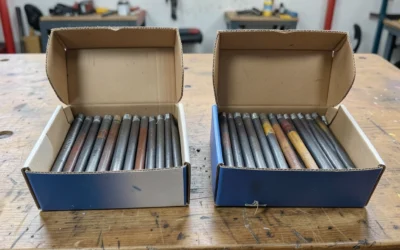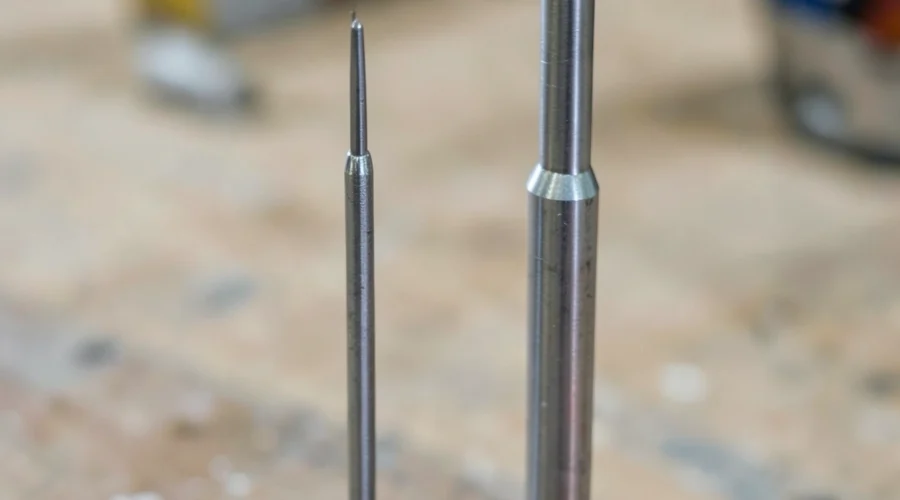
The two most popular stick electrode diameters are 3/32 inch and 1/8 inch. A 3/32 rod runs at lower amperage and gives you more control on thinner steel. A 1/8 rod carries more current, deposits metal faster and handles thicker plate. The right choice depends on your metal thickness, your welder’s output and the position you are welding in.
Quick guide
- 3/32 inch (about 2.4 mm) rods typically run in the 40 to 110 amp range depending on the type, which suits sheet up to about 1/4 inch and small or 120V machines.
- 1/8 inch (3.2 mm) rods typically run from about 75 to 160 amps depending on the type, and suit material over about 1/8 inch thick.
- A larger rod is not automatically stronger: weld strength comes from the rod classification, not diameter. Diameter affects heat, speed and control.
- Start in the middle of the range printed on the rod box and adjust from there.
Typical amperage by rod type and size
| Rod | 3/32 in. | 1/8 in. | Notes |
|---|---|---|---|
| E6011 | 40-85 A | 75-125 A | Works on AC; good for tight, dirty joints |
| E6013 | About 70-110 A | About 100-130 A on DC | Easy general-purpose rod |
| E7014 | About 70-110 A on DC | About 100-140 A on DC | Fast fill, soft arc |
| E7018 | About 70-110 A | About 90-160 A | Low hydrogen, keep dry |
What the sizes mean
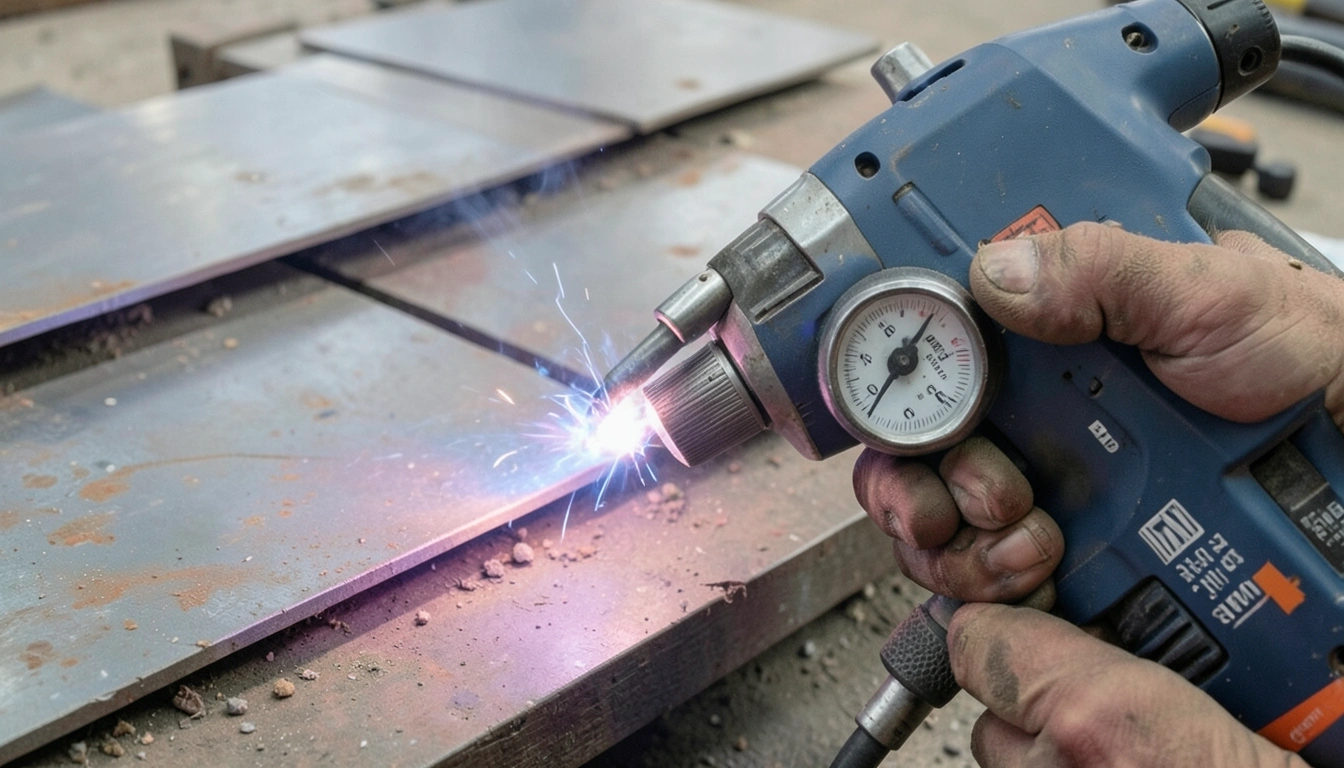
Rod size refers to the diameter of the steel core wire, not including the flux coating. Heat generated depends on current, so bigger rods need more amperage to melt the core and the coating. Ranges vary between brands and types, so use the manufacturer’s data sheet. For example, Lincoln’s published figures for 7018 show a 3/32 rod at roughly 70 to 110 amps and a 1/8 rod at 90 to 160 amps.
When to pick 3/32
- Thinner steel, from about 1/16 up to around 1/4 inch.
- Small machines, including 120V inverters that top out around 100 amps. Many 110V stick units cannot power a 1/8 rod to its full range.
- Out-of-position welds such as vertical and overhead, where a smaller puddle is easier to control.
- Tight fit-up or root passes where you want less heat.
See our best 110V stick welders for machines that suit this size.
When to pick 1/8
- Thicker steel, roughly 1/8 inch and up, where 3/32 would need many passes.
- Flat and horizontal work where you want faster deposition.
- Machines with 140 amps or more available, such as a 220V inverter or AC tombstone welder.
A 1/8 rod is too aggressive for thin gauge sheet. On 1/8 inch plate it can burn through unless you travel fast or run at the low end of the range.
Rod type matters as much as size
E6011 and E6010 dig deep and suit dirty or rusty steel. E6013 is soft and easy, and E7018 is the structural, low-hydrogen choice. Our best rods for beginners article compares them, and 7014 vs 7018 explains two popular iron powder rods. For rusty metal see best welding rod for rusty metal.
Practical setup tips
- Pick the rod type first, then size by metal thickness and machine output.
- Set amperage at the middle of the rod box range, then adjust: too cold causes sticking and a ropey bead, too hot causes undercut and burn-through.
- Keep an arc length about equal to the rod core diameter.
- Practise on scrap of the same thickness before the real job.
New to stick? Read how to stick weld.
FAQs
Is 1/8 or 3/32 welding rod better for beginners?
3/32 is easier on thinner steel and on small machines, while 1/8 is a good all-round size if your welder has enough output. Many beginners start with 1/8 E6013 on 1/4 inch plate.
What amps for a 3/32 7018 rod?
Lincoln lists roughly 70 to 110 amps for a 3/32 E7018 rod. Start near the middle and adjust to the joint.
Can I use 1/8 rod on thin metal?
It is risky. A 1/8 rod needs enough current that it can burn through material around 1/8 inch or thinner. Use 3/32 or smaller, or choose a different process for sheet metal.
Is a bigger rod stronger?
No. Weld strength depends on the rod classification and correct technique. Diameter changes heat, deposition rate and control.
Bottom Line
Use 3/32 rods for thinner steel, small or 120V welders and out-of-position work. Use 1/8 rods for thicker plate when your machine has the amperage to run them. When in doubt, follow the data sheet and test on scrap.
Sources
- Welding Tips and Tricks: 7018 vertical up amps
- Welding Tips and Tricks: 6011 welding rod amperage
- MaterialWelding: Welding rod sizes and amperage chart
- Electrode size and amps reference (W4ZT)