Choose gas MIG if you weld mostly in a shop on clean, thin to medium steel and want clean, low-spatter welds. Choose gasless flux-core MIG if you weld outdoors, on rusty or dirty metal, and want to avoid buying and refilling a gas cylinder.
Gasless MIG uses flux-cored wire that makes its own shield, while gas MIG uses solid wire with an external gas. We compared the two with manufacturer and industry sources and Amazon listings.
We research every product using manufacturer specifications, published manuals and owner feedback. As an Amazon Associate, GenuineWelding earns from qualifying purchases at no extra cost to you. Prices change often, so check the current price before you buy.
Quick Comparison
| Feature | Gas MIG | Gasless (flux-core) |
|---|---|---|
| Wire | Solid wire with shielding gas | Flux-cored wire, no gas |
| Spatter and slag | Less spatter, no slag | More spatter, slag to chip |
| Outdoor use | Wind can blow shielding gas away | Holds up better in wind |
| Thin metal | Handles thin sheet well | Can blow through thin stock |
| Dirty or rusty metal | Needs cleaner metal | More tolerant |
| Setup cost | Needs cylinder, regulator and refills | No cylinder |
| Wire cost | Lower | Higher |
Weld Quality and Cleanup
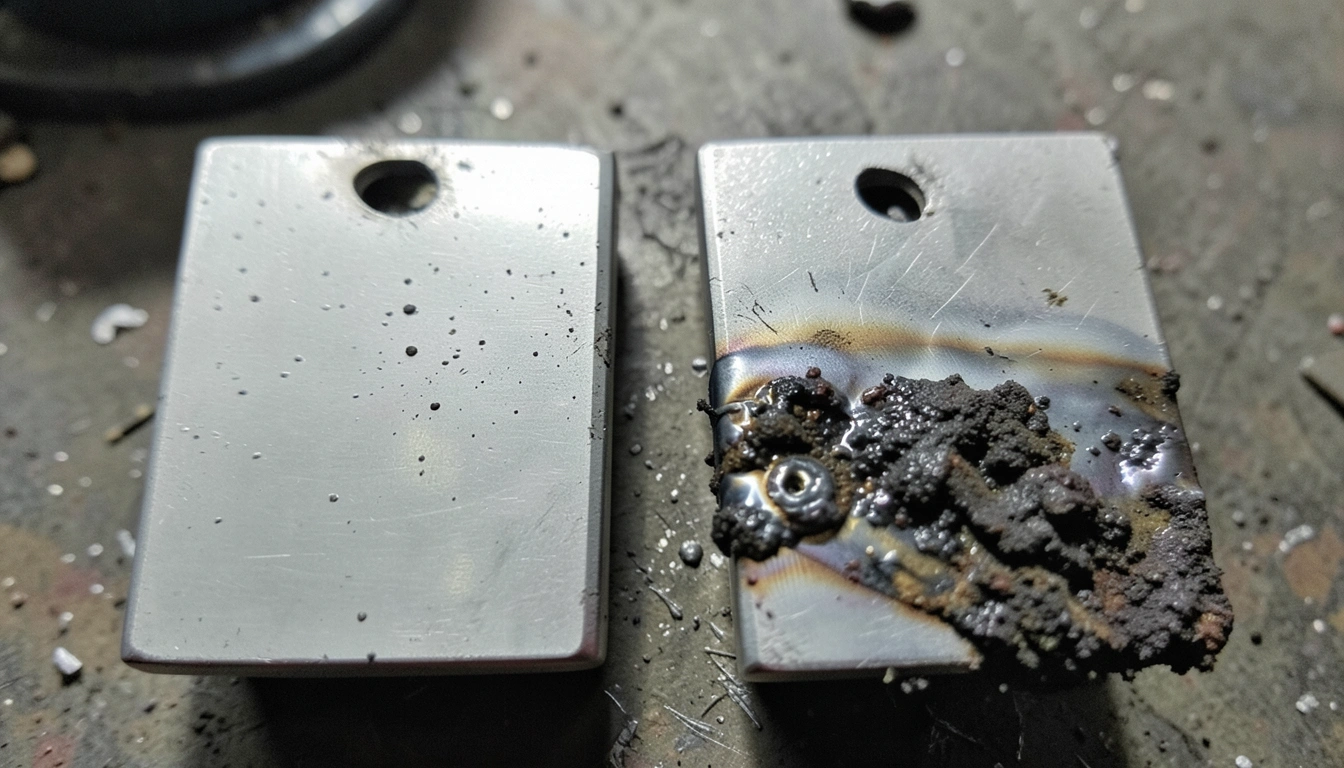
WeldGuru notes solid MIG wire is simple to use, leaves no slag, makes less spatter than flux-cored wire and handles thin metal well. Flux-core makes its own shield but typically leaves more spatter and a slag layer you need to chip off. Our guide on whether flux-core welds are good covers strength and appearance.
Wind and Outdoor Welding
West Air Gases explains that shielding gas on a standard MIG setup starts blowing away in even a light breeze, while flux core makes its shield at the puddle and holds up outdoors. That is why farm and construction repair often favors gasless. Lincoln Electric also compares MIG and self-shielded flux-core (FCAW-S) in its resource center.
Cost and Setup
Gasless machines save you the gas cylinder, regulator and refills, but flux-core wire usually costs more per pound than solid wire. Many multi-process welders do both, so you can start gasless and add gas later. See our best flux core welders, best MIG welder for beginners and flux core vs solid wire guides.
Safety
Flux-core welding makes more fume, so ventilate well and consider a respirator. Read our best welding respirators guide for options. Always wear proper PPE and follow the machine manual.
Gas MIG Welders We Recommend
PrimeWeld MIG180 MIG Welder – Gas MIG

Bottom line: The PrimeWeld MIG180 is a 180 amp wire-feed welder with dual 110V/220V input. It is set up for solid wire with shielding gas and can also run flux-core wire.
Pros
- Enough power for 3/16 in steel with the right settings
- Dual voltage
- Can run solid wire with gas or flux-core wire
Cons
- Higher price than basic gasless units
- Needs gas cylinder and regulator for gas MIG
Best for: home and small-shop users who want cleaner gas MIG welds on thin to medium steel.
YESWELDER 205A MIG Welder – Gas + gasless

YESWELDER 205A MIG Welder
110V/220V 5-in-1 MIG, flux core, spool gun, lift TIG and stick
Bottom line: The YESWELDER 205A is a 110V/220V multi-process machine that does gas MIG, flux-core MIG, spool-gun MIG, lift TIG and stick, so you can try both gas and gasless on one machine.
Pros
- Runs both gas and gasless
- Spool gun ready for aluminum
- Good value for the amperage
Cons
- Lift TIG only, not high-frequency TIG
- Less brand support than Lincoln or Miller
Best for: welders who want to start gasless and add shielding gas later.
Gasless (Flux-Core) MIG Welders We Recommend
YESWELDER 135A Flux Core MIG Welder – Gasless 110V

YESWELDER 135A Flux Core MIG Welder
110V flux-core gasless MIG, lift TIG and stick, 3-in-1
Bottom line: The YESWELDER 135A is a 110V gasless flux-core MIG welder that also does lift TIG and stick, with a digital display.
Pros
- No gas cylinder needed
- Plugs into standard 110V
- Low price
Cons
- Flux-core wire makes more spatter and slag
- Limited to light and medium steel work
Best for: beginners and homeowners doing outdoor or farm repairs.
ARCCAPTAIN 135A Flux Core MIG Welder – Budget gasless

ARCCAPTAIN 135A Flux Core MIG Welder
110V gasless MIG, stick and lift TIG, 3-in-1
Bottom line: The ARCCAPTAIN 135A is a 110V flux-core gasless MIG welder with stick and lift TIG, with a clear display, for light repair work.
Pros
- Very low price
- No gas required
- 3-in-1 process choice
Cons
- Light-duty limits
- More cleanup than gas MIG
Best for: first-time welders on a tight budget.
Which Should You Choose?
Choose a gas MIG welder if:
- You weld indoors in a shop or garage.
- You work on thin sheet metal or want clean-looking welds.
- You are willing to buy a gas cylinder and regulator.
Choose a gasless MIG welder if:
- You weld outdoors or in breezy places like barns and yards.
- You weld rusty, painted or dirty steel.
- You want the lowest setup cost and no gas to refill.
FAQs
Is gasless MIG as strong as gas MIG?
With the right wire and settings, flux-core welds can be strong. Gas MIG gives cleaner, neater welds, especially on thin material. See our guide on flux-core weld quality.
Can I weld thin metal with a gasless MIG?
You can, but flux-core wire can blow through thin stock. Gas MIG with solid wire handles thin metal better.
Can I convert a gasless MIG welder to use gas?
Only if it supports solid wire, a gas solenoid and the right polarity. Many gasless-only units cannot. Multi-process machines can.
Which is better for beginners?
Gasless is cheaper and simpler to start with; gas MIG is often easier to control. Many beginners start with a machine that does both.
Which is better outdoors?
Gasless flux-core, because wind can blow away external shielding gas.
Final Verdict
If you weld in a shop, gas MIG gives the cleaner result. If you repair things outdoors or on a budget, gasless is the practical choice. A multi-process machine like the YESWELDER 205A lets you try both.
Sources
- WeldGuru: Flux-core vs MIG welding
- Lincoln Electric: GMAW vs FCAW-S
- West Air Gases: MIG welding without gas
- UNIMIG: gas vs gasless