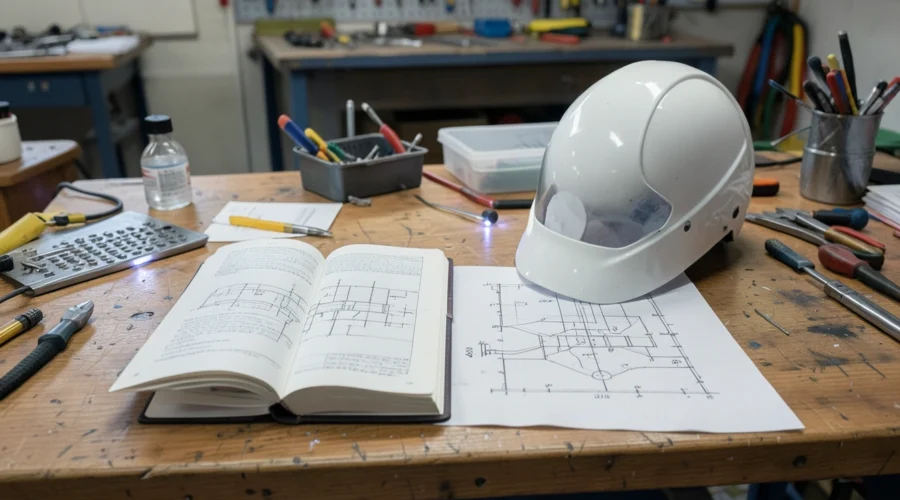
A welding degree usually means an Associate of Applied Science (AAS) in Welding Technology, which takes about 2 years full time and roughly 60 to 75 credits. Certificates and diplomas are shorter, from a single semester to about a year.
Colleges commonly ladder these awards, so credits from a certificate can count toward the degree. Here is how real programs are structured.
At a Glance
| School | Award | Length and credits |
|---|---|---|
| Front Range Community College | Welding Technology AAS | At least 60 credits; 4 semesters (2 years) full time |
| New Mexico State University | Welding Technology AAS | 61 credits |
| Tarrant County College | AAS Welding Technology | 60 semester credit hours (2026-2027) |
| Craven Community College | Welding Technology AAS | 72 credit hours; diploma is 40 credit hours |
| Delta College | Welding Technology AAS | 5 semesters; 74 credits |
| Portland Community College | Welding Technology associate degree | 2 years full time; 96 quarter credits |
| Lone Star College | Welding Level 2 certificate | 40 credits; leads to the AAS |
Certificate vs Associate Degree
WeldingCareerNow explains that the main difference is the amount of material and time: associate degrees in welding technology generally run at least 60 credit hours and take 2 years, and they include general education courses and sometimes business-related courses. Certificates focus on welding skills, such as introductory and advanced pipe welding and layout and fabrication.
Ladder Programs
Delta College offers a Certificate of Achievement (1 semester, 16 credits), an Advanced Certificate (3 semesters, 42 credits) and the AAS (5 semesters, 74 credits). Lone Star College notes that courses completed in its welding certificate can be applied toward the Welding Technology AAS. Dallas College says its Welding Applications AAS and certificate use the same welding courses, with the degree requiring a small amount of extra academic coursework.
Do You Need a Degree?
BLS lists a high school diploma or equivalent as the typical entry-level education for welders. A degree is optional, but may help with supervisory, inspection or engineering paths. See is welding a good career, how long welding school takes and how much it costs.
Choosing a Path
- Want to work fast: a certificate.
- Want credits that transfer or a broader foundation: an AAS.
- Already working: part-time evening classes stretch the timeline.
Bachelor's Degrees in Welding: 4 Years
If you want to become a welding engineer, the usual path is a four-year bachelor’s degree. Only a handful of U.S. schools offer one:
| School | Degree | Notes |
|---|---|---|
| The Ohio State University | BS in Welding Engineering | 4-year engineering degree; described by the university as the only ABET-accredited undergraduate welding engineering program in North America |
| Ferris State University (Michigan) | BS in Welding Engineering Technology | Established in 1984; Ferris calls it the largest program of its kind in the U.S. |
| LeTourneau University (Texas) | BS in Materials Joining Engineering | Covers welding plus brazing and adhesive bonding |
| Pennsylvania College of Technology | Welding engineering technology bachelor’s | Hands-on, technology-focused degree |
Engineering degrees include calculus, physics, chemistry and metallurgy, so they are a very different commitment from a welding certificate.
Master's Degrees
Ohio State also offers an M.S. in Welding Engineering, including an online option that typically takes about 24 months. It requires a bachelor’s degree first. A master’s is mainly for engineers moving into research, advanced procedure development or senior technical roles.
All Welding Education Paths Compared
Here is how the main options line up by time:
| Path | Typical length | Best for |
|---|---|---|
| Single-process certificate | A few weeks to a few months | Adding one skill, such as TIG |
| Full welding certificate or diploma | About 6 to 18 months (often 900 to 1,400 hours) | Getting hired as a welder |
| Associate of Applied Science (AAS) | About 2 years, 60 to 75 credits | Welders who want supervisory or inspection options later |
| Registered apprenticeship | About 3 to 4 years, paid | Learning on the job while earning |
| Bachelor’s in welding engineering | 4 years | Welding engineers |
| Master’s in welding engineering | About 2 years after a bachelor’s | Advanced engineering and research |
For school lengths in more detail, see how long welding school takes.
Which Degree Pays Off?
Most production, pipe and structural welders are hired on skills and test results rather than degrees, so a certificate or apprenticeship is usually enough to start. An AAS helps if you later want to move into supervision, teaching or inspection. A bachelor’s degree is required for most welding engineer jobs, which focus on procedures, metallurgy, automation and quality rather than daily welding. See is welding a good career for pay across these paths.
FAQs
How many years is an associate degree in welding?
About 2 years full time, usually 60 or more credits.
How many credits is a welding certificate?
It varies, for example 15 credits for an entry-level certificate at Craven CC and 40 for Lone Star Level 2.
Can certificate credits count toward the degree?
Often yes. Lone Star and Delta describe stackable certificates that lead to the AAS.
Do I need a degree to be a welder?
No. BLS lists a high school diploma or equivalent as typical entry-level education.
What does an AAS include besides welding?
General education such as English and math, according to WeldingCareerNow.
Is there a 4-year welding degree?
Yes. Ohio State offers a BS in Welding Engineering, Ferris State a BS in Welding Engineering Technology and LeTourneau a BS in Materials Joining Engineering.
Bottom Line
Plan on about 2 years for a welding associate degree and less for certificates. Choose based on whether you want a quick start or a broader credential, and check whether certificate credits stack toward the degree.
Sources
- Front Range Community College: Welding Technology AAS
- New Mexico State University: Welding Technology AAS
- Tarrant County College: Welding Technology
- Craven Community College: Welding
- Portland Community College: Welding Technology
- WeldingCareerNow: certificate vs associate
- BLS Occupational Outlook Handbook: Welders
- Ohio State: Major in Welding Engineering
- Ohio State: The field of Welding Engineering
- Ferris State: Why Welding
- TopUniversities: Ohio State online M.S. Welding Engineering