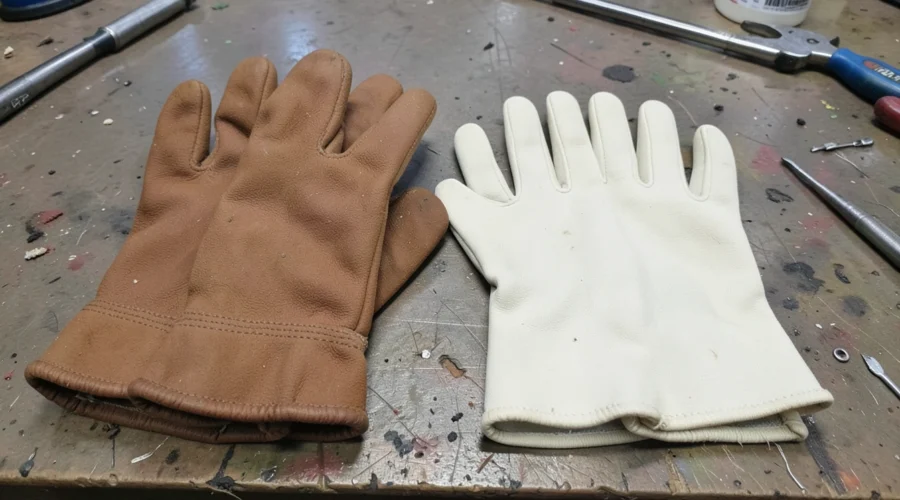
Choose MIG gloves for MIG, stick and flux-core welding, where you need thicker leather for heat and spatter. Choose TIG gloves for TIG welding, where thin goatskin gives the fingertip feel you need to hold a torch and feed filler rod.
The two glove types trade protection for dexterity in opposite directions. We compared them using safety and glove-maker guidance plus Amazon listings.
We research every product using manufacturer specifications, published manuals and owner feedback. As an Amazon Associate, GenuineWelding earns from qualifying purchases at no extra cost to you. Prices change often, so check the current price before you buy.
Quick Comparison
| Feature | MIG gloves | TIG gloves |
|---|---|---|
| Typical leather | Cowhide or split leather | Goatskin or deerskin |
| Thickness | Thicker, often lined or padded | Thin, often unlined |
| Fit | Looser with extra padding | Snug and form-fitting |
| Best for | MIG, stick, flux-core | TIG |
| Dexterity | Moderate | High |
| Spatter protection | Better | Limited |
Why They Differ
The Welding School (TWS) explains that MIG gloves are more often cowhide or pigskin for durability, while TIG gloves use goatskin, deerskin or fire-resistant fabric for a lighter, fitted glove. PIP notes TIG gloves do not need to provide much heat protection because the priority is dexterity, and the filler rod is thin.
Heat, Spatter and Safety
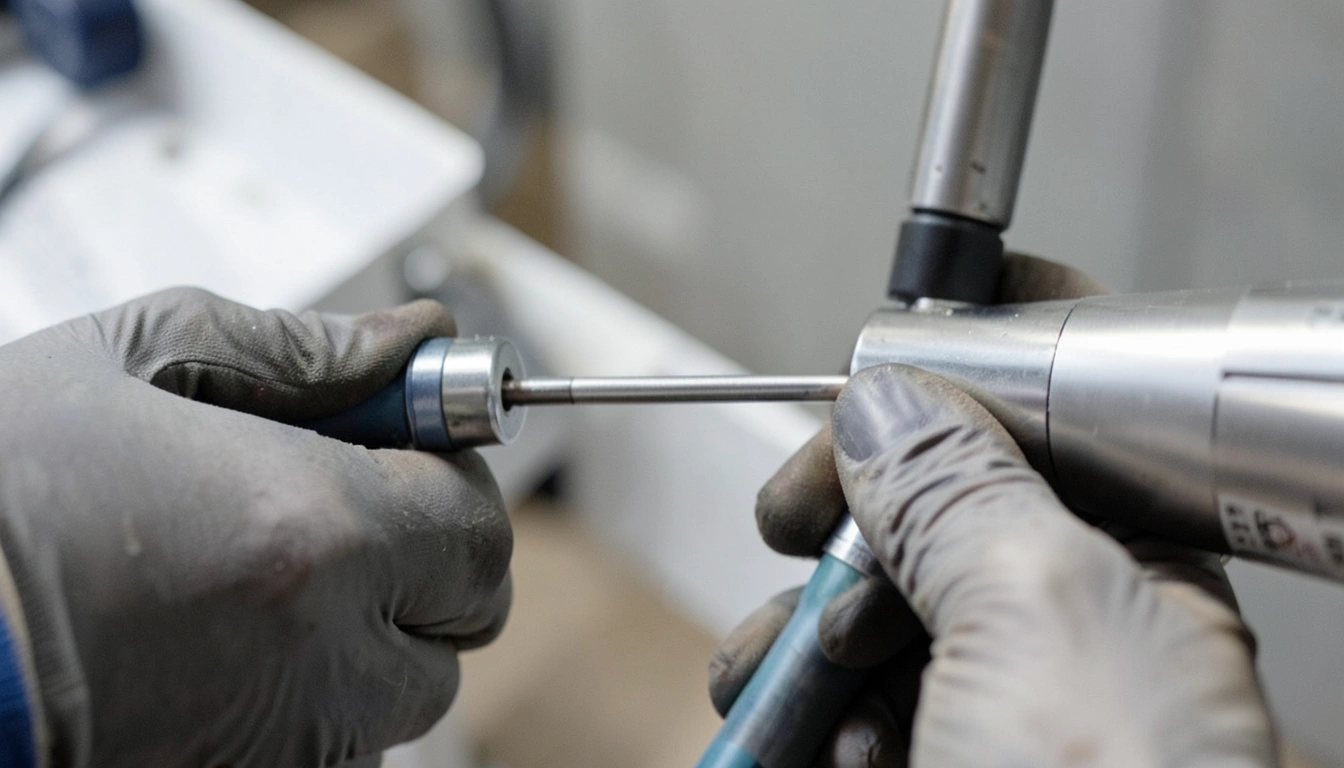
MIG and stick throw more spatter and radiant heat, so thicker gloves with long cuffs are safer. Thin TIG gloves can burn through quickly in spatter, which is why you should not use them for MIG or stick. Gloves are categorized under EN 12477, with Type B aimed at TIG dexterity and Type A at higher heat and spatter.
Can One Pair Do Both?
Multi-task goatskin gloves with a reinforced palm, such as Caiman goat grain TIG/multi-task gloves, are a compromise for light MIG and TIG work. For heavy MIG or stick, use thicker gloves. For gear that goes with your gloves, see our best welding caps and best lightweight welding helmets.
Fit and Care
Choose the glove size that fits snugly without bunching. Replace gloves when the leather stiffens, cracks or thins, and keep them dry. Check the product page for sizing charts before buying.
MIG Gloves We Recommend
Lincoln Electric Traditional MIG/Stick Welding Gloves (K2979) – Classic MIG glove
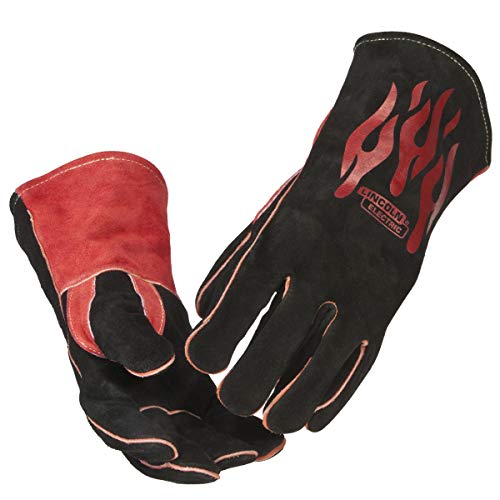
Lincoln Electric Traditional MIG/Stick Welding Gloves (K2979)
14 in lined leather gloves with Kevlar stitching and cotton liner
Bottom line: Lincoln’s Traditional MIG/Stick gloves are 14 inch lined leather gloves with Kevlar stitching, leather-reinforced stress points and a cotton liner with a straight thumb.
Pros
- Good heat and spatter protection
- Kevlar stitching resists burn-through
- Long cuff covers the forearm
Cons
- Less fingertip feel than TIG gloves
- Stiff until broken in
Best for: MIG and stick welders who need heat and spatter protection.
Black Stallion GM1611 Cowhide MIG Welding Gloves – Heavy-duty MIG
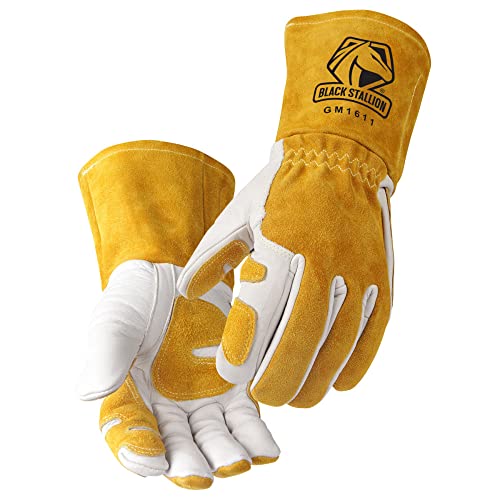
Black Stallion GM1611 Cowhide MIG Welding Gloves
Top grain cowhide with reinforced patches and Kevlar stitching
Bottom line: The Black Stallion GM1611 is a cowhide MIG glove with reinforced patches on the palm, thumb and index finger, Kevlar stitching and extra padding on the side and wrist.
Pros
- Patched wear points
- Extra padding for heat
- Kevlar stitching
Cons
- Bulkier than TIG gloves
- Sizing runs by brand, so check the chart
Best for: welders who want a tougher MIG glove for daily use.
TIG Gloves We Recommend
Tillman 1328 Top Grain Goatskin TIG Welding Gloves – Classic TIG glove

Tillman 1328 Top Grain Goatskin TIG Welding Gloves
Reusable top-grain goatskin with abrasion-resistant build
Bottom line: The Tillman 1328 is a top grain goatskin TIG glove with a pull-on closure and ambidextrous design, built for fine control with filler rod and torch.
Pros
- Thin and flexible for torch control
- Low price
- Abrasion resistant
Cons
- Little protection from spatter
- Short cuff leaves forearm exposed
Best for: TIG welders who need maximum fingertip control.
Tillman 1338 Goatskin TIG Gloves with Glide Patch – TIG with thumb patch

Tillman 1338 Goatskin TIG Gloves with Glide Patch
Goatskin TIG glove with glide patch and reinforced thumb
Bottom line: The Tillman 1338 is a white goatskin TIG glove with a glide patch for the filler rod hand and a reinforced thumb for added strength.
Pros
- Good feel and dexterity
- Glide patch helps feed filler rod
- Reinforced thumb
Cons
- Light protection only
- White leather shows dirt
Best for: TIG welders who feed rod by hand all day.
Which Should You Choose?
Choose MIG gloves if:
- You MIG, stick or flux-core weld most of the time.
- You deal with spatter, sparks and radiant heat.
- You want a long cuff to protect your forearm.
Choose TIG gloves if:
- You TIG weld and need to feel the torch and filler rod.
- You work at low heat on small parts.
- You want a snug glove that does not bunch.
Products Mentioned in This Article

FAQs
Can I use TIG gloves for MIG welding?
It is not recommended. TIG gloves are thin and can burn through in MIG spatter. Use thicker MIG gloves.
Can I use MIG gloves for TIG welding?
You can, but the thicker leather reduces feel for the torch and filler rod. TIG gloves give much better control.
What leather is best for TIG gloves?
Goatskin and deerskin are the common choices because they are thin, soft and form-fitting.
What leather is best for MIG gloves?
Cowhide and split leather are common because they are durable and heat resistant.
Do I need separate gloves for stick welding?
Stick throws the most spatter and heat, so use heavy gauntlet-style gloves or thick MIG/stick gloves.
Final Verdict
Match the glove to the process: thick leather for MIG and stick, thin goatskin for TIG. If you do both, owning two pairs is the safest and most comfortable approach.
Sources
- The Welding School: MIG and TIG welding gloves
- PIP: hand protection for welders
- Watson Gloves: how to choose welding gloves
- YESWELDER: how to choose welding gloves